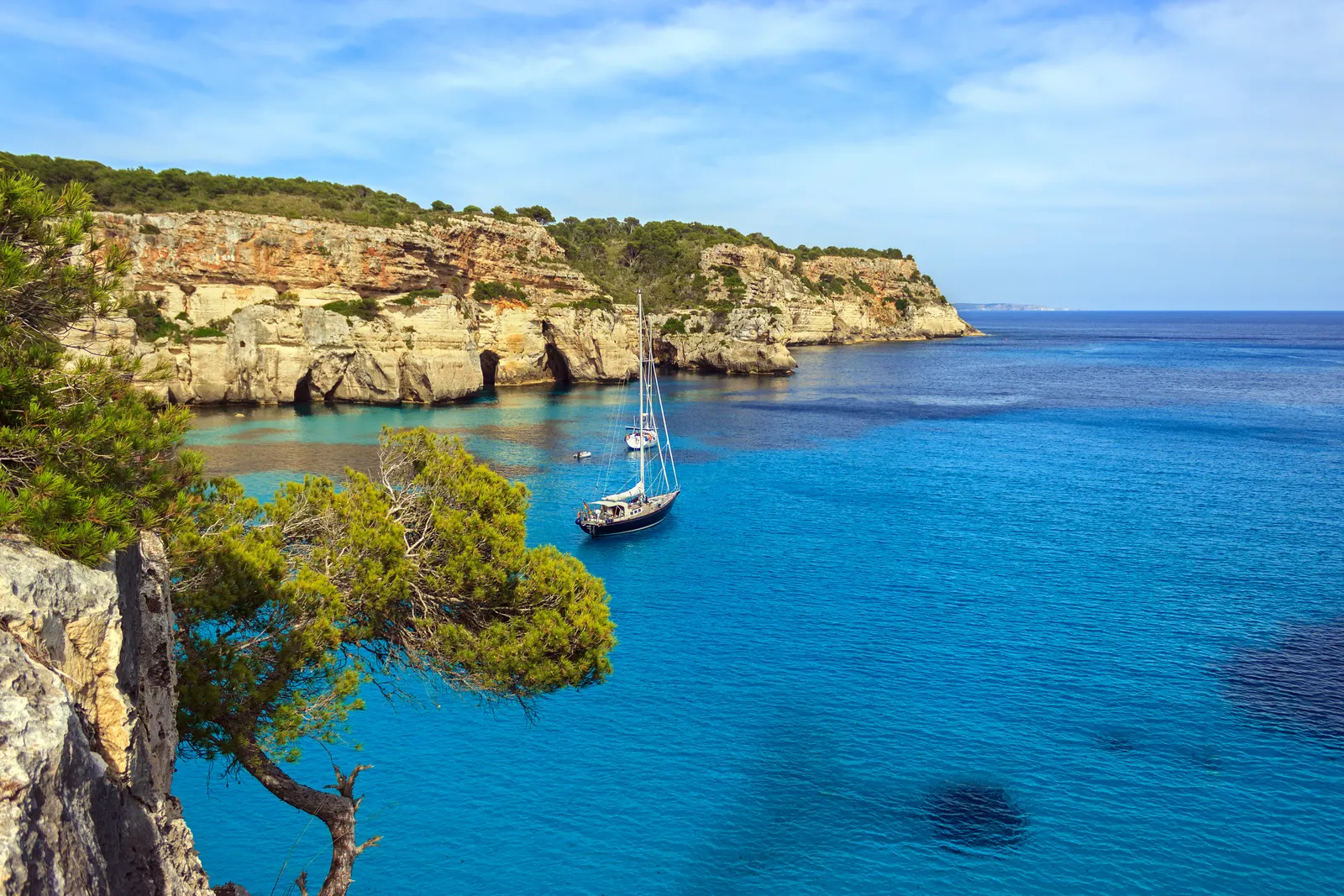
There is a kind of traveller for whom the ‘airport to hotel’ guides are no use: the one who isn’t going to a hotel. Their destination is a particular pontoon in a particular marina — the chartered yacht that casts off tomorrow, their own boat after a winter on its berth, the yacht where the rest of the party is already waiting on board. For that traveller, the journey from the plane to the water is the first gesture of the trip, and it deserves to go well.
This guide walks Menorca’s five main marina ports — Maó, Ciutadella, Cala en Bosch, Fornells and Addaia — with what actually matters on arrival: how long it takes from the airport, which marina is which, how far the car can go and what is worth tying down before you leave home. Everything verified as of 2026; the map of marina concessions is in the middle of a reshuffle, so commercial names may change from one season to the next.
The essentials
- The airport: Menorca Airport (MAH), about 4.5 km from Maó. From there, by car and without traffic: port of Maó ~10 min, Fornells ~35 min, Ciutadella ~40-45 min, Cala en Bosch ~50 min, Addaia ~30 min.
- There is no Uber or Cabify in Menorca (July 2026): taxi, public bus or a pre-booked private transfer.
- The port of Maó is very long — more than 6 km of inlet —: confirm your marina and pontoon number before booking the transfer.
- Weekly charters run, as a general rule, Saturday to Saturday; each operator announces its own boarding times.
- The ferries don’t dock where you’d imagine: in Maó they arrive at the Cós Nou (away from the centre) and in Ciutadella at the Son Blanc breakwater (not the old port).
Before you leave home: three details that change everything
- The exact marina and pontoon. ‘The port of Maó’ is six kilometres of shoreline; ‘Fornells’ can mean the village pontoon or Ses Salines, a kilometre further south. Ask your base or your skipper for the name of the marina and the berth number: it is the difference between being dropped at the gate and hauling kit bags across half a harbour.
- The real boarding time. For charters, each operator sets its own (there is no standard published time in Menorca); arrange the transfer around that figure, not your flight schedule.
- The luggage decides. Soft bags, a cool box, the crew’s shopping: the volume of an embarkation doesn’t fit just any car. Choose the vehicle by its boot, not by the fare.
The port of Maó: the yacht mile
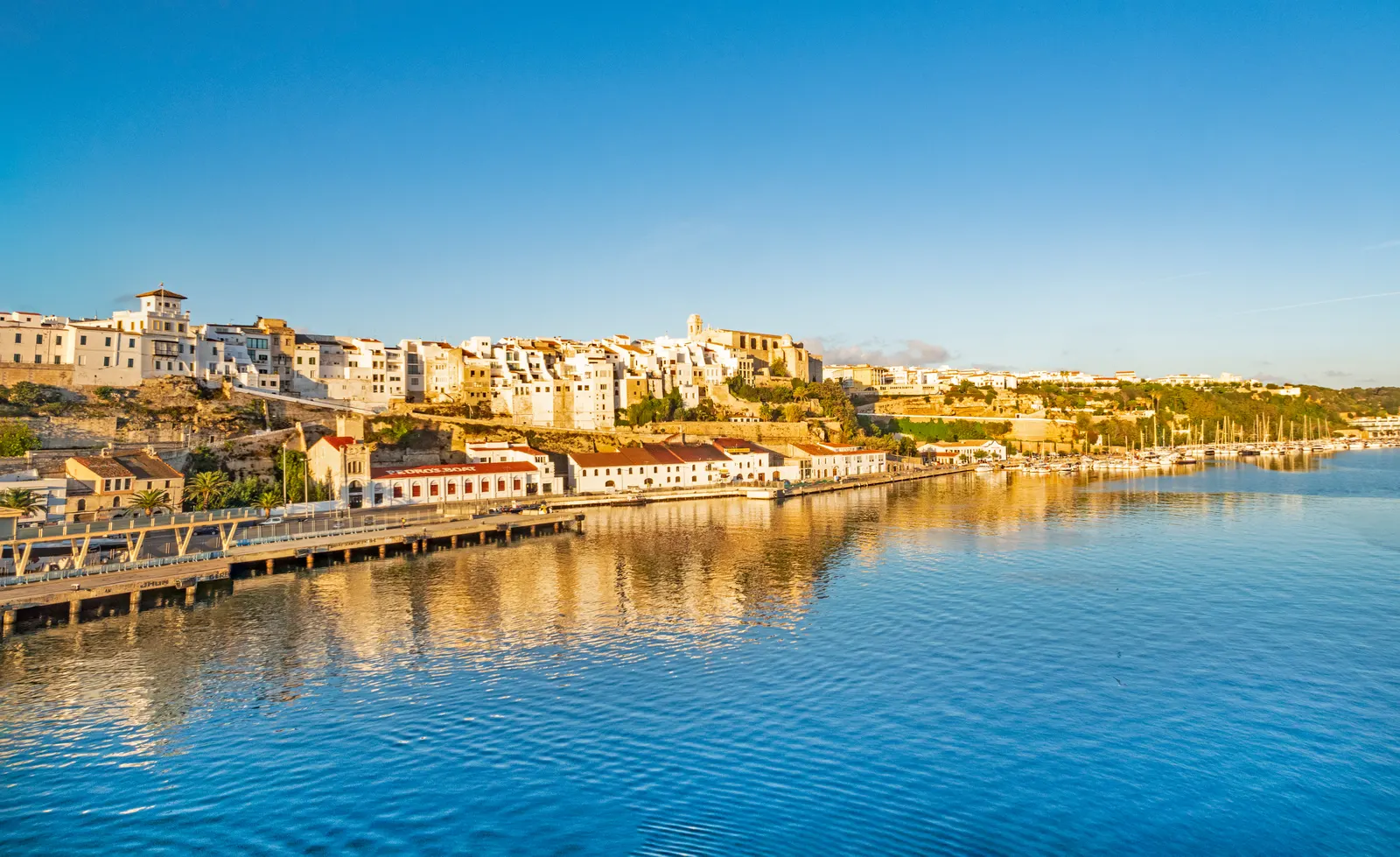
The approach to Maó by sea is celebrated; arriving by land is, quite simply, easy: the airport sits about 5 km away, some 10 minutes by car. The inlet — ‘more than six kilometres’, according to the Balearic Port Authority, which presents it as the second-largest natural harbour in the world — concentrates the island’s sailing life.
Sailing boats and yachts gather along the Moll de Llevant, the southern shore, facing the mile of restaurants: boats of up to 60 metres berth there, and there you will find (as of 2026) Marina Port Mahón —30 berths for yachts of 25 to 60 m—, Port de Llevant and the historic Club Marítimo de Mahón. The true giants lie a little further along, at the old Estación Marítima: in June 2026 the Yalla (73 m) and the Starfire (70 m) were resting there. At the head of the harbour, in Sa Colàrsega, Marina Menorca adds more than 200 berths across seven pontoons, some ten minutes from the old town.
Two practical notes. The car reaches the marina gates all along the Moll de Llevant, but harbour parking is regulated and paid for in season (with around a hundred free spaces by Cala Figuera): if you are only coming to board, being dropped at the gate is worth more than a parking space. And if you arrive by ferry from Barcelona (Trasmed or GNV, an overnight crossing), you will dock at the Cós Nou, on the northern shore: it is ‘in the harbour’, but it is not in town — with luggage, count on a taxi or a transfer.
Menorca’s main sailing charter base is here, between the Moll de Llevant and Sa Colàrsega. If your week begins in Maó, you have the easiest logistics on the island: from the plane to the pontoon in a quarter of an hour. What to do with that gift of time is the subject of our charter check-in day guide.
Ciutadella and Cala en Bosch: the western gateway
The west lies at the far end of the Me-1: 47 km and some 40-45 minutes of serene road between dry-stone walls. There is no direct bus from the airport — Line 10 leaves you in Maó, where you change onto the Ciutadella line (€5.75), for a total of 1 h 15 to 1 h 45 — and the taxi comes to around €57-69, according to the airport’s official indicative fare table. It is the journey where a transfer booked in advance earns its keep most clearly.
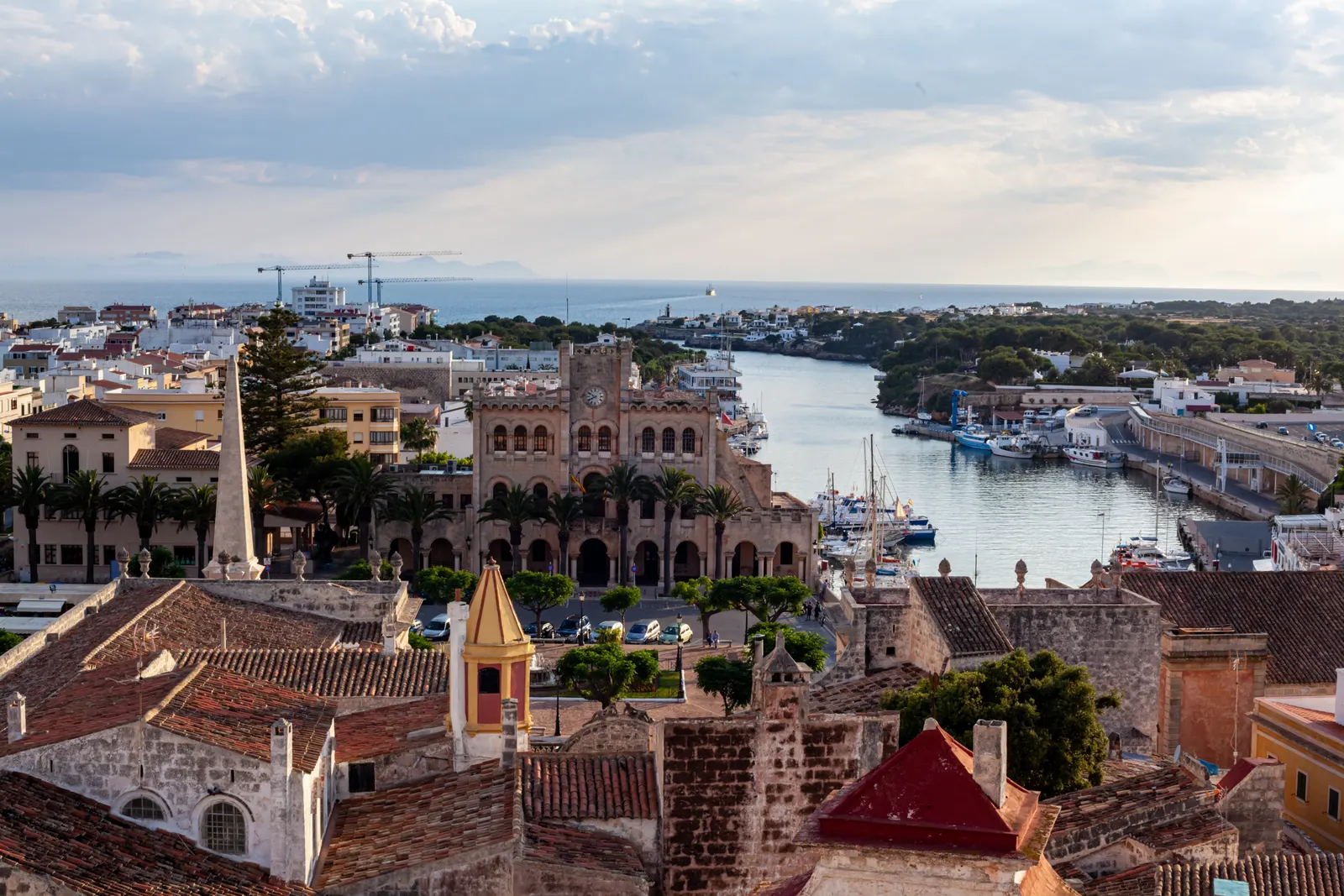
Ciutadella’s old port is one of the loveliest corners of the Spanish Mediterranean: a narrow fjord of an inlet beneath the ledge of the old town. Recreational sailing lives there and in the Cala en Busquets basin, in the hands of the Club Nàutic Ciutadella (180 berths in the port, 116 more in the basin) and of Ports IB, which runs the port and offers transit berths bookable online for boats of up to 12 metres. One warning that spares you trouble: the car cannot drive down to the restaurant quayside, and the parking areas beside the port are, as of mid-2026, in legal limbo — leave the car in the old-town car parks and walk down the Baixada Capllonch, or ask your transfer to drop you at the nearest point above the pontoon. The ferries (Baleària from Barcelona in about 3 h 30; Baleària and Menorca Lines from Alcúdia in around an hour; Corsica Ferries from France in season) dock at the Son Blanc breakwater, on the edge of town.
Cala en Bosch, half an hour south of Ciutadella and some 59 km from the airport (~50 minutes), is another matter: an inner lake-harbour — es Llac — ringed by the resort’s promenade, with a fuel dock and a boat-hire base on the lake itself. The car reaches the resort itself; your berth is a level stroll from the drop-off point. It is the natural base for sailing the coves of the western south coast.
Fornells and Addaia: the north, with a calm of its own
Fornells is some 30 km from the airport, ~35 minutes (indicative taxi fare: €41-49; no direct bus). Its bay is the classic refuge of the north coast and, since 2025, it has a new order: Ports IB has installed floating pontoons with around 300 seasonal berths — operational, according to the tender documents, from 1 May to 15 October — shared among several operators. The Club Nàutic Fornells has its clubhouse and 74 berths at Ses Salines, a kilometre south of the village, and 31 more on the village-centre pontoon; Marina Menorca runs pontoon 7, five minutes’ walk from the promenade. The golden rule: ask whether your berth is ‘village’ or ‘Ses Salines’ — it changes exactly where the car should drop you. And a gesture very much of this house: the bay holds a field of Ports IB eco-friendly buoys over the posidonia, bookable online — mooring without touching the meadow is quiet luxury carried down to the anchorage.
Addaia, on the inlet that opens the north-east coast beside the s’Albufera des Grau natural park, is the discreet port: a marina under private concession, inside a residential estate with direct road access to the quay, a winter lay-up service and some 30 minutes by car from the airport. Those who berth here tend to return year after year: zero swell, zero noise.
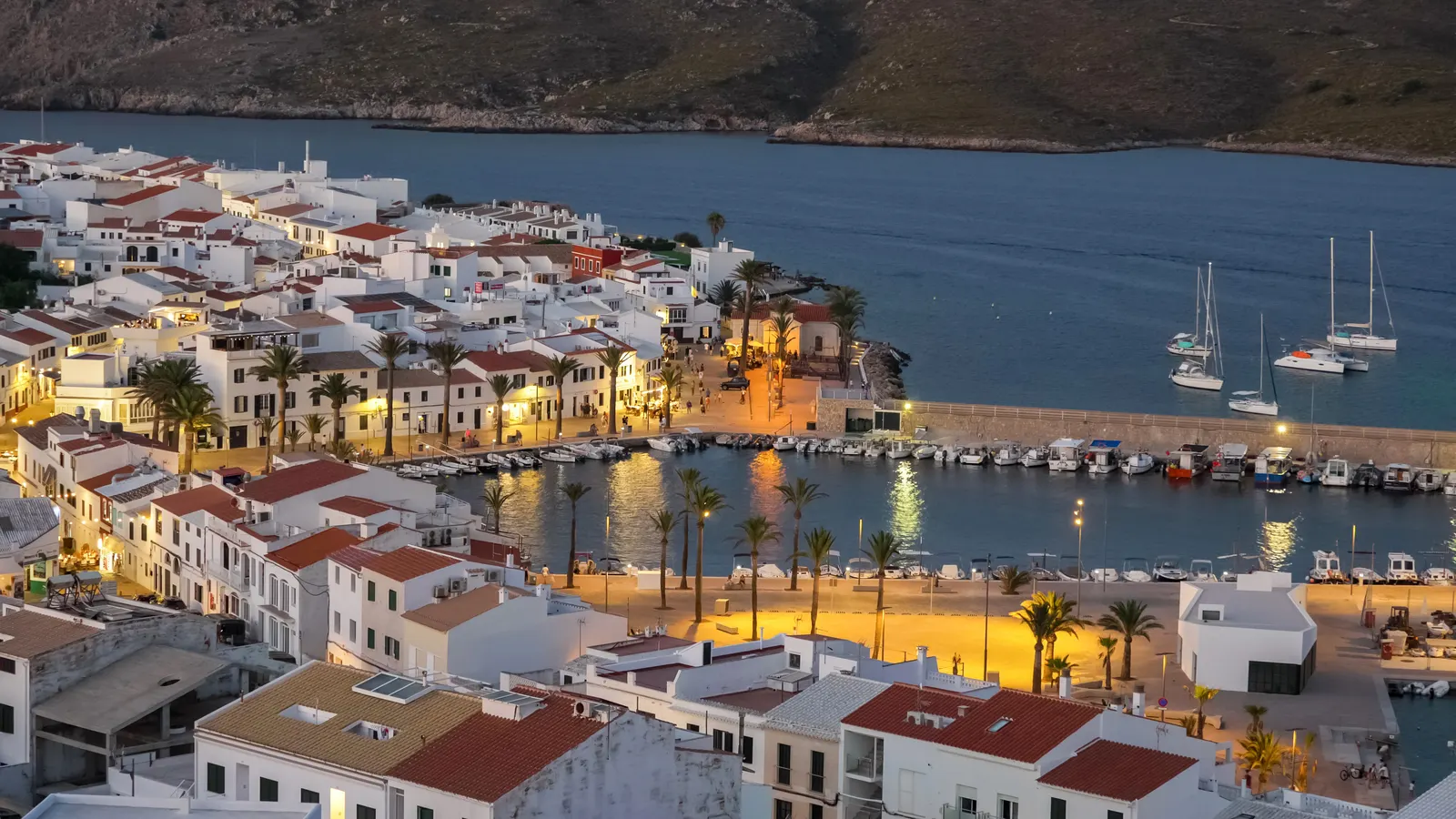
Depending on who you are
- You’re a crew arriving for a charter (six or eight of you, with kit bags and shopping): look for genuine space — a large MPV or a minibus settles luggage and crew in a single trip. Our charter check-in day guide puts the whole Saturday in order.
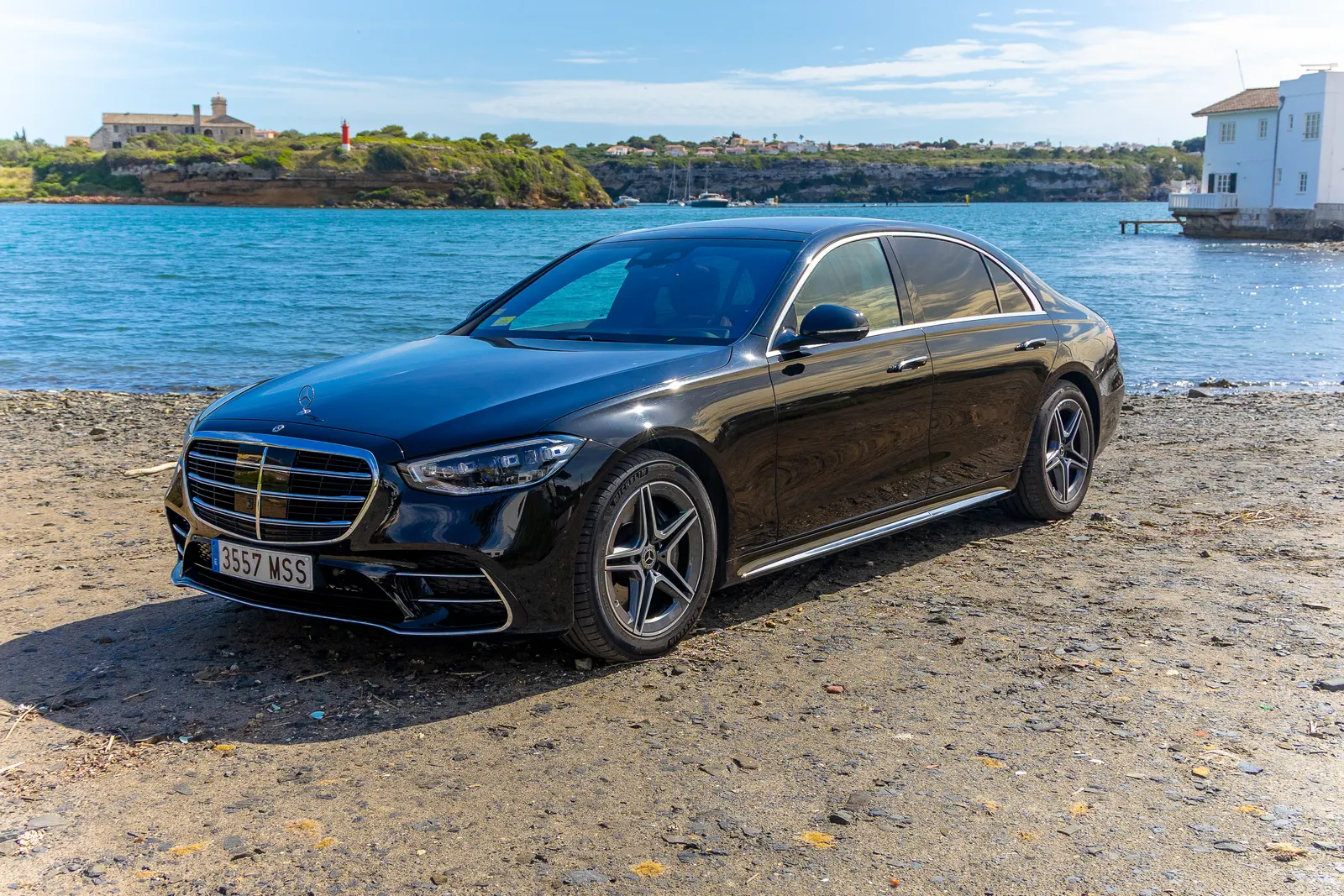
- You’re expected on board (a guest on a yacht): the transfer is part of the experience; a chauffeur-driven S-Class from the airport to the passerelle keeps the boat’s standard on dry land.
- You keep a berth on the island: yours are the journeys of the season — airport, boatyard, provisioning. And if the plan is to head out, our guide to sailing Menorca covers where to anchor without harming anything.
- Is your destination a hotel after all? Then you are better served by our guide from the airport to your hotel.
Getting around, depending on who you're travelling with
If you'd rather sort the transport in advance, this is what drives the island. The difference isn't the car's luxury — it's how many of you there are and how much luggage you carry.
-
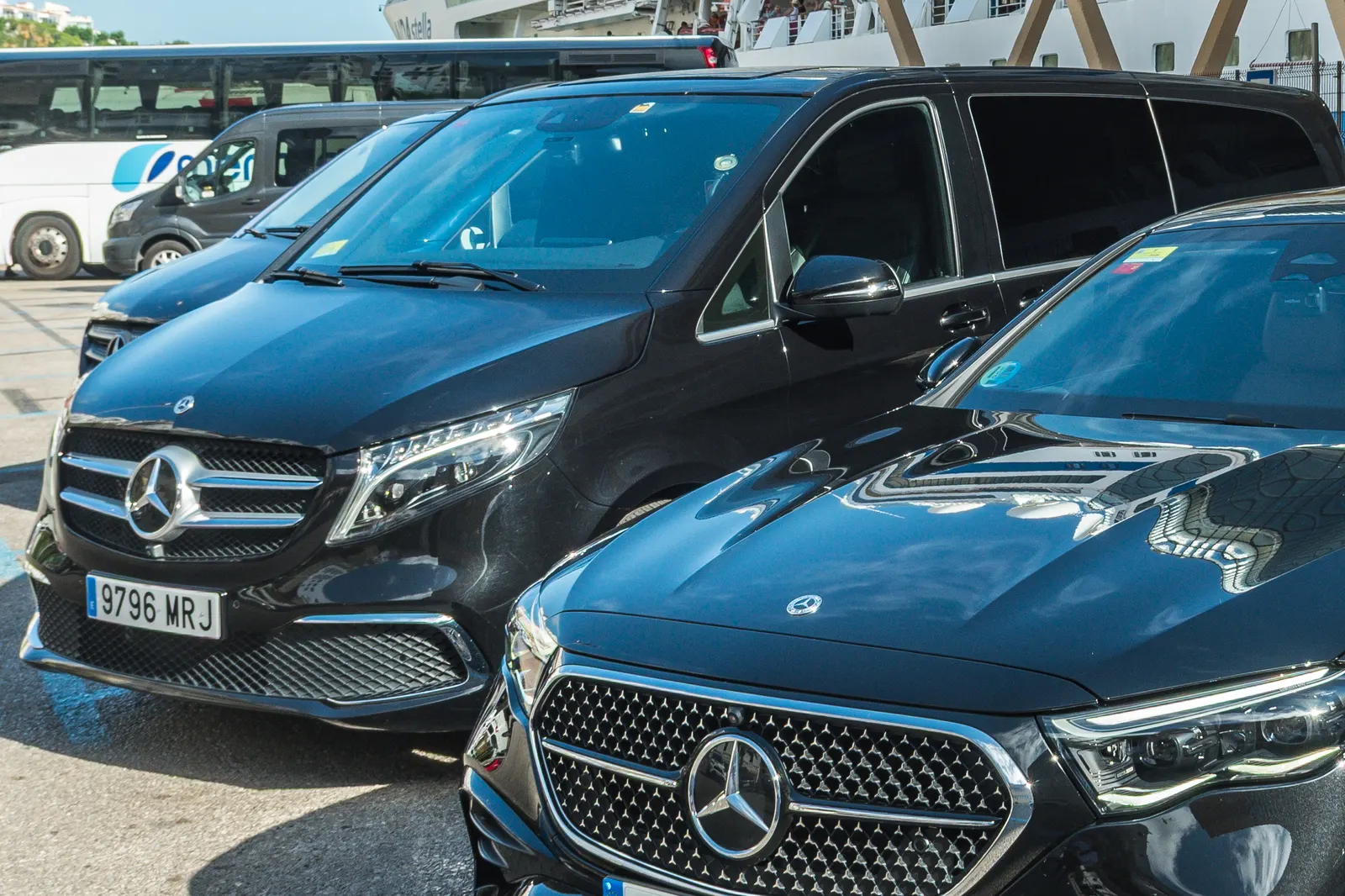
For · Families and groups
Mercedes Clase V
Room to spare for cruise luggage, and nobody travels wedged in. This is the one that solves a call ashore with the family.
Read more → -
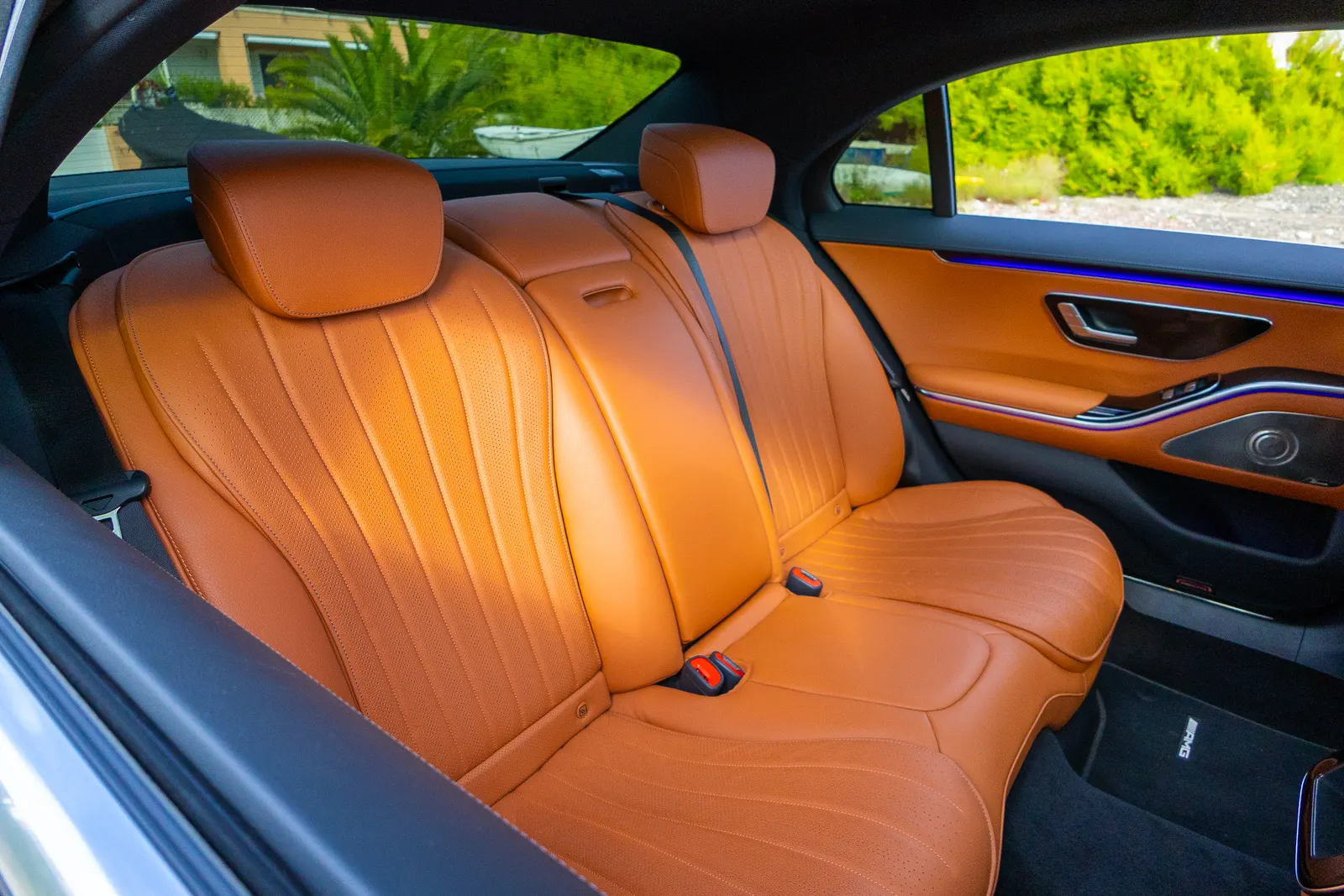
For · Two, with no compromises
Mercedes Clase S
Silence as luxury. For those who want the journey to count too, not just the destination.
Read more → -
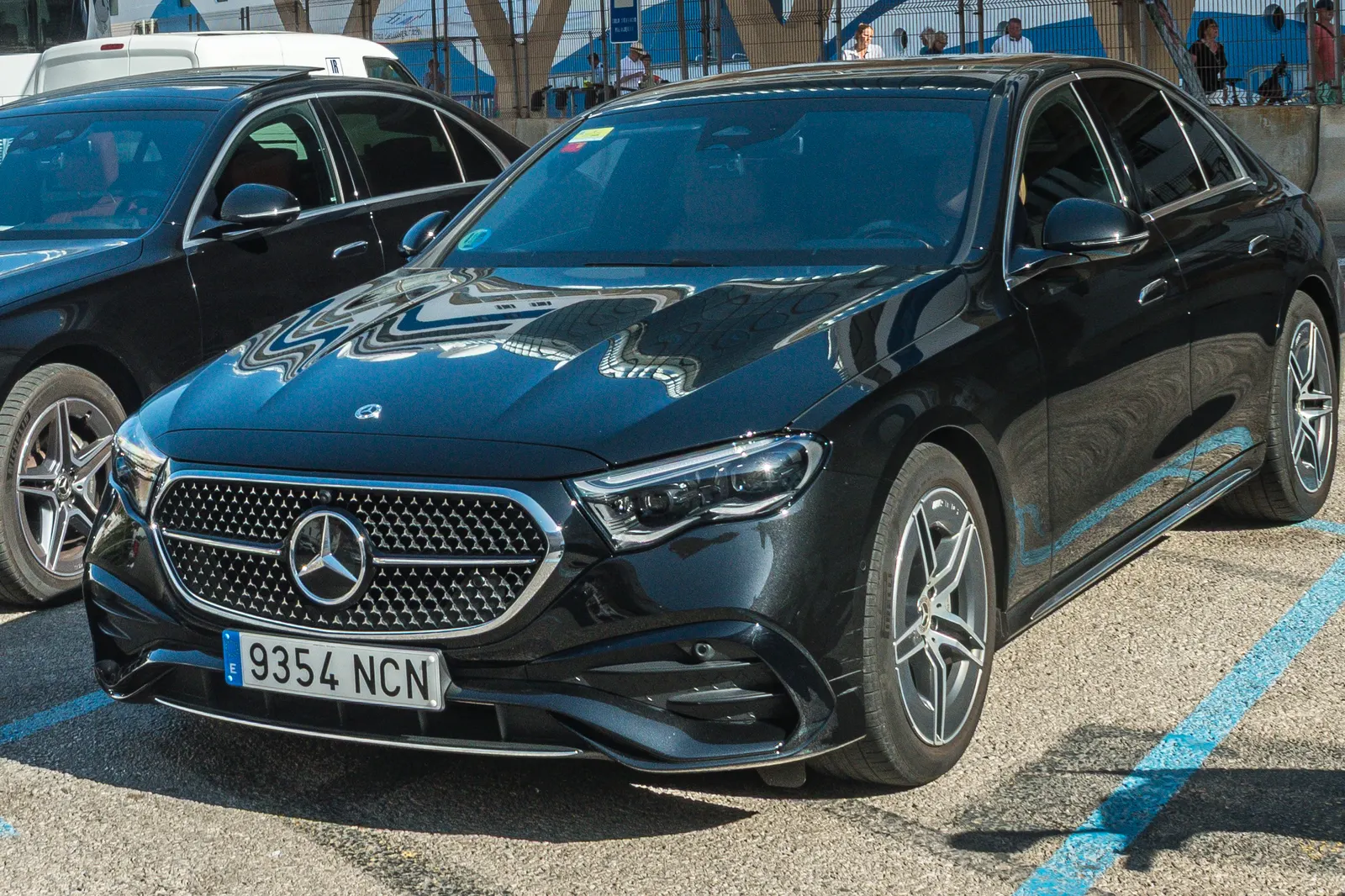
For · Two
Mercedes Clase E
The same silence, one step below the S-Class. An E 450 d diesel: a six-cylinder saloon with its boot intact — no battery stealing space.
Enquire → -
For · Two
Audi A8
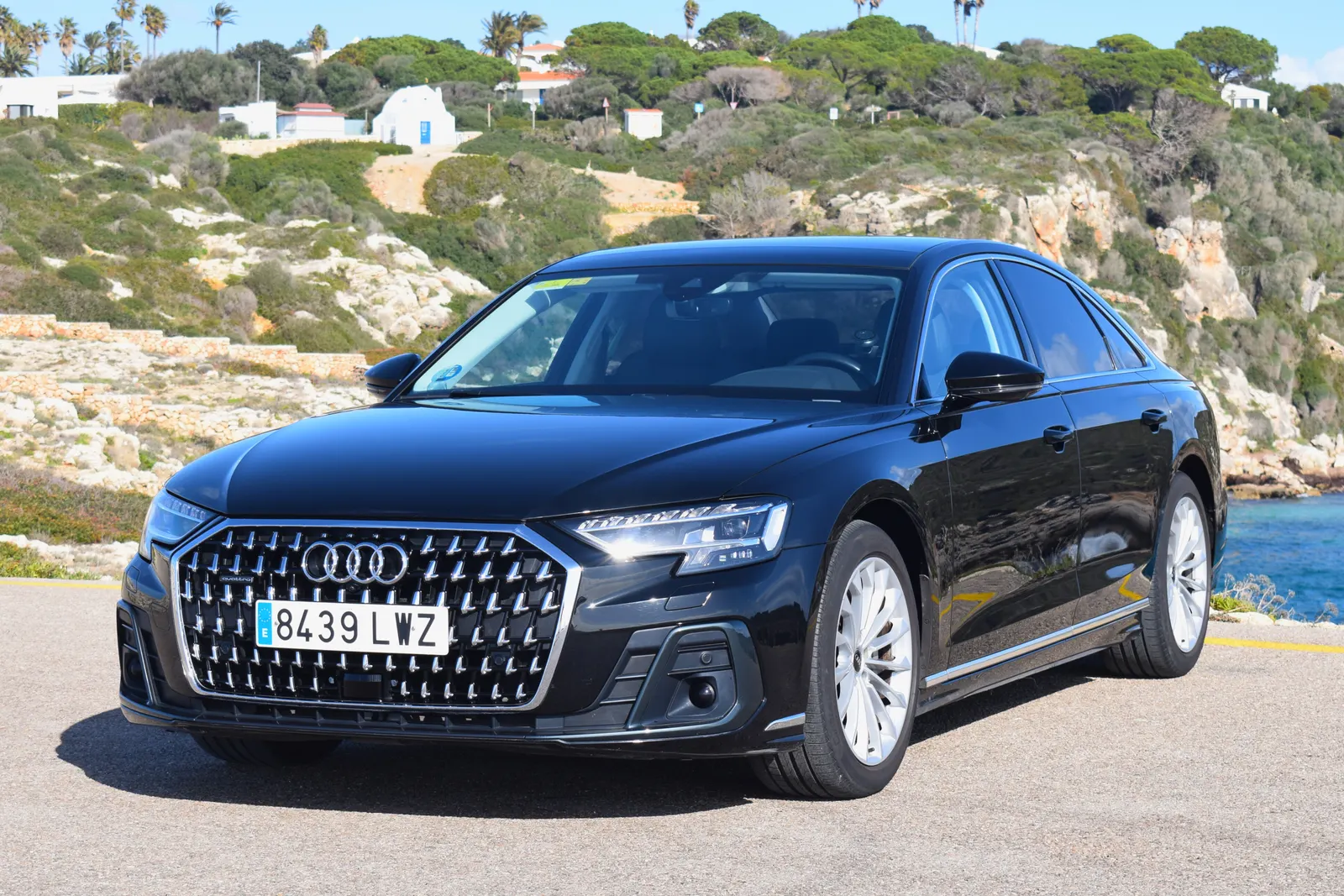
The alternative to the E-Class for those who prefer Audi's register: presence without noise. The brand's flagship, and one hardly anyone talks about any more.
Enquire →
Photo: Menorca Bus
Our take
The classic mistake of anyone heading for a boat is to treat the transfer as a formality — and then discover, with two kit bags and a cool box on the pavement, that ‘the port’ was a six-kilometre concept. Our advice fits in three lines: confirm the marina and the pontoon, book the transfer around the real boarding time and choose the vehicle by its boot. The boat imposes its own calm the moment you cast off; don’t let logistics steal the day before from you.