There is a way of coming to Menorca that appears on no list of “things to do”. It has no schedule, can’t be booked and won’t fit in a photograph. It consists, quite simply, of slowing down until the island begins to be heard: the wind in the wild olive trees, the brush of sand, the thick silence of a June midday. That, to us, is the real luxury of this place. Not the most expensive, but the scarcest: time, space and your whole attention given to what is in front of you.
Menorca has been teaching this lesson for decades to anyone willing to listen. Declared a UNESCO Biosphere Reserve in 1993, the island chose long ago a different path from its neighbours: less volume, more care; less spectacle, more truth. Here luxury is not displayed, it is breathed. A whitewashed stone house, a cove you earn on foot, a plate of local produce eaten without watching the clock. No ostentation. All judgement.
This article is not an itinerary. It is almost the opposite: an invitation to do less in order to live more. A guide to unlearning the hurry we bring from elsewhere and learning, instead, the Menorcan art of calm. Because the greatest mistake you can make on this island is to treat it as a list to tick off.
The essentials
- The luxury here is intangible: calm, space, time and authenticity. It isn’t bought; it’s chosen.
- When to come slowly: outside high season —May, June, September and October— to have more of the island to yourself.
- The golden rule: choose few things and live them well. One cove savoured beats five rushed.
- The secret to the coves: rise early. First light and silence change the experience entirely.
- The body’s rhythm: walk sections of the Camí de Cavalls (GR-223), eat local produce with no clock, and keep your phone in your pocket.
- Respect: the island’s calm is fragile. Caring for the surroundings is part of enjoying them.
What is Menorca’s “quiet luxury”, really?
The luxury this island stands for isn’t measured in stars or square metres. It is measured in what almost no one has any more: a whole morning with nothing to fulfil. A cove where only the water can be heard. A conversation no notification interrupts.
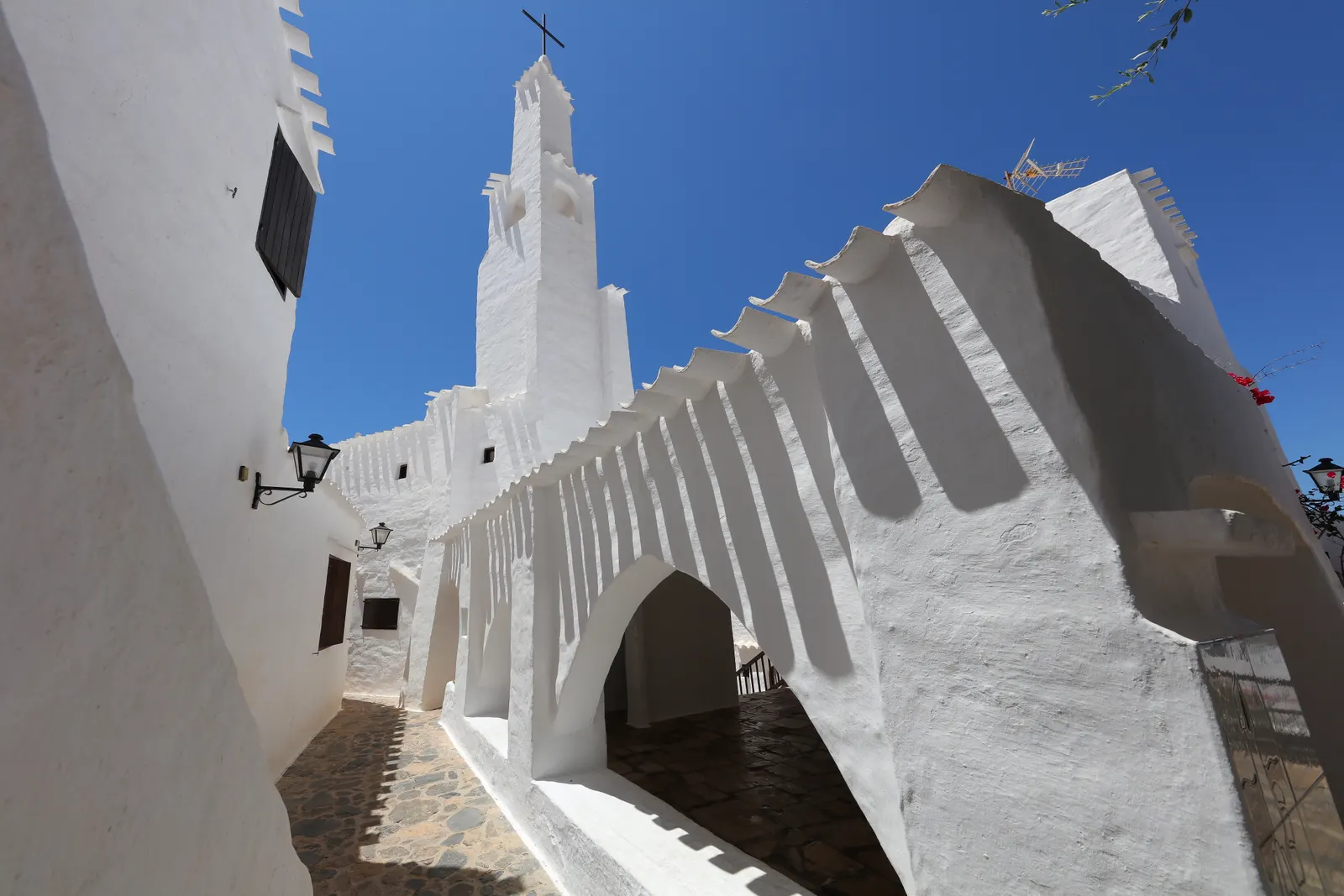
Menorca doesn’t compete to be the most dazzling spot in the Mediterranean, and therein lies its greatness. While other destinations fill up, it holds back. The true privilege here is restraint: white walls, cool shade, the deep blue of a shutter, the clean taste of a garden tomato. Learning to see that —and to want it— is the first step to experiencing the island as it deserves.
When should you come to find calm?
The season is almost everything. In the heart of July and August, Menorca offers the best of its light but also its busiest face: the most photographed coves of the south fill their car parks by mid-morning and the pace quickens.
If you’re after calm, travel in the shoulder months: May and June, when the countryside is still green and the days grow long, or September and October, with the sea still warm and the island catching its breath. In those weeks you’ll have real space, gentler prices and that increasingly rare feeling of having room.
And if you’re brave enough for winter, you’ll discover the year-round Menorca: villages all to yourself, cliffs battered by the tramontana wind, and the austere silence so loved by those who live here. Do check which coastal services stay open, though, as many are seasonal.
How can you enjoy the coves without crowds or hurry?
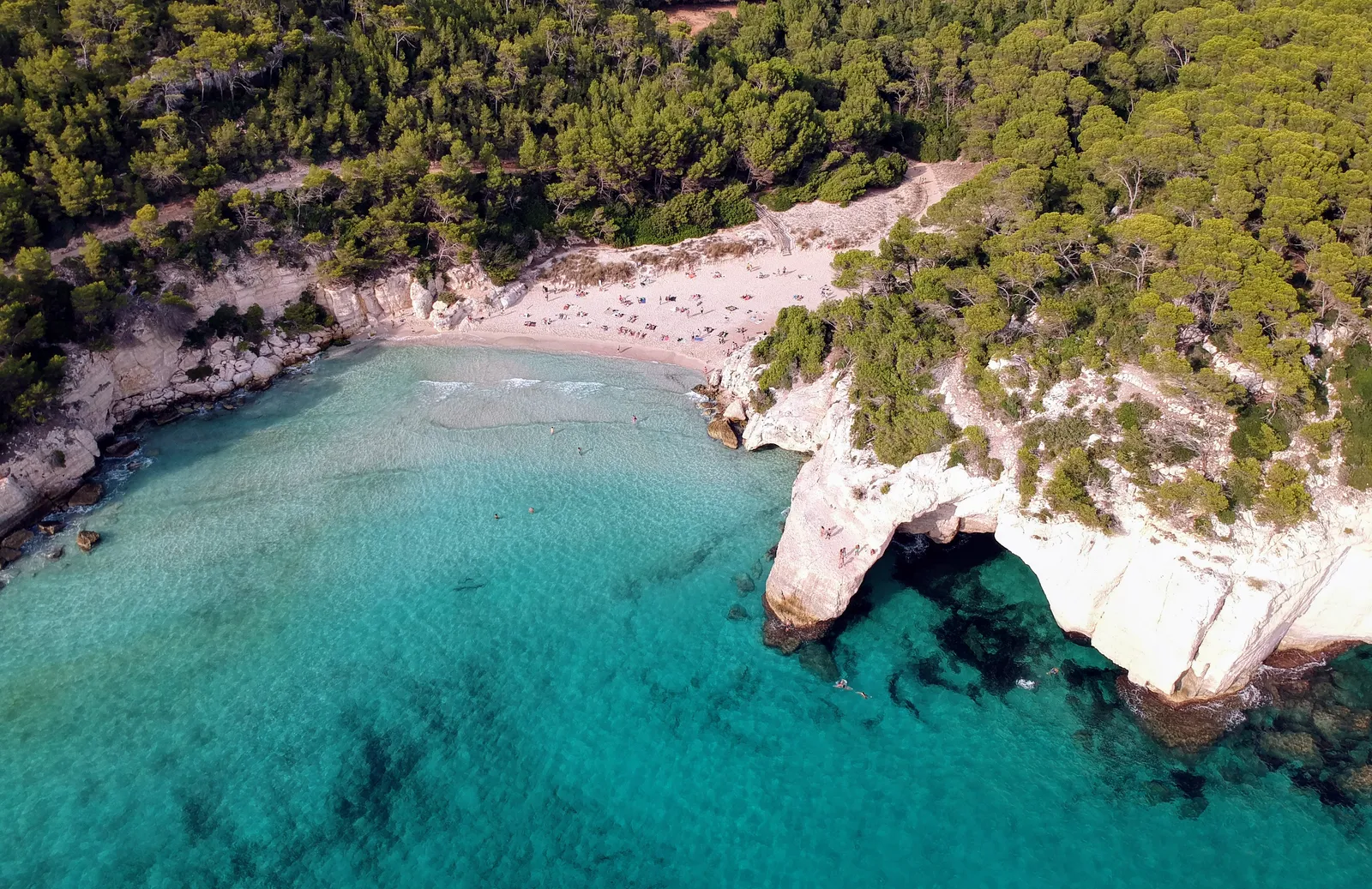
The most common mistake is arriving at a cove at peak time, hunting for parking for half an hour and sharing the sand with hundreds of people. Calm is won another way: by rising early.
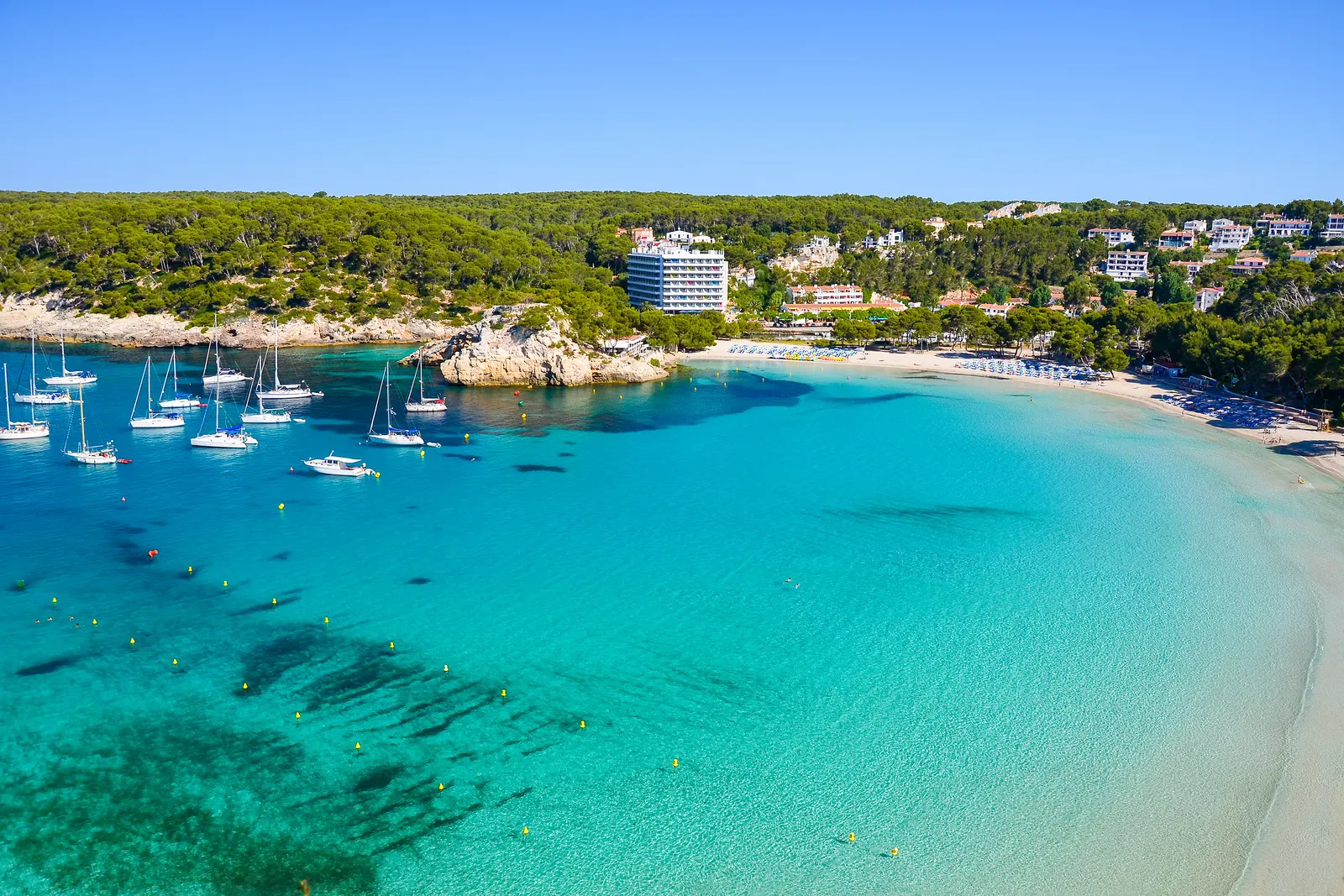
Arrive early, with the light still low and golden, when the water is as still as a mirror and the car park half empty. You’ll have the cove almost to yourself, you’ll hear the sea before the voices and watch the colour shift minute by minute. Late afternoon is the other magic window, when the crowds withdraw and the rock gives back the day’s warmth.
A local trick that changes everything: check the wind before choosing a coast. With the tramontana (north wind), the south —Cala Galdana, Macarella, Turqueta, Mitjana— stays sheltered and calm. When it blows from the south, it’s the north —Fornells, Cavalleria, Pregonda— that settles. Choosing well according to the day is what marks out someone who knows the island.
Why does walking change everything?
There is no more honest way to know Menorca than on foot. The Camí de Cavalls (GR-223), the historic path of some 185 kilometres that encircles the whole island, is the backbone of that slow experience. You don’t need to walk it all: just choose a section between two coves and let the path set the pace.
Walking forces the body into the right cadence. Details appear that are lost from a car: the scent of pine and thyme, the flight of a stone curlew, a centuries-old dry-stone wall, a tiny cove that’s in no guidebook. Spring (April-May) and autumn (October) are the ideal moments: mild temperatures for long walks, when at 18 degrees what would be punishment at 32 becomes a pleasure. Carry water, comfortable shoes and, above all, no hurry.
How do you eat slowly and well?
The Menorcan table is a school of calm. Here you eat local produce with no clock: Mahón-Menorca PDO cheese, sobrassada, the catch of the day, garden vegetables, wine from the island’s small wineries, a pomada as the afternoon fades.
The luxurious gesture isn’t ordering the most expensive dish, but sitting down without hurry. Choosing somewhere simple and good, letting the food arrive when it must, talking between courses. Buy at a market, taste a cured cheese looking out at the sea, cook a modest dinner with what you found that morning. Eating slowly isn’t only a pleasure: it’s the best way to understand a place. Where you need to book or check opening times, consult up-to-date information before you go, as many businesses change their rhythm out of season.
How do you truly disconnect?
Calm isn’t a backdrop: it’s a state. And it demands a small sacrifice. Put the phone away. Not to photograph everything, but to live it. The island doesn’t reveal itself to anyone who watches it through a screen.
Try beginning the day without screens, leaving the phone at your accommodation for a whole morning, not checking the time over a meal. Swim in the September air, read beneath a fig tree, watch the light shift over the sandstone of Ciutadella. These small decisions —so easy to state, so hard to keep— are the ones that turn a trip into a memory that lasts.
How do you choose less in order to live more?
The temptation, especially on a first visit, is to want it all: every cove, every village, every lighthouse. It’s precisely the opposite of what the island asks.
Choose few things and live them well. One cove a day, not five. One village walked thoroughly —its squares, its market, a terrace in the shade— rather than three seen in passing. Calm is born of depth, not quantity. You’ll come home with fewer photos and more experience, which is exactly what this island gives to those who treat it with respect.
Our take
After many seasons here, we’re certain of one thing: Menorca isn’t conquered, it’s accompanied. Whoever comes to tick it off a list leaves without having seen it; whoever comes to be led away carries off something that won’t fit in a suitcase.
Our advice is simple and demanding at once. Come outside the summer peak, rise early for the coves, walk a section of the Camí, eat local produce with no clock, put the phone away and do less than you’d planned. The luxury of this island lies not in the extraordinary, but in the quality with which you live the everyday. Learning how to do less is, here, the hardest art and the most valuable. And Menorca, patient, is ready to teach it to you.