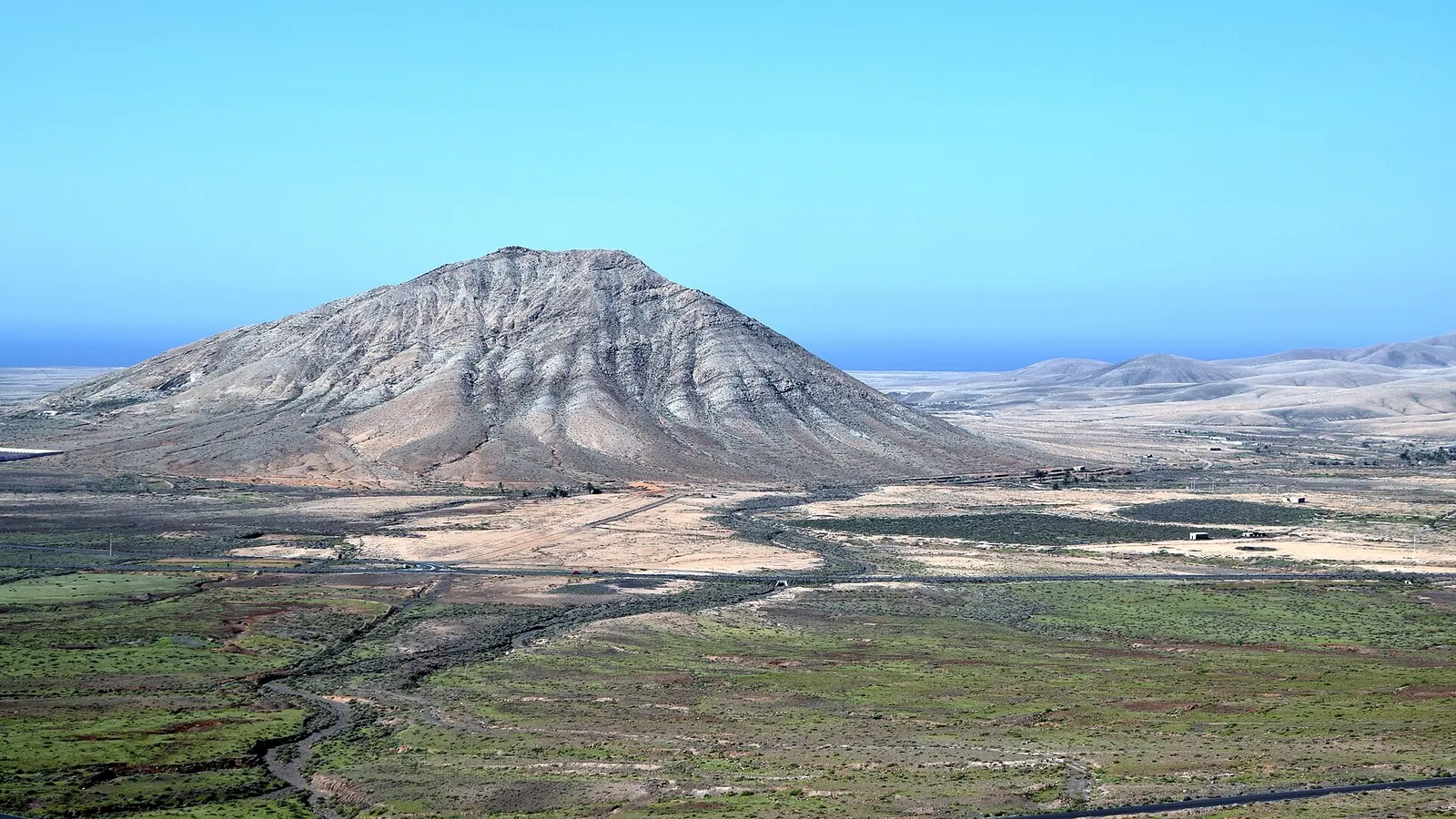
Fuerteventura is an island of open horizons, which is why it comes as a surprise that its first capital is hidden. Betancuria sits in a valley among the inland hills, far from the coast and out of sight from the sea. That was not a whim. It was a way of surviving.
A Norman foundation
The village was founded in 1404, in the early years of the Castilian conquest of the Canary Islands, by two Norman knights, Jean de Béthencourt and Gadifer de La Salle. The name gives it away: Betancuria is Béthencourt, reshaped by the island’s tongue. For more than four centuries it was the head of Fuerteventura, until in 1834 the capital moved to Antigua. Puerto de Cabras — today’s Puerto del Rosario — came later, once island life had turned for good towards the sea.
1593: the year of the fire
Hiding the capital inland was not enough. In 1593 a party of Barbary corsairs made its way up to the valley, plundered the village and burned its church. That episode explains much of what you see today: a rebuilt, restrained old centre of stone and lime, with the memory of the raid still part of the way locals tell its story.
What to look at, and how
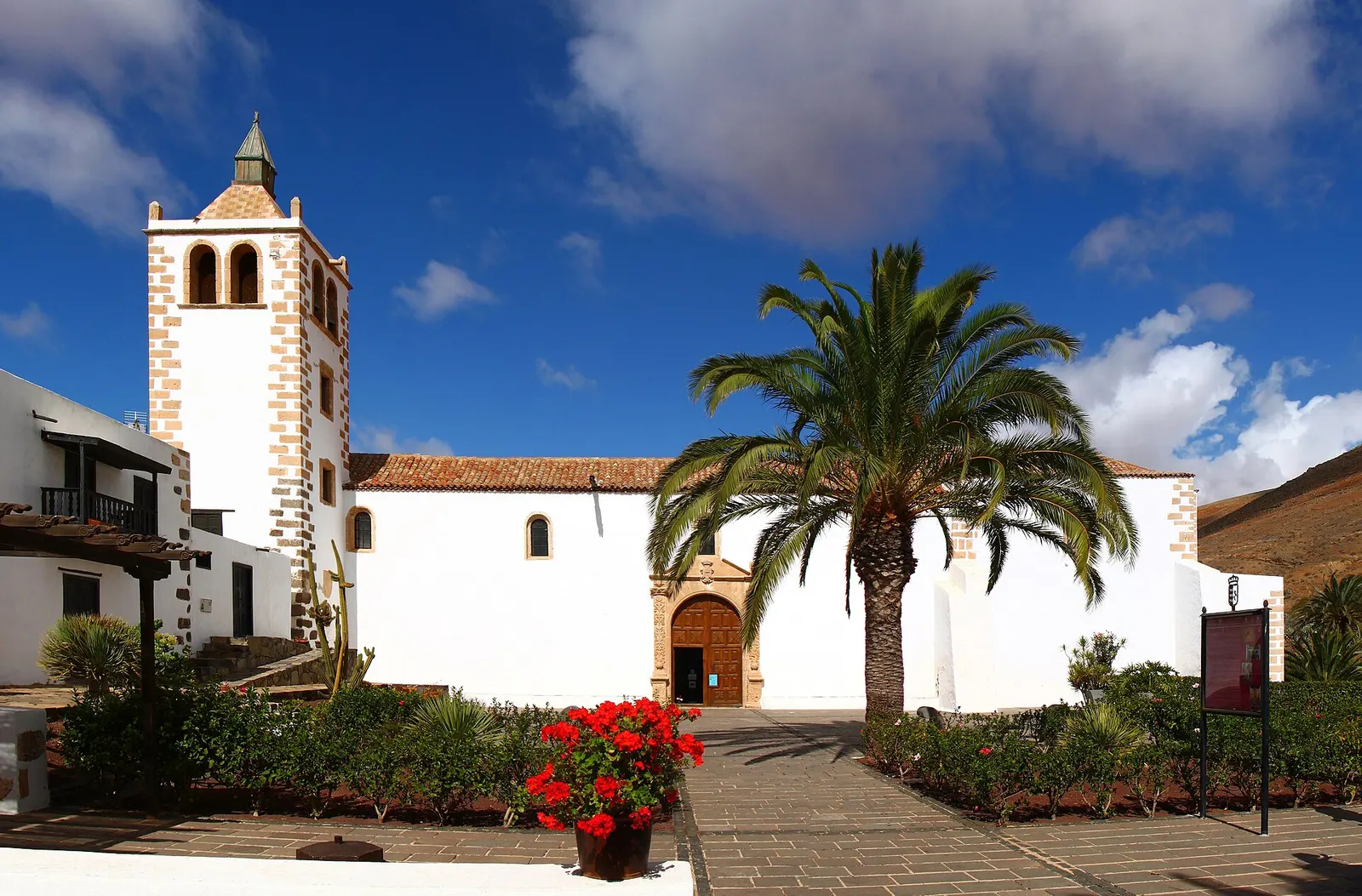
The church of Santa María. It was rebuilt in the 17th century on what remained standing and keeps elements of the original fabric. Sources disagree on the exact year of the rebuilding, so we would rather not give one. Simply look at it slowly: the tower, the dark stone at the corners, the contrast with the whitewashed walls.
The convent of San Buenaventura. Founded by the Franciscans in the first years of the conquest, it is now a roofless ruin at the edge of the village. That is exactly why it is worth the walk: open to the sky, its arches framing nothing but light, it is one of the quietest places on the island.
The old centre. Betancuria’s historic ensemble is protected as a Bien de Interés Cultural, Spain’s highest heritage listing. You can walk it in half an hour, but it deserves more: short streets, whitewashed walls, palms along the dry riverbed and the valley appearing at the end of every corner.
Timing matters
Betancuria is small and features on almost every day tour of the island. By mid-morning the coaches arrive and the village changes character. Come early, while the valley still holds the shadow of the slopes, or late in the afternoon, when the light turns oblique and the stone warms in colour. In between, carry on south: a few minutes away is Vega de Río Palmas, the starting point for the Las Peñitas gorge, and beyond it the coast at Ajuy, where the oldest rocks in the archipelago come to the surface.
A park, not a stage set
The village lies within the Betancuria Rural Park, a protected natural area. In practice that means winding mountain roads, limited parking in the centre and hillsides that are not for wandering off the path. Park in the designated areas, walk the rest and leave the stones where they are.
Our view
Betancuria needs neither embellishment nor haste. It is the island before tourism, before even the port: a valley where, six centuries ago, someone decided that the best thing was not to be seen. Give it time, step into the church, sit for a while in the roofless convent and let the village empty out around you.
Historical facts checked in October 2026. Opening times for the church and the village museums change: check before you go.