Fuerteventura is not an island of showy cooking. It rains little, water was always scarce, and for centuries people ate what the goats, the sea and the wind-ground grain provided. The result is an austere, honest cuisine, all the better for being left unadorned. Eating well here is not about finding the fashionable place: it is about knowing what to order.
The essentials
- Goat and kid, stewed or roasted: the island’s meat.
- Salted fish: sancocho and pejines date from when fish had to be preserved.
- Gofio, kneaded, in escaldón or on the rind of a cheese.
- Papas arrugadas with mojo, red (picón) or green.
- Majorero cheese, at any point in the meal.
- Information as of October 2026. We have not verified any Michelin or Repsol distinctions on the island, so we cite none.
The meat: goat and kid
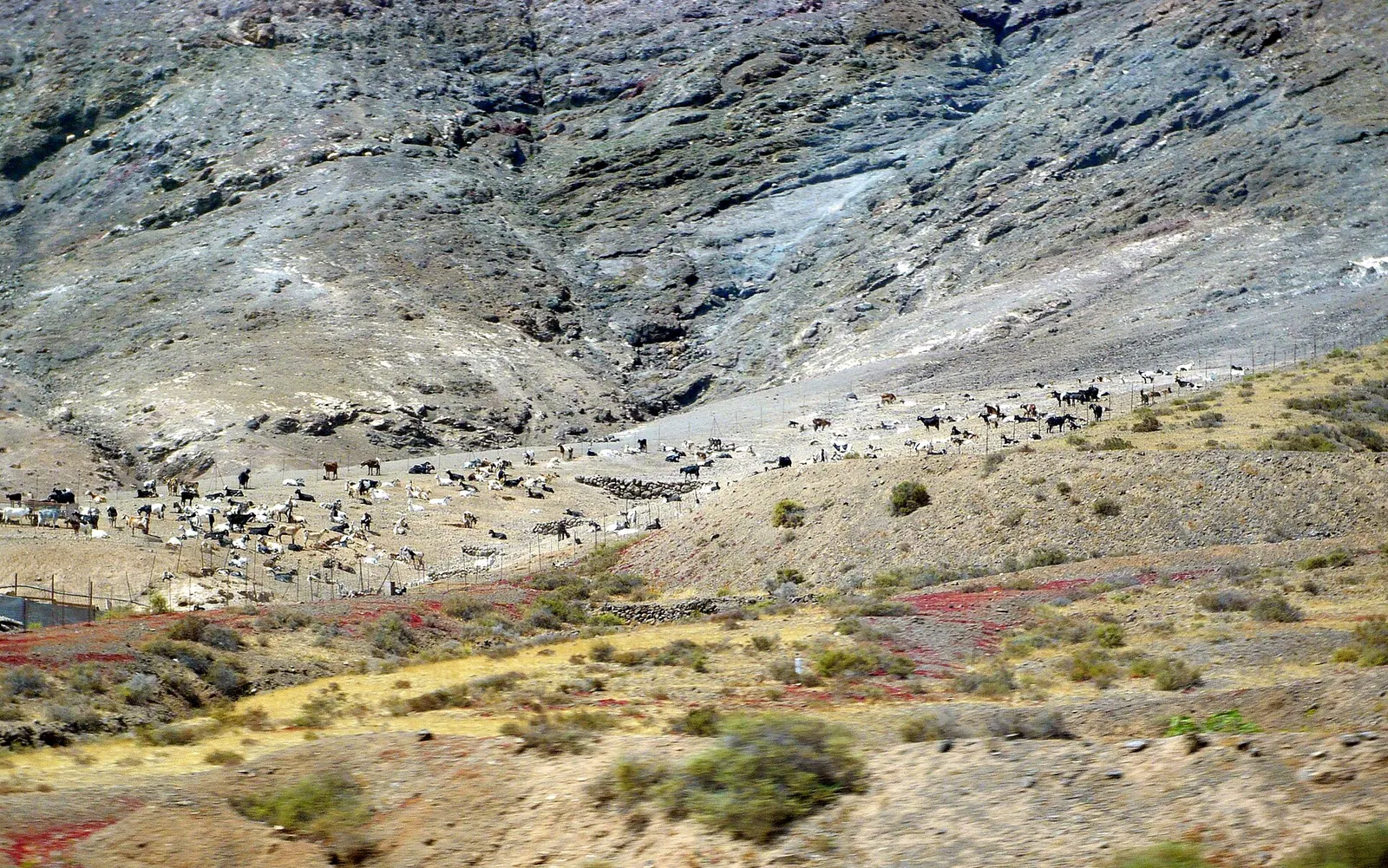
On an island of sparse grazing, the goat was everything: milk, cheese and meat. Kid goat (cabrito), roasted or stewed, is the celebration dish and the one most sought after inland. Goat in sauce, more robust, is the everyday version.
Puchero majorero is the other great spoon dish: a stew of meats, vegetables, potatoes and pulses served in several courses, and a fixture at village festivals.
The sea, salted
Fuerteventura’s coastline is long, but what defines its cooking is how fish was kept. Sancocho is made with salted fish — wreckfish (cherne) or meagre (corvina), for example — desalted and stewed, served with potatoes, sweet potato, a ball of gofio and mojo. It is a dish for a shared table and no hurry.
Pejines are small fish, salted and sun-dried, eaten toasted as an aperitif. Fresh fish, grilled or baked in salt, is found at the eating houses in the fishing ports.
Gofio and mojo
Gofio — toasted-grain flour — goes with almost everything: kneaded into a ball alongside sancocho, stirred into broth as escaldón, or coating the rind of a cheese. Its story, bound up with the island’s windmills, is told in gofio and windmills of Fuerteventura.
Papas arrugadas — potatoes boiled in their skins in very salty water — come with two sauces: mojo picón, red, made with peppers and garlic, and mojo verde, made with parsley or coriander. Order both.
Cheese, always
Majorero cheese, made from goat’s milk and protected by a designation of origin, appears at the start, the middle and the end: fresh at breakfast, fried as a starter, cured with paprika to finish. We explain it in Majorero cheese. To go with it, see the wine the island makes.
Where to eat, away from the noise
The island’s best tables are traditional eating houses inland and in the fishing ports, rather than restaurants in the resort areas. One address with several consistent sources is El Horno, in Villaverde (La Oliva), known for its roast kid; before you go, check that it is still open and when: places like this close on odd days and change with the season.
Two pieces of advice that hold across the island: ask which fish came in that day and let them cook it simply; and remember that the Canary Islands are one hour behind mainland Spain — bear it in mind when booking from abroad.
Our view
Majorero cooking asks for neither tablecloths nor ceremony: it asks for time and attention. A well-made sancocho, a plate of kid and a piece of cured cheese say more about Fuerteventura than any tasting menu. That is this island’s luxury: the essentials, without disguise. To time your visit with a fair, see the year’s events.
Information as of October 2026, cross-checked against island guides and published reviews. We are not paid to include anyone and recommend no establishment in exchange for anything. Always check opening hours before you go.