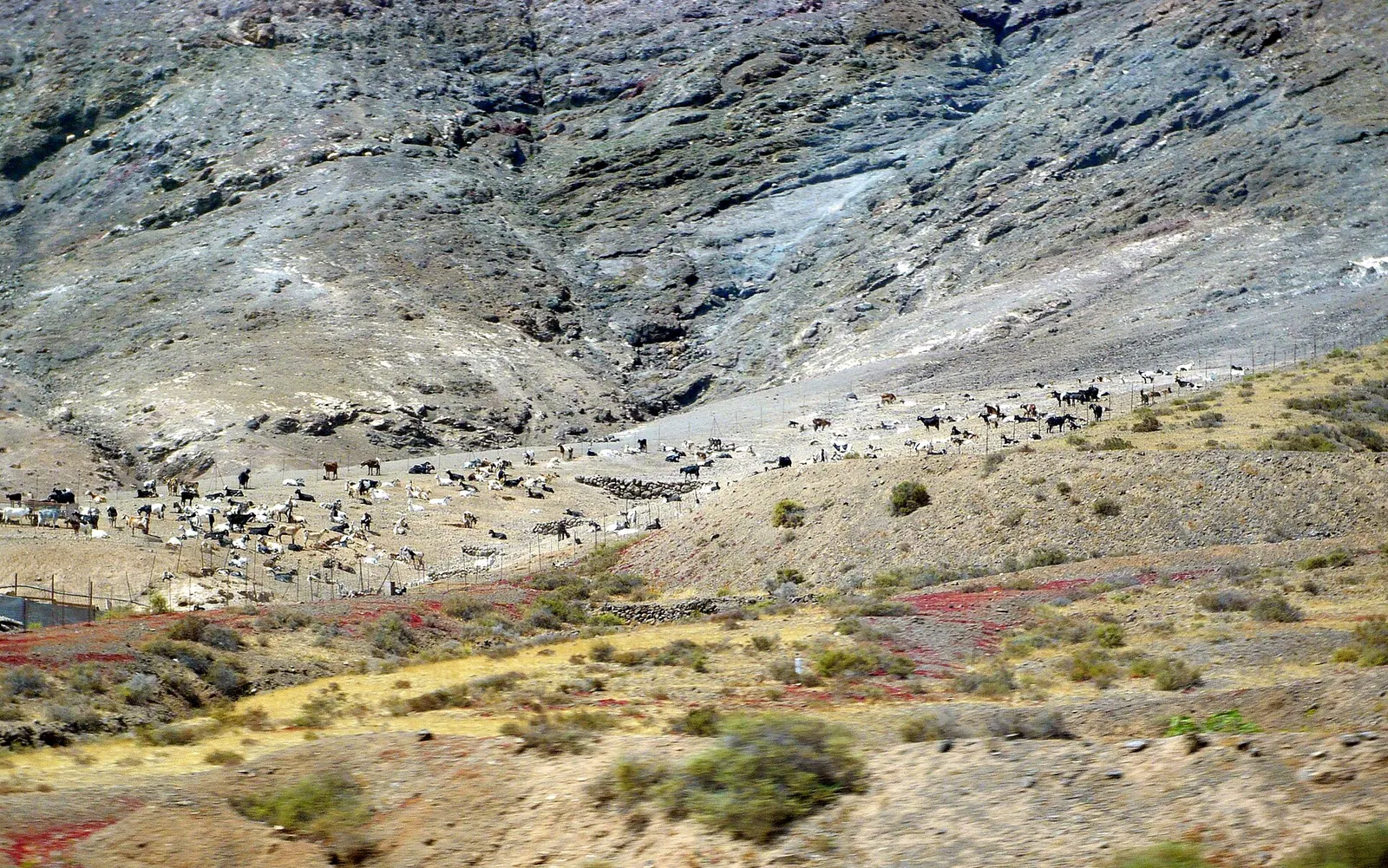
Fuerteventura is a dry island, with little rain and a great deal of wind, where for centuries the one thing in plentiful supply was goats. From that austerity comes its most serious product: Majorero cheese. To understand it is to understand the island — a goat suited to the land, an intense milk and a way of keeping it that has never needed dressing up.
The essentials
- Milk from the Majorera goat, the island’s native breed: the foundation the designation of origin requires.
- A designation of origin since 1996: the Government of the Canary Islands approved its regulations in February that year, and the Spanish ministry ratified them in September (Spain’s official gazette, the BOE, of 14 September 1996).
- Three ages: fresh, semi-cured and cured. Cured cheeses often have the rind rubbed with paprika, oil or gofio.
- The mark of the pleita: the sides of the cheese keep the pattern of the traditional plaited mould.
- Information as of October 2026.
The goat before the cheese
The Majorera goat is the quiet protagonist. It is a breed adapted to aridity, living on sparse grazing and giving a milk with character. Cheese was, at heart, the island’s way of keeping that milk when there was no other way to make it last.
Protection came in 1996. That year, the Canary Islands’ Department of Agriculture approved the Regulations of the Queso Majorero Designation of Origin and its Regulatory Council, and the ministry later ratified them by an order published in the BOE. The text sets out the essentials: milk from the Majorera goat, the production area — the island itself — and the rules for ageing.
Fresh, semi-cured, cured
Majorero is not one cheese but three moments of the same one.
- Fresh (tierno): white, moist, with a clean taste of goat’s milk. It is the breakfast cheese, and the one that best shows the raw material.
- Semi-cured (semicurado): firmer, with the acidity and slight bite of goat already present.
- Cured (curado): dense and intense, to be cut thin. This is where the rinds come in: natural, rubbed with oil, with paprika — which gives it that unmistakable reddish colour — or with gofio, the toasted-grain flour that is the other pillar of the island’s larder.
Look at the sides: the raised pattern recalls the pleita, the plaited strip once used as a mould. It is Majorero’s signature, and the regulations require it.
How to buy it well
Look for the designation of origin label: it guarantees the cheese comes from the island and from Majorera goats. Ask to taste before choosing — at a good stall that is normal — and if you are taking it home on the plane, a whole cured cheese travels better than wedges of fresh.
The most pleasant way is to buy it where it is made. Some of the island’s cheese dairies open to visitors or sell directly; opening hours change with the season, so confirm them before making a detour. It is also easy to find at village markets and in shops selling local produce.
FEAGA and the Tabefe awards
If you travel in spring, one event brings it all together: FEAGA, Fuerteventura’s agricultural, livestock and fisheries fair, held at the Granja Experimental de Pozo Negro (Antigua). Within the fair, the Tabefe awards, a goat’s cheese competition, are presented. It is the simplest way to taste, in a single morning, cheeses from several producers and to compare ages and rinds. Dates are announced each year: check them before planning your trip. More in our guide to Fuerteventura through the year.
At the table
Majorero turns up at almost every meal on the island: in cubes with mojo, fried as a starter or at the end, with something sweet. It goes with gofio and with the goat and salted-fish cooking we describe in eating in Fuerteventura. And if you want to see where the gofio on the rinds comes from, continue with Fuerteventura’s windmills. And to go with it, the island has vines too: see Fuerteventura’s wine.
Our view
Majorero cheese is quiet luxury in its purest form: a humble product, rigorously protected and made with time. It needs no adjectives. Taste a fresh cheese and a paprika-rubbed cured one side by side, slowly, and you will understand the island better than any brochure could explain it.
Information as of October 2026, checked against the BOE (14 September 1996) and published information on the designation of origin and the FEAGA fair. The specification, fair dates and dairy opening hours may change: check them before you go. This guide is not paid to include anyone.