Some festivals are organised for visitors; others belong to the people who live on the island. In Fuerteventura almost all are of the second kind. They take place in small villages, around a hermitage, with folk music, a puchero for sharing and, often, a luchada. Visitors are welcome, provided they understand they are stepping into someone else’s home.
The essentials
- The Virgen de la Peña is Fuerteventura’s patron saint. Her sanctuary is in Vega de Río Palmas (Betancuria).
- Her pilgrimage and offering, in September, has been an island-level Asset of Cultural Interest since 2007.
- The programme usually includes the pilgrimage, a solemn mass and a luchada of Canarian wrestling.
- Each village has its feast day: in Lajares, the Milagrosa, at the end of November.
- Information as of October 2026. Exact dates are announced each year.
La Peña: the island on the move
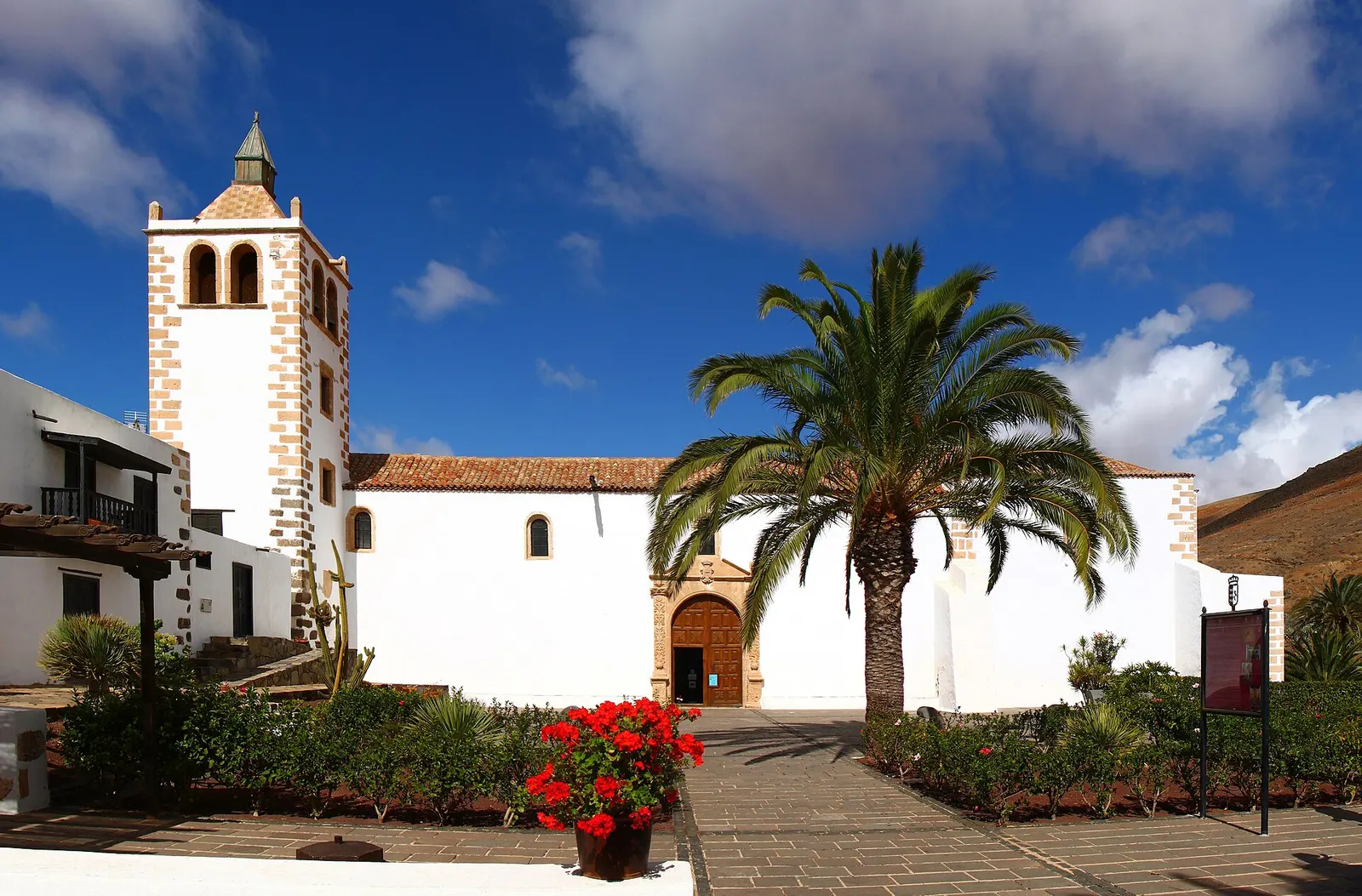
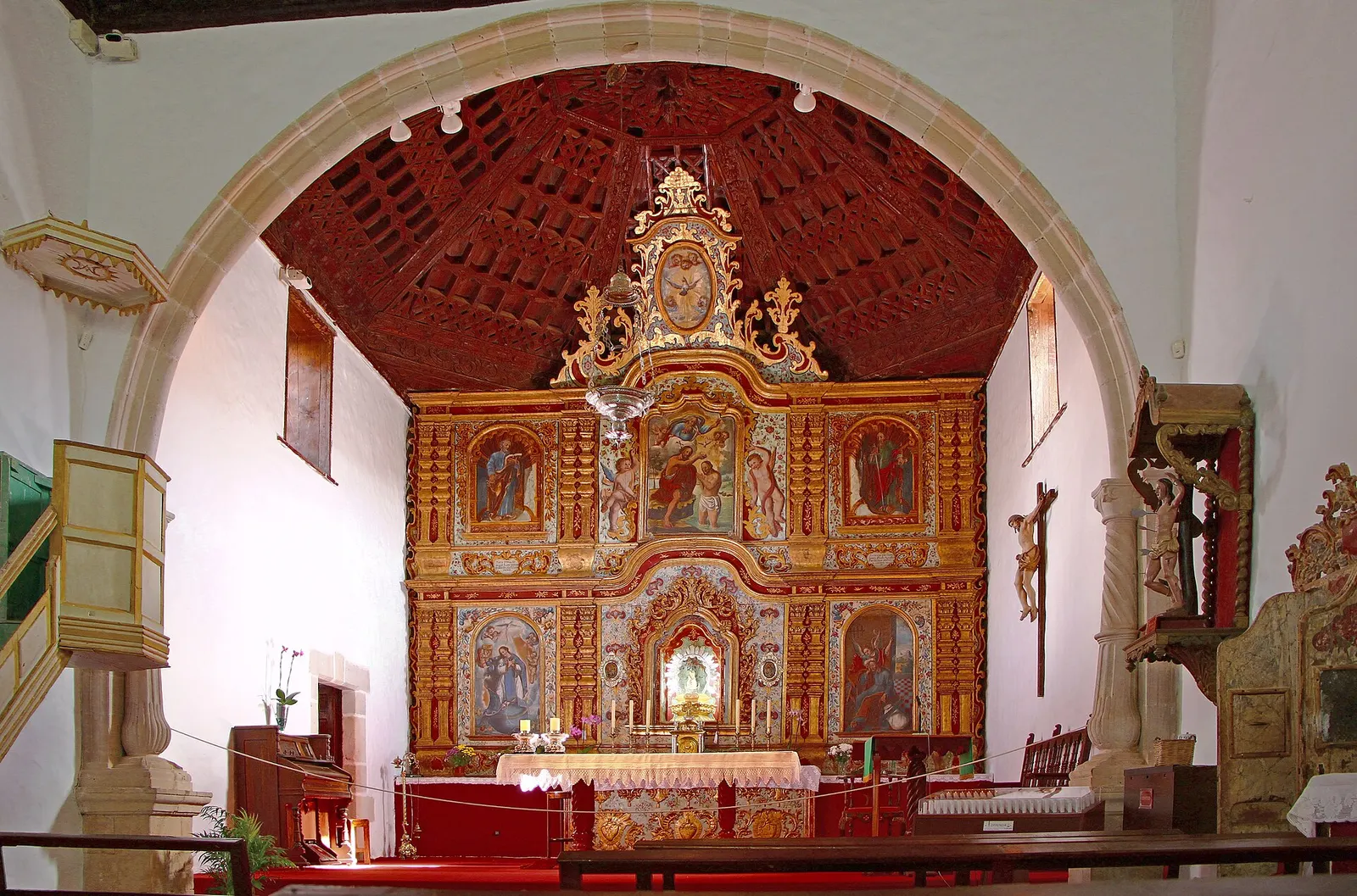
The festival of the Virgen de la Peña is the most heartfelt in Fuerteventura. The sanctuary stands in Vega de Río Palmas, a palm grove in the mountainous interior of Betancuria, beside the Las Peñitas gorge. In September, people from all over the island arrive on pilgrimage with their offerings: produce from the land, traditional dress, folk music. The pilgrimage was declared an island-level Asset of Cultural Interest in 2007.
The usual programme opens with the pilgrimage and offering, continues with a solemn mass and closes with a luchada. The 2025 edition also served puchero majorero, the island stew, and included a Canarian wrestling display. It is the moment to see Fuerteventura as it sees itself.
Canarian wrestling
Canarian wrestling (lucha canaria) is the islands’ traditional sport: two wrestlers, a sand ring and one aim — to make the opponent touch the ground with any part of the body other than the feet. At island festivals a luchada is almost a must. You do not need to know the rules to appreciate the technique, the silence before each hold and the respect between wrestlers.
Village festivals
Almost every village honours its patron saint with mass, a procession, an open-air dance and, sometimes, a luchada. At the end of November, Lajares, in the north of the island, celebrates Nuestra Señora de la Milagrosa: a small, neighbourly festival that shows the island’s human scale well. Town councils publish the programmes a few weeks ahead.
How to attend with respect
- Arrive early and park where the organisers indicate: villages are small and roads narrow.
- Religious ceremonies are not a backdrop. Keep quiet during mass and do not interrupt the offering for a photograph.
- No drones over people or over protected areas.
- If you are offered food or a glass, accept it graciously: it is the island’s form of hospitality.
- Dress simply, and leave traditional costume to those who wear it by inheritance.
To continue
The La Peña festival makes more sense once you know Betancuria, the old capital. The rest of the calendar is in Fuerteventura through the year, and what is eaten at these festivals in eating in Fuerteventura.
Our view
At an island festival, the luxury is being allowed to be there. It cannot be bought or booked: it is earned by arriving with respect, looking more than photographing and staying until the end of the luchada. Those who do take home the Fuerteventura that never makes it into the brochures.
Information as of October 2026, cross-checked against RTVC and Festivales de España. Dates and programmes change every year: check the website of the relevant town council or of the Cabildo de Fuerteventura before you go.