In January much of Europe lives with little light, low skies and the heating on. A few hours’ flight away, Gran Canaria spends those same weeks with mild days on the coast and summits that sometimes wake to frost. This is not a summer island that merely holds out in winter: winter is its season.
The essentials
- Coastal weather: according to AEMET (Gran Canaria airport, 1981–2010 normals), January averages 17.9 °C, with highs of around 21 °C, lows of around 15 °C, little rain and some 184 hours of sunshine.
- In the summits winter is real: cold nights and, on occasion, snow on the highest ground.
- Almond blossom: between late January and February, in Tejeda, Valsequillo and Artenara.
- It is high season: book ahead. The Canaries run one hour behind mainland Spain.
- Information as of October 2026.
November and December: the sea still mild
The Canarian autumn is gentle and long. The Atlantic keeps some of the summer’s warmth and the south coast still invites a swim, while the summits begin to see cool mornings and the vegetation turns green again after the first rains. It is a good time for walking: the inland trails can be done without August’s heat. December brings the rhythm of the festive season, more inward-looking than showy.
From October the great season of northern European travellers also gets under way. In the south, in Arguineguín, it is especially noticeable: we tell the story in the Norwegian winters of Arguineguín.
January and February: almond blossom and the summits
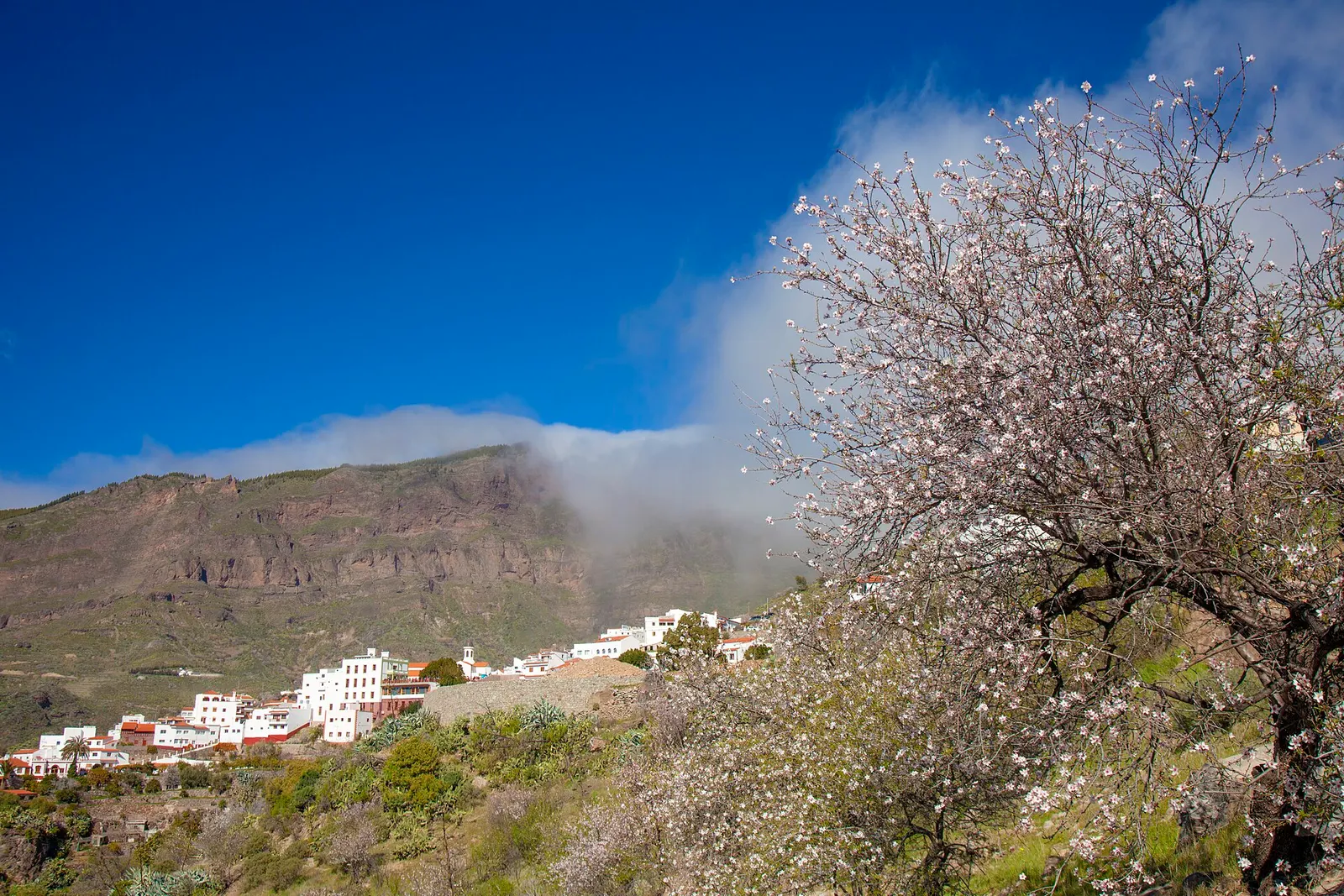
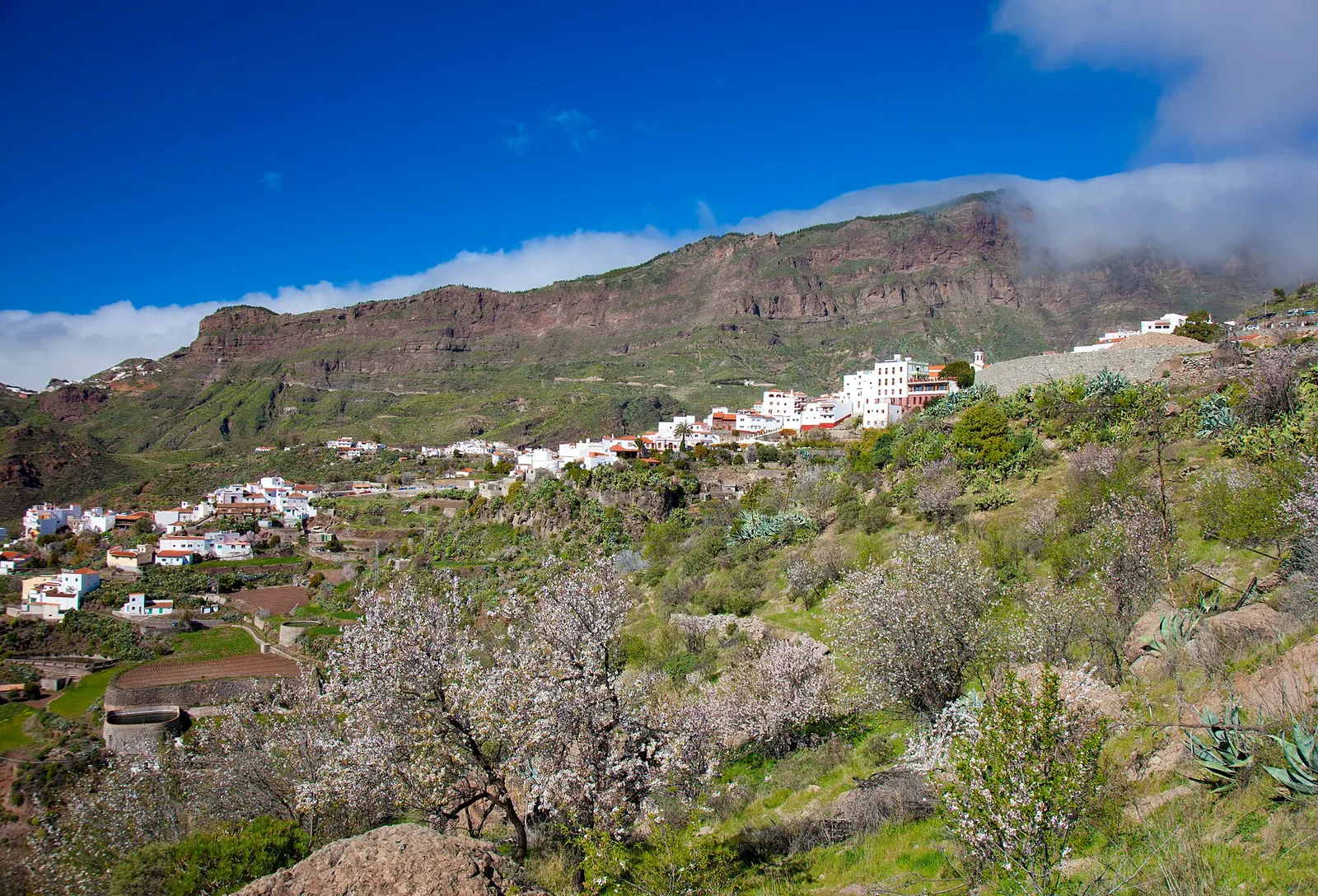
This is the heart of winter and, for many, the best time of year in the summits. Between late January and February — the exact timing depends on each year’s weather — the almond trees blossom in Tejeda, Valsequillo and Artenara, and the slopes turn white and pink. Tejeda holds the Almond Blossom Festival (Fiesta del Almendro en Flor), a Festival of National Tourist Interest; its programme is published each season.
Up at almost 2,000 metres the air is cold and clear. The long, cloudless nights are the best for looking at the sky: we explain it in the skies of Gran Canaria. Down on the coast, the low winter light favours walks at sunrise, as in the Maspalomas dunes, always on the waymarked trails.
Between February and March, depending on the year, comes the Carnival of Las Palmas de Gran Canaria, a Festival of International Tourist Interest since 2023, staged in the Parque de Santa Catalina. Its dates move each year with the Lenten calendar. It is a huge, nocturnal celebration; if you are after calm, it pays to know when it falls.
March: the turn of the season
The days lengthen, the north stays green and the south gradually finds its pace again. It is a good month for combining city and nature: spend a few days living in Las Palmas and drive or take the bus — the guagua — up to the summits.
What to pack
- Layers. In a single day you can go from the beach to a cold summit. A jumper and a windproof jacket will not go amiss.
- Walking shoes if you plan to head up into the summits.
- Sun protection, in winter too: the sun in the Canaries is strong all year round.
The honest counterpoint
Precisely because it is winter in the rest of Europe, this is high season here. Accommodation in the south fills up, flight prices rise and the best-known places have people in them. Calm exists, but you have to look for it: in the summits on weekdays, in the green north, early in the morning. The year’s dated events are in our Gran Canaria calendar.
Our approach
We give the weather using AEMET’s climate normals and do not schedule dates that change every year (the blossom, the Carnival). Information as of October 2026; check each festival’s official programme before you travel.