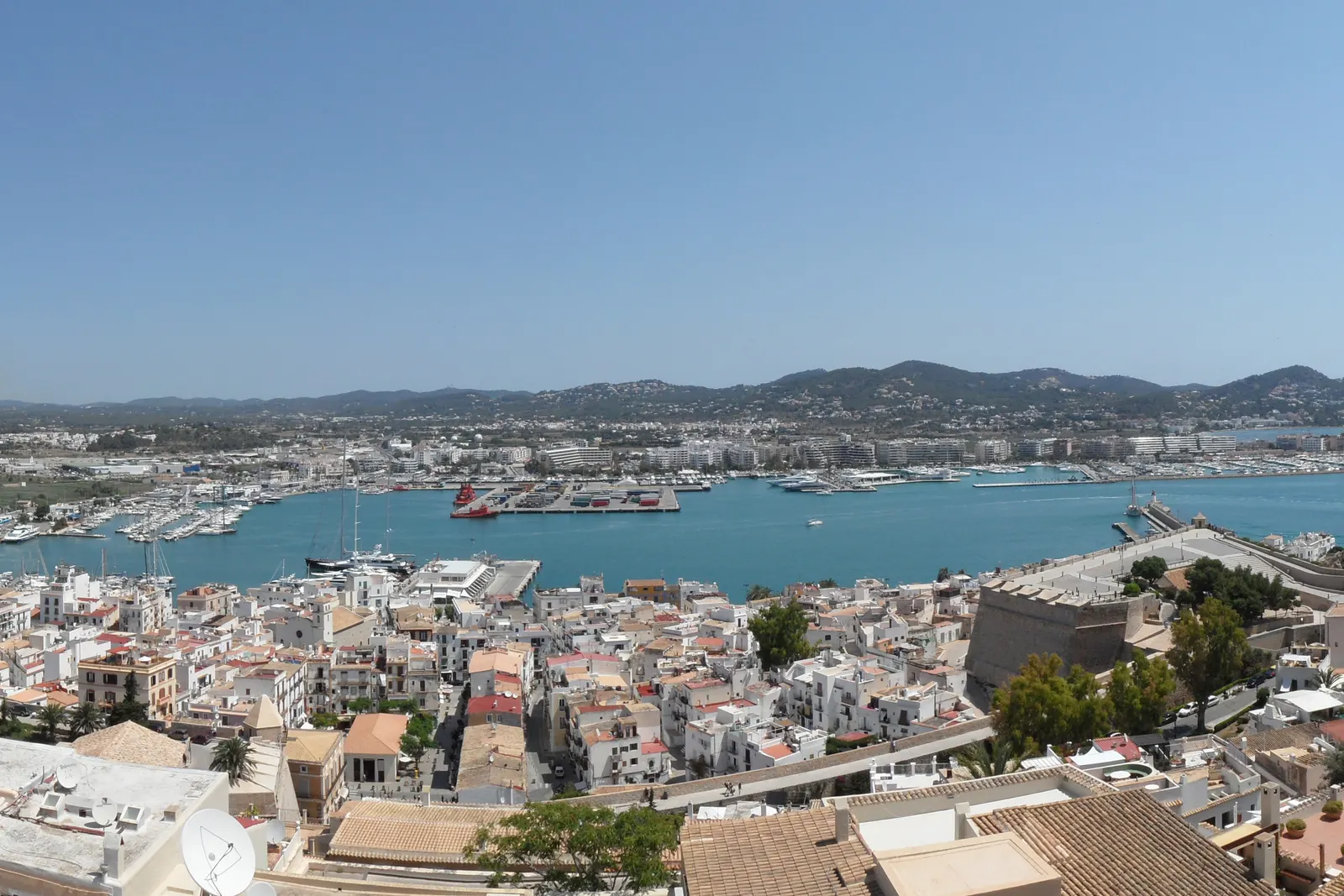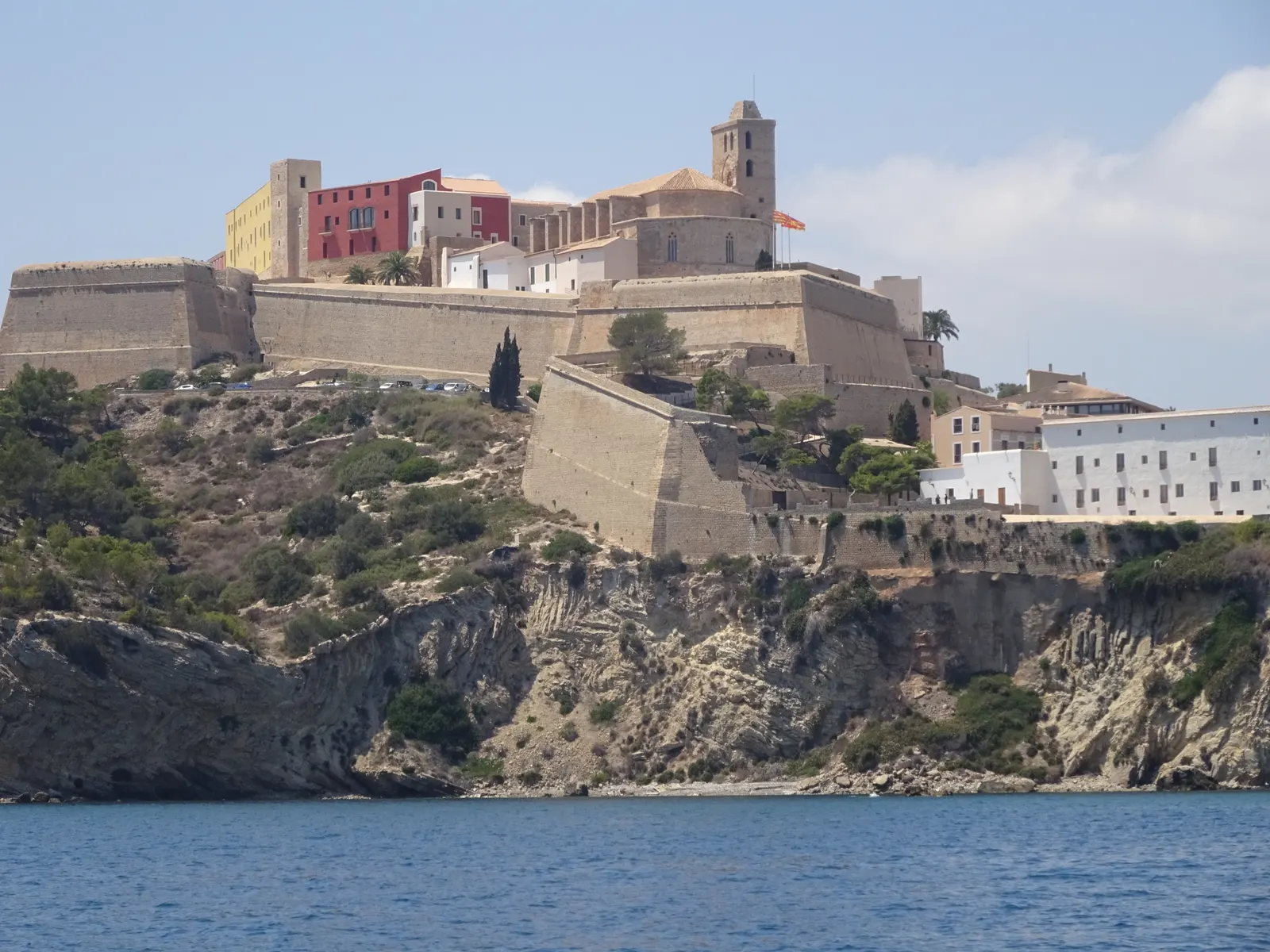
People often say that “Dalt Vila is a World Heritage Site”, and it falls short. What UNESCO inscribed in 1999 is called “Ibiza, Biodiversity and Culture”, it is a mixed site — cultural and natural at once — and it is four elements, not one.
The four
Dalt Vila. The walled enclosure that crowns the city. The walls you see today are Renaissance: they were raised for Philip II to replace the medieval ones, and their design later influenced fortifications in the New World.
The Puig des Molins necropolis. More than five thousand tombs on the hillside, which make it possible to follow funerary rituals from Punic, Roman and Islamic times. It is among the best preserved funerary sites in the western Mediterranean.
The Phoenician settlement of sa Caleta. On a small peninsula to the south, the island’s oldest urban settlement and an exceptional record of how Phoenician colonies lived in the western Mediterranean.
The posidonia meadows. Here is what almost nobody mentions: a good part of the recognised value is underwater. Posidonia oceanica is a plant endemic to the Mediterranean, not a seaweed, and its meadows cover the seabed between Ibiza and Formentera. Their state of conservation was decisive in the listing.
Why that fourth element matters
Because it explains the water. The clarity these islands are known for is neither chance nor luck: posidonia binds the sediment, releases oxygen and shelters an enormous share of marine life. The densest meadows lie within the protected area of ses Salines, between the two islands.
It is also the most fragile part of the whole. A sixteenth-century wall takes whatever you throw at it; an underwater meadow does not.
How to see it
Dalt Vila is walked, and it is worth doing early or late in the day. The necropolis and sa Caleta are separate, quieter visits. Of the posidonia you see the effect rather than the plant: when the water is clear all the way down, you are looking at it.