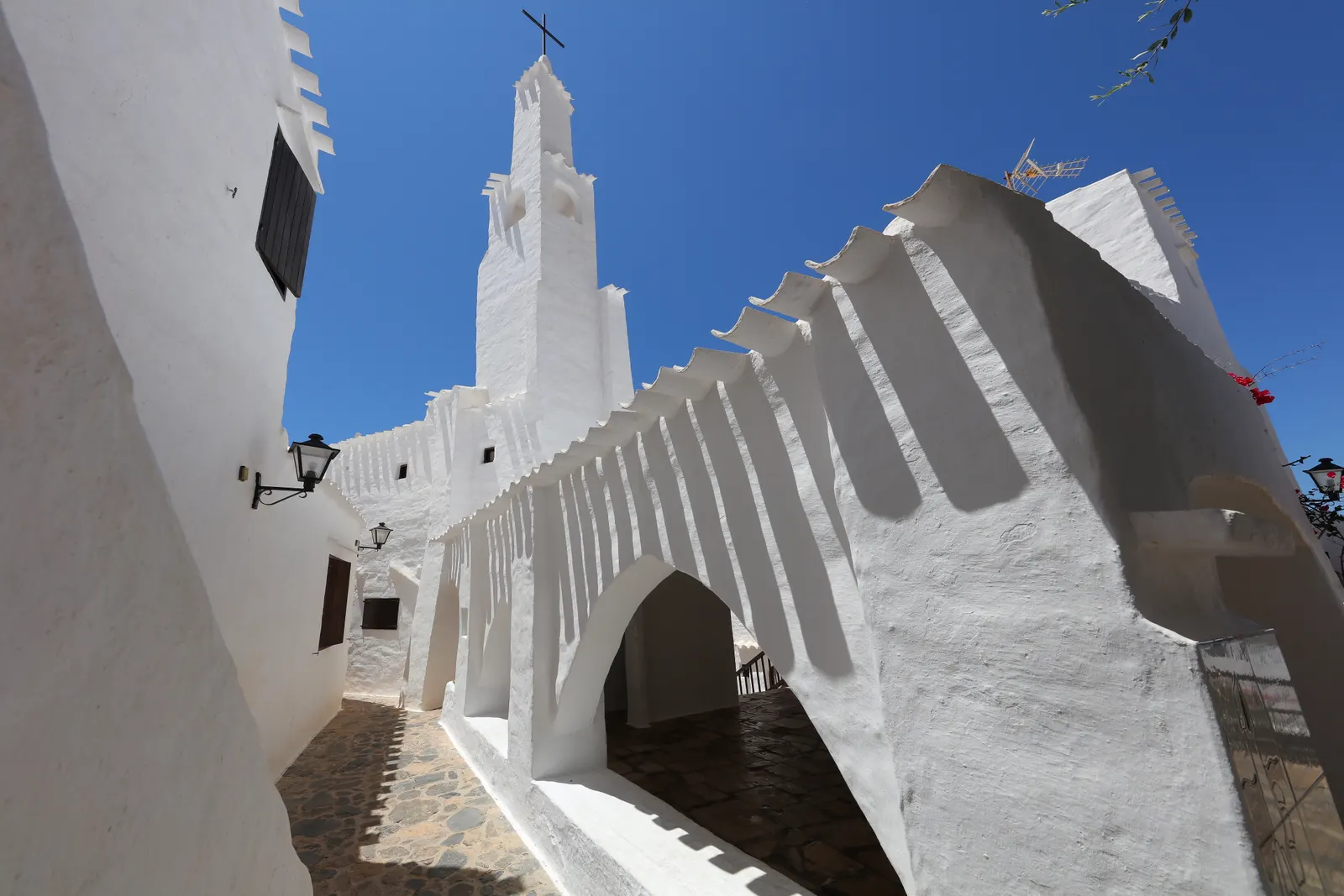
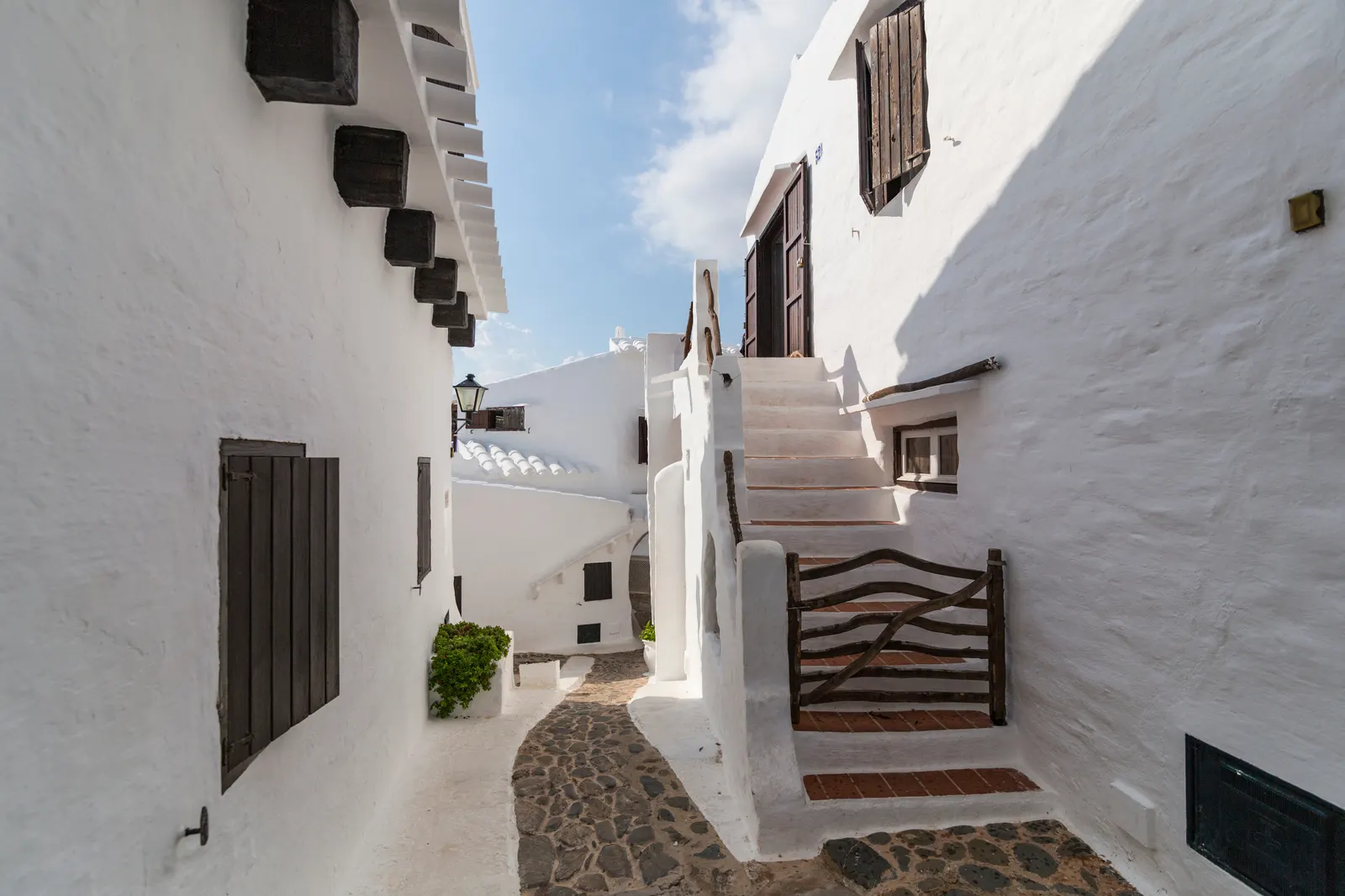
There is a moment, just after you step through the first whitewashed arch, when Binibeca Vell stops being a photograph and becomes a place. Light bounces between white walls, the alleys narrow until they almost graze your shoulders and, suddenly, you don’t know where to look. Everything is lime wash, cool shade and wayward geometry: stairs that climb to nowhere, covered passageways, tiny courtyards where a bougainvillea throws the order into colourful chaos. It looks like a fishing village out of another century.
It isn’t, and that is the interesting part. Binibeca Vell is not an old quarter: it is a development built around 1972 that imitates — with notable taste and craft — the traditional Mediterranean architecture of Menorca. It was designed to evoke the white island of old, and it succeeds so well that millions of visitors take it for ancient. Knowing this takes nothing away from its charm; on the contrary, it puts it in its rightful place. It is a homage, an inhabited stage set, an architectural caprice ageing with dignity under the southern sun.
And it is, on top of that, a place where people live. That is the key to enjoying it. In 2024 the residents asked for visiting hours to be limited because of overcrowding, and they have a point: when the coaches unload at midday, the labyrinth turns into a traffic jam of selfies and the silence that made it magic disappears. The good news is that you only need to change the hour and the attitude to win it all back. This guide is about exactly that: how to experience Binibeca and the white south-east slowly, with respect and in the right light.
The essentials
- What it is: a residential development from around 1972 that recreates traditional Menorcan architecture; beautiful, but modern and privately owned.
- Where: south-eastern Menorca, in the municipality of Sant Lluís, about 10 km from Maó.
- When to go: very early (at dawn or shortly after) or in the late afternoon. Avoid the middle of the day, from 11 to 18, especially in July and August.
- How to behave: in silence, without entering private courtyards or peering into windows, respecting the residents’ rest. It is their home.
- Nearby: Binibèquer, Cala Torret and the small coves of the south-east, perfect for stretching out the morning.
- How long: an unhurried 45 to 60 minutes is enough to walk it; leave the rest of the day for the coves and the shade.
Why is Binibeca Vell not what it appears to be?
The story deserves to be told plainly. In the early 1970s, an urban project decided to build a residential complex that would evoke the old fishing settlements of the Mediterranean. Instead of raising apartment blocks, it chose an organic layout of low whitewashed houses, winding streets, arches and corners, imitating the spontaneous growth of an old village. The result was so convincing that today many people believe they are walking through centuries of history when, in reality, they are walking through a very well executed idea from some five decades ago.
Far from being a flaw, that honesty is part of its value. Binibeca Vell works as a manifesto of Menorcan white architecture: the lime wash that cools, the thick walls against the heat, the shade sought on purpose, the human scale of the streets. It is a lesson in how to build with the place in mind rather than against it. Visiting it while knowing what it is — a homage, not a relic — lets you appreciate it for what it truly offers: beauty, coolness and a play of light that few places can match.
When to go to have it almost to yourself?
The secret is no secret at all: the hour changes everything. First thing in the morning, when the sun comes in low and sets the walls glowing an almost rosy white, the alleys are empty and the only sound is that of your own footsteps. It is the moment when Binibeca Vell really resembles what it promises: a quiet, cool, silent place. Going at dawn or shortly after is, without question, the best decision you can make.
The late afternoon is the other good window. When the groups leave and the light turns golden, the village recovers its calm and the whites take on a honeyed tone. What you should avoid at all costs is the middle of the day in high season: from mid-morning to mid-afternoon, in July and August, the labyrinth fills up and the charm dissolves into the crowd. If you can only go at midday, accept that you will see something else — a packed set piece — and reserve judgement until you return at a better hour.
How to walk it slowly? The art of getting lost
Binibeca Vell is not something you “see”: it is something you walk. And it is walked best without a map and without haste. Enter wherever you like and let yourself get lost on purpose; the complex is small, so there is no real risk of losing your way, only the pleasure of turning a corner without knowing what lies behind it. Follow the shadows, seek out the covered passageways that suddenly open onto a courtyard of light, stop wherever a blue door or a flowerpot breaks the white.
A few gestures for truly living it, not just photographing it:
- Walk in silence. Sound travels between these walls; an ordinary conversation sounds like a megaphone in a narrow alley.
- Touch the lime wash with your eyes, not your hand. Notice the whitewashed texture, how the light curves around the rounded corners.
- Look up. The best details are above: arches, chimneys, tiny balconies, slices of sky between walls.
- Don’t rush to the perfect shot. Keep your phone in your pocket for the first ten minutes. You’ll see twice as much.
- Accept the dead-end alleys. They are part of the game; turn back without frustration.
What must you respect? It is an inhabited place
It bears repeating, because it is what people most often forget: Binibeca Vell is privately owned and residential. Behind many of those white doors are people who live, rest and sometimes simply want quiet in their own home. The 2024 residents’ request to limit visiting hours was born precisely from that: from weariness in the face of a flow of visitors who treated their streets like a theme park.
The unwritten rules are common sense. Do not enter private courtyards or gardens, even if the gate is open. Do not lean into the windows or photograph interiors. Do not climb private stairs to get an angle. Lower your voice and, if you come in a group, keep it small and discreet. Respect any sign indicating hours or restricted areas. The golden rule is simple: behave as you would want others to behave if this were your street. The privilege of strolling through a place like this is preserved by treating it well.
What is nearby to stretch out the morning?
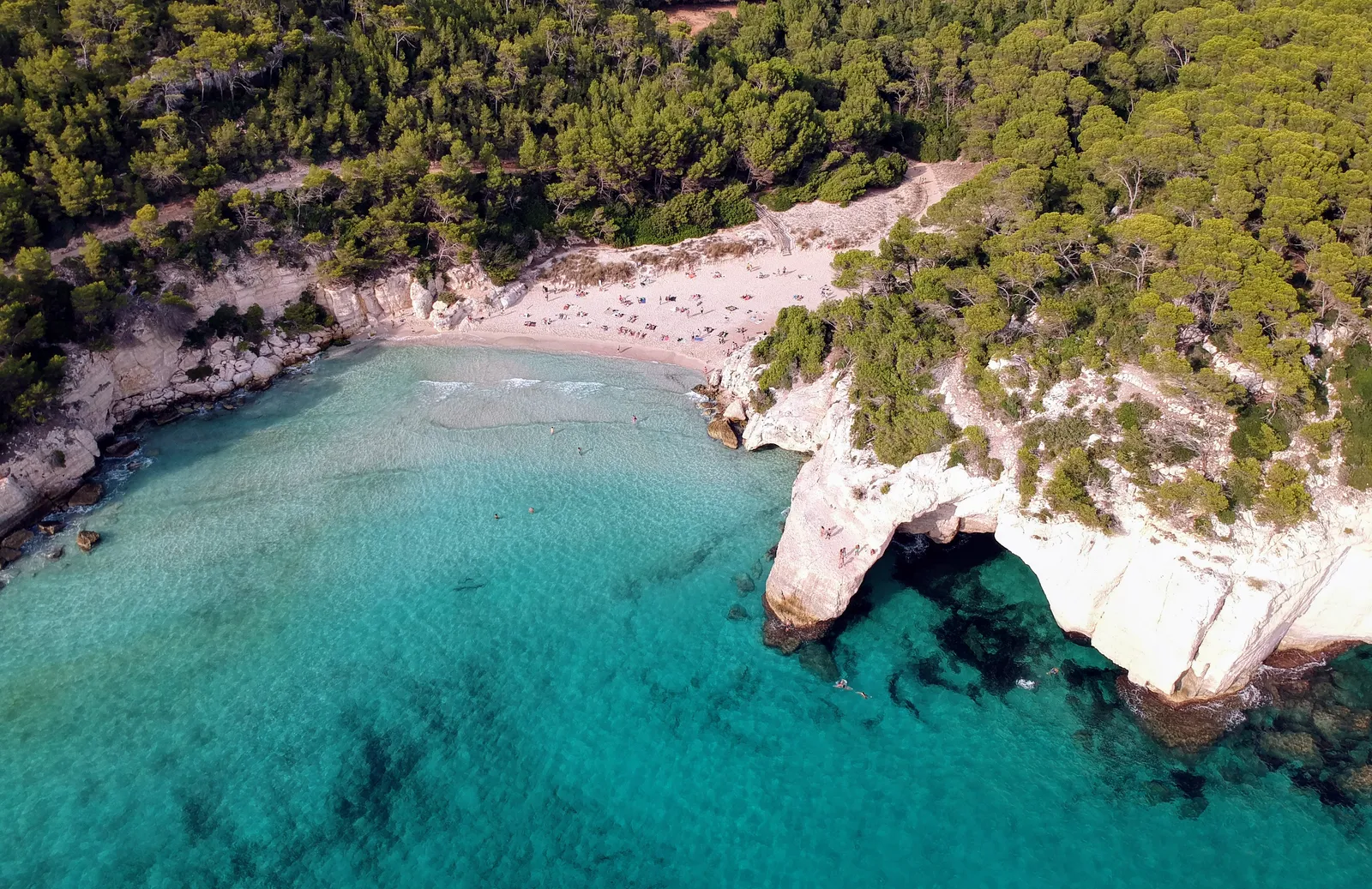
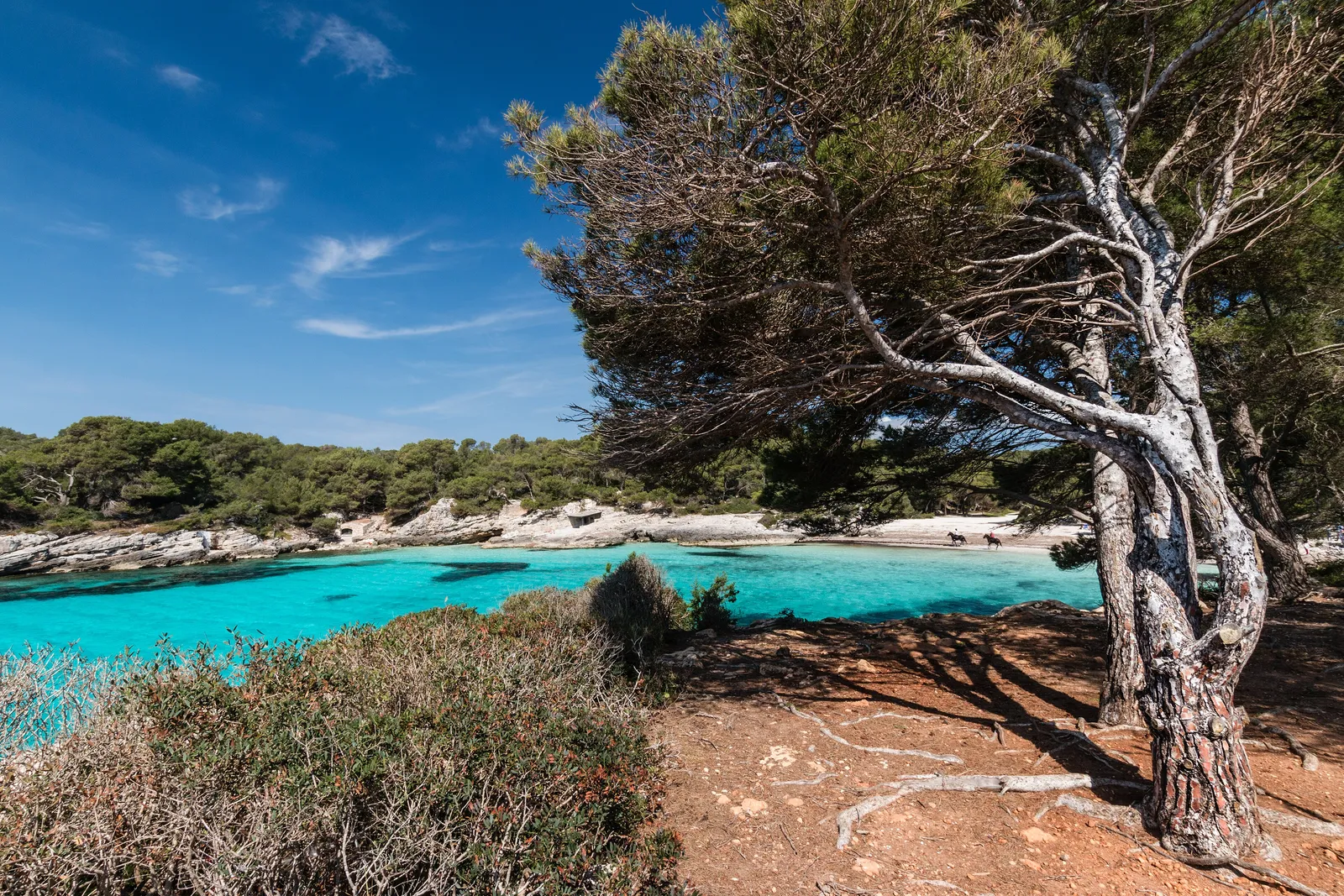
The best thing about visiting Binibeca early is that it leaves the day ahead of you, and the south-east of Menorca is full of nearby rewards. A step away lies Binibèquer, with its more residential and tranquil air, and Cala Torret, a small urban cove of gentle waters and white houses leaning over the sea, ideal for an effortless swim. This whole south-eastern strip is characterised by intimate coves, with pale sand and transparent water, where the morning is far more rewarding than at the big, famous beaches.
The smart move is to chain it all together: dawn at Binibeca Vell, an unhurried coffee at one of the local spots — check current opening hours, since many work seasonally — and then an early swim in one of the small coves before the sun bites and the crowds arrive. Bring water, your own shade and little else. The white south-east rewards the early riser with near-empty coves and that clean first-light glow which, once you have seen it, you never forget.
Is it worth it despite being “modern”?
Emphatically yes, as long as you go with the right expectations. Anyone looking for an authentic, centuries-old fishing village will leave disappointed, because it is not one. But anyone who comes to enjoy a well-made piece of white architecture, a labyrinth of light and shade designed for the pleasure of walking, will find one of the most photogenic — and, at the right hour, most serene — corners of Menorca.
The luxury here is not antiquity or exclusivity: it is calm. It is having the labyrinth to yourself at dawn, the coolness of the lime wash on a June morning, the silence between two white walls while the rest of the island still sleeps. That cannot be bought; it is won by rising early and knowing how to look. Binibeca Vell, experienced this way, stops being a tourist trap and becomes what its architects dreamed of: a liveable homage to the serene beauty of the Mediterranean.
Our take
If you can only do one thing, do it well: set the alarm and arrive at Binibeca Vell at dawn. There is no better version of this place than that one, with the streets empty and the light freshly minted. Forty-five unhurried minutes, in silence, looking up, are worth more than two hours at midday jostling among a hundred other people.
Afterwards, head down to a small south-eastern cove — Cala Torret, or any you discover on the way — and let the morning stretch out. Don’t turn Binibeca into a box-ticking stop; turn it into the quiet beginning of an unhurried day. Go knowing what it is — a modern, lovely homage, not a relic — treat it as the home it is for its residents, and it will give you back the scarcest and most valuable thing of the Menorcan summer: beauty, coolness and silence, all at once.