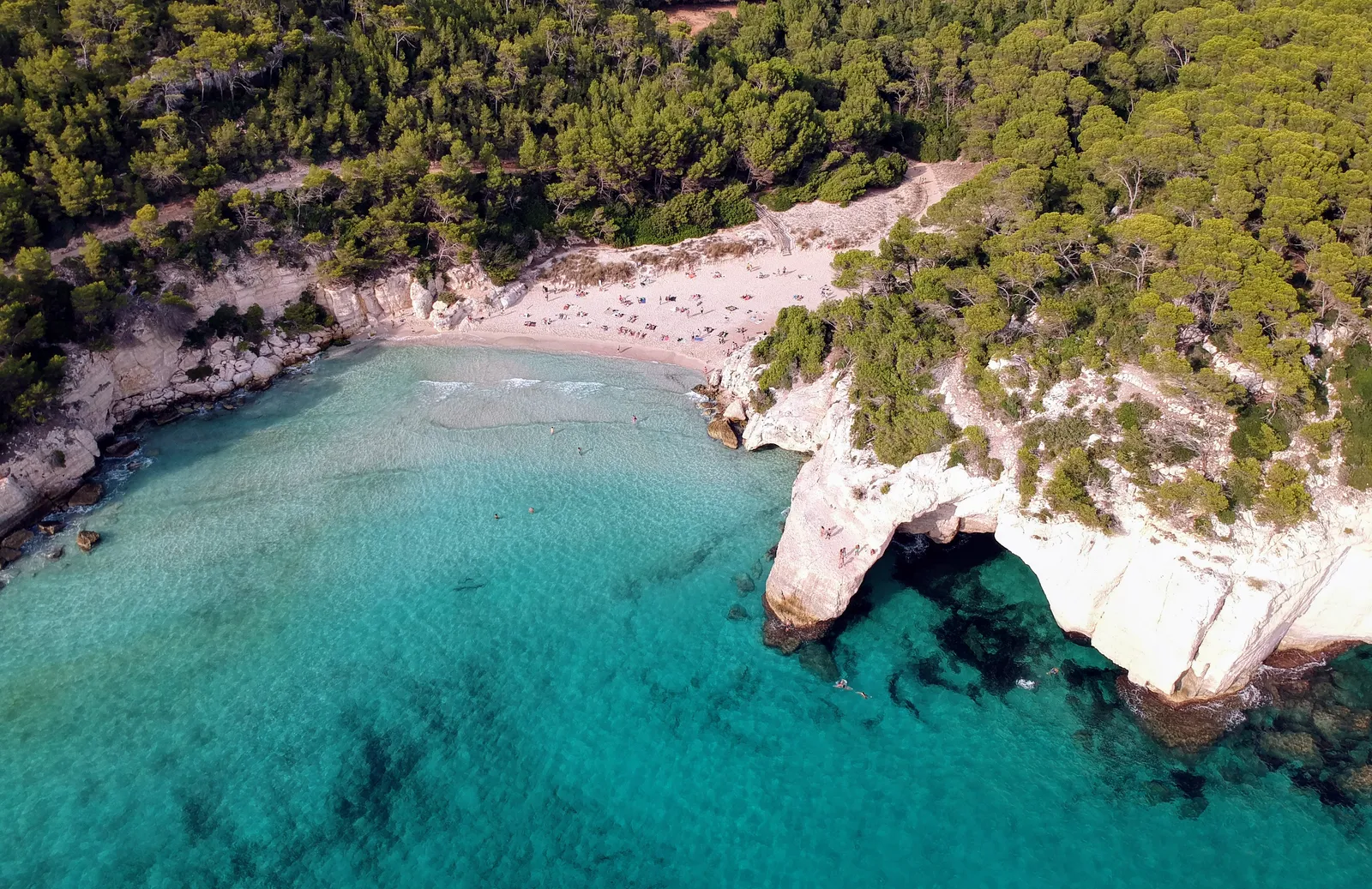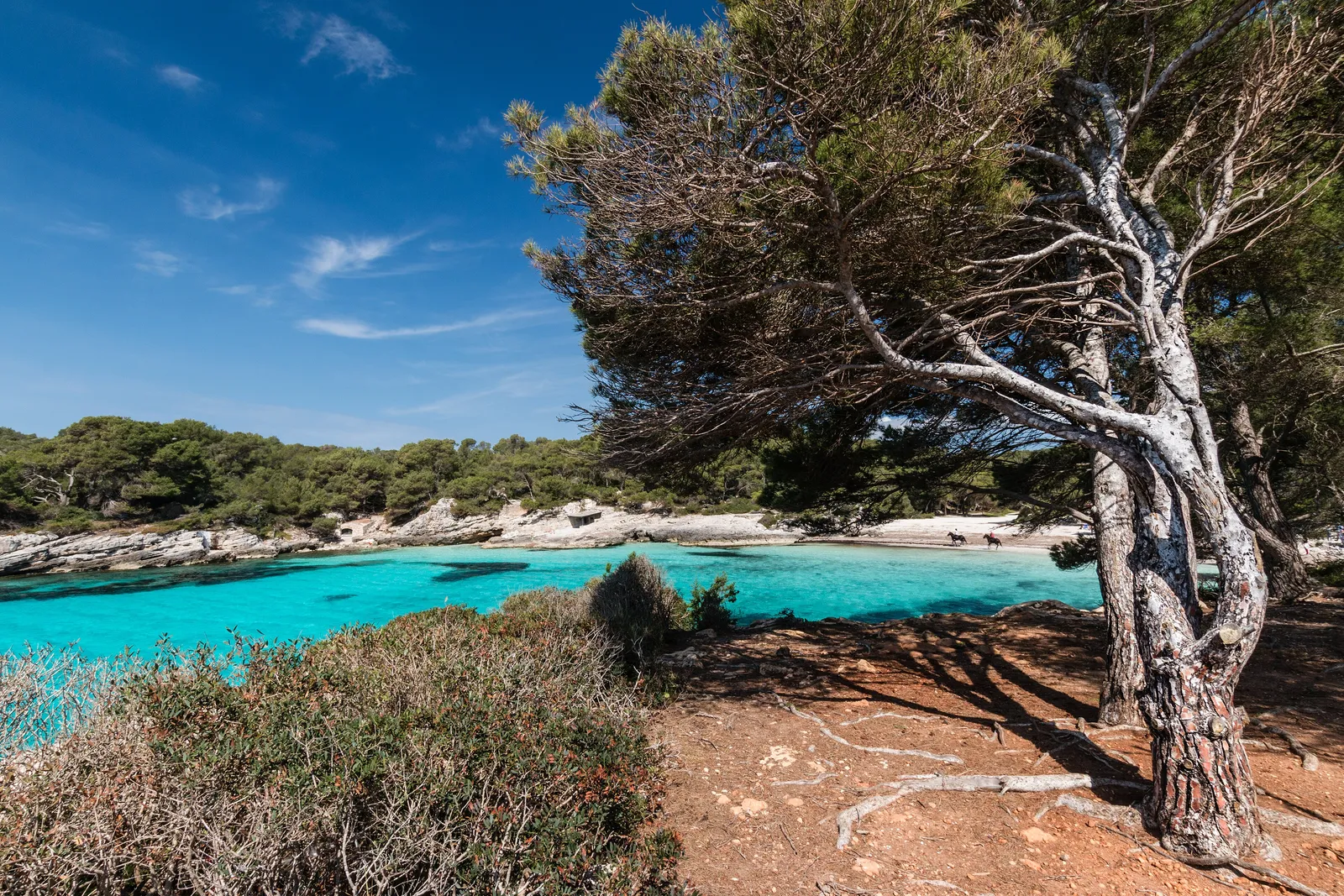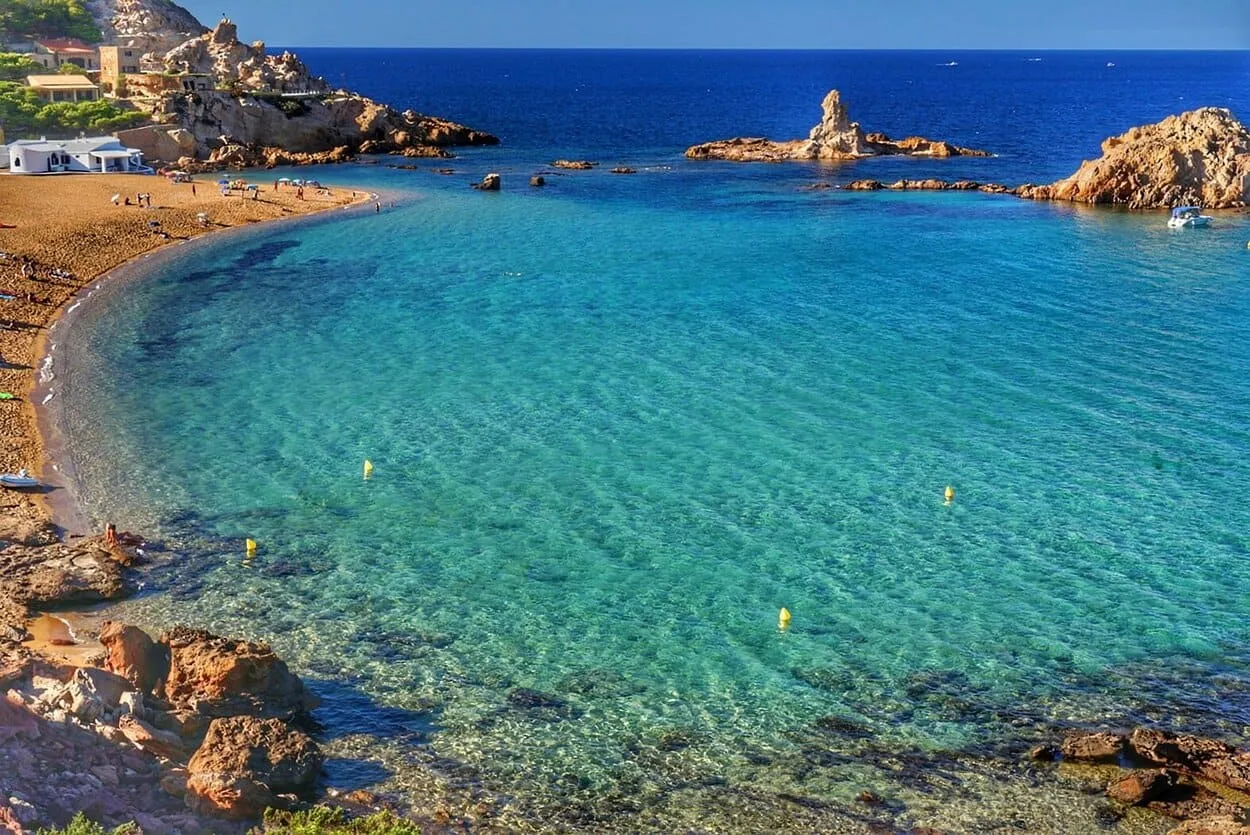
Menorca’s north coast — the tramuntana — is the island’s wild side. Where the south offers white sand, turquoise water and the textbook postcard, the north answers with reddish, dark sand, ancient rock, pines bent by the wind, and a sea that changes colour and character by the hour. This is not the easy Menorca. It is the Menorca you have to earn, and that is precisely why it keeps its silence.
Here the landscape has not been dressed up for the visitor. The land is older — geology of millions of years that surfaces in ochre and near-black tones — the wind is in charge, and the coves remain what they have always been: refuges at the end of a dirt track or a path through the scrub. Do not expect rows of parasols or beach-bar music. What the north offers is something else: space, time, and the increasingly rare sense of standing somewhere that does not quite belong to you.
This is a considered guide to the most memorable coves of the tramuntana — Pregonda, Cavalleria, Pilar, Tortuga, Binimel·là — to be walked with respect, without hurry, and knowing what you are going for.
The essentials
- Where: Menorca’s north coast, between Fornells and the far end of Ciutadella; many access points start from Es Mercadal and the Tramuntana road.
- When: May, June and September are ideal; in August, only the first hour of the morning.
- How: drive to a dirt car park and then walk a stretch (ten minutes to almost an hour, depending on the cove) along the Camí de Cavalls (GR-223).
- What to bring: plenty of water, closed shoes, your own shade, food and a bag for your rubbish. Almost none have facilities.
- The wind: with a strong tramuntana, the north turns uncomfortable and the sea rough. On that day, head south.
Why is the northern sand reddish and dark?
It is the question everyone asks on first setting foot on Pregonda or Cavalleria. The answer lies in the geology: the north of Menorca belongs to a far older substrate than the south, with red sandstones, slates and iron-rich rock that, as it erodes, tints the sand in copper, terracotta and almost violet tones. Add to that the islets and formations dotting the coast, born of that same rugged relief.
The contrast is striking and part of the appeal: on a single island you move from the pale, Caribbean-like coves of the south to these beaches with an almost Nordic or lunar air, where dark sand, intense water and wind-sculpted rock compose a landscape that barely looks Mediterranean. It is the Menorca least photographed in the brochures and, for many, the most authentic.
When should you go?
From May to June and in September the light is perfect, the water has begun to warm and the crowds are modest. These are, without question, the best months for the north: you will find coves almost to yourself and a clean-coloured sea without the summer throng.
In high August, the only quiet hour is the first one. Arrive before ten and the cove is yours; from midday onwards, even the most remote spots receive visitors. The afternoon light, mind you, is magnificent for those who hold out: the low sun sets the reddish sand alight and gives some of the finest sunsets on the island.
One detail that makes all the difference: always check the wind forecast — our where the sea is calm tool shows which coves lie sheltered each day. The tramuntana — that north wind which gives the coast its name — can rise from one day to the next. With a strong tramuntana, these coves turn inhospitable, the water clouds and the sand flies. The local rule is simple: north-wind day, southern beach; calm day, the north is a gift.
How do you get there? The Camí de Cavalls
Most of these coves require a stretch on foot, and that is part of the bargain. Access is usually a dirt track to a rustic car park and, from there, a path — often part of the Camí de Cavalls (GR-223), the historic trail of around 185 km that rings the entire island. Wear good closed shoes, carry ample water and expect no beach bar or shade: here, the luxury is the absence of everything else.
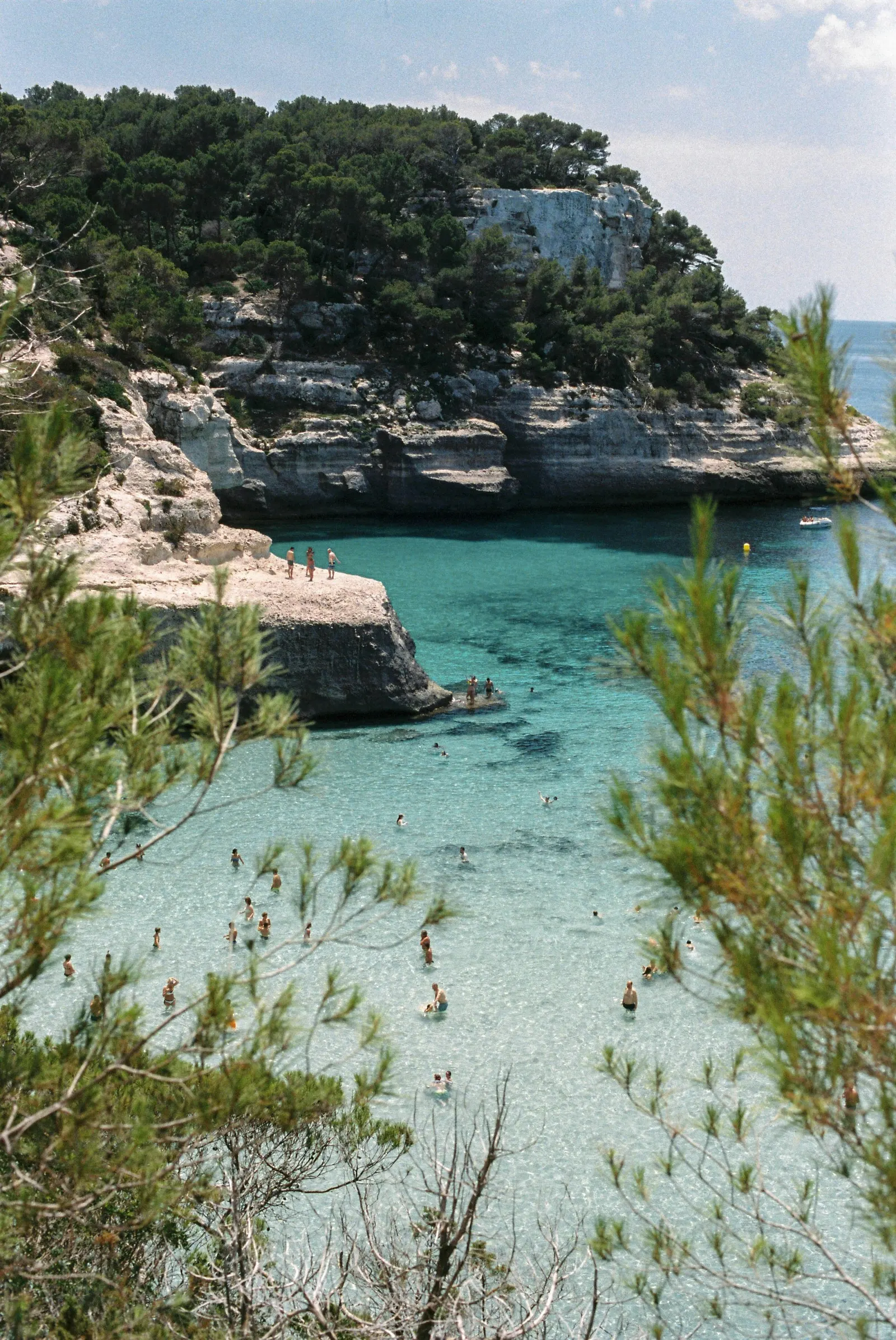
- Cala Pregonda: perhaps the most famous in the north for its islets and its golden-red sand. It is reached after a walk of about 30-40 minutes from the Binimel·là car park. The effort filters out the crowd and is part of the reward.
- Cala Pilar: among the wildest and most solitary, with a longer, more demanding approach through a wood of wild olive trees. Its dark sand and isolation make it unforgettable; go prepared.
- Cala del Pilar and Cala Tortuga: Tortuga, beside the imposing Favàritx lighthouse, lies within the s’Albufera des Grau Natural Park — the heart of the Biosphere Reserve — and is reached on foot from the lighthouse car park across an almost lunar landscape of black slate.
- Cala Cavalleria: one of the more accessible coves in the north, with a short walk from its car park. Its reddish sand and the Cavalleria headland behind make it ideal for a first taste.
- Binimel·là: the easiest of all, almost at the car park’s edge, and the natural gateway to Pregonda. A good option for anyone who would rather not walk far or is travelling with children.
Drive calmly on the dirt tracks, respect the gates of private estates and park only where permitted. Access to nature is a privilege kept alive by treating it well.
Are there facilities, parasols or beach bars?
Generally, no, and it is worth accepting that before you set out. The vast majority of the northern coves are wild or semi-wild: no bars, no sun-lounger hire, no showers and, often, no bins. Binimel·là and Cavalleria, by virtue of their accessibility, may have some seasonal service, but take nothing for granted and check the current season before counting on it.
This changes entirely what you need to bring. The sensible minimum list:
- Water, lots of it: there is nowhere to buy any and the north is fierce in the sun.
- Your own shade: a light parasol or canopy, as natural shade is scarce.
- Food and a good picnic: turn the lack of a beach bar into a virtue.
- Walking shoes and plenty of sun cream.
- A bag for your rubbish. There is no cleaning service; what comes in leaves with you.
What to do when you arrive (and what not to)
The north invites you to do almost nothing, and therein lies its luxury. Swim early, when the water is still and clear; walk the shoreline along the dark sand; seek the shade of a pine to read through the middle hours. Snorkelling is usually excellent on calm days, especially around the rocky ends of each cove, where marine life is abundant.
What is best avoided: swimming under a red flag or with a swell — the tramuntana generates currents and undertow that should not be underestimated — lighting fires, collecting sand or stones (it is protected), and leaving any trace. You are in a UNESCO Biosphere Reserve; many of these coves form part of protected natural areas. The golden rule is to leave no mark.
Where to eat and round off the day?
As there is nothing at the coves, the clever move is to go down with a picnic — bread, Mahón-Menorca DOP cheese, fruit, water — and save the dining for afterwards. Fornells, the fishing village of the north-east, is the natural stop on the way back: famous for its seafaring tradition and its lobster stew (caldereta de langosta), it is the place to sit by the harbour over something well made. It is wise to book ahead in season and to check current opening times, as many businesses work seasonally.
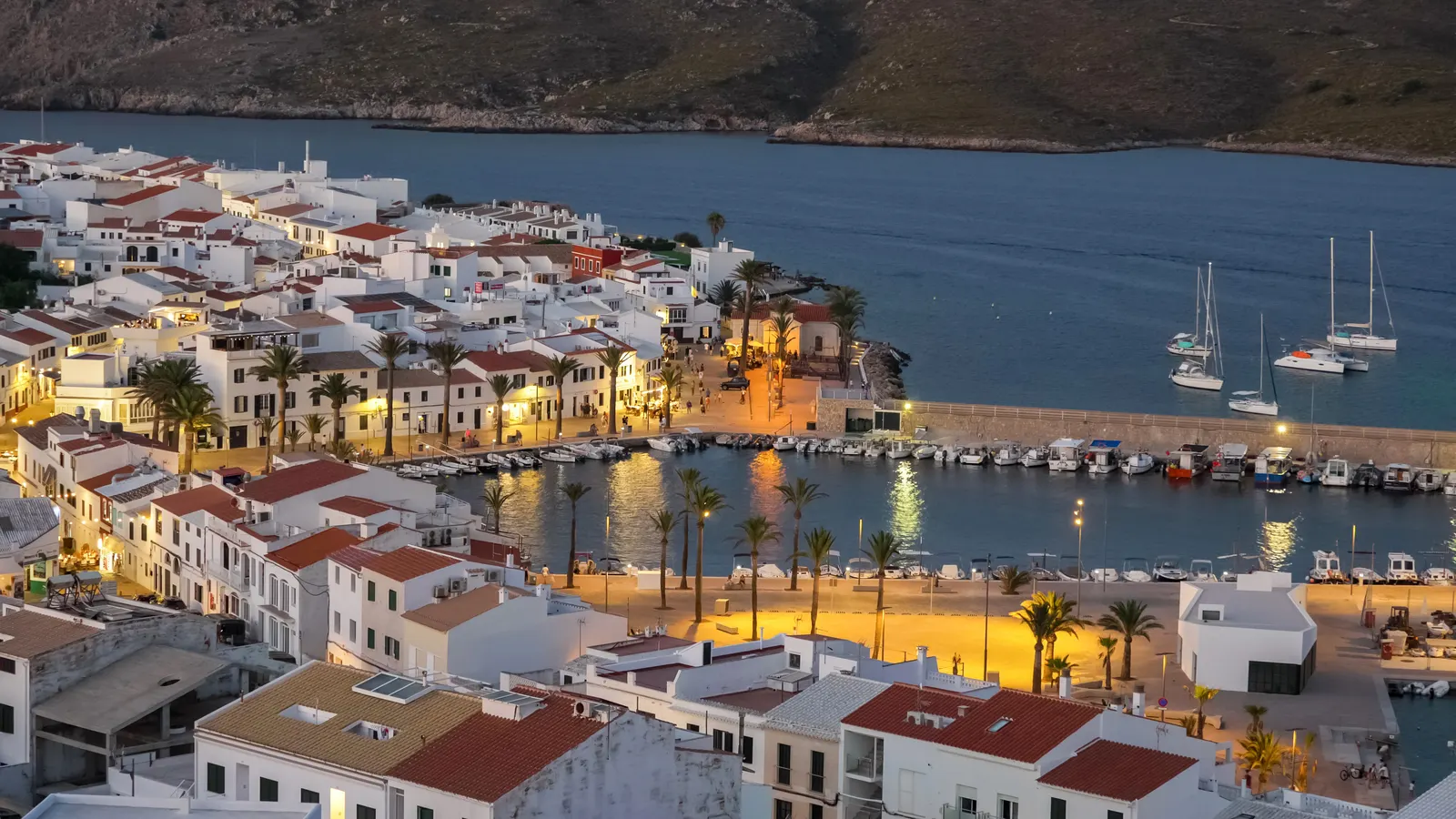
To close the day, nothing beats a sunset at the Cavalleria headland or beside the Favàritx lighthouse, and on the way home, a pomada — the island’s gin, the classic Gin Xoriguer, with lemonade — to toast the silence that remains.
The Calma Society verdict
If you can only go to one, go to Pregonda: the walk, the islets and that sand somewhere between gold and red sum up the whole north. If you are after true solitude, choose Cala Pilar and its long approach, which keeps most people away. And if you are short on time or travelling with children, Binimel·là and Cavalleria give you the north without so much walking.
But the real advice is not a cove, it is an attitude: park in the shade, set out early, do not pack the day with plans and let the tramuntana set the pace. The north is not for photographing and leaving; it is for staying, falling silent and letting the place do its work. It rewards those who rise early — and those who know how to wait.