Northern Fuerteventura moves at two speeds. One belongs to Corralejo, with its promenade, its harbour and its bustle. The other lies a few kilometres to the west: an inland village ringed by volcanoes, a former fishing harbour with lagoons of still water and a lighthouse where the day comes to an end. This is the itinerary for those who prefer the second.
The essentials
- Morning: a waymarked trail from Lajares to the rim of the Calderón Hondo crater. Easy.
- Midday: a swim in the lagoons of Los Lagos, in El Cotillo, at high tide.
- Afternoon: La Concha, the shallow bay, and the Tostón lighthouse for the last light.
- If it is a Saturday: the Lajares craft market, in the morning.
- Information as of October 2026.
First light: Calderón Hondo
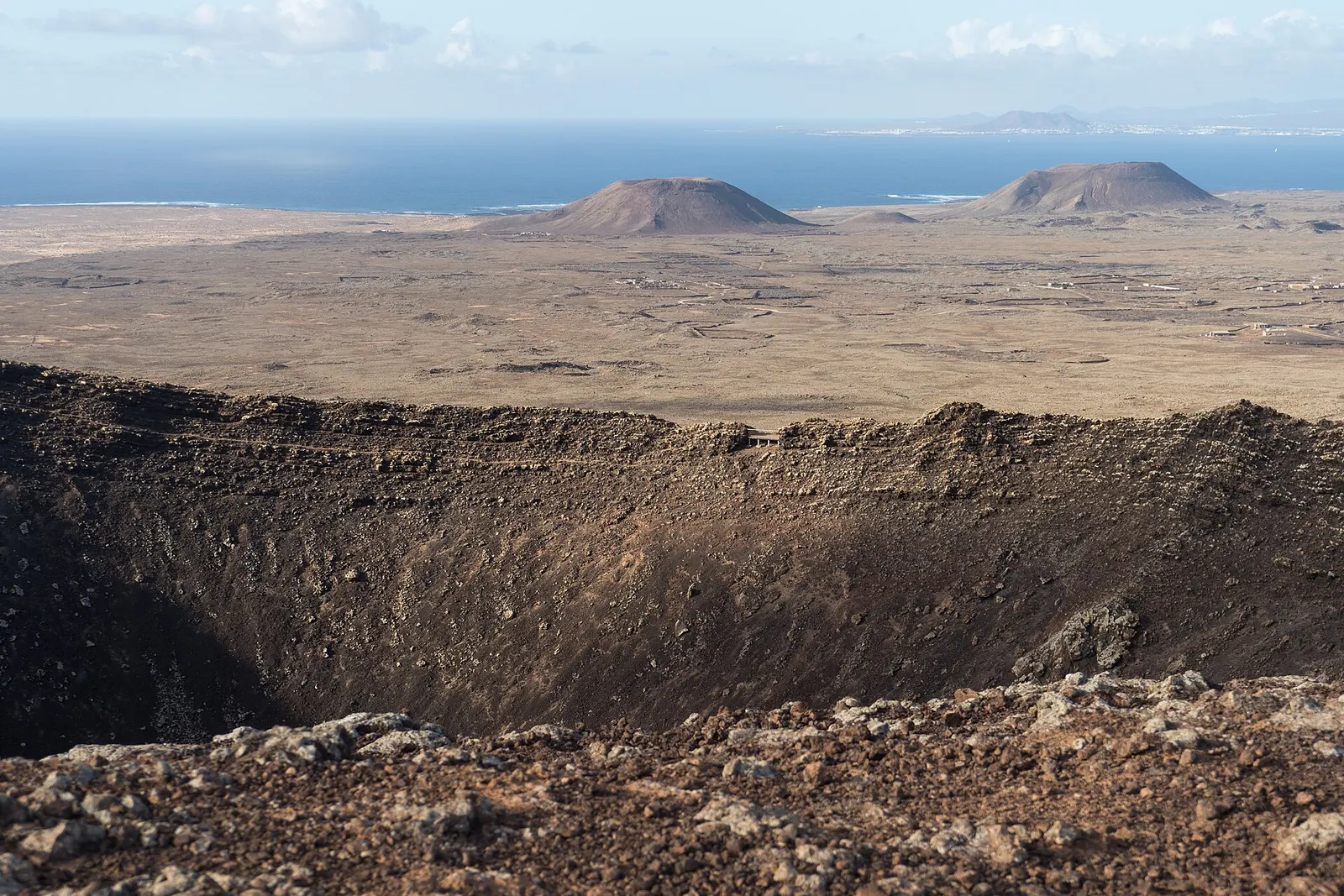
Lajares is surrounded by volcanic cones, and the most approachable is Calderón Hondo. A well-waymarked trail, easy going, leaves the village, crosses the lava field and climbs to the crater rim at around 278 metres. At the top the reward is twofold: the volcano’s perfect hollow at your feet and, around you, the north of the island and the other volcanic cones nearby.
Go early, before the sun gets strong: there is no shade along the way. Do not go down into the crater or leave the marked path, do not take volcanic stones and do not fly drones. The landscape is fragile precisely because it looks eternal.
Lajares, on the way back
Back in the village, Lajares deserves some time. It is a place of low houses where traditional life, a community of surfers and craftspeople, and an old textile tradition sit side by side: calado, the drawn-thread embroidery still worked on the island.
If it falls on a Saturday, the craft market is held in the morning, with stalls run by the people who make what they sell. The first hour is the quietest for browsing and conversation; check before you go.
Midday: the El Cotillo lagoons
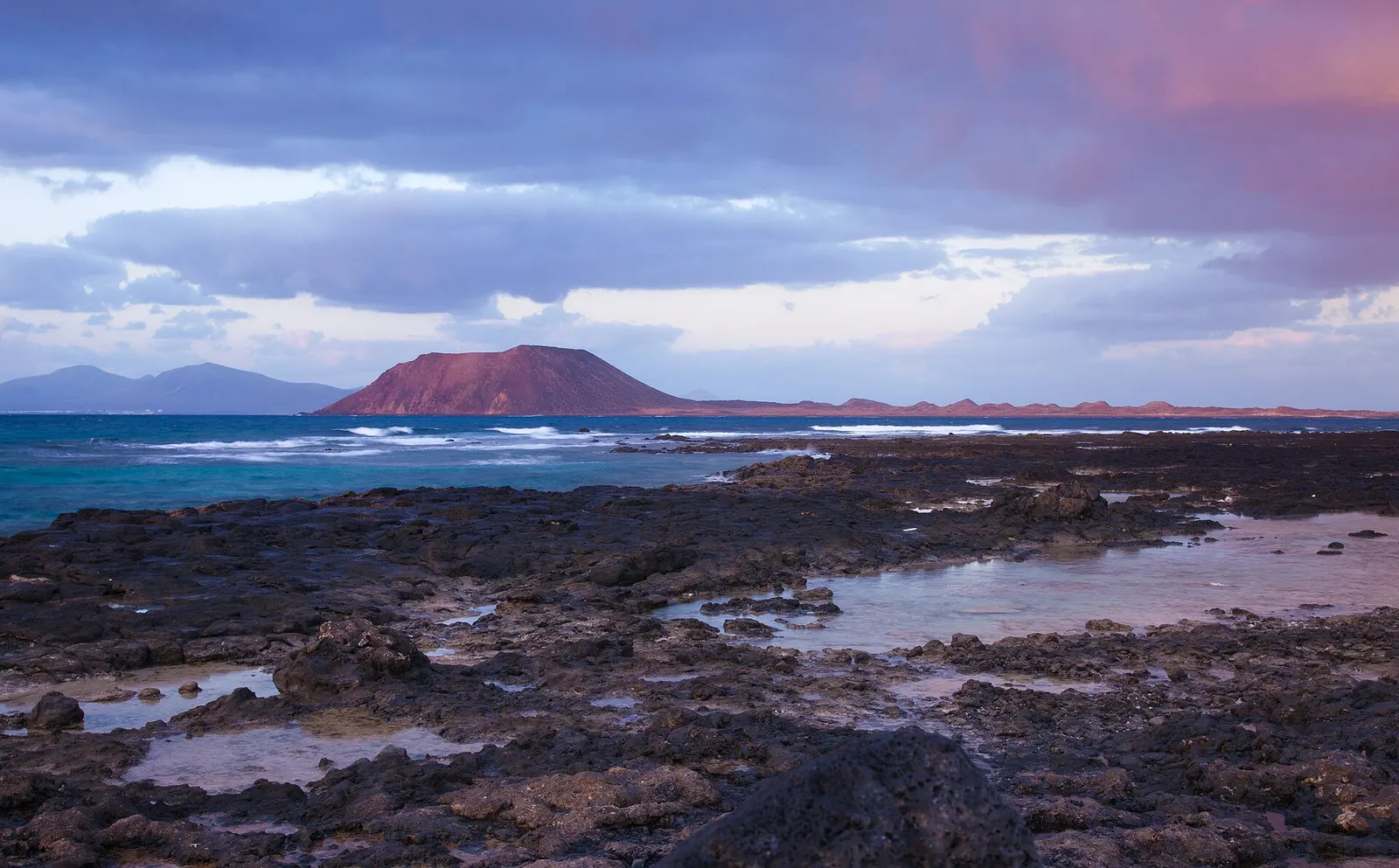
El Cotillo was a fishing village and still looks like one. North of the village, the coast forms Los Lagos: small coves of white sand sheltered by a natural reef that, at high tide, encloses lagoons of still, clear water. This is a different Atlantic — the one that does not break.
The key is the tide: at high tide the lagoons fill and the swimming is calm; at low tide they are left almost dry. Check the tide table before you go and plan the day around it.
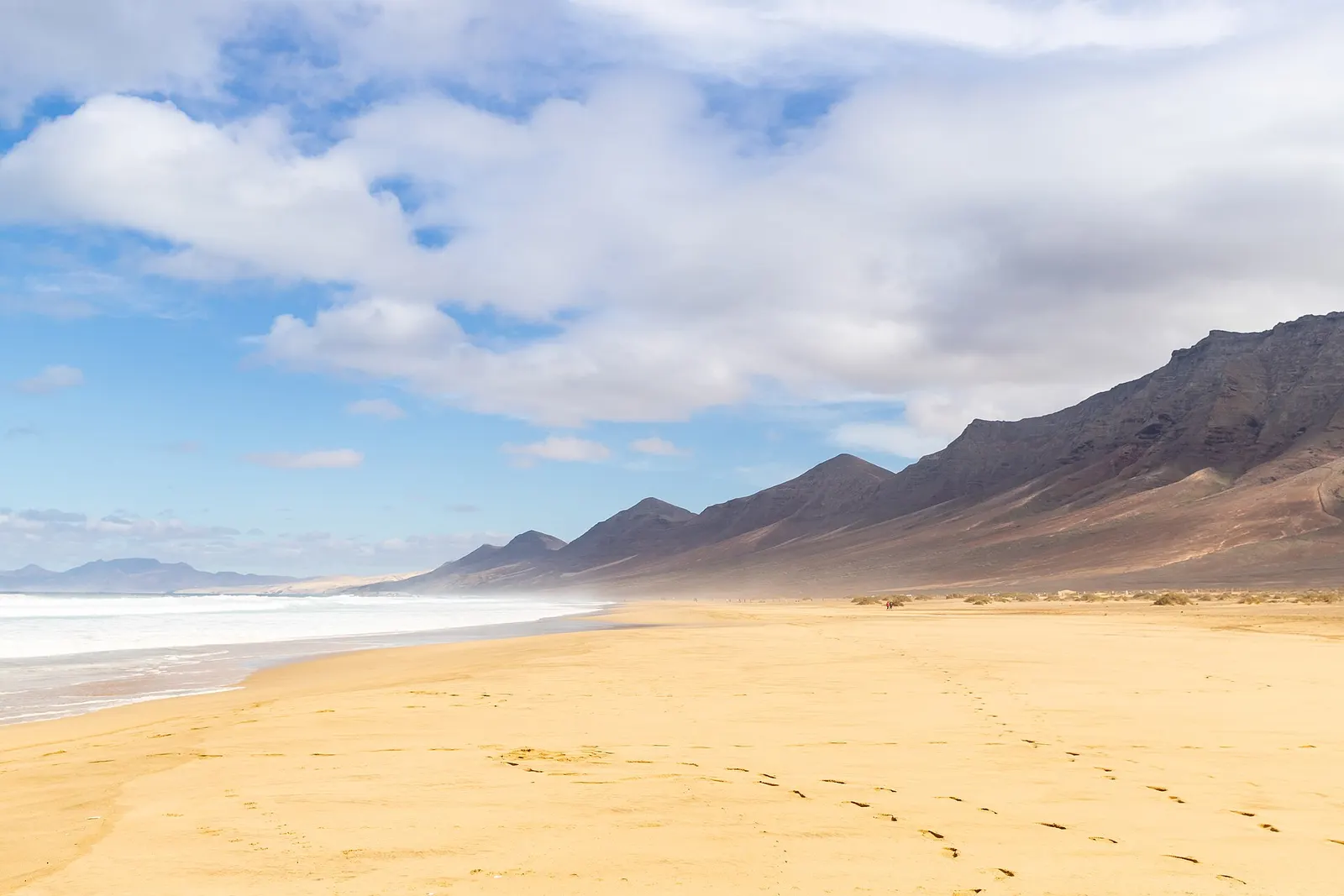
A little further on lies La Concha, an open, crescent-shaped and shallow bay much loved by families. Outside the sheltered lagoons, remember that this is open coast: respect the flags and the lifeguards’ instructions.
Last light: the Tostón lighthouse
The day ends at the north-western tip, at the Tostón lighthouse, a group of three towers from different periods that now houses the Museum of Traditional Fishing. Check its opening hours if you want to go in; for the sunset, all you need to do is arrive, sit down and look west, where there is nothing but sea.
How to fit it together
- For a full day: Calderón Hondo first thing, Lajares, a swim in El Cotillo at midday and the Tostón in the afternoon.
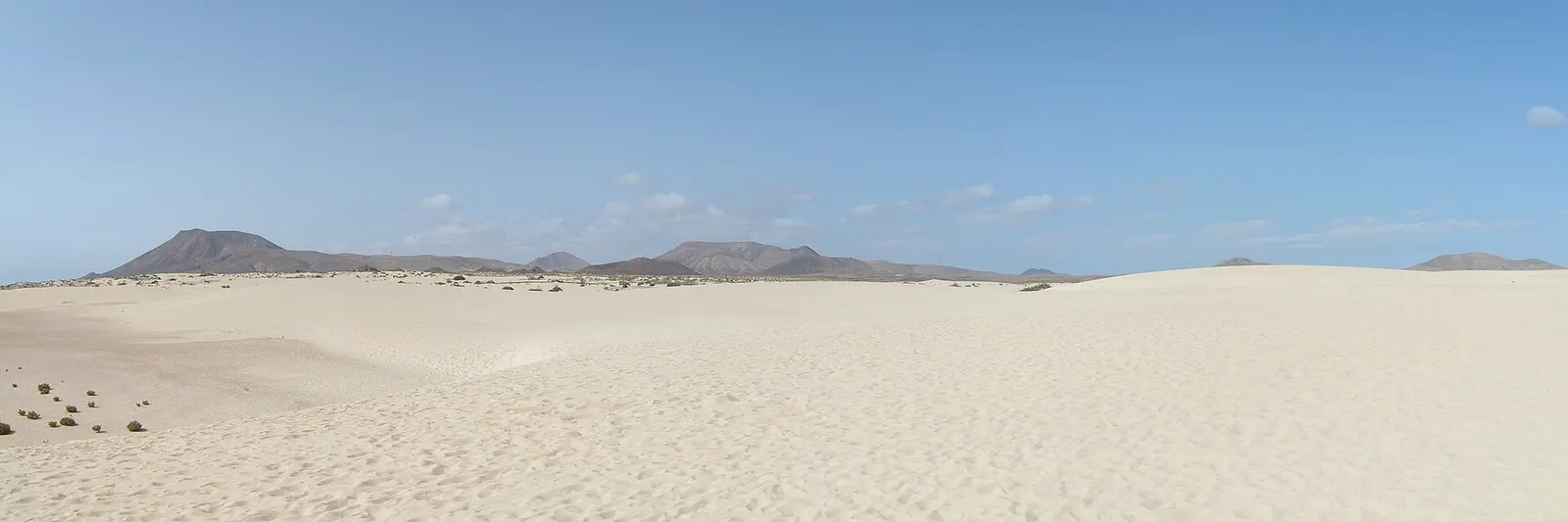
- If you want more of the north’s nature → the Corralejo dunes on foot, early in the day.
- If you are thinking of staying → living in the north of Fuerteventura: Lajares, La Oliva and the inland villages.
- To end the day with a glass → the wine nobody expects on Fuerteventura.
- To choose your dates → when to go to Fuerteventura.
Our view
This itinerary has no famous must-see, and that is why it works. It is a day of a little walking, a good swim and no clock-watching except for the tide. That is the luxury of Fuerteventura’s north-west: a big landscape, a small village and plenty of time in between.
Information as of October 2026, checked against published guides to Calderón Hondo, El Cotillo and Lajares, and information on the Tostón lighthouse. Market and museum hours: check before you go.