Some products explain an island better than any beach. In the north of Gran Canaria, among green ravines and farmed midlands, there is a cheese set with a flower. That is not a figure of speech: the milk is curdled with a vegetable rennet drawn from the thistle flower, without a drop of animal rennet. The result is Flor de Guía cheese, and understanding it takes time, which is exactly what it asks for.
The essentials
- Protected Designation of Origin «Queso de Flor de Guía y Queso de Guía», with its specification published in Spain’s official gazette (BOE) in 2008.
- Three types: Flor, Media Flor and Guía.
- Flor: at least 60 % Canarian sheep’s milk, and curdled exclusively with thistle rennet.
- Three municipalities: Santa María de Guía, Gáldar and Moya.
- One festival: the Cheese Festival, of Canary Islands Tourist Interest, every spring in Guía.
A flower instead of rennet
The rennet comes from the flowers of two related plants, a wild thistle and the artichoke (Cynara cardunculus var. ferocissima and Cynara scolymus, according to the PDO specification). The flowers are gathered, dried and steeped to make the rennet that curdles the milk.
That one gesture changes everything. Vegetable rennet gives the cheese a softer, creamier paste and a very gentle bitterness at the finish, which is its signature. It is not a cheese to slice in a hurry and serve with anything: it asks for bread, quiet and perhaps a wine from the island.
The three types
The designation distinguishes three cheeses by how much vegetable rennet is used:
- Flor: the most singular. At least 60 % Canarian sheep’s milk, curdled only with thistle flower.
- Media Flor: a blend of vegetable and animal rennet.
- Guía: set with animal rennet.
If you are only going to try one, make it the Flor. If you can, ask for all three on one board and compare them: it is the best lesson there is in what rennet does.
Three northern municipalities
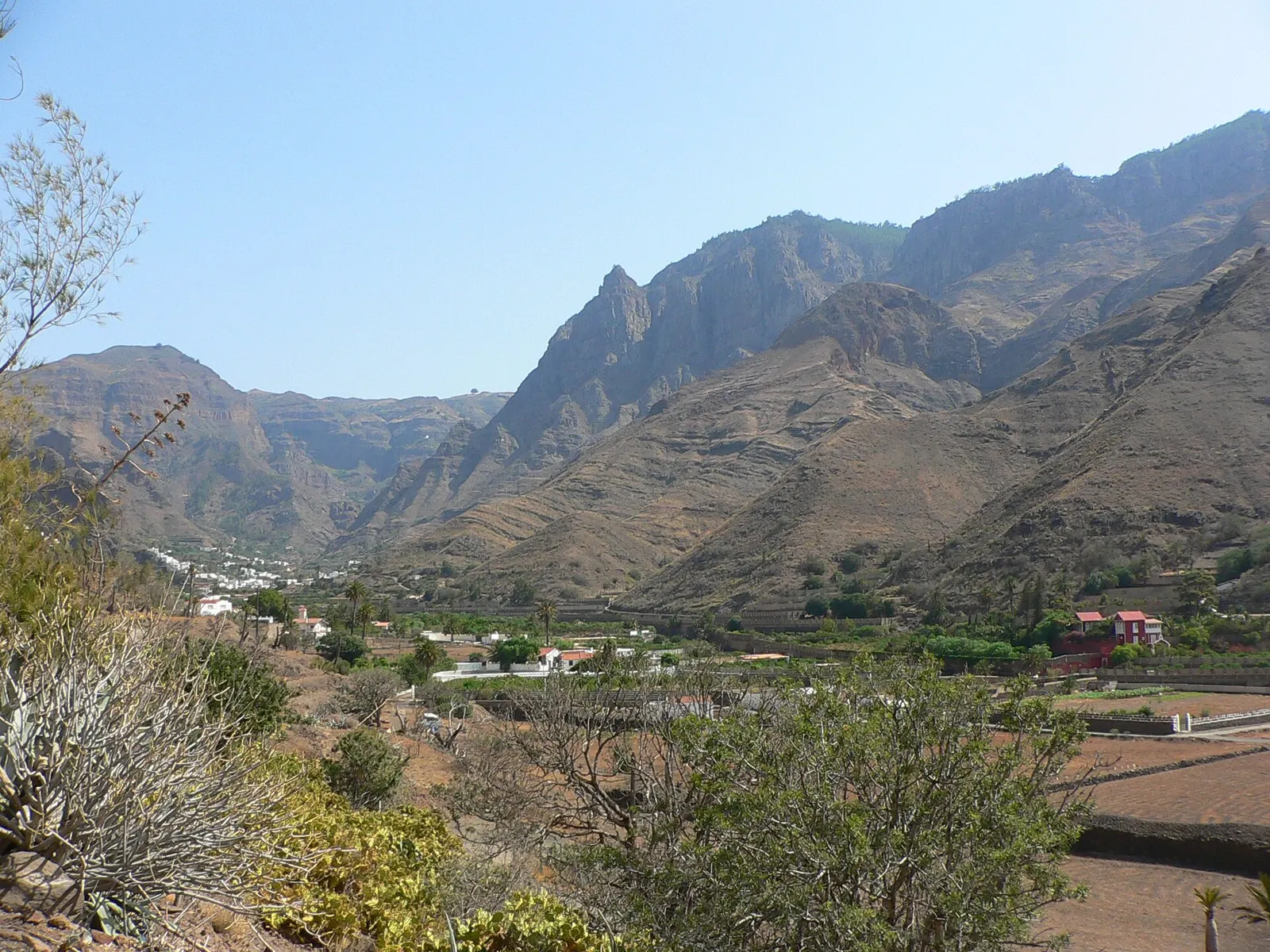
The designated area covers Santa María de Guía, Gáldar and Moya, in the north-west and north of the island. These are midland lands, greener and cooler than the south, where sheep and goat herding has survived everything. Driving through them unhurriedly, village by village, is the best way to learn where the cheese on the tables of Las Palmas comes from.
For the rest of the island’s larder — potatoes, mojo, gofio and pork — see eating in Gran Canaria.
The Cheese Festival
Every spring, Santa María de Guía holds the Fiesta del Queso de Flor de Guía, declared of Canary Islands Tourist Interest. In 2026 it ran from 18 April to 3 May. The date of the next edition has not yet been announced: check with Santa María de Guía town council before planning your trip.
It is a town festival before it is a food event, and that is precisely why it is worth going.
Buying it and taking it home
Look for the designation’s back label, which identifies the type and guarantees the origin. Buy from the makers or in village shops in the area, and ask about the ageing: the cheese changes a great deal from young to mature. For the journey home, ask for it to be vacuum-packed.
Our view
Flor de Guía is the opposite of an airport product: scarce, slow, impossible to industrialise without losing it. That is why it is luxury in the sense we care about. If you take only one thing home from Gran Canaria, let it be a wedge of this cheese, bought in the village where it is made.