Gran Canaria is known for winter sun and dunes, but for golfers it also has a story no other place in Spain can tell: this is where, in 1891, the country’s first golf club was founded. Since then the game has spread across two very different landscapes on the island: the green uplands on the rim of a volcano, and the dry southern coast facing the Atlantic.
The essentials
- The historic club: the Real Club de Golf de Las Palmas, founded in 1891 by British residents and regarded as the oldest golf club in Spain.
- Where it plays: since 1956-1957, on the Llanos de Bandama (Santa Brígida), beside the Bandama caldera, on a course designed by Mackenzie Ross.
- The south: Maspalomas Golf, Meloneras Golf, Salobre Golf and Anfi Tauro, among others.
- When: all year; the mild winter is the natural season for European golfers.
- Green fees and bookings: each club publishes its own; check before you go.
Bandama: golf on the rim of a caldera
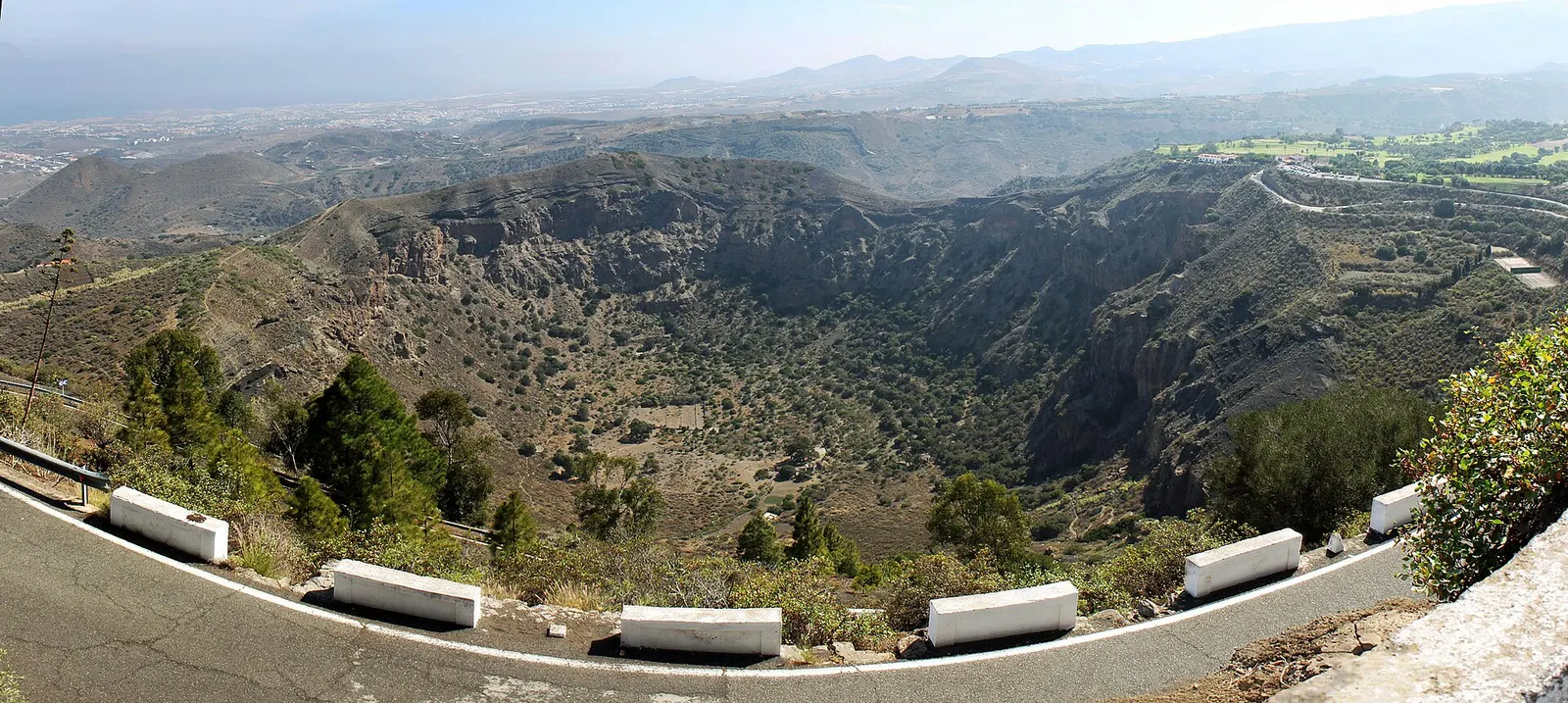
The Real Club de Golf de Las Palmas was born in the city, the work of the British community of the late 19th century. In the mid-20th century it moved inland to the Llanos de Bandama, in the municipality of Santa Brígida. The new course was laid out by Mackenzie Ross, and its setting is its great argument: the course looks over the Bandama caldera, a volcanic crater that is one of the island’s most singular landscapes.
Playing here is not like playing at a resort. The upland air is fresher than on the coast, the vegetation greener, and the silence that of a club with more than a century of history. It is the place for an early, unhurried round, with the caldera on one side and the city far below.
The courses of the south
Many of the courses are in the south of the island, close to the resort areas of Maspalomas, Meloneras and Mogán. The main ones:
- Maspalomas Golf. Beside the Maspalomas dunes nature reserve: the classic course of the south.
- Meloneras Golf. At Meloneras, close to the sea.
- Salobre Golf. In the south of the island, a little inland.
- Anfi Tauro. In the Mogán area, between mountains and close to the coast.
Number of holes, layouts, green fees and playing conditions: confirm them with each club before booking.
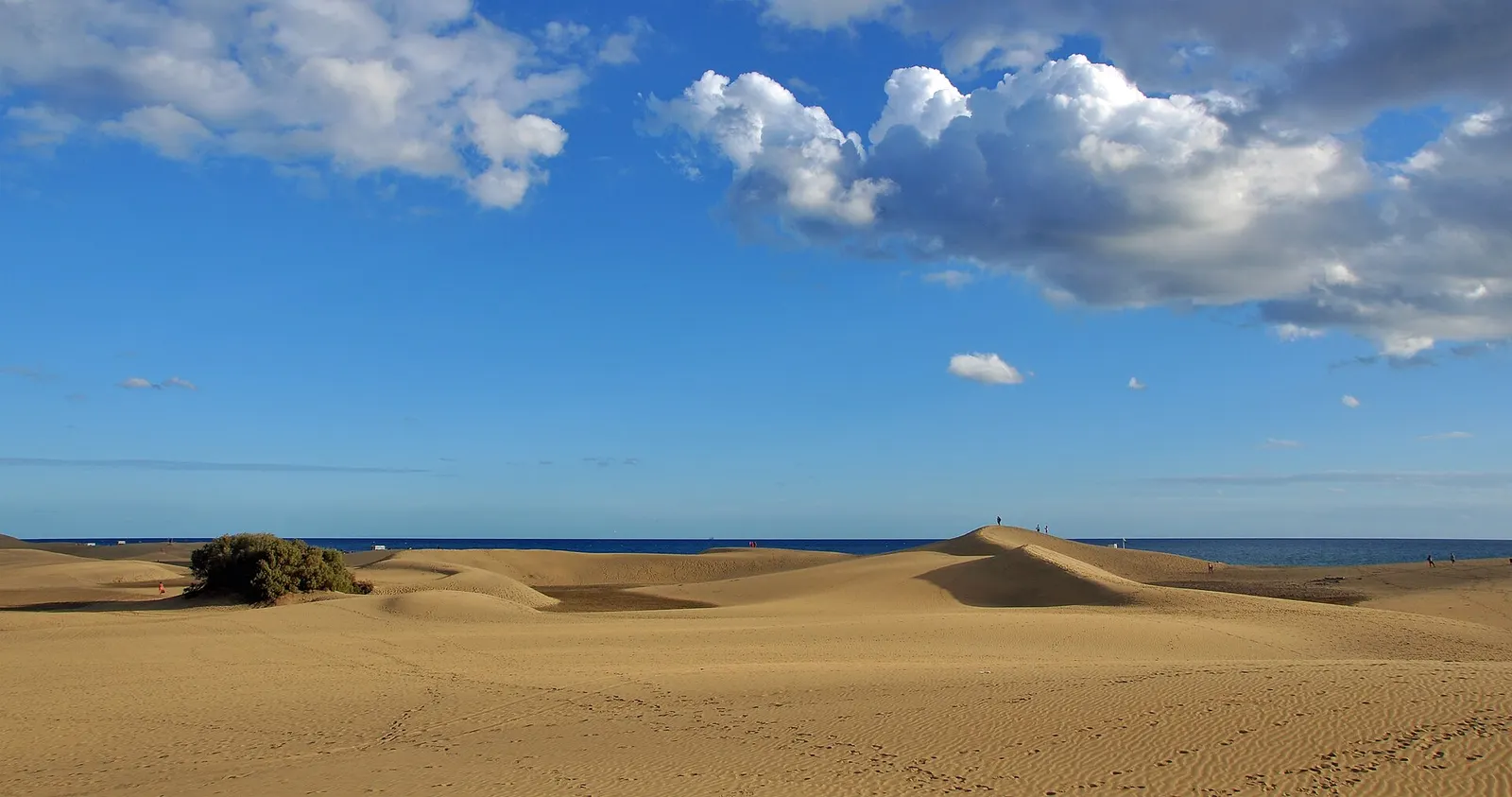
A word for anyone playing at Maspalomas: the neighbouring dunes are a nature reserve. If you walk there before or after your round, do so only on the marked paths, without entering fenced-off areas or building stone shelters — and leave the sand where it is.
Getting around with your golf bag
Gran Canaria airport is on the east coast, between Las Palmas and the south, so both Bandama and the southern courses are within reasonable distance by motorway. The real options:
- Hire car. The most practical if you plan to play more than one course: Bandama and the south are at different ends of the island.
- Taxi. Useful for one-off journeys; mention that you have a golf bag so the vehicle has room.
- Bus (guagua). The intercity network exists, but we have not been able to confirm any line stopping at the courses; with a golf bag, it is not the option.
Before you fly, book your bag with your airline as sports or special baggage: it is paid separately and each airline sets its own weight limit.
Depending on who you are
- You care about the history of the game: an early round at Bandama, then a walk to the rim of the caldera.
- You’re coming to play for a week: base yourself in the south, close to several courses, with a day out to Bandama.
- You’re living in Las Palmas for a season: the historic club is a short drive from the city; we describe that life in living in Las Palmas.
Our view
Gran Canaria doesn’t compete with other golf destinations on the number of courses, but on something harder to copy: an 1891 club playing on the rim of a volcano, and a mild winter that lets you tee off any morning of the year. Start at Bandama, to understand where it all began; continue south if you want the sea. And remember that fees and tee times are always checked with the club.
Information as of October 2026. Check green fees, tee times and playing conditions with each club before you go.