Menorca holds some of the most beautiful coves in the Mediterranean, and the truly valuable part is that you can still experience them calmly if you know when and how to approach them. This isn’t the longest list, nor the most viral one, but a selection made with judgement: eight calas —five from the turquoise south and three from the wild north— worth the early start, still offering silence, and leaving a mark that lasts longer than the photo.
The whole island has been a UNESCO Biosphere Reserve since 1993, and you can feel it: pine woods reaching down to the shore, transparent water and a coastline stitched together at sea level by the Camí de Cavalls (the GR-223, around 185 km that encircle Menorca). That same fragility explains why many accesses are regulated in summer: looking after a cala is part of enjoying it.
This guide is for the traveller who prefers space to crowds, time to rush, and authenticity to a much-repeated postcard. Here you’ll find the why, the when and the how, first-hand.
The essentials, at a glance
- How many: eight coves chosen with judgement — five in the south (Macarella, Macarelleta, Turqueta, Mitjana, Trebalúger) and three in the north (Pregonda, Cavalleria, Cala del Pilar).
- South: white sand, turquoise water and pine woods. The most photographed and, therefore, the busiest.
- North (tramuntana): reddish and golden sand, wild scenery, wind and considerably fewer people.
- Access: none of the eight has its sand right by the car; all ask for a walk, from Cavalleria’s ~400 metres to Pregonda’s ~35 minutes. In summer, Macarella also closes its car access (bus, bike or on foot only), and the Cala del Pilar car park is capacity-controlled.
- When to go: early (first thing in the morning) or outside the summer peak, in June and September, when the sea is still warm and the coves can breathe.
- How to get there in July and August: many car accesses are restricted; use the seasonal bus, walk the Camí de Cavalls, or arrive by sea by kayak or boat.
- Facilities: only Macarella has a beach bar on the sand (at Turqueta there is a small seasonal bar by the car park); the others have none. Five of the eight have a lifeguard in season: Macarella, Turqueta, Mitjana, Pregonda and Cavalleria. In the bag: water, your own shade, walking shoes and a bag for your litter.
What makes the turquoise south special?
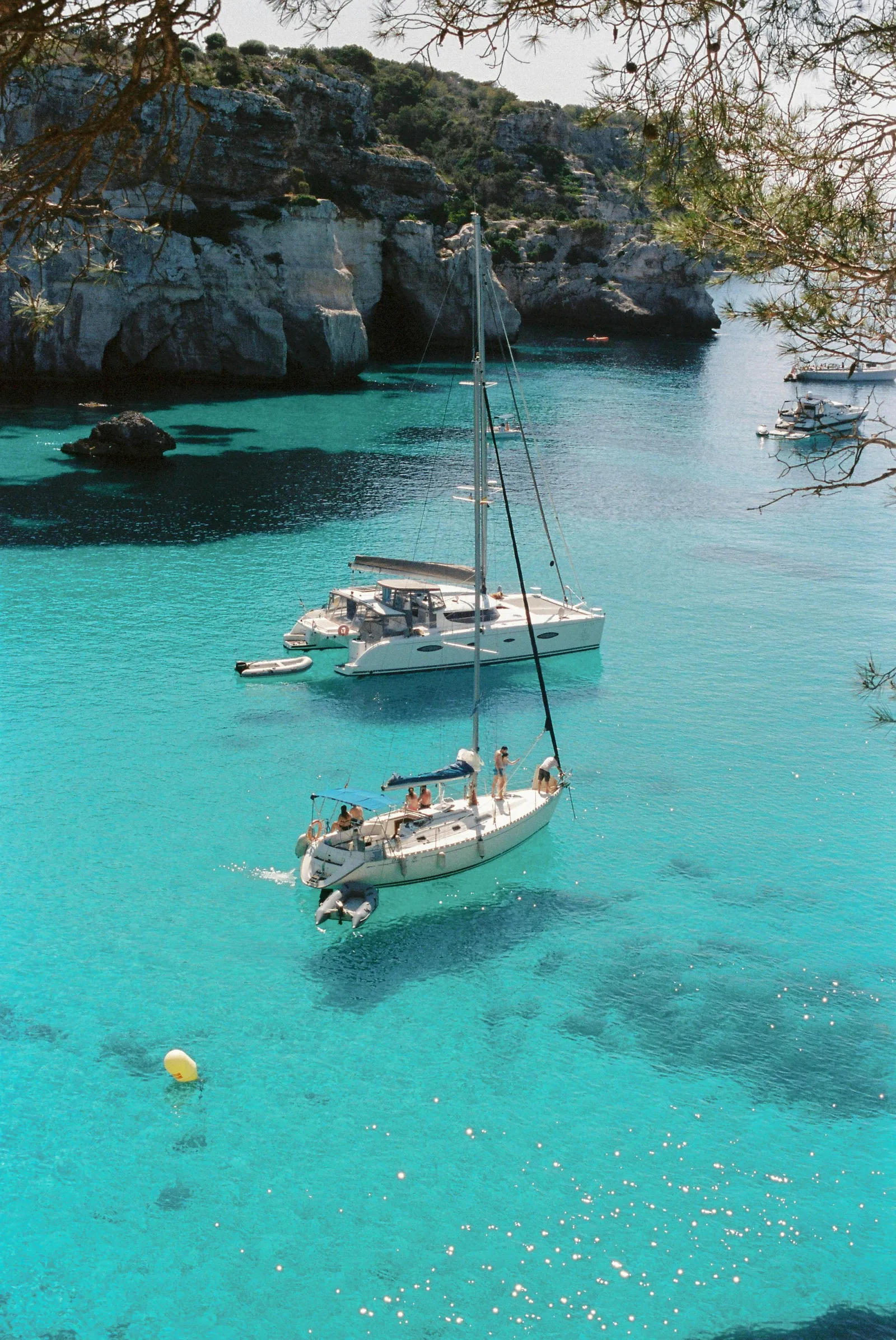
The south-west, around Ciutadella and Ferreries, holds the images everyone associates with Menorca: small horseshoes of fine white sand, water of an almost unreal turquoise, and an amphitheatre of pines and pale rock cliffs. These are postcard coves because they deserve to be, but that very charm has made them the most visited. These are our five.
1. Cala Macarella
The quintessential turquoise horseshoe, with pine woods right down to the sand: the postcard of the south, and it knows it. In high summer, treat it as what it is — an early-morning appointment.
- Getting there: from 1 June to 30 September, cars and motorbikes are banned; you arrive by shuttle bus from Ciutadella, by bicycle or on foot along the Camí de Cavalls from Cala Galdana. Out of season, the car park is about a 20-minute walk away.
- Facilities: a seasonal beach bar; even so, bring water and shade.
- Best time: June and September; in July and August, first thing in the morning.
2. Cala Macarelleta
Macarella’s smaller, more intimate sister, separated by a rocky isthmus: intense turquoise, a secluded atmosphere (partly naturist) and an even more human scale. There is no infrastructure here at all: what you carry is what you’ll have.
- Getting there: on foot from Macarella, along a short path through rock and pine.
- Facilities: none of its own.
- Best time: the same rule as its sister: the earlier you arrive, the more it is yours.
3. Cala en Turqueta
Sheltered, family-friendly and a blue so clean it seems impossible. A good choice for those seeking calm without giving up the turquoise, and the usual starting point for walking to Macarella along the Camí de Cavalls.
- Getting there: a short 10-15 minute walk from the car park, along a path through holm oaks. It keeps its car access in summer, but the free car park fills very early (aim for around 8am); in season there is also a shuttle bus from Ciutadella.
- Facilities: no beach bar on the sand; in season there are toilets and a small bar by the car park. Bring water, food and shade.
- Best time: May, June and September; in August, very early.
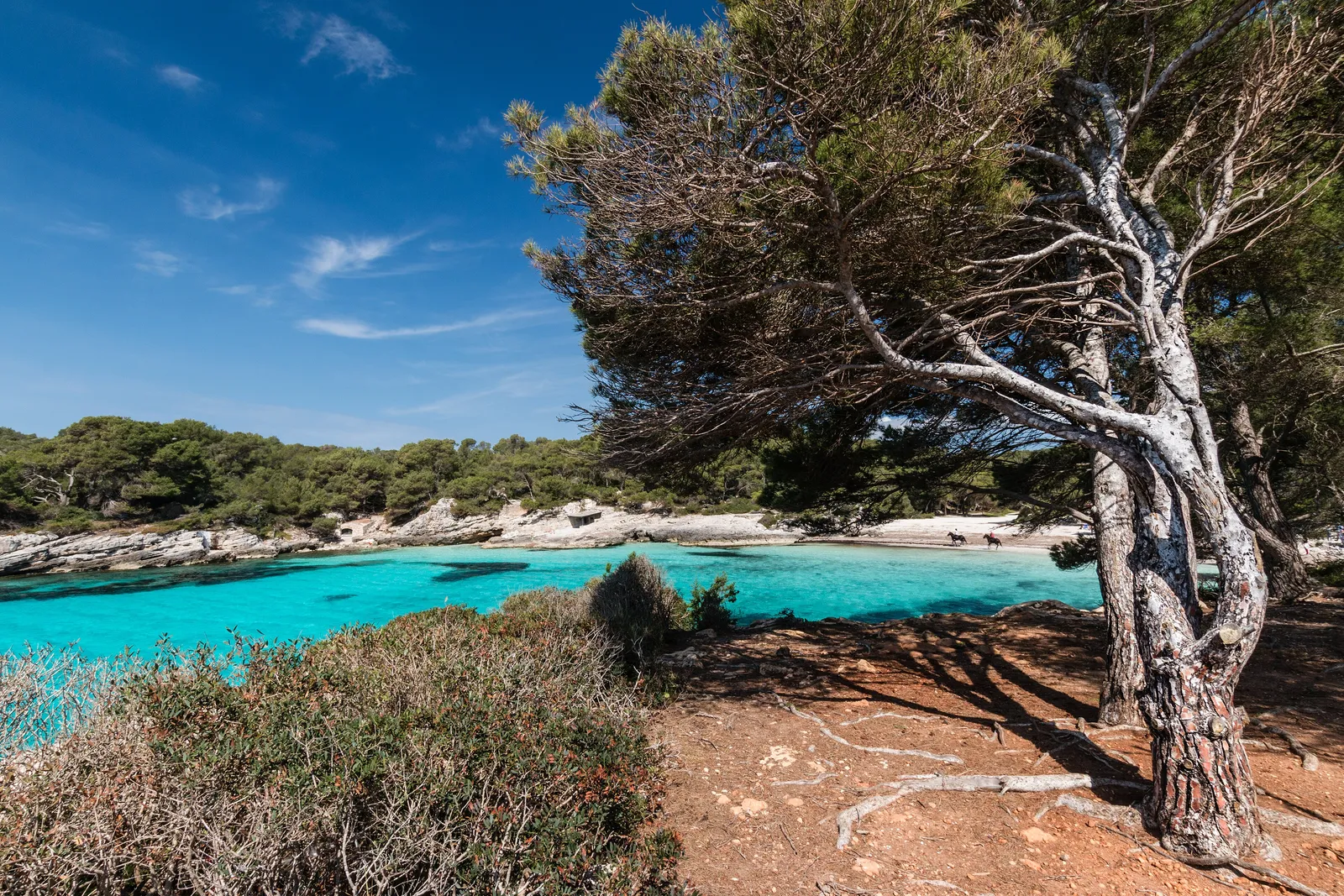
4. Cala Mitjana
Wide, crystal-clear and framed by cliffs that some are brave enough to jump from (with caution). Its neighbour Mitjaneta is a short stroll away, and Cala Galdana a stretch of the Camí de Cavalls.
- Getting there: a large free dirt car park and a signposted 1.2 km downhill path, mostly comfortable and family-friendly; in high season, arrive first thing. Also on foot from Cala Galdana and, in season (in 2026, until 30 September), by bus (L52 from Ciutadella, L51 from Maó).
- Facilities: a picnic area; no beach bar. A lifeguard from 1 June to 15 September (itinerant from Cala Galdana for the rest of the season). Bring everything else you need.
- Best time: June and September; in August, early.
5. Cala Trebalúger
One of the island’s most beautiful virgin coves: white sand, limestone cliffs, pines down to the shore and a small stream meeting the sea at one end. Longer and deeper to reach, it rewards those who walk in with an almost private cove feel.
- Getting there: only on foot —a demanding walk— or by sea. Plan your return before heading down.
- Facilities: none: water and food are essential.
What is the wild north like?
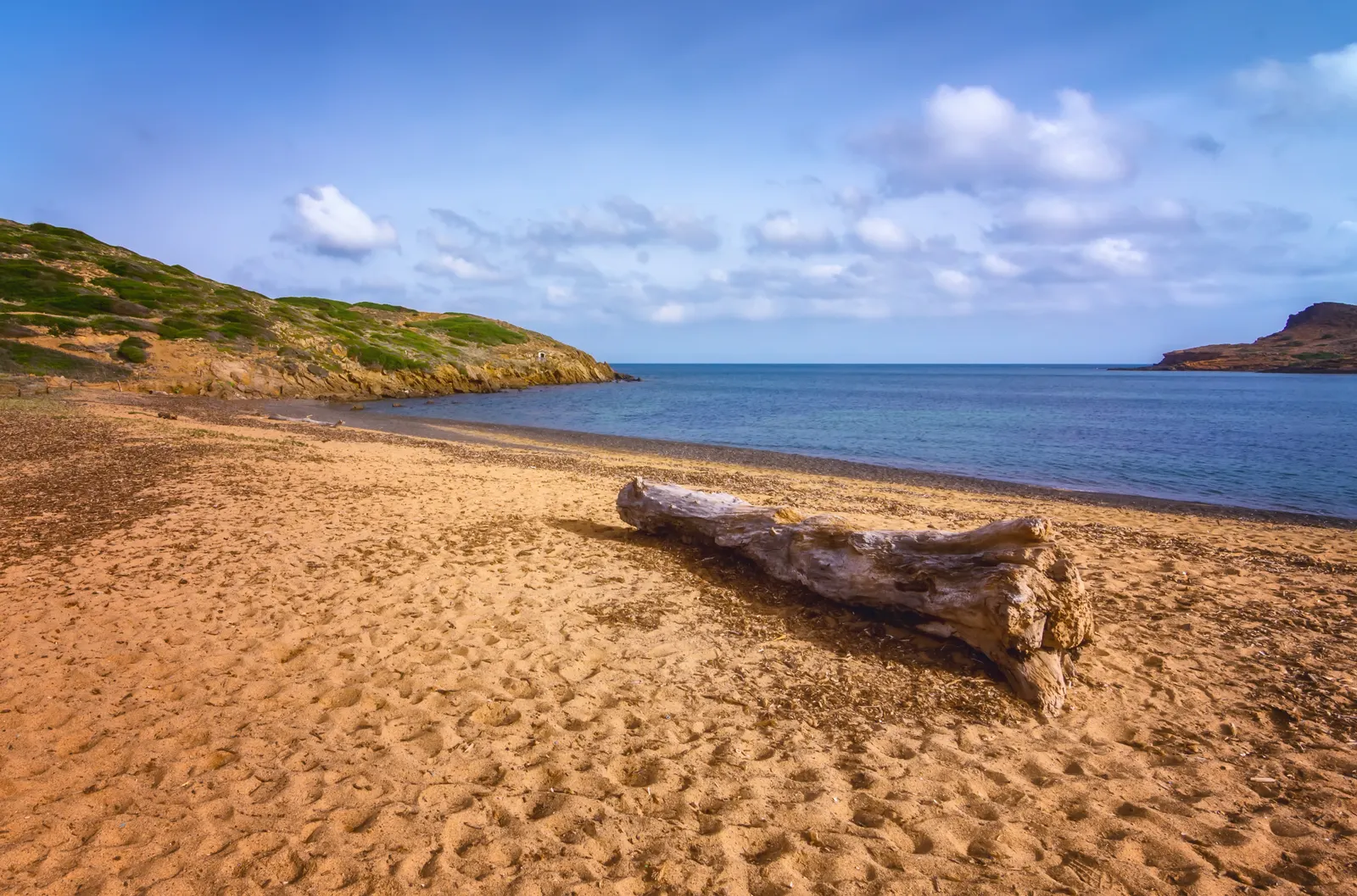
The tramuntana coast is another Menorca, and for many the most memorable. Here the geology changes: red earth, dark ancient rock, sand that ranges from gold to russet. There is wind, there is silence, and there is a rougher, more solitary beauty — no perfect pine woods, but a drama that draws you in.
We chose three: Pregonda, Cavalleria and Cala del Pilar. More exposed to the tramuntana wind, they share warm tones and a red clay best left untouched: scraping it off to smear on the skin erodes the cliffs; Binimel·là, Pregonda’s neighbour and its natural car park, completes the picture. The north rewards those who accept its terms: walking a little further, going without a beach bar and surrendering to the landscape.
6. Cala Pregonda
Reddish sand, islets facing the shore and an almost lunar feel: one of the north’s most iconic coves. No beach bar or toilets, and therein lies part of its charm: the walk-in access filters out the crowds. Pure calm.
- Getting there: no road access to the cove; around 35 minutes on foot (~2 km) along the Camí de Cavalls from the public Binimel·là car park, very limited in summer.
- Facilities: no beach bar, toilets or showers; a lifeguard in season. Bring water, food and shade.
- Best time: May-June and September; in August, first thing. And best with little northerly wind.
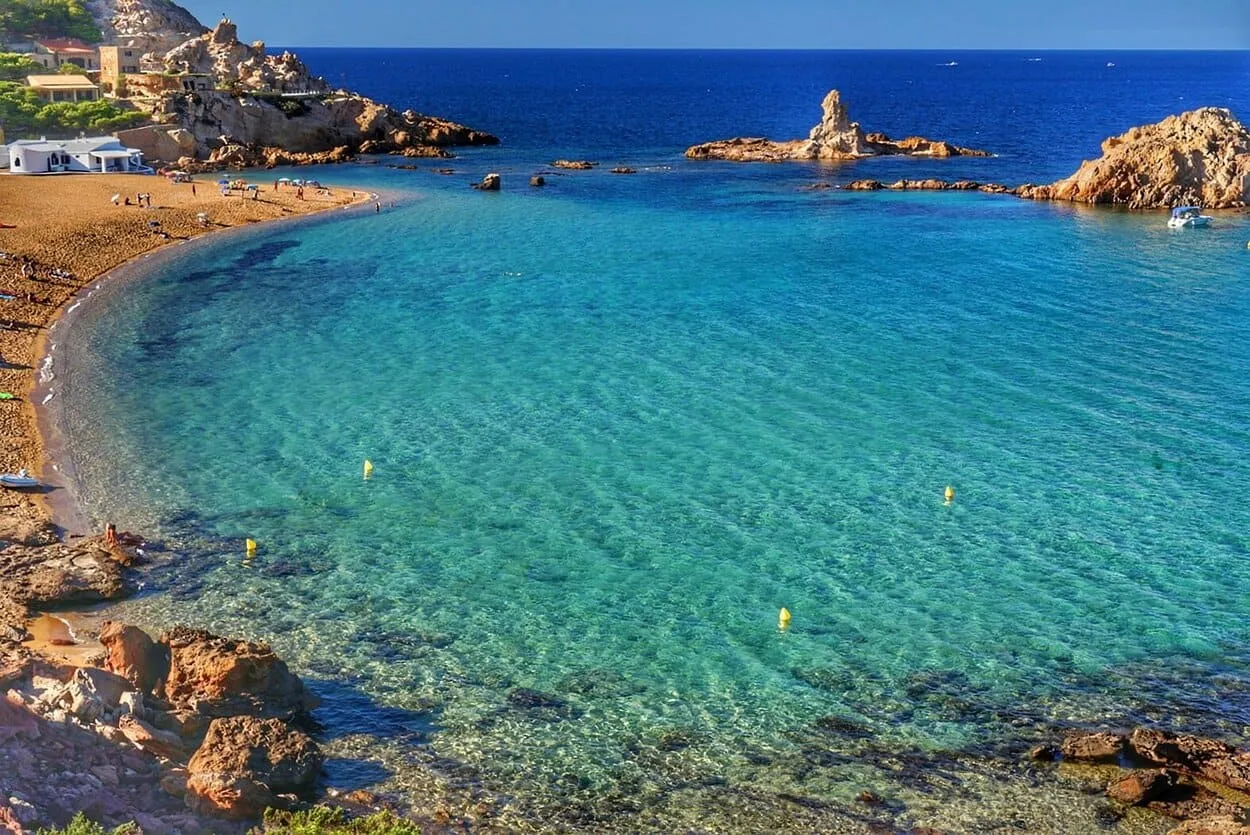
7. Platja de Cavalleria
A large unspoilt beach of reddish sand framed by ochre cliffs, one of the north’s postcards — and the most convenient of the three, thanks to its car park near the sand.
- Getting there: a narrow paved road (~15 minutes) to the car park; from there, around 400 metres on foot down wooden walkways.
- Facilities: only a lifeguard in season.
- The perfect plan: climb afterwards to the Cap de Cavalleria lighthouse for sunset.
Platja de Cavalleria, in detail →
8. Cala del Pilar
One of Menorca’s wildest and most isolated beaches: golden sand beneath red clay cliffs, with not a single facility. The long walk and the access controls keep it almost untouched: it rewards only those who earn it.
- Getting there: a long walk through pine wood and scrub from the car park, which is capacity-controlled in season; there is no public transport.
- Facilities: none on the sand: go with nothing and come back with nothing (your litter included).
When should you go to avoid the crowds?
The secret is no secret, yet few put it into practice: timing matters as much as the place.
- First thing. An early start completely changes the experience: parking is possible (in July and August, Turqueta fills by around 8am), the sand is clear and the light is soft. By mid-afternoon, as many leave, numbers drop too.
- In the shoulder season. June and September offer a mild sea, long days and far fewer people than the July and August peak.
- Mind the wind. The north is best enjoyed with a southerly wind; the south, with a northerly. Checking the forecast and choosing the sheltered coast that day makes all the difference.
If you’d like this same judgement taken further, the Society’s free guide —Menorca’s famous beaches, and how to see them without the crowd— covers the island’s six most sought-after beaches with the hour at which they stop being full and the wind that shelters them.
How to get there without a car (or when access is closed)?
In the busiest months, several road accesses to the southern coves are closed or limited to protect the surroundings and prevent car parks from collapsing. There are three good alternatives, all more serene than fighting for a space:
- Seasonal bus. Seasonal lines connect the towns with the most popular beaches. Check up-to-date timetables and frequencies before you go, as they change every summer.
- On foot along the Camí de Cavalls. Many stretches of the GR-223 link neighbouring coves in short, spectacular walks. Arriving on foot is, moreover, the loveliest way to discover them.
- By sea. By kayak, paddleboard or small boat, the coves look as few ever see them. Always respect the anchoring zones and the posidonia meadows, essential to the crystal-clear water.
What to bring and how to look after them?
The luxury here can’t be bought: it is the silence and the space. To enjoy it without a hitch and leave the cala as you found it:
- Enough water and your own shade. Most unspoilt coves have no beach bar and no reliable natural shade.
- Comfortable shoes. Access paths are usually earth, rock or roots.
- Take all your litter with you. No exceptions. The biosphere is sustained by small, constant gestures.
- Respect the posidonia and the dunes. The piles of dry seagrass on the shore protect the sand; they are not dirt.
- No speakers. A cove’s soundscape is part of its value.
Our considered recommendation
If you only have one day, pair a southern cala first thing (Turqueta or Macarella, first thing) with a sunset in the north (Pregonda or Cavalleria), and you’ll discover Menorca’s two souls in a single day.
If calm matters above all, prioritise the coves that demand a walk: the effort, however modest, is the best filter against the crowd. And if you come in high summer, take it as given that rising early is not a sacrifice but the true price of admission to a Mediterranean you can still live slowly.