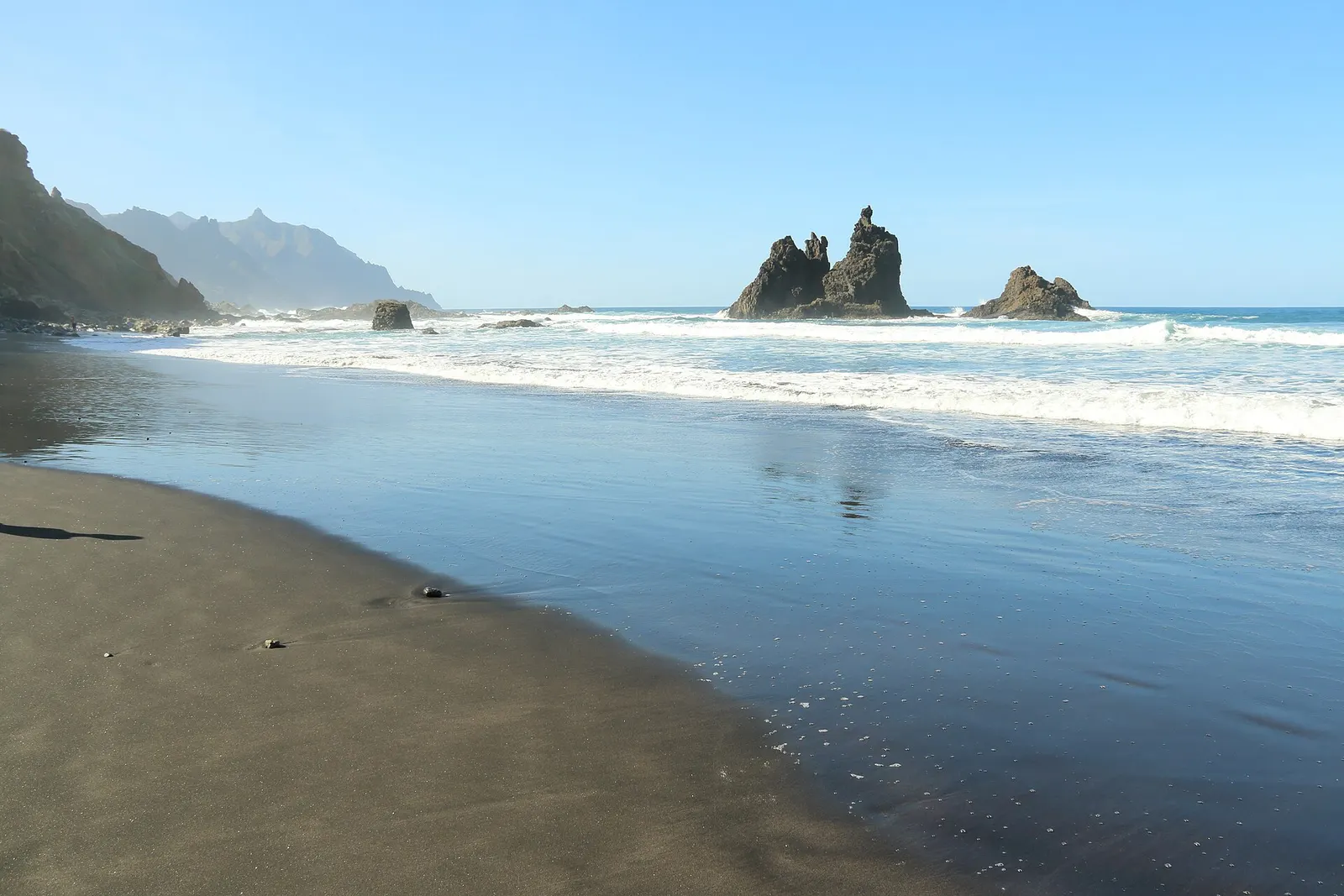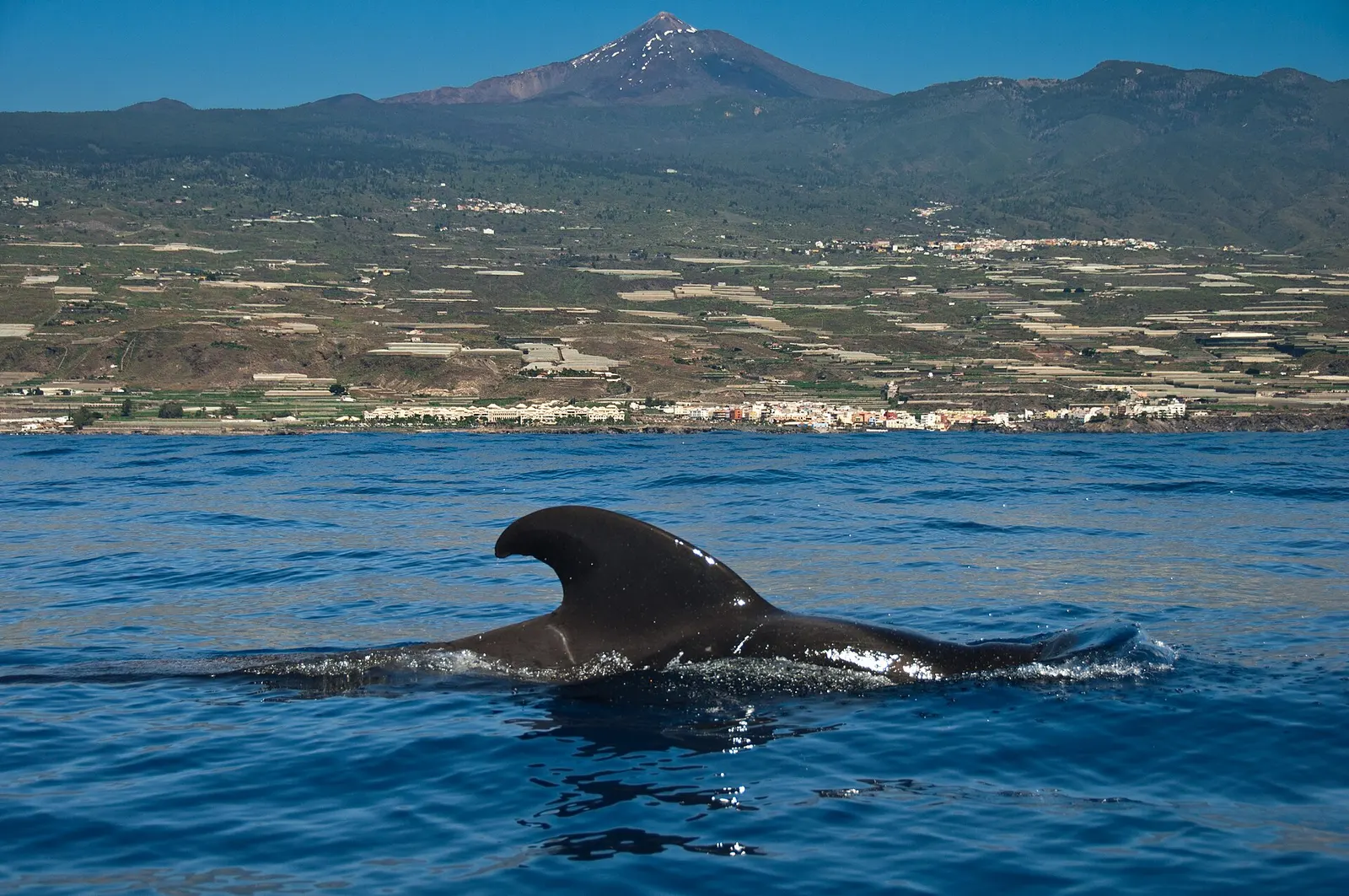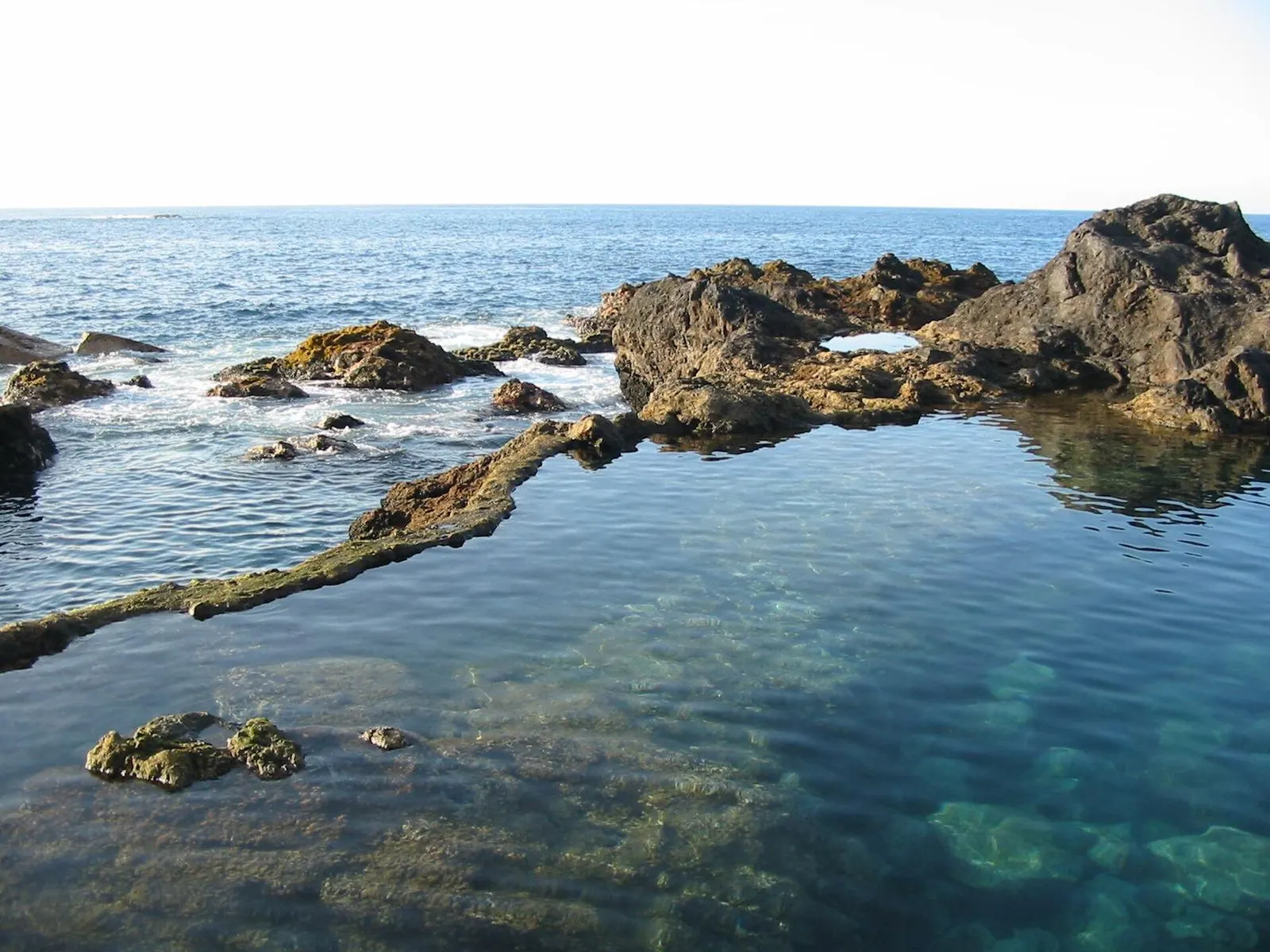
The north of Tenerife does not have the golden sand of the south. It has something else: a coast of black lava that the Atlantic pounds for most of the year and, between the rocks, charcos — rock pools where the water arrives tamed. People here have always swum this way. What looks like a curiosity to visitors is simply custom on the island: you watch the sea from the shore and enjoy it from the pool.
The essentials
- El Caletón, in Garachico: pools formed by the lava of the 1706 eruption. Free access.
- Bajamar, in La Laguna: two large pools and a children’s pool behind a wall that softens the swell.
- Punta del Hidalgo: the El Arenisco pools, with a Blue Flag and adapted access.
- Charco de La Laja, in San Juan de la Rambla: the wildest. Steps down, no facilities, and no swimming when the sea is rough.
- Lago Martiánez, in Puerto de la Cruz: César Manrique’s complex, a protected heritage site, reopened in 2026 after renovation.
- The rule above all: with a groundswell running, nobody swims.
El Caletón in Garachico
In 1706 a volcano buried the harbour of Garachico, until then one of the most important on the island. Where the lava met the sea it left a coastline of nooks, and today these hold the pools of El Caletón: walkways, small ladders and clear water between walls of rock. Access is free and it sits a step from the old town, so a swim pairs easily with a walk through the streets the volcano spared.
Go early, while the town is still quiet, and then walk up for lunch in the old quarter.
Bajamar and Punta del Hidalgo
On La Laguna’s coast, at the foot of Anaga, two villages live by the pool. Bajamar has two large pools and a children’s pool protected by a wall that breaks the waves; it is the easiest choice with children, and the guagua — the island’s bus — runs here from La Laguna.
A few minutes further on, Punta del Hidalgo is where the road ends and the landscape begins. Its El Arenisco pools hold a Blue Flag and have adapted access, according to La Laguna town council. The open sea here is not for swimming — the swell and currents rule it out, which is exactly why the pools exist. Behind them, the mountains of Anaga close the view.
Charco de La Laja
In San Juan de la Rambla, Charco de La Laja is the purest version of the Canarian rock pool: a natural basin at the foot of the cliff, reached by a flight of steps. There are no facilities. It is lovely when the sea is calm and dangerous when it is rough; on those days you look from above and move on.
Lago Martiánez
At the other end of the scale is Lago Martiánez, in Puerto de la Cruz: a large seawater lake set among gardens and volcanic stone, designed by César Manrique and opened on 30 April 1977. It is listed as a Bien de Interés Cultural in the historic garden category and reopened in 2026 after renovation. It is the answer for days when the sea says no: the Atlantic breaks on the other side of the wall while you swim in calm water. Opening hours and prices after the reopening: check before you go.
Safety: look at the sea before your swimsuit
The northern rock pools sit on the front line of an open ocean. A groundswell — waves arriving from far away in apparently fine weather — can flood a pool in seconds under a clear sky. Before swimming:
- Check AEMET’s coastal warnings and the town council’s information. Some pools are closed when coastal conditions are severe.
- Watch for five minutes from above. If waves wash over the wall or the rocks, or the water surges in and out, today is not the day.
- Never turn your back on the sea on the rocks, and do not walk to the outer edge for a photo.
- The tide changes the pool: the same spot can be a calm basin or a breakwater depending on the hour.
And one rule for when you leave: stones and volcanic sand stay where they are.
Which to choose
- You want to swim with history → El Caletón in Garachico, early in the day.
- You are travelling with children → Bajamar, or El Arenisco in Punta del Hidalgo.
- You want the wildest pool → La Laja, only when the sea is calm.
- The sea says no → Lago Martiánez.
- You would rather have sand → the Tenerife beaches that are still wild.
Our view
The rock pool is the quiet luxury of the north: Atlantic water, black rock and nobody in a hurry. There are no sunloungers and no cocktail list; there is morning light on the lava and the sound of the sea on the other side. But the sea is in charge, and those who understand that come back. If today is not possible, it is not possible: the pool will still be there tomorrow.
Data as of October 2026, checked with La Laguna town council, the Canarian press (RTVC) and local guides. Conditions at the pools change with the sea and with council closures: always confirm before swimming.