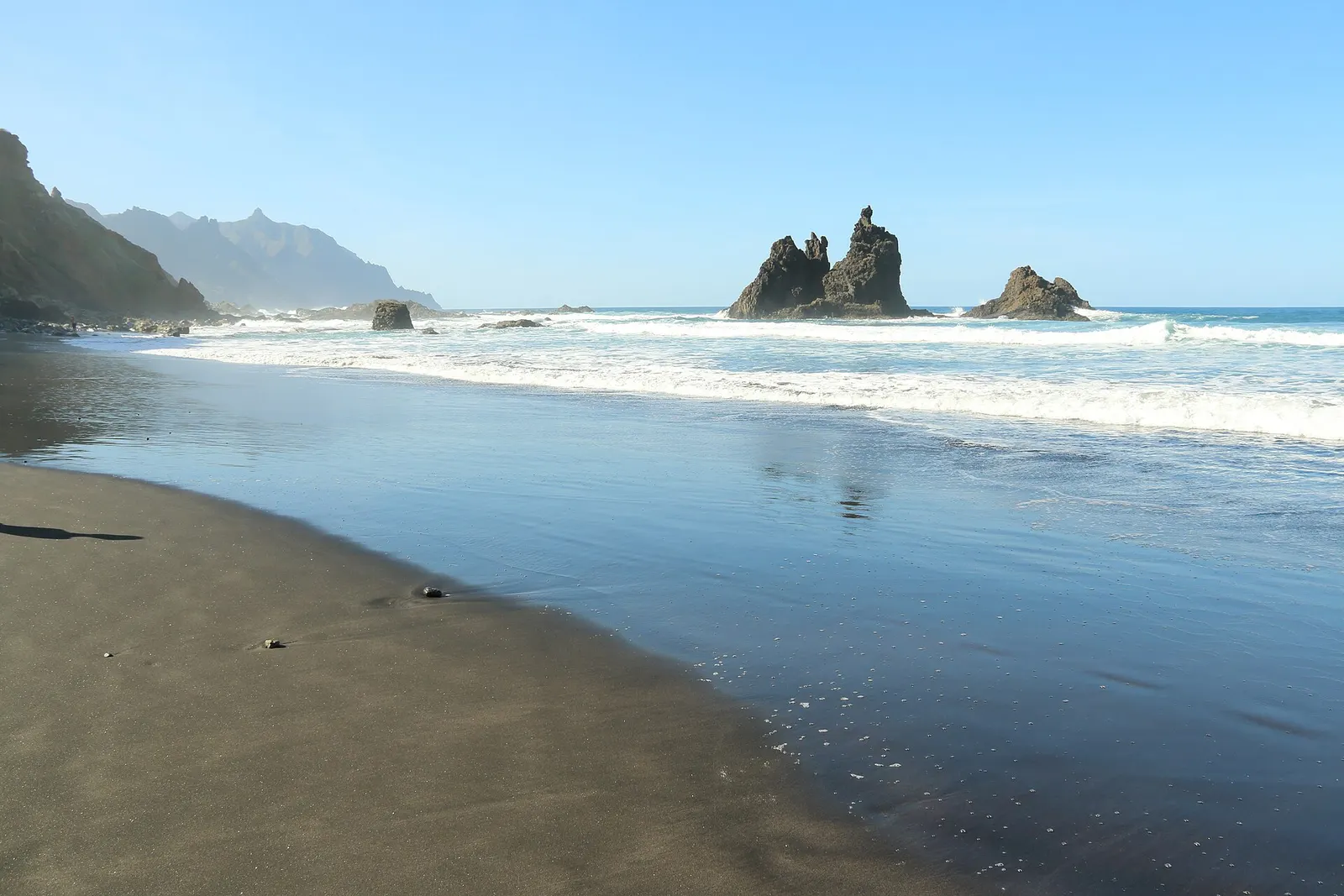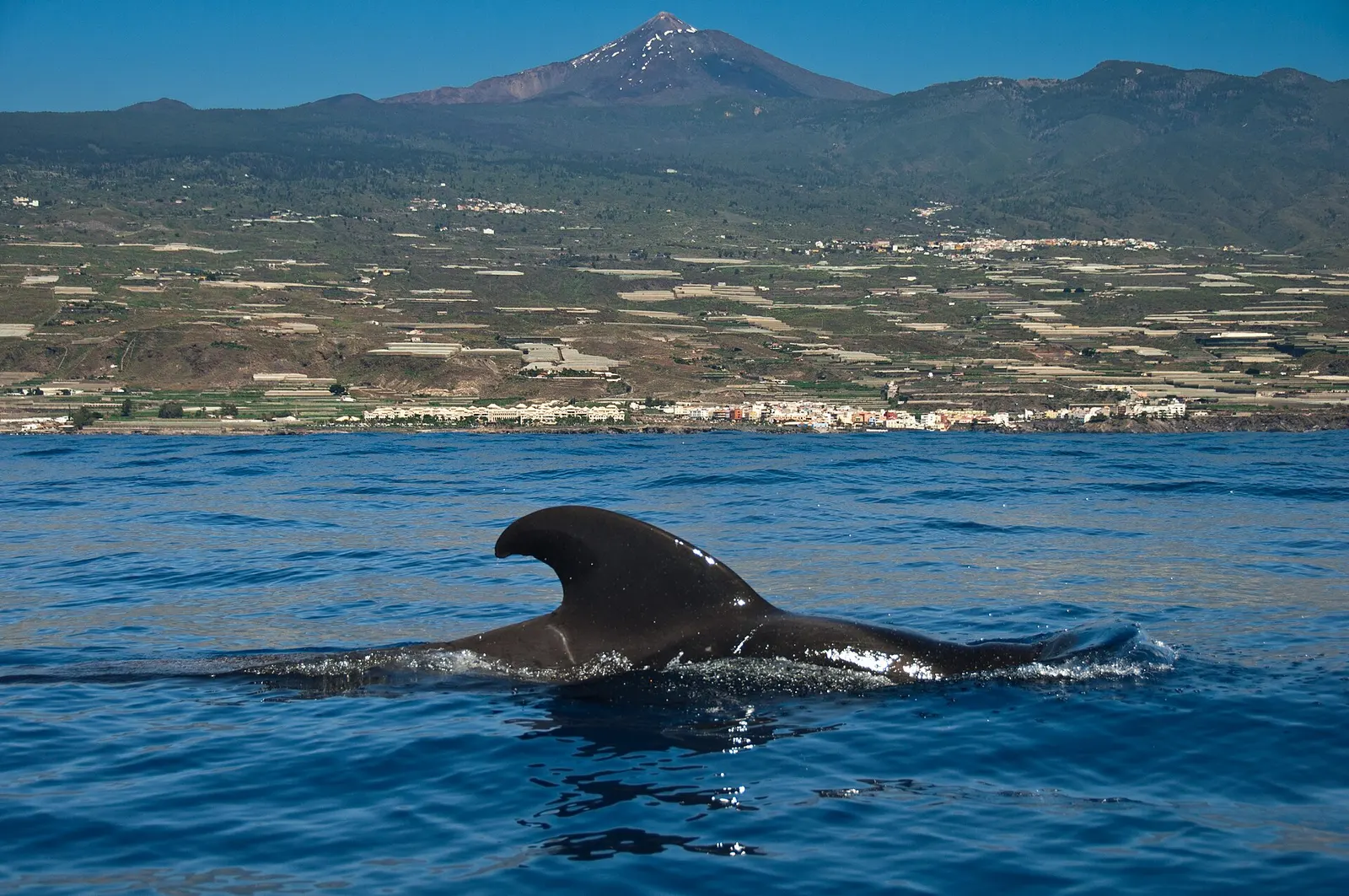
There are places whales pass through. In Tenerife, some of them stay. Off the south-west coast, between the cliffs of Teno and the headland of Rasca, a population of short-finned pilot whales and bottlenose dolphins lives all year round. There is no migration to wait for and no season to get right: they are at home. That turns any boat trip into a visit, and a visit comes with manners.
The essentials
- The Teno-Rasca marine strip has been a Special Area of Conservation in the Natura 2000 network since 2011: some 69,490 hectares of sea between Punta del Fraile, in Teno, and Punta Salema, in Las Galletas.
- Resident pilot whales and bottlenose dolphins. Both species are listed as vulnerable in Spain.
- Europe’s first Whale Heritage Site, an international designation for places where people live alongside cetaceans responsibly.
- The pressure is real. Spain’s Ministry for the Ecological Transition has warned of the risk of collisions and of noise, and has proposed a moratorium on new whale-watching authorisations.
- Always choose a boat with the Barco Azul badge issued by the Government of the Canary Islands. Small, with few people on board, and in no hurry.
A population that does not leave
The short-finned pilot whale is a dark cetacean with a rounded head that lives in stable family groups. Known resident populations are few: besides Tenerife, the Ministry cites those of Japan, Madeira, California and Hawaii. Published estimates of how many animals live in Teno-Rasca range from around two hundred to more than three hundred, depending on the year and the source. Bottlenose dolphins, better known, share the same water.
Why the pressure needs to be talked about
Success has a cost. For more than three decades the south of Tenerife has been one of Europe’s major whale-watching destinations, and the authorised boats are joined by jet skis, pleasure craft and shipping. The Ministry has warned of the risk of collision and of underwater noise, and has proposed halting new authorisations. In 2025 the Canarian press reported the concern of scientists and conservationists about tourist pressure on the area.
None of this is a reason not to go. It is a reason to go well.
How to choose your trip
Trips leave mainly from Los Cristianos, Puerto Colón (Costa Adeje) and Los Gigantes. Before booking:
- Ask about the Barco Azul badge. It is how the Government of the Canary Islands identifies boats authorised for cetacean watching, and it is shown on board as a flag. A boat without authorisation should not approach the animals. Do not confuse it with the Blue Flag, which is a different award.
- Choose a small boat and a small group. Less engine, less noise, and enough quiet on deck to hear the blow when the pilot whales surface to breathe.
- Be wary of promises. Anyone who guarantees a sighting a few metres away, chases a group or offers to put you in the water with them is not working for the animals.
- Ask about the guide. The best trips carry someone who explains what you are seeing and why the boat stops or moves away.
A good trip shows in what it does not do: it does not circle the group, does not cut across its path and pulls back when the animals change course. Specific distances and times are set by each boat’s authorisation; the skipper knows them and must respect them.
The coast from the sea
A trip from Los Gigantes has a bonus: the cliffs of the same name, which drop into the water at the foot of the Teno massif, make more sense seen from below.
Which to choose
- You want the calmest experience → a small boat with the Barco Azul badge, early in the day, with a guide on board.
- You want to see the cliffs → a trip from Los Gigantes.
- You would rather be in the water without a boat → the Tenerife beaches that are still wild.
- You are travelling in high season, which here is winter → Tenerife in winter.
- You are looking for somewhere to sleep near the sea → quiet-luxury hotels in Tenerife.
Our view
Luxury here is not getting closer: it is knowing when to stop. Watching a group of pilot whales breathing slowly at a distance, with the engine idling and nobody shouting on deck, is worth more than any photo taken from three metres. These animals have been here far longer than we have, and they will stay if visitors learn to behave like guests.
Data on the Teno-Rasca SAC, the species and the moratorium checked with Spain’s Ministry for the Ecological Transition and the Canarian press (RTVC, Diario de Avisos); data as of October 2026. This guide recommends no company and is not paid for inclusion: check each boat’s authorisation before booking.