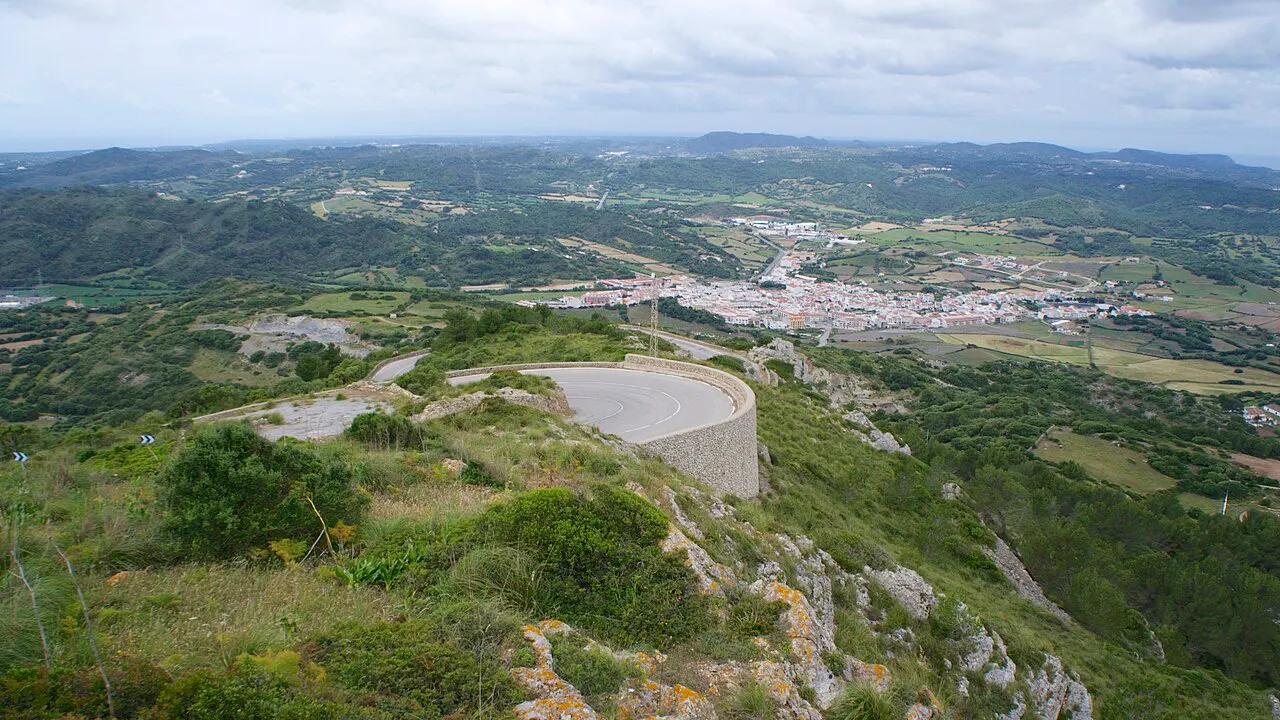
Some Menorcan villages announce themselves with monuments; others are recognised by what they lack: no bustle, no obligatory postcards, no August rush of the coast. Es Migjorn Gran belongs to the latter. A handful of houses in the centre-south of the island, quiet streets, countryside all around and a silence that has become a luxury today. Anyone seeking the real Menorca — the one that still smells of the land rather than of high season — will find a refuge here.
It is worth starting by clearing up a common confusion. “Es Migjorn” is, in Menorquí, the generic name for the south of the island; Es Migjorn Gran, with its full name, is a specific municipality, the youngest in Menorca. They are not the same, and the difference matters: this article is about the village, not the whole region. It is a village born of farming and livestock, which for centuries lived in the shadow of Es Mercadal and only a few decades ago took its own destiny in hand.
This is an unhurried guide to Es Migjorn Gran: why it is worth the stop, what makes it different, what to see around it and how to experience it without watching the clock.
The essentials
- Where: centre-south of Menorca; a municipality in its own right since 1989, when it broke away from Es Mercadal.
- The youngest and smallest: the last municipality on the island to be constituted and the least populated, with around 1,500 inhabitants.
- Origins: a farming and livestock community of the 18th century; an inland village, peaceful and unspoilt.
- What to see: the Cova des Coloms (“The Cathedral”), a great cave in the Barranc de Binigaus, and the talayot of Sant Agustí Vell.
- Its beaches: Binigaus (wild, pale sand and clear water) and Sant Tomàs (a tourist resort from the 1960s).
- Famous son: the doctor, writer and folklorist Francesc Camps i Mercadal “Francesc d’Albranca” (1852-1929).
Why stop in Es Migjorn Gran?
Because it is an oasis, and the word is not marketing. While much of the Menorcan coast fills up in summer, this inland village keeps a slow pulse all year round. There is no need to “do” anything in particular: stroll its streets, have something on an unhurried square, watch the countryside spread towards the ravines. The reward is precisely that — a place that does not perform for the visitor.
Its scale also explains the charm. With around fifteen hundred inhabitants — the least populated municipality in Menorca — you can cover it on a short walk, and that smallness is what keeps it safe from the noise. It is the perfect threshold to two worlds: towards the sea, beaches that range from wild to family-friendly; inland, a ravine that holds one of the most imposing caves on the island.
Menorca’s youngest municipality
Es Migjorn Gran has a singular administrative history. It was born as a farming and livestock community in the 18th century, but for a long time it formed part of the municipality of Es Mercadal. It was not until 1989 that it broke away and constituted its own town council, which makes it the youngest municipality on the island.
That institutional youth coexists with deep roots in the land. The village keeps the character of those who lived off the fields and the livestock, without the seigneurial stamp of the larger towns or the maritime calling of the north. It is inland Menorca, the Menorca of the farmer, and you can feel it in its calm.
The village is also the birthplace of Francesc Camps i Mercadal, known as “Francesc d’Albranca” (1852-1929): a doctor, writer and folklorist who devoted his life to gathering Menorcan popular culture. That so small a place should produce such a figure says a great deal about the cultural density of the island.
The Cova des Coloms, “The Cathedral”
If Es Migjorn Gran holds one great secret, it is the Cova des Coloms, nicknamed “The Cathedral” for its proportions. It is no ordinary cave: a vast cavity some 24 metres high, 15 wide and 110 long, opening into the Barranc de Binigaus. The figures, cold on paper, do not prepare you for the feeling of stepping beneath a vault of stone the height of a building.
Its past adds mystery to the spectacle. According to studies, it may have been used as a funerary or ritual space in the post-Talayotic period, which makes it a place laden with symbolism beyond its size. To set foot inside is to glimpse a Menorca far older than the one in the brochures.
An important note for visiting it properly: the Cova des Coloms is reached on foot along the ravine — you cannot drive there. You need good footwear, water and to enjoy the walk as part of the experience. It is worth checking the state of the access paths and the timing of the route before you go, because the ravine is walked at a steady pace and without shortcuts.
The beaches: from wild Binigaus to family-friendly Sant Tomàs
The municipal boundary runs down to the sea with two beaches of opposite character, and therein lies its appeal.
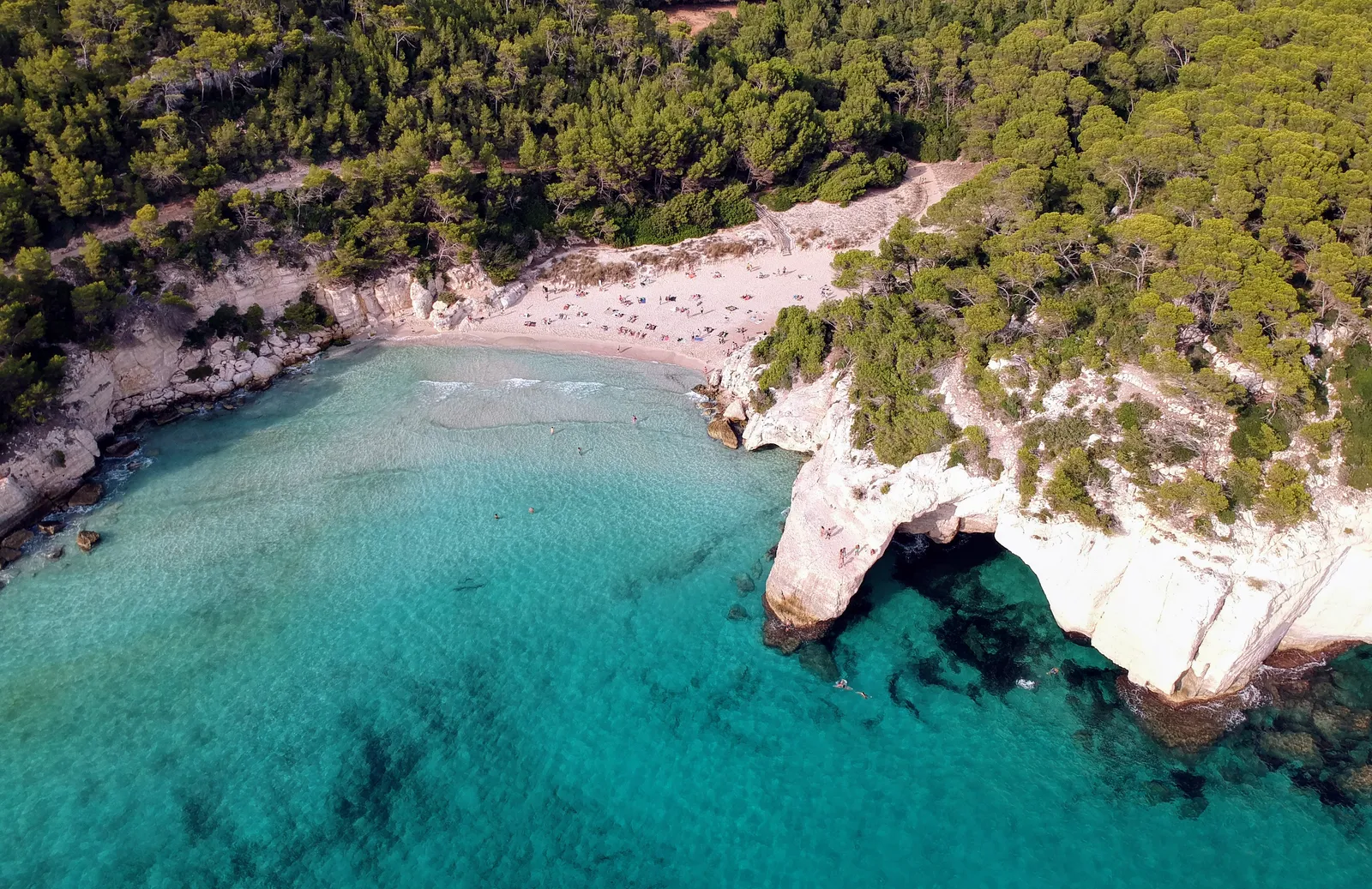
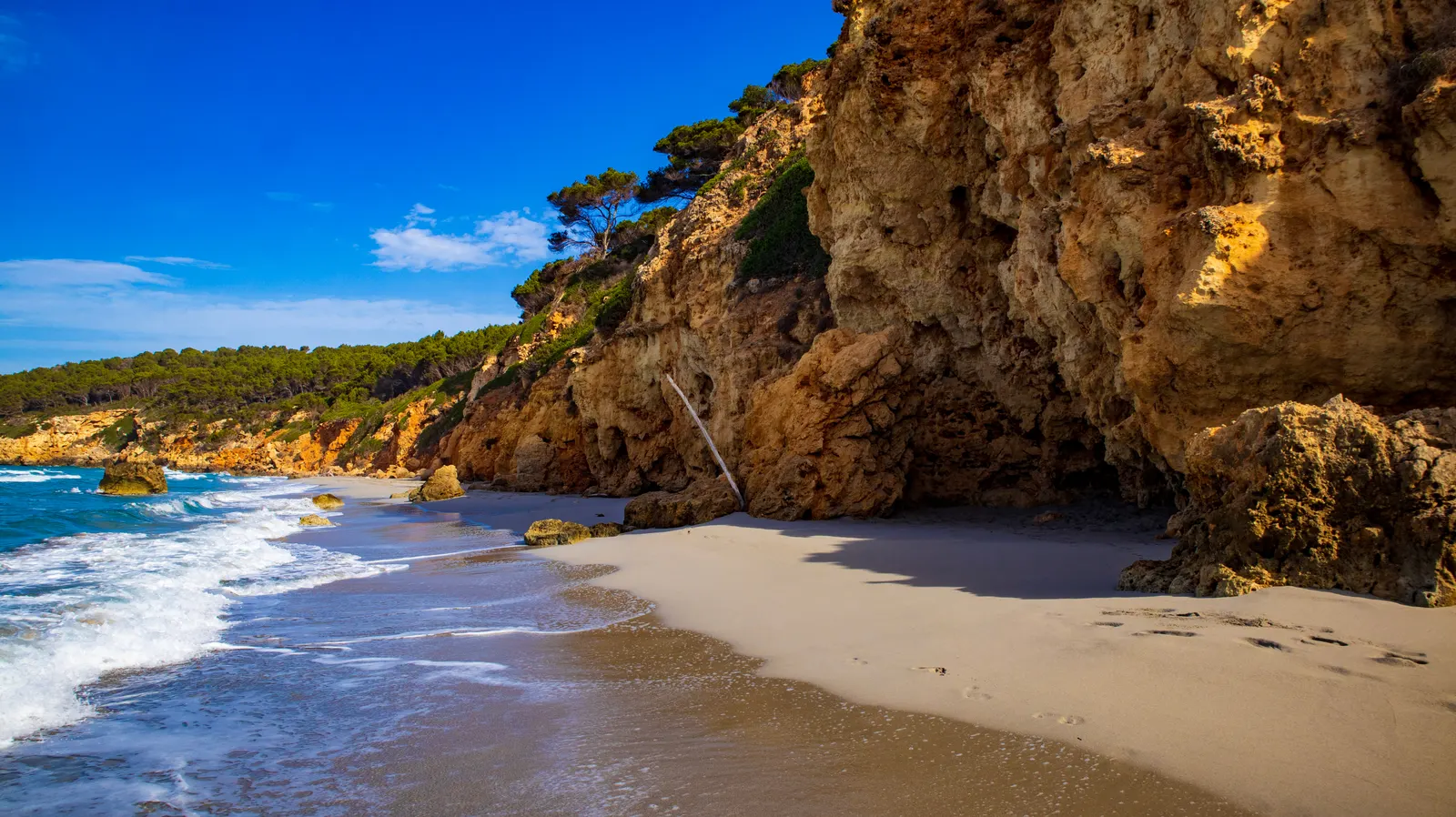
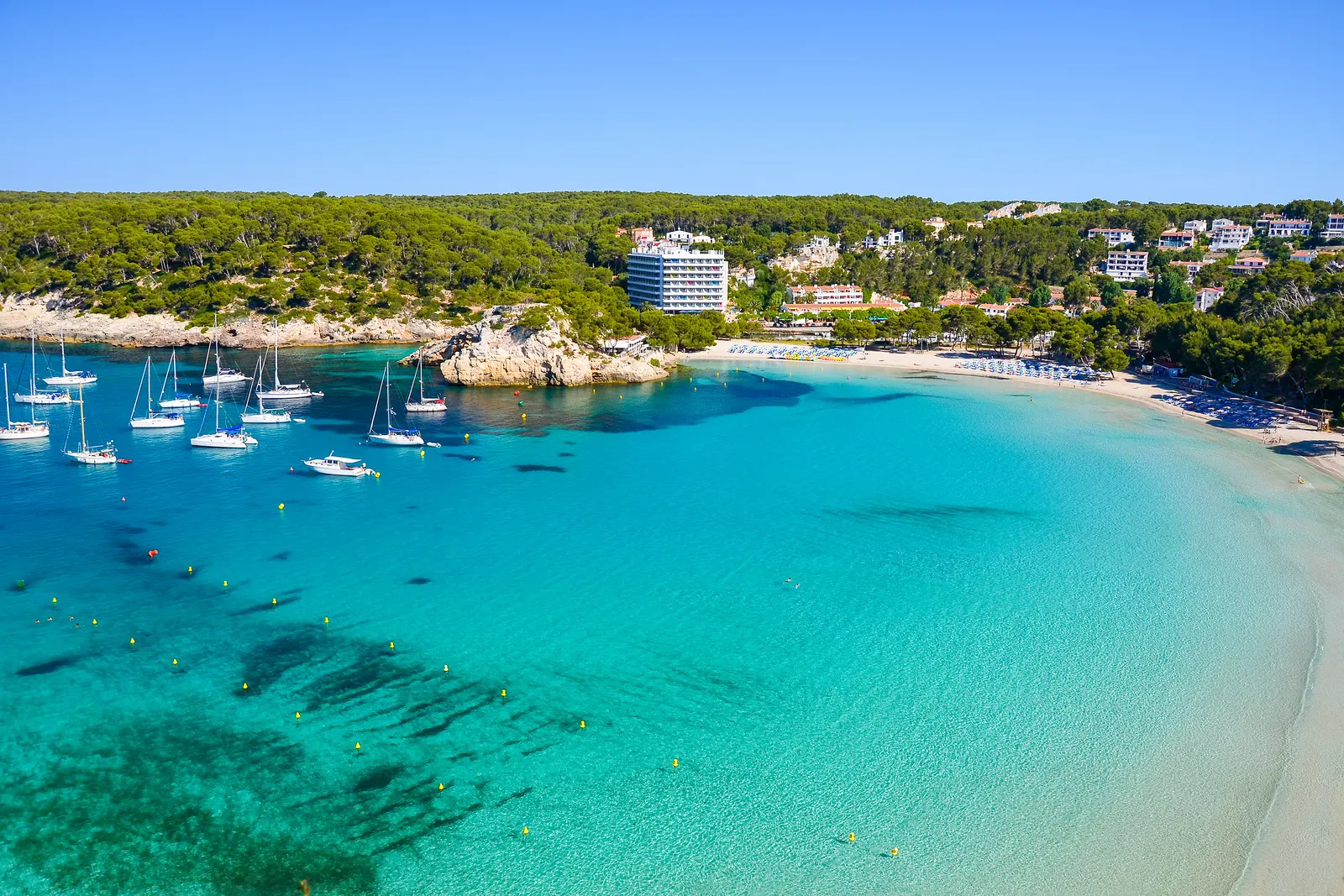
Binigaus is the wild jewel: an unspoilt beach of pale sand and clear waters, with no development behind it, framed by cliffs. It is the image of southern Menorca that many seek and few know where to find. Reaching it calls for a bit of a walk, and that small effort is what keeps it peaceful.
Right beside it, Sant Tomàs offers the opposite face: a tourist resort that grew up in the 1960s, with services, hotels and a long, easily accessible beach. It is neither historic centre nor hidden corner — worth knowing — but the practical, family base from which you can walk towards the wild. Together, the two sum up the two souls of the south.
If you would like to extend your coastal plan, our guide to the best calas in Menorca places you on the map of the coastline, and the art of calm explains why this quiet south is worth visiting without rushing.
What else to see nearby
Beyond the cave and the beaches, the municipality holds traces of prehistoric Menorca. The talayot of Sant Agustí Vell is a site that reminds us this land has been inhabited long before the present village, adding to the island’s immense Talayotic heritage.
The real plan, in any case, is a low-key one: walk the ravine, settle on one of the two beaches according to your mood, and return to the village at the quiet hour. Es Migjorn Gran is not covered with a checklist in hand; it is lived in for a while.
When to go and how to get there
Like almost all of inland Menorca, it is at its best in spring and autumn, when the countryside is green, the light is gentle and the ravine can be walked without the midday heat. In summer it is wise to keep the cool hours — early morning and dusk — for the route to the cave. It is easily reached by car from Es Mercadal or from Maó and Ciutadella through the interior, though, as always in season, parking near the beaches becomes tricky.
Our take
Es Migjorn Gran does not compete for the turquoise postcard or the bell-tower monument. Its luxury is another kind: that of a small village which has stayed on the margins of the noise and yet keeps, all at once, one of the most awe-inspiring caves in Menorca and a wild beach just a walk away.
Our recommendation: start early with the walk through the ravine to the Cova des Coloms, leave midday for a swim at Binigaus, and keep the afternoon for the village, with no agenda. It is quiet luxury understood as it should be — space, time and authenticity — in the youngest and most serene municipality on the island.