There are towns that face the sea and towns that face the land. Ferreries faces the land, and that is why it has kept something the coast has gradually lost: the pulse of the trades. Here, in one of the highest inland towns of Menorca, at around one hundred and forty metres, the landscape is not one of sand and turquoise but of rolling countryside, dry-stone walls and workshops where leather, wicker and clay are still worked by hand.
It is a place you come to understand slowly. It has neither the obvious postcard of the southern calas nor the seafront of the fishing villages; what it has instead is an authenticity that is less photogenic and runs deeper, the authenticity of those who make rather than display. As the capital of the island’s living crafts and a byword for Menorcan footwear and leatherwork, Ferreries is the Menorca that produces, not only the one that is admired.
And yet the sea is never far away. From the town begins the Barranc d’Algendar, a green, humid valley that descends southwards until it meets the sea at Cala Galdana. That dual nature — a land of trades above, a ravine running down to the sea — is what makes Ferreries a stop worth making with discernment.
The essentials
- Where: inland Menorca, in the west-central belt; one of the highest-lying towns on the island, at around 140 m.
- Its reputation: capital of living crafts and a benchmark for Menorcan footwear and leatherwork, with a long tradition of skilled trades.
- Not to be missed: the Mercat Artesà i Agroalimentari in the Plaça d’Espanya on Saturday mornings (it is worth confirming the times according to the season).
- Nature: the Barranc d’Algendar, a green ravine with a watercourse and walking and cycling paths that link up with the Camí de Cavalls (GR-223, ~185 km) towards Cala Galdana.
- Nearby calas: Cala Galdana, Cala Mitjana and Mitjaneta, at the foot of the ravine and around it.
- Character: a working, serene, inland town; none of the coastal bustle.
Why stop in an inland town?
Because Menorca is not only its coastline, and anyone who sees only the calas misses half the island. Ferreries offers the other Menorca: the one of countryside, trades and a rhythm that does not depend on the bathing season. It is a town that lives all twelve months of the year and which, thanks to its height and its position in the centre-west, also works well as a comfortable base for moving between the north and the south.
Its scale invites you to explore on foot: the square, the sloping streets, the workshops and shops where local produce is not a souvenir gimmick but a lifetime’s work. There is no list of monuments to tick off. The plan is a different one: letting yourself be carried along by the pulse of the town and, if it fits, by that of the ravine.
The Saturday artisan market
If there is one moment to get to know Ferreries, it is Saturday morning, when the Plaça d’Espanya fills up with the Mercat Artesà i Agroalimentari. Here is concentrated everything the town knows how to make: costume jewellery, ceramics, wicker basketry, leather, soaps and footwear, alongside the island’s agri-food produce. It is a market of craft, not of trinkets; the place to see up close why Ferreries has earned its reputation.
It is worth confirming the times according to the season, as they can vary over the course of the year. The advice is simple: go without rushing, look calmly, talk to the person behind each stall. Menorcan craftsmanship is better appreciated when you understand where it comes from.
Trades that are still alive: leather, wicker and clay
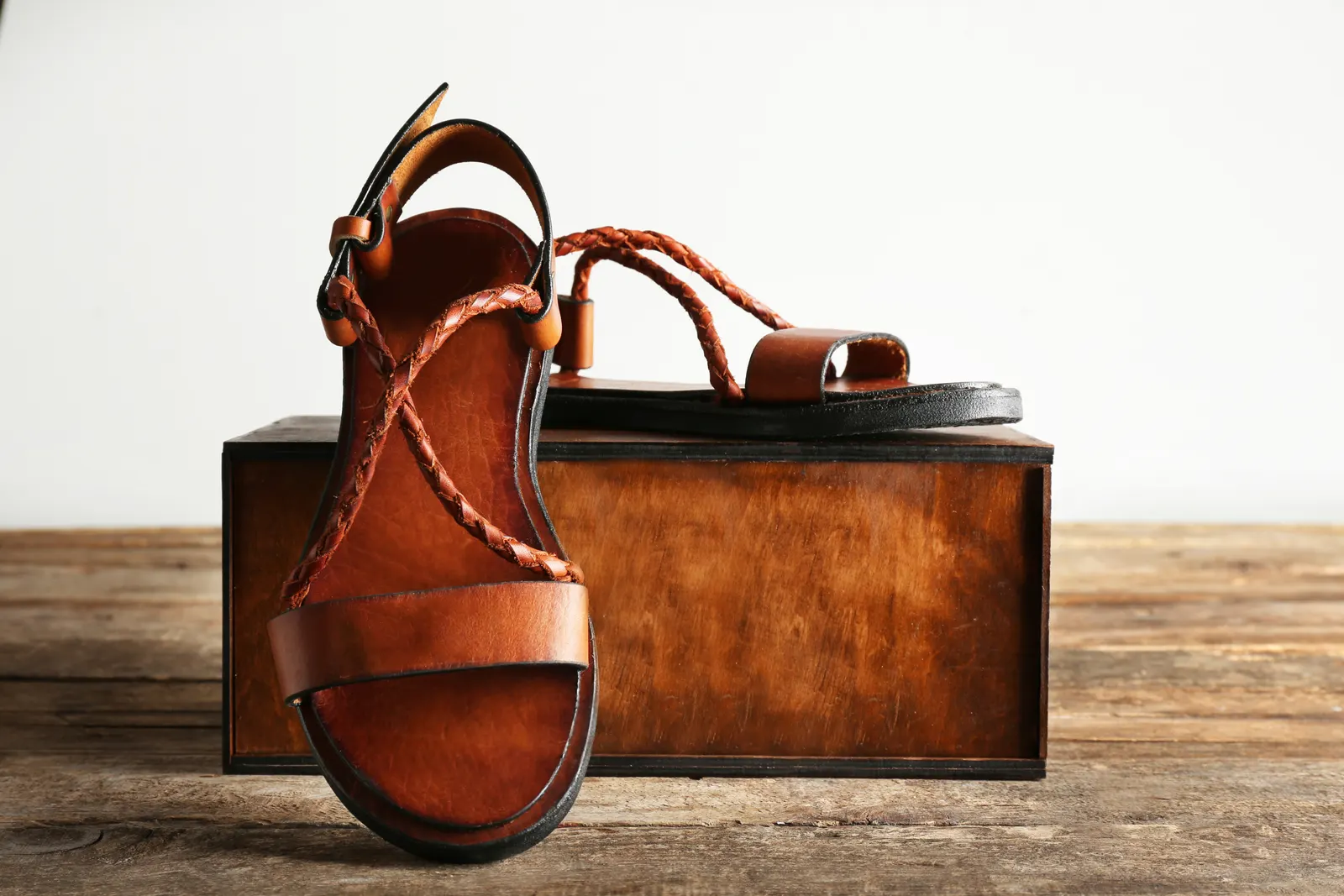
What sets Ferreries apart is that craftsmanship here is not a backdrop for tourists but a genuine economic activity. Leather and leatherwork have their own tradition, tied to Menorcan footwear; wicker is still woven into basketry; and clay is worked into ceramics for use and decoration. These are trades that demand time, hands and patience — exactly the opposite of mass production.
For the discerning traveller, this translates into something concrete: buying a piece of leather, a basket or a ceramic here means taking home an object with an origin and a story, not an interchangeable keepsake. Quiet luxury is also that: knowing what you are buying and from whom.
The Barranc d’Algendar: the green gateway to the sea
From Ferreries begins one of the most singular landscapes in Menorca: the Barranc d’Algendar, a deep, green ravine that descends towards the south. It is a humid valley, with a watercourse, lush vegetation and a microclimate that contrasts with the dry land above. Through it run walking and cycling paths that connect with the Camí de Cavalls, the historic trail that circles the whole island — the GR-223, some 185 kilometres long — which on this stretch leads down to the sea, to Cala Galdana.
It is a walk to take calmly, with comfortable shoes and water, enjoying the passage from land to sea. If you want to understand this trail before setting foot on it, we tell you all about it in our guide to the Camí de Cavalls.
The calas nearby: Galdana, Mitjana and more
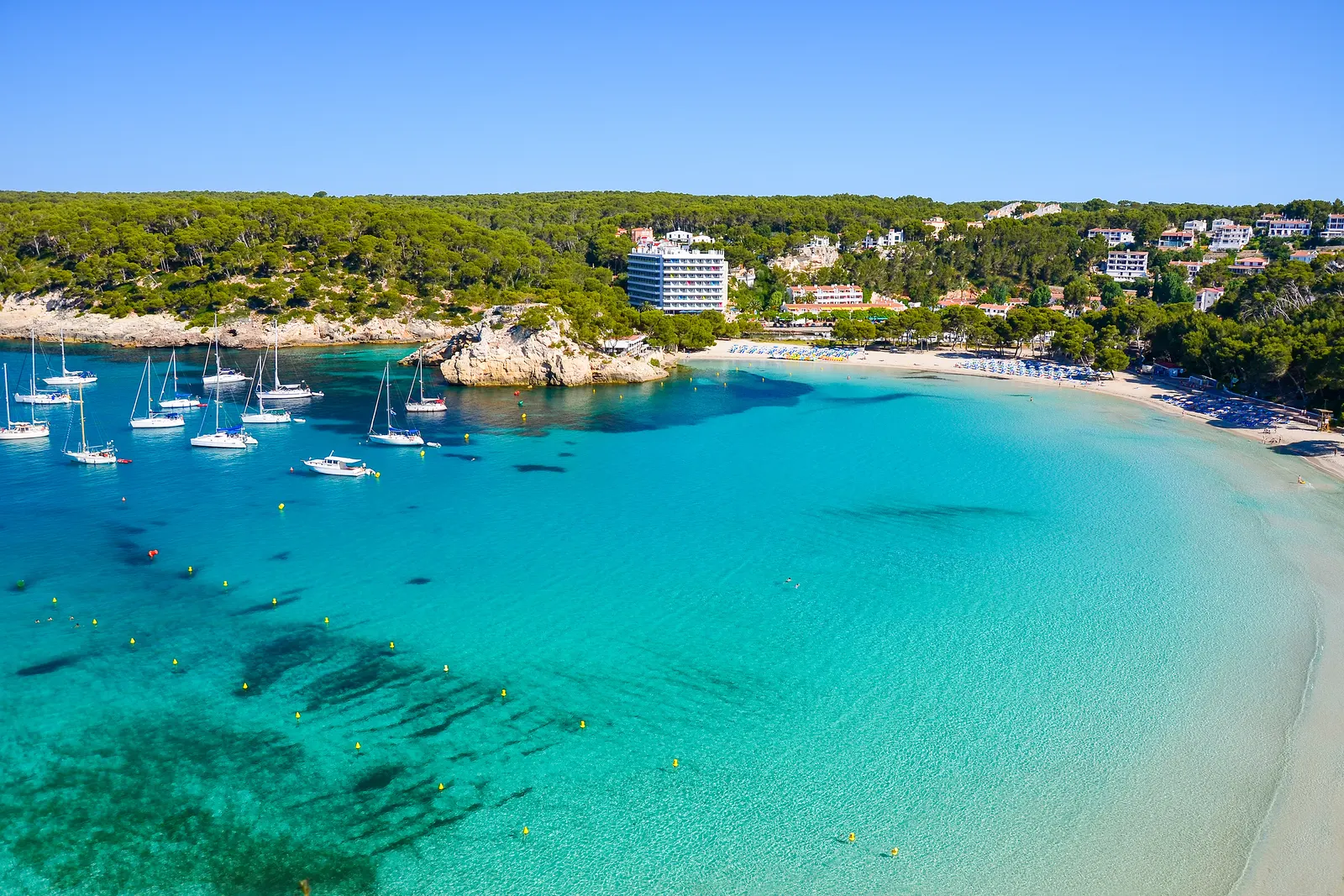
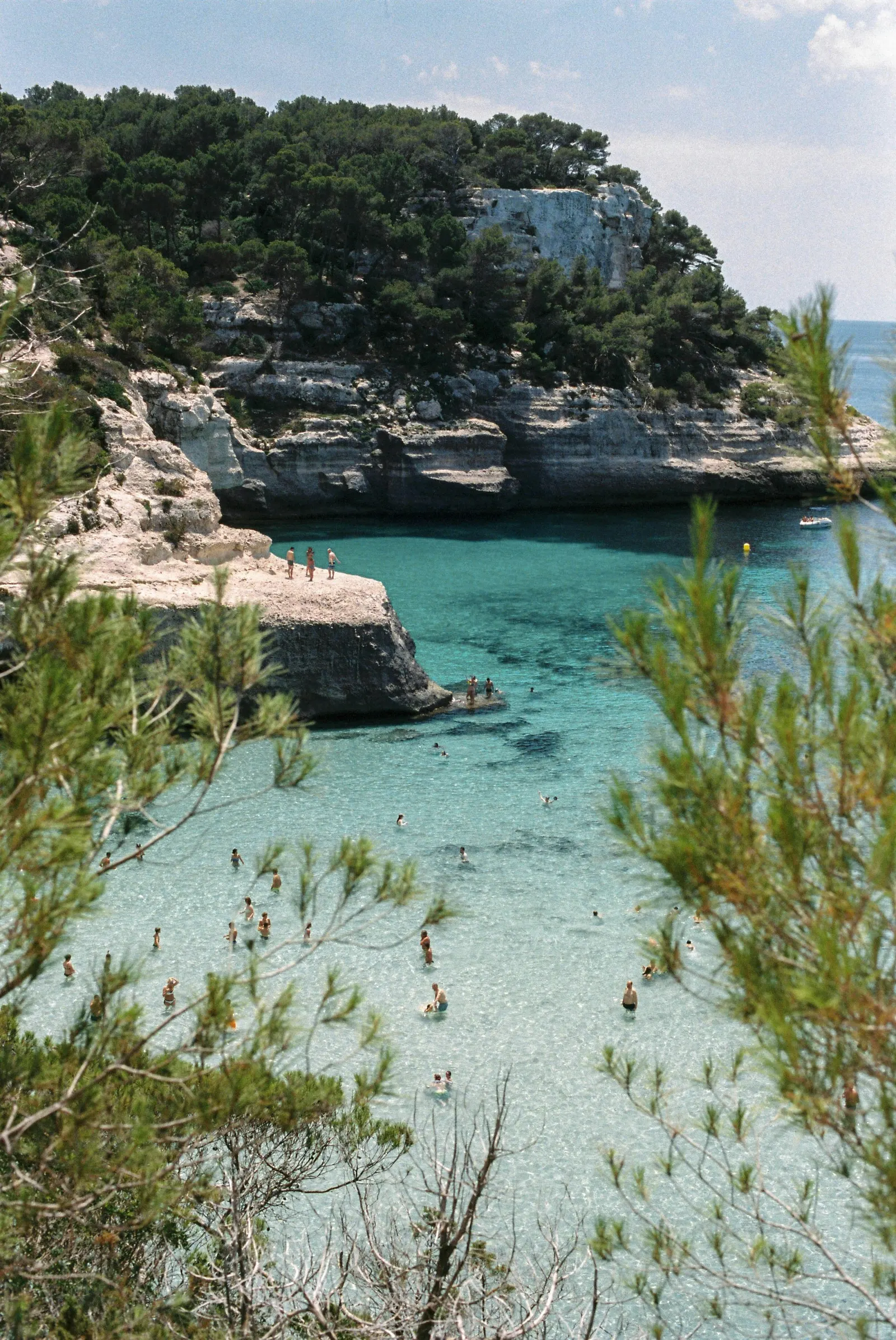
At the foot of the ravine and around it, the southern coast awaits. The best known is Cala Galdana, the so-called “pearl of the south”: a broad, turquoise bay, embraced by pine woods and cliffs, and the only cala in the area with any development and services. It is the comfortable gateway to the south of Ferreries.
A short distance away, and unbuilt, are Cala Mitjana and Mitjaneta, two more secluded, wilder stretches of sand reached on foot. Here an honest caveat is in order: the municipal boundaries of some of the calas along this belt, towards Macarella and Mitjana, are disputed between Ferreries and Ciutadella, so rather than assigning them to one municipality, what matters is that they form part of the same stretch of southern coast to which Ferreries gives access. If you are planning a day of calas, you will find our selection in the guide to the best calas in Menorca.
When to go and how to experience it
Ferreries can be enjoyed all year round, and precisely because of its inland character it holds up well in the low season: the market, the workshops and the ravine do not depend on the summer heat. Spring and autumn are ideal for walking the ravine in mild temperatures; Saturday morning is the moment for the market; and the calas call, as everywhere in the south, for arriving early in summer.
Thanks to its central, elevated position, it is also a good point from which to organise the day: the town and its trades above, the sea through the ravine below.
Our take
You do not come to Ferreries to tick off postcards, but to understand a Menorca that works. Our recommendation: arrive on a Saturday morning for the market, spend a while really looking at the craftsmanship — the leather, the wicker, the ceramics — and save the afternoon for the ravine, walking a stretch of the Camí de Cavalls down towards Cala Galdana.
It is quiet luxury understood from the land: trades that demand time, a green valley dropping to the sea and the satisfaction of taking home something made by hand. The island that produces, not only the one that is photographed.