There is a way of getting to know Menorca that never appears in the hire-car brochures. It isn’t measured in kilometres driven or in coves ticked off a list, but in hours of quiet, in the sound of the wind over the wild olive, and in the surprise of rounding a headland to find, all at once, an empty bay. That way has an old name: the Camí de Cavalls.
The Camí de Cavalls (GR-223) is a historic path of about 185 kilometres that completely encircles the island, hugging its entire perimeter between Maó and Ciutadella without ever turning away from the sea. Its origins go back centuries, when the mounted militia used it to watch and defend the coast against raids — hence the “path of horses”. For decades it lay closed, encroached upon and all but forgotten, until public pressure secured its recovery and reopening as a public trail. Today it is, without question, the best way to discover the Menorca you can’t see from the road.
Walking the whole thing is a small, quiet epic; walking a single stretch at dusk is enough to grasp what this island is about. At Calma Society we hold it up as the most elegant gesture a traveller can make in Menorca: trading haste for pace, and the car for boots.
The essentials
- What it is: the GR-223 coastal trail that circles Menorca.
- Distance: about 185 km in total, divided into 20 official stages.
- Direction: waymarked in both directions, with wooden posts and the white-and-red marks of a long-distance trail.
- Difficulty: varies by stage, from easy strolls to demanding sections over rock and gradient.
- Best season: spring (April to June) and autumn (September and October).
- Cost: free and open access; it is a public path.
What exactly is the Camí de Cavalls?
It is a coastal ring path, not an inland route. That means you’ll almost always have the sea on one side, alternating dark rocky cliffs in the north with pinewoods and white sand in the south. It crosses the island’s most varied landscapes in a remarkably small space: dunes, ravines, wetlands, holm-oak woods, marshes and old defensive towers.
None of this survives by chance. Menorca has been a Unesco Biosphere Reserve since 1993, and much of what you’ll see on foot is protected. The Camí is the gateway to that discreet, well-kept Menorca.
Do you have to walk the whole thing?
No, and almost no one does it in one go. The 20 stages vary greatly in length and difficulty, and you can combine them as you wish. There are three sensible ways to approach it:
- The full route: a multi-day traverse, usually between one and two weeks depending on pace, sleeping in villages or near the coast. This is for those after the complete experience.
- A weekend of chosen stages: two or three select stretches, linking the landscapes that interest you most.
- Half-day single stretches: the easiest option and the one we recommend for a first time. Pick one stage, leave the car at one end and walk calmly.
For linear stretches it’s worth thinking about the return: either walk out and back the same way, use two cars, or check public transport and local taxi services, which cover the coast better in summer.
Which are the best stretches?
It depends on which Menorca you want to feel. These are the two souls of the Camí:
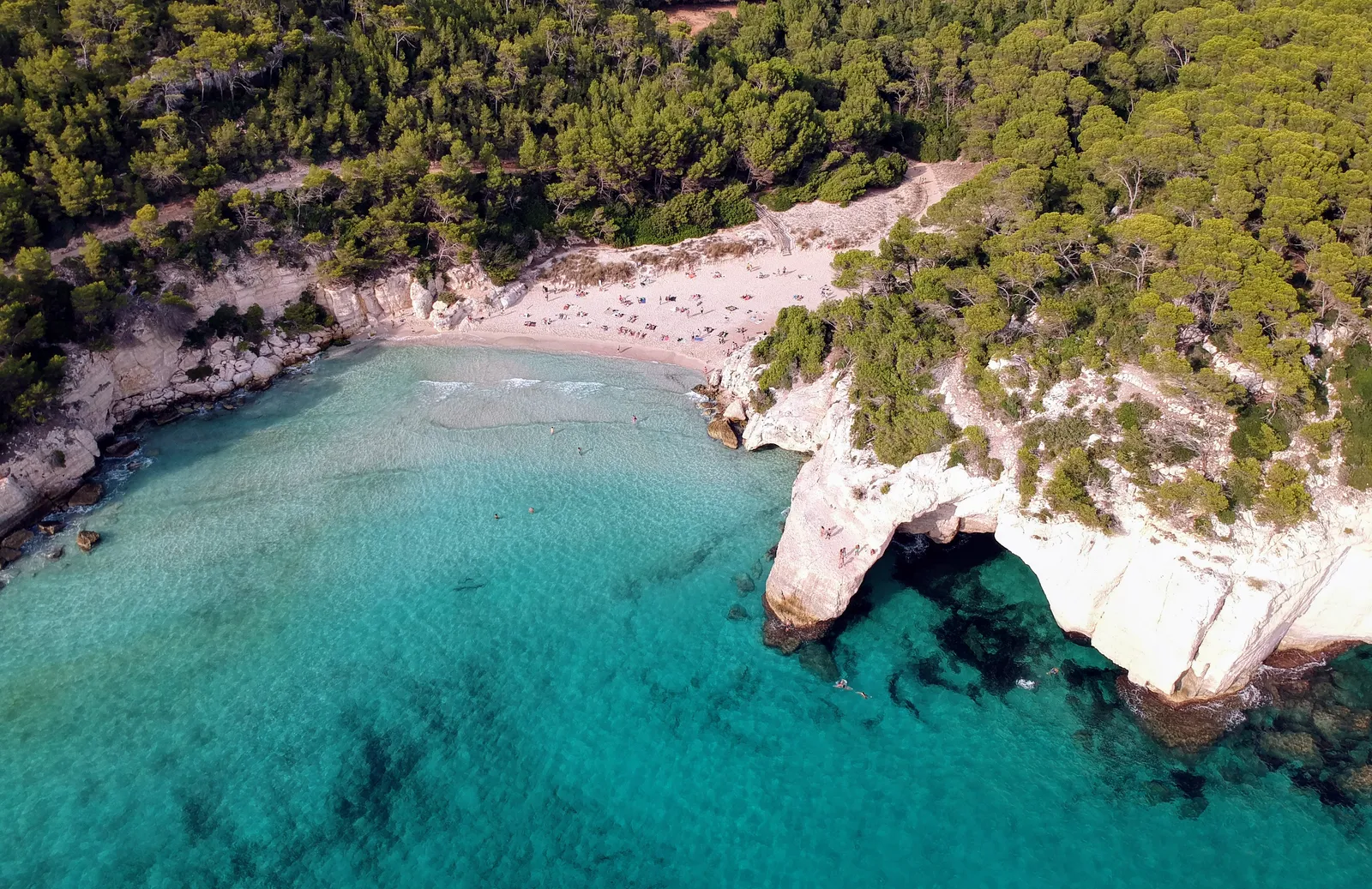
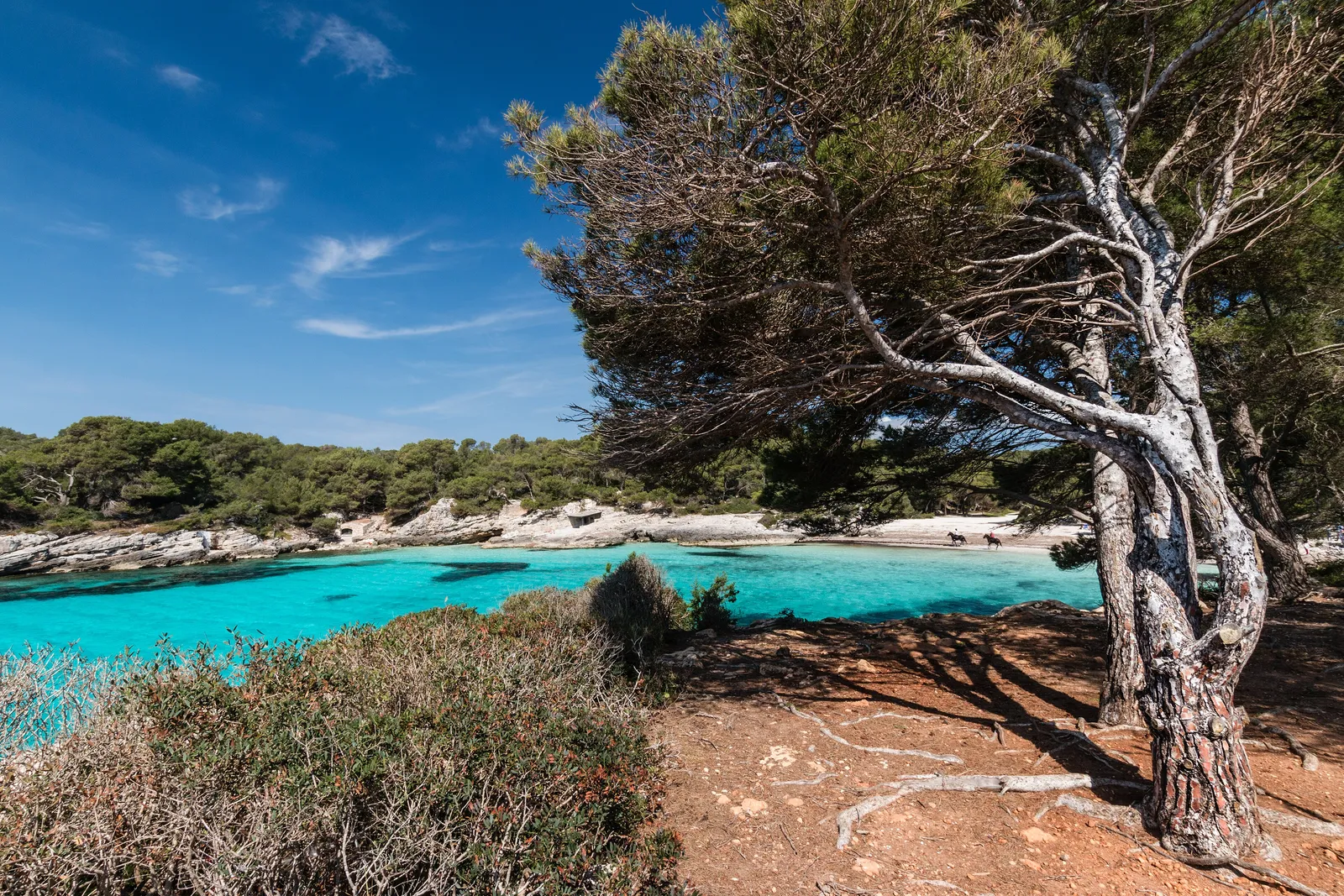
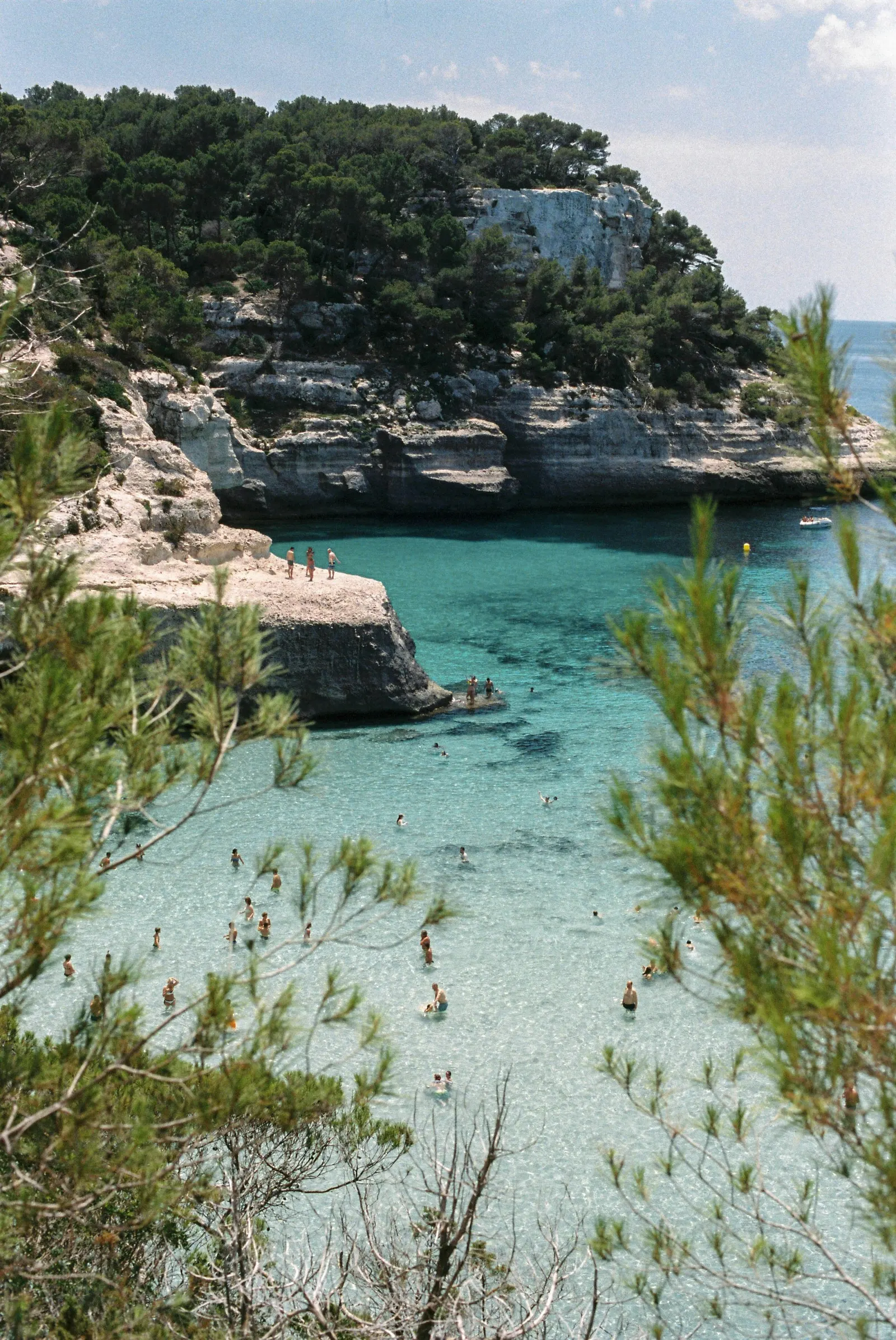
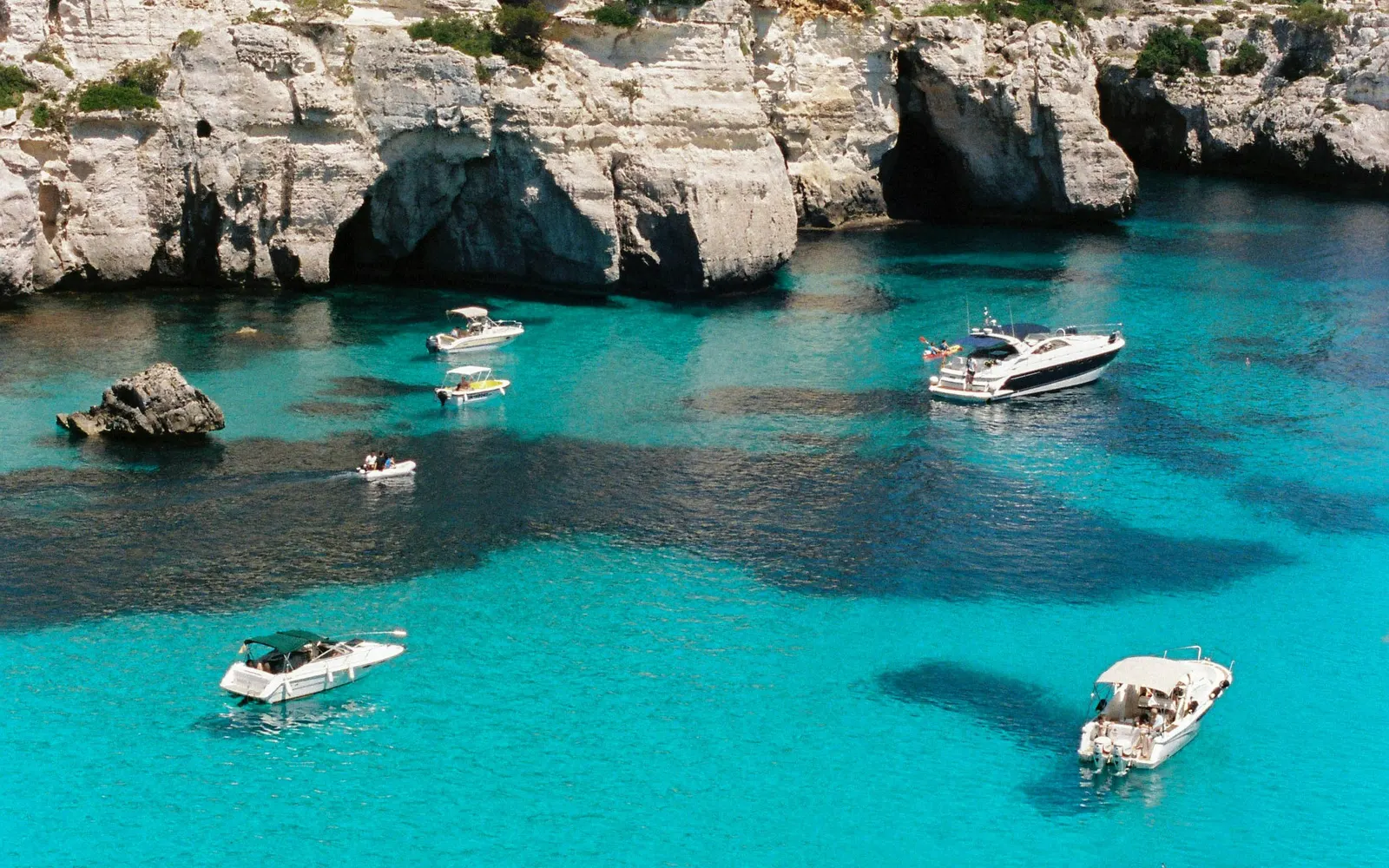
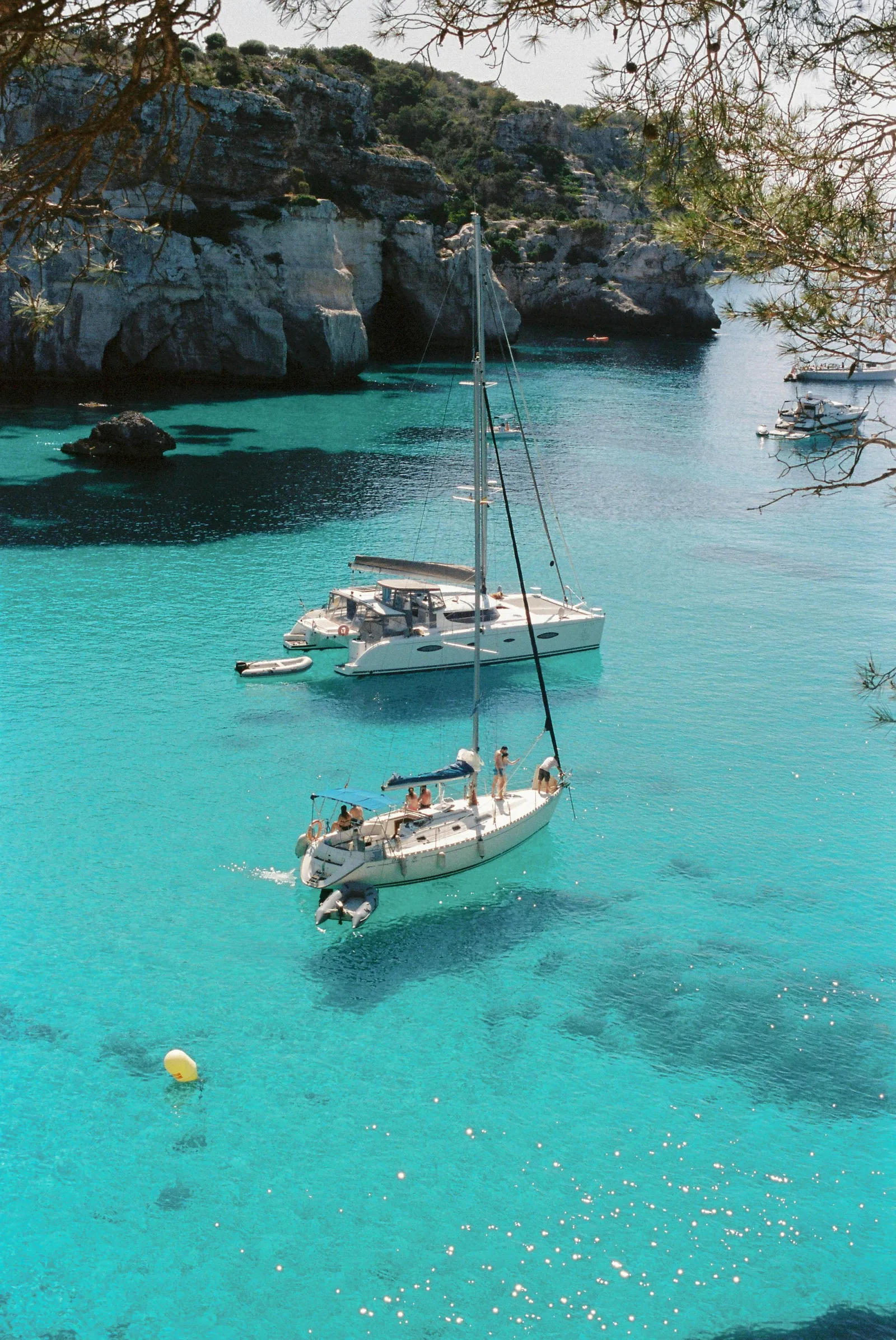
The south, for dream coves. This is the classic postcard: pale sand, turquoise water, pines that reach down to the shore. The stretch running from Cala Galdana towards Cala Macarella and Macarelleta is the most famous and, rightly, one of the loveliest coastal walks in the Mediterranean. The area around Cala Mitjana is also worth it, accessible and serene outside peak hours. These are relatively gentle sections, ideal for getting started.
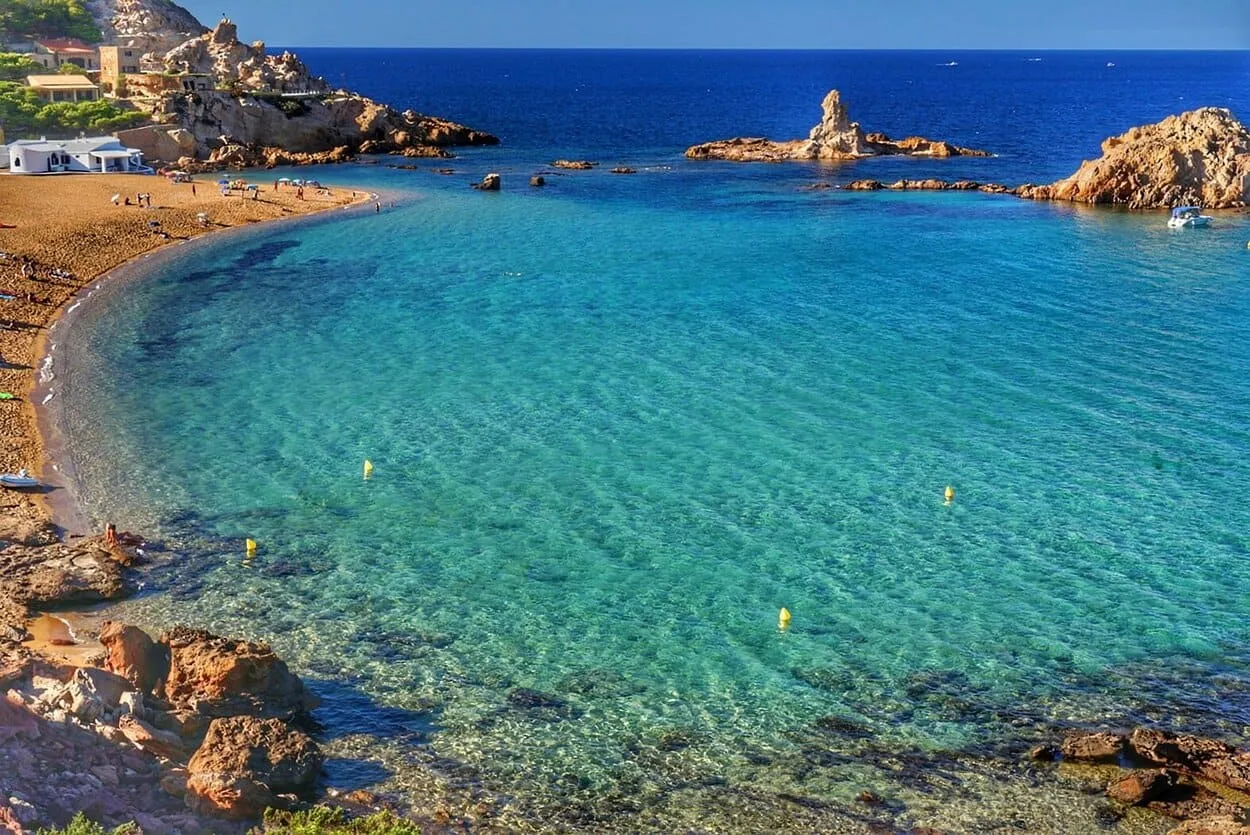
The north, for wild scenery. Here the island shows its rugged character: reddish and black rock, the tramuntana wind, coves of reddish sand and a solitude that is hard to find in the south. The surroundings of Cala Pregonda, Cavalleria and Binimel·là offer an almost lunar landscape, harsh and magnificent. It asks a little more of your legs and your respect for the terrain, but the reward is a Menorca that feels of another century.
Our considered advice: if you can only choose one, go south to swim and north to look. They are different and complementary experiences.
When is the best time to walk it?
Spring and autumn are, without question, the finest seasons: kind temperatures, green or golden countryside, clean light and few people. April, May, June, September and October offer the best conditions.
Summer is perfectly possible, but calls for good sense: it’s hot, many stretches have little shade and the midday sun is fierce. If you walk in July or August, set off at dawn, finish before the central hours and carry plenty of water. Winter has its own melancholy charm, especially in the north battered by the tramuntana, though some days the wind can be uncomfortable.
What to bring and how to prepare
The Camí is not high mountain, but neither is it a seafront stroll. It’s worth going well equipped:
- Footwear: boots or trail shoes with good grip; there is rock, roots and uneven ground.
- Water: plenty. Many stretches have no fountains or services, so don’t count on refilling along the way.
- Sun: hat, sunglasses and cream. Shade is scarce, especially on the open south and the bare north.
- Food: some fruit or nuts; plan meals around the village or cove where you finish.
- Map or trail app: the waymarking is good, but carrying the downloaded track gives peace of mind.
Always check the wind forecast, especially in the north, and look up up-to-date timetables for transport if you depend on it to get back.
Can you do it with children or as a family?
Yes, by choosing the right stage. Not every stretch suits small legs, but several southern walks are short, shaded by pinewood and end at a cove where you can reward yourselves with a swim. The key is to pick a brief linear stretch, work out the return and turn the path into a small adventure with stops: a watchtower, a lizard in the sun, the first glimpse of water through the trees. Avoid the long, exposed northern stretches with youngsters or in strong heat.
The pleasure of pairing it with the table
Walking sharpens the appetite, and Menorca rewards it well. After a stage, there’s nothing like sitting down to Mahón-Menorca DOP cheese, a seaside caldereta (lobster stew) or, as evening falls, a pomada — the local mix of Xoriguer gin and lemonade that is almost a ritual. No need for fine linen: the luxury is arriving with honest hunger, smelling of salt and rosemary, and letting the food taste of effort well spent. Plan the end of each stretch near a village or a cove with service, and let the day close itself.
Walking with respect
This is a Biosphere Reserve, not a theme park. Take all your rubbish with you, don’t leave the marked paths, don’t pick plants or stones, and respect nesting areas and livestock, because much of the Camí crosses private estates that generously allow passage. Silence is heritage too: leave it intact for those who come after you.
Our view
If we’re asked for a single thing to do in Menorca with time and sensitivity, we always say the same: a stage of the Camí de Cavalls, with no watch. There’s no need to do it all or turn it into a sporting feat. What’s needed is simply to walk slowly, stop to look at the sea, swim in a cove you’ve earned on foot, and let the island set the pace.
That is, precisely, the luxury we stand for: not having more, but having time. The Camí de Cavalls gives it away with every step.