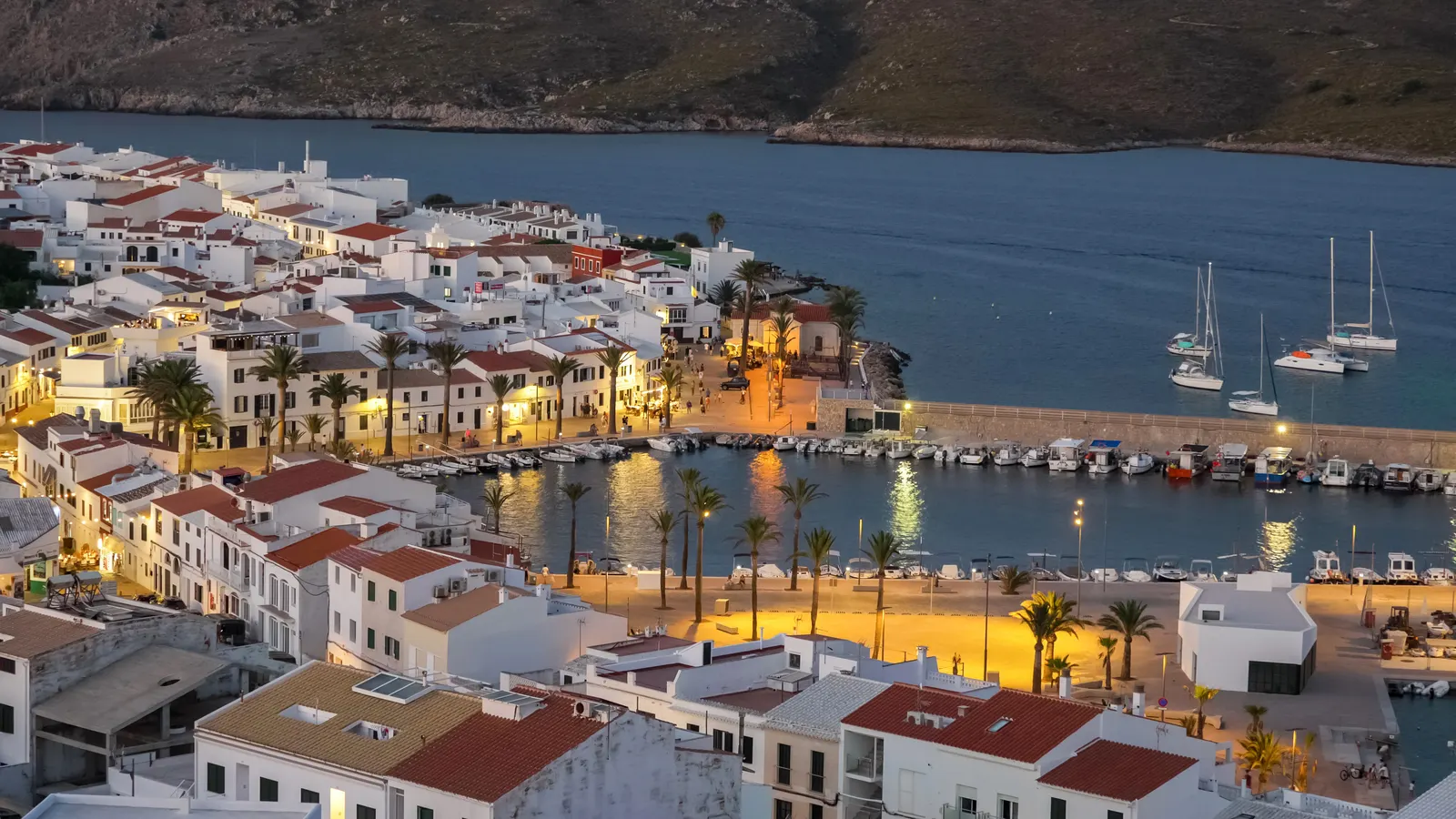
There are villages you understand the moment you step out of the car, and Fornells is one of them. Low white houses lined up along the water, fishing boats at their moorings, a long, gentle bay that the north wind barely manages to ruffle, and a rhythm that has nothing in common with the touristy south. Fornells is the seafaring Menorca that still smells of salt and slow-cooked stew, not of souvenirs.
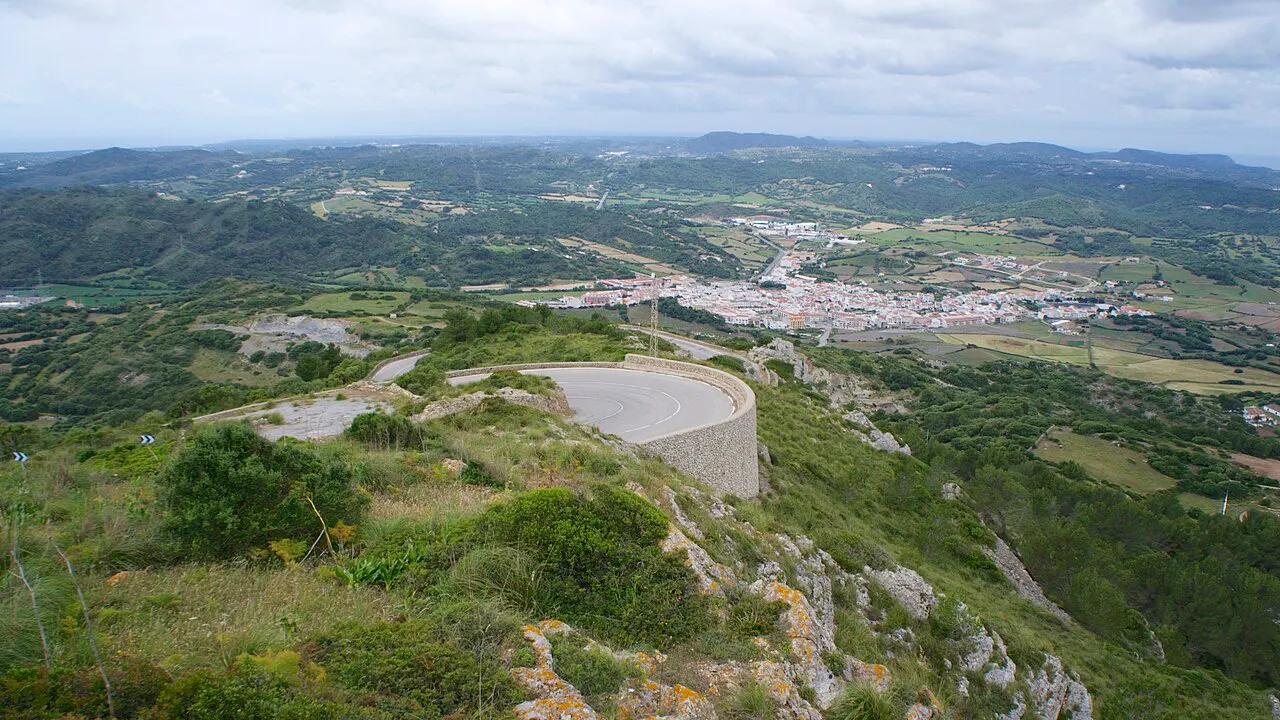
It sits on the north coast —the north-east, in the municipality of Es Mercadal— overlooking one of the loveliest and most protected natural bays on the island: more than three kilometres of sheltered water that for centuries made this corner a refuge for fishermen and, equally, a point that had to be defended. Today that same bay is its greatest treasure: calm enough to swim in, perfect for sailing and framed by the tramuntana, Menorca’s wild, windswept northern fringe.
This is an unhurried guide to Fornells: why it’s worth the stop, what to eat (spoiler: lobster stew), what to see and how to take it in at a gentle pace.
The essentials
- Where: the north coast of Menorca, municipality of Es Mercadal, on an enclosed bay more than 3 km long.
- Its claim to fame: the lobster stew (caldereta de langosta), held to be the best on the island.
- What to do: stroll the seafront, swim in calm waters, sail, windsurf, kayak or paddleboard in the bay, and climb the defence tower.
- An ideal base for: discovering the Cap de Cavalleria and the wild coves of the tramuntana.
- Character: a small village (little more than a thousand inhabitants), white, peaceful and seafaring. No bustle.
- When: spring and autumn for the calm; in summer, best first thing in the morning or at dusk.
Why stop in Fornells?
Because it’s one of those places where you don’t need to “do” anything for it to work its magic. You sit down facing the harbour, watch a boat come in, order something well made, and the day has already been worth it. Fornells doesn’t compete with the turquoise postcards of the south: it offers the opposite, an unposed authenticity, a village that lives off the sea twelve months a year.
Its scale is part of the charm. You can walk the whole of it in a short while, between white lanes and the harbour promenade, with no grand monuments to tick off a list. The plan is precisely that: to have no plan, and let the bay and your appetite set the pace.
The lobster stew, its signature dish
If Fornells is famous for anything beyond its bay, it’s the lobster stew. It is Menorca’s seafaring dish par excellence, and here it’s treated as an institution: island lobster, a patient sofrito of tomato, onion, garlic and pepper, and a broth that concentrates the whole of the northern sea. It is neither fast food nor cheap —the lobster sets the terms— but an experience to sit down to and take your time over.
A couple of pointers to enjoy it properly: book ahead in season, because the tables facing the harbour go quickly, and check prices and the season before you go, since several establishments operate by the month. Good produce comes at a price; the setting takes care of the rest.
A bay to enjoy the sea at a gentle pace
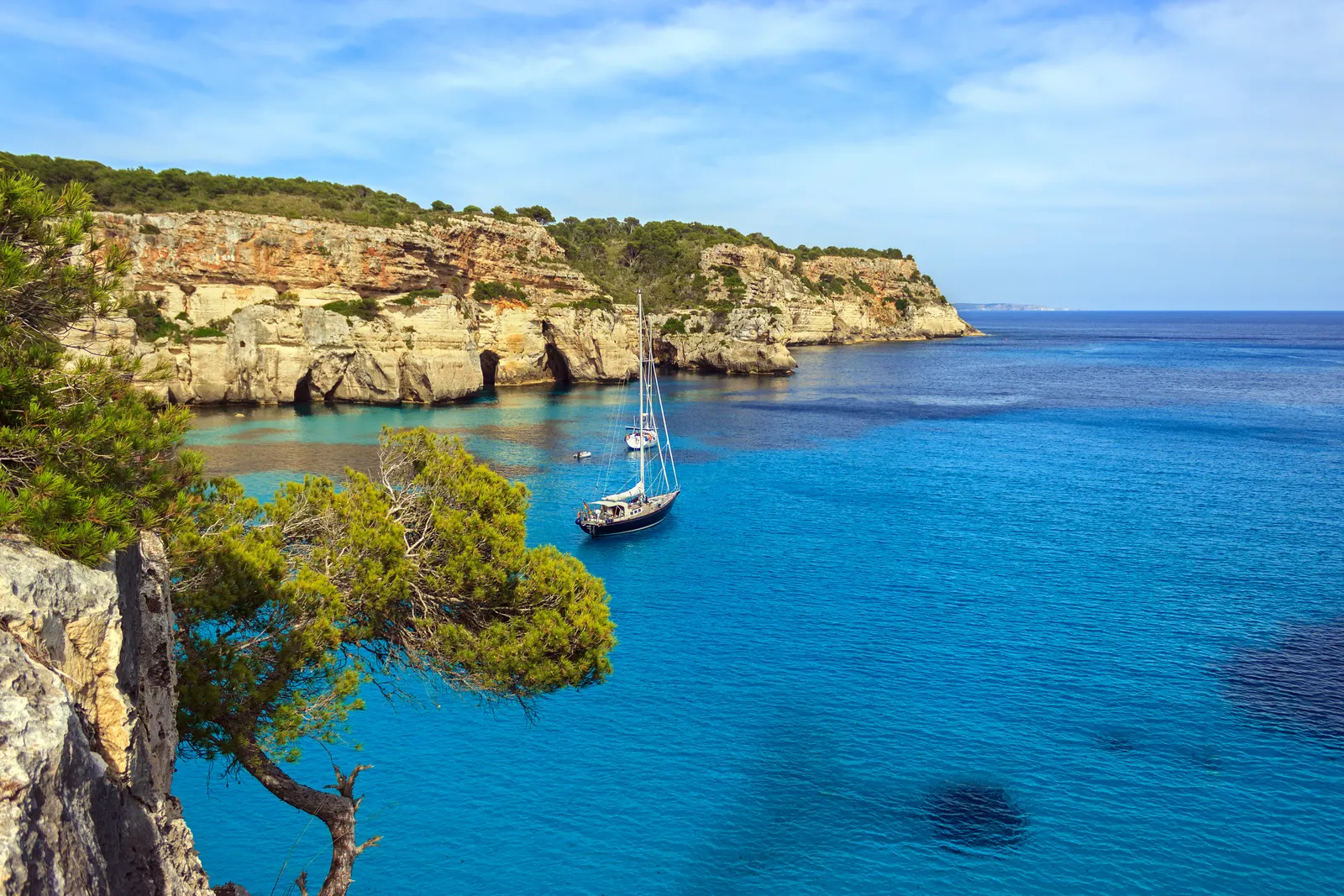
The bay of Fornells is a gift for anyone who wants the sea without the swell. Enclosed and shallow over much of its extent, with calm waters and a steady wind, it is one of the best places on Menorca to take up or enjoy watersports: dinghy sailing, windsurfing, kayaking and paddleboarding. There are schools and rentals, and the feeling of sailing inside a sheltered lake, with the white village in the background, is hard to forget.
For those who prefer dry land, the harbour promenade at dusk, with the boats swaying and the light falling over the water, is one of those small pleasures that sum up the north of the island.
The Tower of Fornells and a past of watchmen
The bay that today is a luxury was, for centuries, a vulnerability: a perfect way in for pirates and enemies too. That’s why the place was fortified. The most visible piece is the Tower of Fornells, a circular defence tower built by the British between 1801 and 1802, at the start of the 19th century, during their final spell on Menorca. Today it can be visited, and from the top you grasp at a glance why this point was strategic: it commands the entire mouth of the bay and the open sea.
Nearby lie the ruins of the old Castell de Sant Antoni, of earlier defensive origin. Between the tower and the castle, Fornells tells in stone the story of an ever-contested island.
What to see nearby: the wild tramuntana
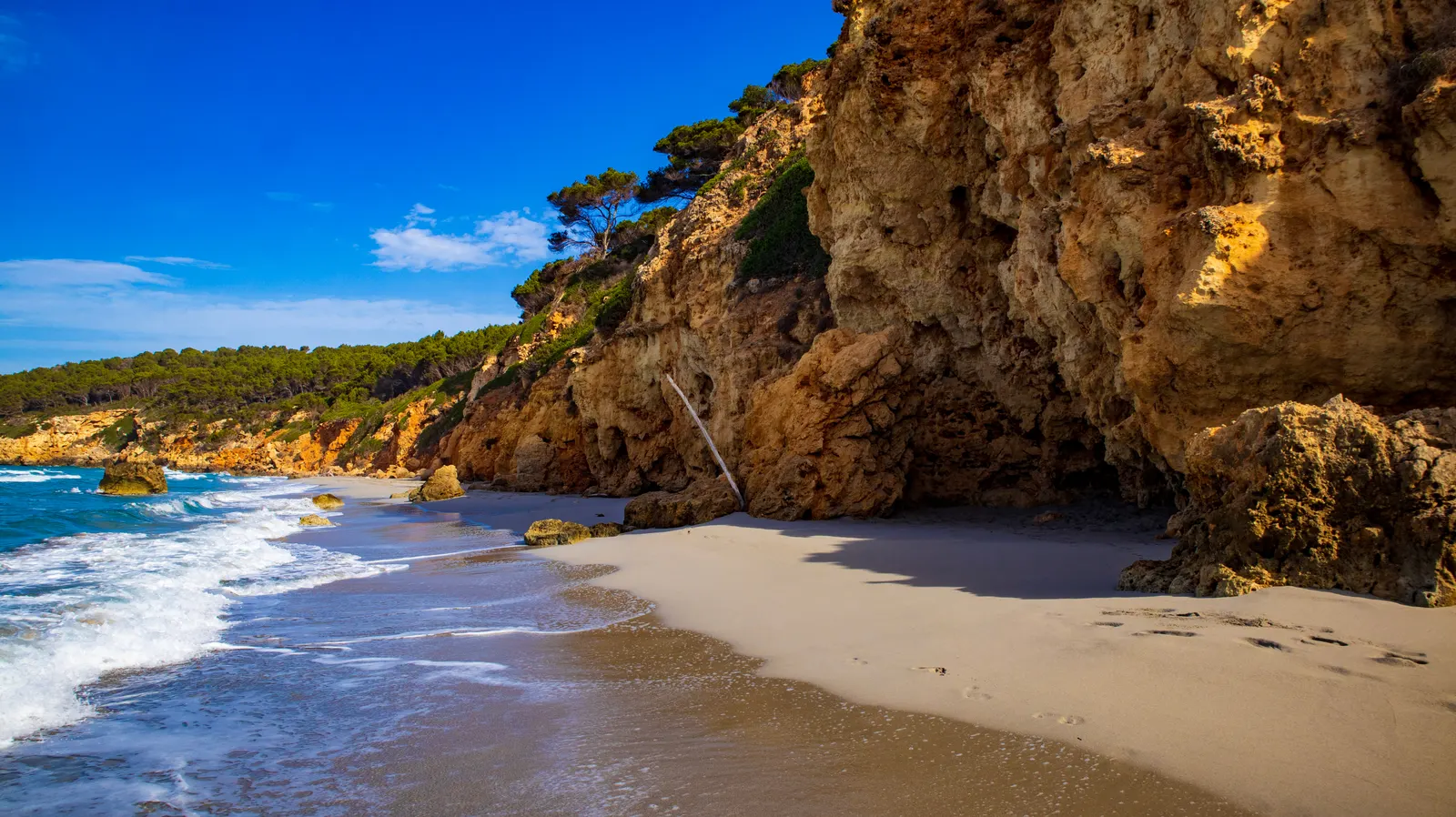
Fornells is the best base for exploring the rugged north of Menorca. A very short distance away awaits the Cap de Cavalleria, the island’s northernmost point, with its lighthouse, its reddish cliffs and the remains of the ancient Roman town of Sanitja. And all along the coast open the coves of the tramuntana —Pregonda, Cavalleria, Binimel·là— of reddish sand, intense water and far fewer people than the south.
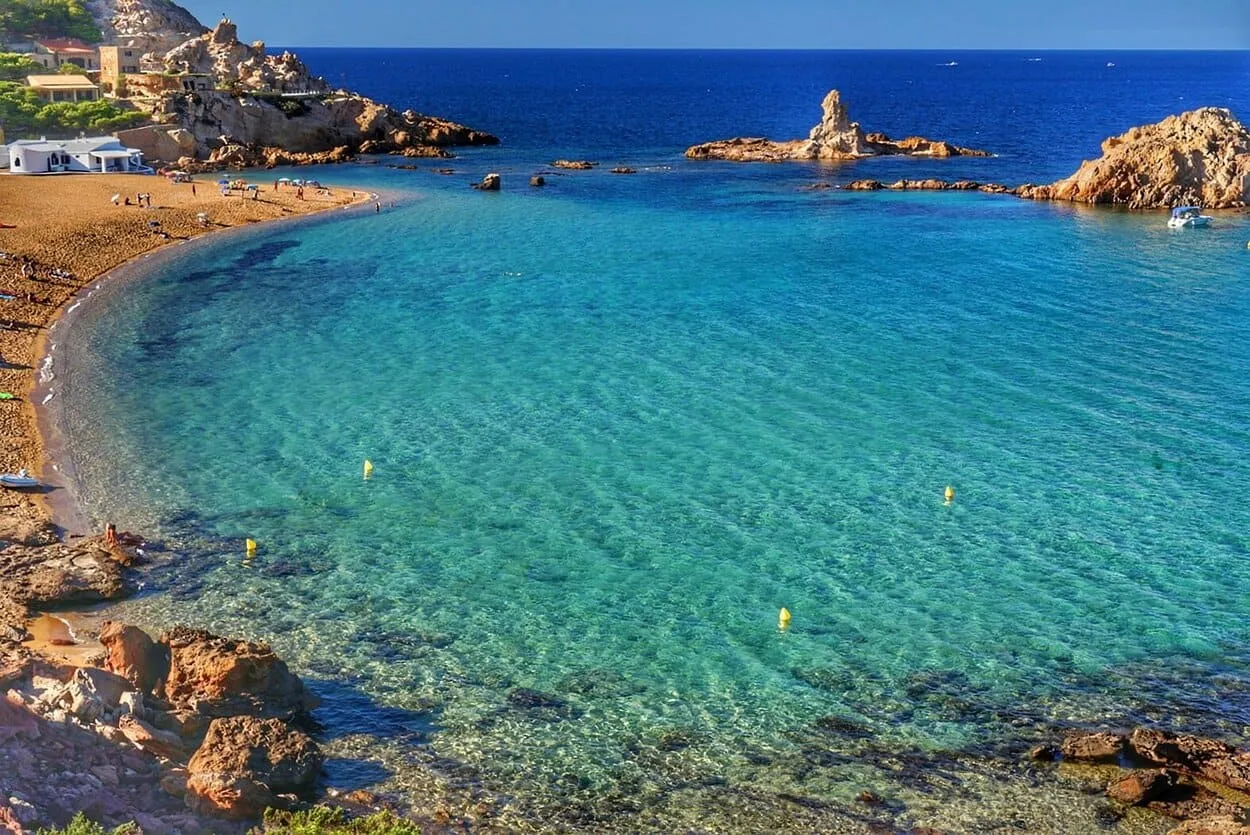
The local rule for the north is simple: with a strong tramuntana the sea turns rough and it’s best to take refuge in the south; in calm weather, this coast is a gift that few lay claim to.
When to go and how to get there
The north is at its best in spring and autumn, with kind light and quiet villages; in high summer, Fornells comes alive mainly around lunch and dinner, so early morning and dusk are the most serene moments. It’s an easy drive from Mahón or Es Mercadal, but parking gets tricky in high season and at lobster-stew o’clock.
Our take
Fornells isn’t “visited”, it’s enjoyed slowly. Our recommendation: arrive in the mid-afternoon, take a dip in the bay or head out to paddle as the wind eases, climb the tower to place the landscape, and save the evening for a lobster stew facing the harbour. If you have a day more, use it for the Cap de Cavalleria and a northern cove at dusk.
It’s quiet luxury in its purest form: a white village, a gentle bay and a dish that asks for time. Nothing to photograph in a hurry; everything to make you stay a while longer.