An island is also explained by what comes up from its boats each afternoon. In Menorca, fish is no picture-postcard prop: it is a small, regulated, seasonal trade, with three guilds that have spent centuries organising who goes out, when, and after what. Understanding where what you eat comes from is the best way to eat it well.
This article tells how fishing works in Menorca —who fishes, which species matter and when they are at their best— and ends where it should: at the table, ordered by area and with no lists of restaurants.
The essentials
- Menorca has three fishermen’s guilds: Maó, Ciutadella and Fornells, one per port. They are public-law corporations that represent the sector and regulate the catch.
- Two fleets coexist: the trawling fleet (that of the red prawn, of great economic value) and the small-scale fleet, the artisanal inshore fishery —the majority in number of boats— which brings in the lobster and the rockfish.
- The Maó red prawn is the jewel of the trawl: in 2022 some 22,953 kg worth €515,607 were landed in the port of Maó, fished at around 650 metres deep and 17 nautical miles offshore.
- The raor (pearly razorfish) may only be fished from 1 September to 31 March; it is the great treat of the Menorcan autumn.
- There is no umbrella “Menorca fish” label: the strong traceability lies with the lobster (the guild’s tag), not with fish in general.
Who fishes in Menorca?
Three guilds —Maó, Ciutadella and Fornells— share out the coast. Behind them work two very different ways of going to sea. The trawling fleet fishes in deep water and lives, above all, off the red prawn; it is based in Maó and Ciutadella and it moves the big figures. The small-scale fleet —arts menors, artisanal inshore gear— is what gives the island its character: small boats, hook and pot gear, trips along the coast and a direct relationship with the rock and the seagrass. From it come the lobster, the cap-roig (scorpionfish), the razorfish and almost every fish a Menorcan recognises as their own.
The species worth knowing
Not all fish are at their best at once. These are the pieces worth seeking out, with their best season and their traditional use:
- Raor (Xyrichtys novacula, pearly razorfish). The most coveted. Caught only from 1 September to 31 March (closed in spring and summer). It is eaten fried whole, with nothing else: a high-priced fish and an autumn ritual.
- Cap-roig (scorpionfish). All year. The noble base of the caldera fish stew and the suquet; also “a la panadera”, baker’s style with potato.
- Sípia (cuttlefish). At its best in spring. The classic dish is sípia amb pèsols (with peas), sometimes with meatballs.
- Calamar (squid). Best in autumn–winter. Grilled, in rice or stuffed.
- Gerret (picarel). Humble and delicious: eaten fried, in a mixed fry, or en escabeche (pickled).
- Moll (red mullet) and oblada (saddled bream). Rockfish, all year, for the grill or the fryer.
- Dèntol (dentex). A noble piece of summer–autumn, oven-baked.
- Sírvia / verderol (amberjack). Summer–autumn; taken even raw. In the Balearics the amberjack now carries size and closed-season rules that have tightened in recent years.
- Gamba roja (Aristeus antennatus, red prawn). The exception among the trawl: a deep-water luxury, under quota, which we tell separately.
Is there an auction? How it reaches the buyer
Here it pays to be honest: in Menorca we have not been able to confirm a great “open-outcry auction” in the style of other mainland fish markets. What does work is direct selling through the guilds and through outlets such as Sa Llotja, in the port of Maó, which sells the fish and shellfish from the boats a few metres from where they moor, both to the public and to wholesalers. In summer, moreover, there is quayside selling, with its dusk queues as a small local ritual.
Where to eat it, by area
- Fornells (north): the kingdom of the lobster and the stew; a small-scale fishing village by definition.
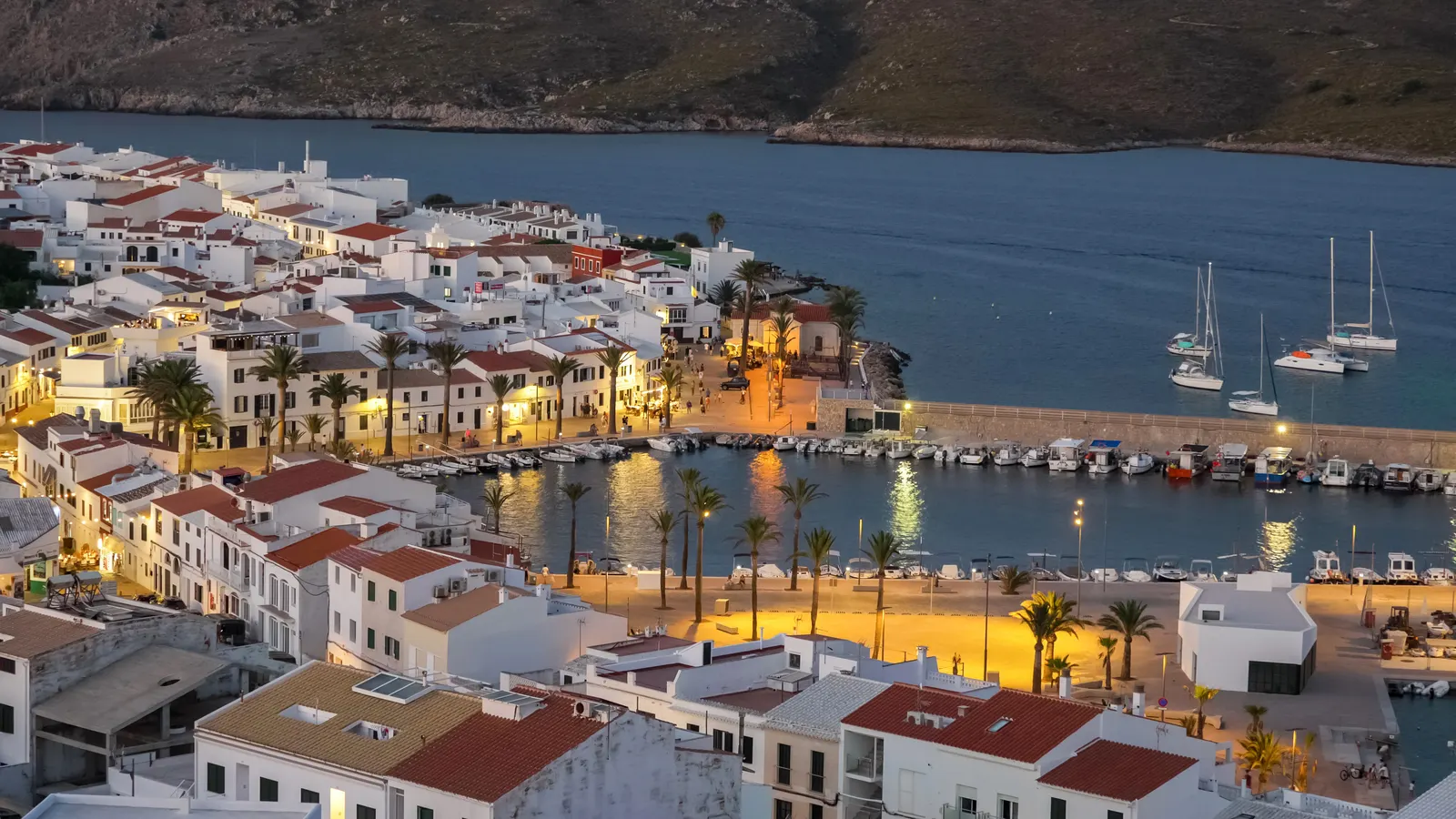
- Ciutadella (west): trawling port —red prawn, lobster— and a historic variant of the stew; a seafaring atmosphere at dusk.
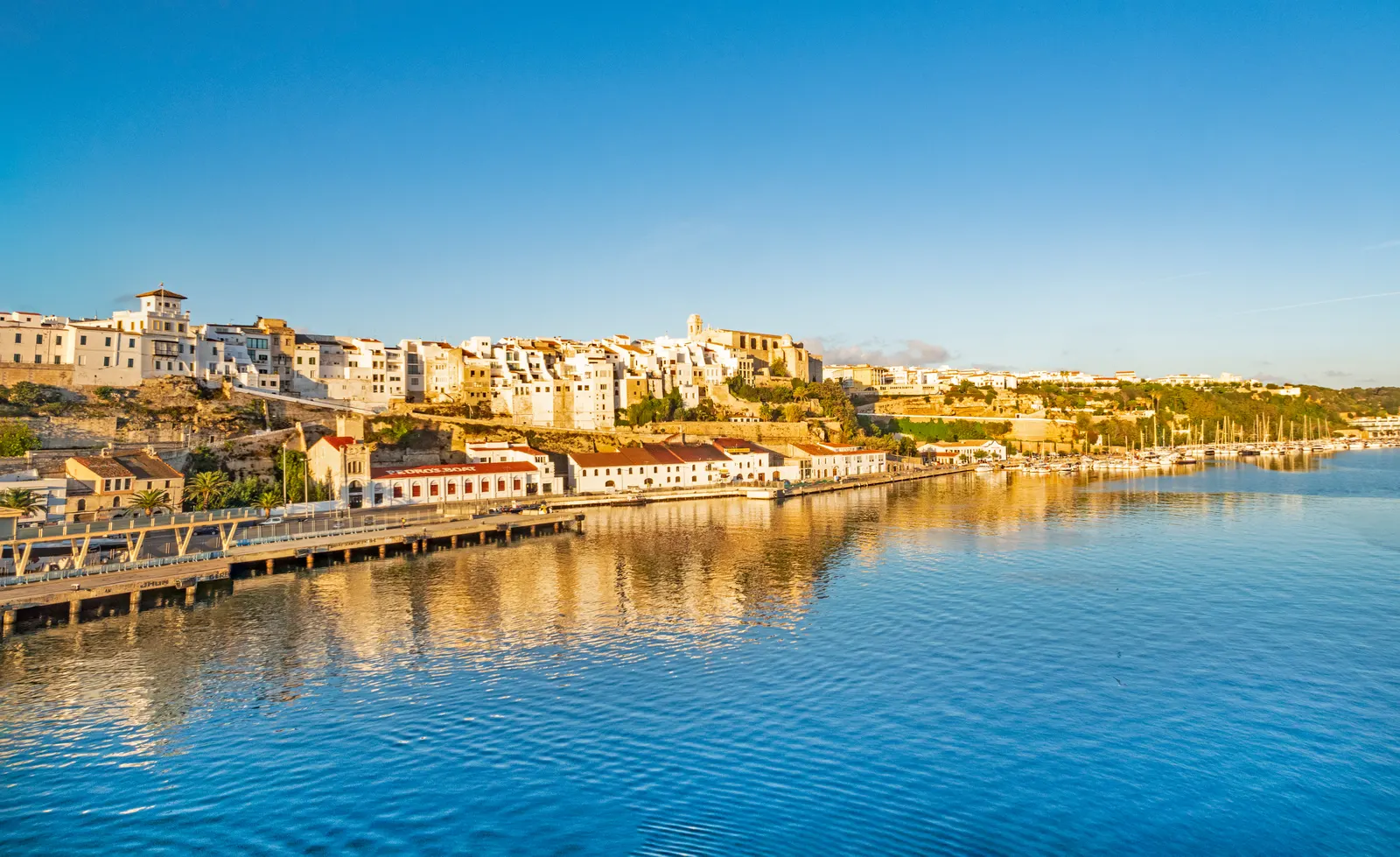
- Maó (east): Sa Llotja, the Maó red prawn and the mussels farmed in the harbour — with the Mercat des Peix to eat it all at the bar.
- Across the island: fried razorfish in the autumn season, fries of gerret and moll, and sípia amb pèsols as a stew-cum-tapa.
Our view
Good Menorcan fish is not recognised by the name of a place, but by two questions that here have an answer: which boat did it come off? and is it in season?. Order it where they can answer them. And if you are after the razorfish, do not look for it in August: it will be closed, and whoever offers it to you is not telling you the whole truth.
The sea of Menorca does not give all year round, nor to everyone: it gives little, and that is why it gives so well. Eating its fish in season is the simplest way to understand the island.