It is Menorca’s most international product and, at the same time, one of the most misunderstood: it is bought all summer long, but it is truly fished only five months a year. The red spiny lobster —Palinurus elephas, the Mediterranean spiny lobster, which here we call llagosta— is a luxury with a calendar, a rulebook and a trick for not being fooled.
This article tells what almost no one explains on the menu: when there is Menorcan lobster, how it is fished, where the best lives and, above all, how to know that the one they serve you is from here.
The essentials
- Catch season: 1 April to 31 August. The rest of the year —some seven months— there is a closure in Balearic waters.
- It is fished with the nansa (a conical pot) and the trammel net; the rules forbid setting both gears at once and limit the size of the pot (max. 90 × 60 cm).
- The best grounds are the North of Menorca Marine Reserve: 5,119 hectares between Fornells and Cap Gros, created in 1999, where trawling, purse seining and longlining are banned.
- Traceability: every legal lobster is marked with a coloured band according to the guild; it is the way to prove it is from Menorca. (Note: there is no registered designation-of-origin seal; the documented individual yellow tag belongs to Ibiza, not Menorca.)
- Prices and catches change every year: in 2025, the first sale ran to around €70–75/kg, with some 17,950 kg landed (less than in 2024). Check the current season.
A strict calendar
Menorcan lobster may be fished only from 1 April to 31 August. Outside that window, the law protects the species during spawning and growth. This has a practical consequence worth memorising: a local, fresh lobster in October does not exist. Whatever is served then will be from a holding tank, frozen or imported —perfectly legal if declared, but not the same thing.
The traditional gear is the nansa, a funnel-shaped trap set on the rocky bottom, and the trammel net. Balearic regulation keeps the balance: the two gears cannot be used at the same time, and the pot has a maximum size. It is a fishery of patience, of small-scale gear —the opposite of the industrial kind.
Where the best lives
The ground par excellence is the North of Menorca Marine Reserve, 5,119 hectares running from the bay of Fornells to Cap Gros. Created in 1999, it turned 25 in 2024, and within it the most aggressive gears are banned: the result is a healthy seabed that acts as the Mediterranean’s larder and nursery. Lobster is also fished in the inner waters of the south, between Cap d’Artrutx and l’Illa de l’Aire. That the Consell de Menorca has a say over whether boats from other islands may work here gives the measure of what is being protected.
How to know it is from Menorca
Here is the key to the article. Legal lobster caught in the Balearics is marked with a coloured band or tag according to the guild of origin and travels with its traceability paperwork. It is your right to ask for that guarantee tag: if it is from here, there will be an answer; if no one knows where it came from, be wary.
That this matters was shown by a real episode: in August 2025, at the height of the season, the Guardia Civil’s Seprona impounded lobster imported from France without traceability bound for the island’s restaurants. The tag is not red tape: it is the difference between paying for Menorca and paying for a sign on a wall.
From the pot to the stew
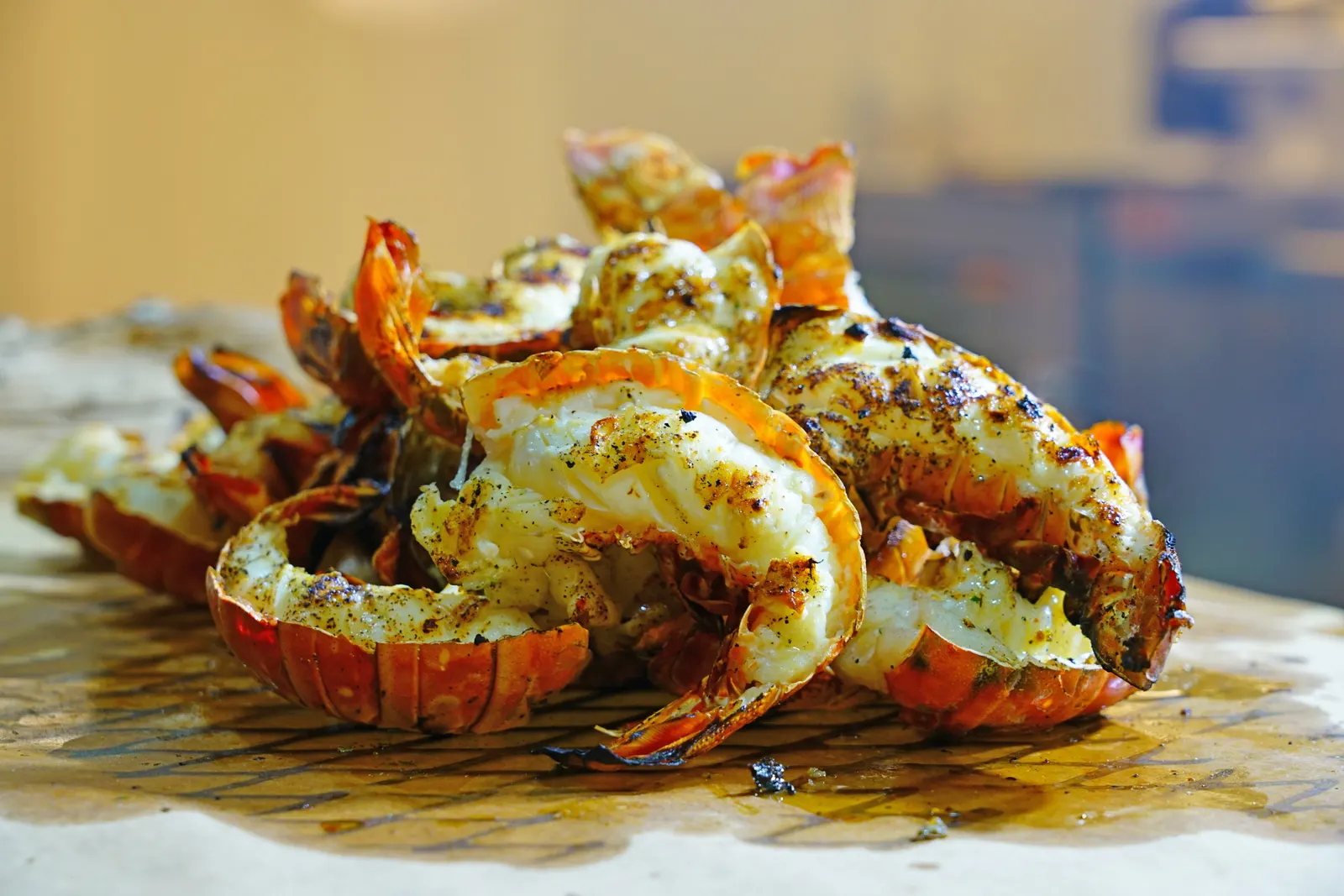
The most famous destination of this lobster is the Fornells lobster stew, which began as a humble fishermen’s dish —a bread soup made with whatever went unsold— and ended up the dish that put Menorca on the gastronomic map. We devote a whole article to it: the Fornells lobster stew. Here it is enough to recall that a good plate begins long before the pot, in a nansa set in the reserve of the north.
Our view
Menorcan lobster is expensive because it is scarce, seasonal and hard-won, and that is exactly its point. Eat it between April and August, ask for the guild’s tag and be wary of bargains: a local lobster does not compete on price with an imported one, it competes on truth. That premium does not pay for a whim; it pays for the sea of the north to stay alive.
A product with a closure and a tag cannot be faked: either it is from here and in season, or it is not. Menorcan lobster is both things or it is nothing.