It is probably the most repeated question before a Balearic trip: Menorca or Mallorca? And it is only fair to open with a confession: this magazine is written from Menorca and devoted to Menorca, so our interest is plain. Which is precisely why this comparison follows one strict rule: be fair. Mallorca is not the caricature sometimes drawn from the smaller island, and Menorca does not win “at everything”. Each island answers a different question.
The good news is that choosing is easier than it looks. The two share a sea, a light and a sibling culture; what separates them is scale and pace. Mallorca is a small Mediterranean continent: almost everything fits, from a World Heritage mountain range to a capital with genuine urban life. Menorca is something else: an island that chose restraint decades ago, and that today offers what almost no Mediterranean destination can promise — space, silence and time.
If you came here for a verdict, you will get one, with nuance and without empty headlines. This is our honest reading, written for those who travel in search of calm.
The comparison, at a glance
| Menorca | Mallorca | |
|---|---|---|
| Scale | A genuinely small, human-scale island: just over 100,000 inhabitants, eight municipalities and two main towns (Maó and Ciutadella) | Much larger and far more populated, with a true capital, Palma, and dozens of towns |
| Pace | Unhurried all 365 days; the whole island has been a UNESCO Biosphere Reserve since 1993 | Several paces at once: from mountain village to urban bustle and the busiest resort areas |
| Signature landscape | The coast: pine-fringed coves and the Camí de Cavalls (GR-223), some 185 km circling the island on foot | The mountains: the Serra de Tramuntana, a World Heritage site |
| Connections | A small airport; fewer direct flights, and more seasonal ones | Vastly more direct connections, all year round |
| Urban life and nightlife | Discreet: harbours, terraces, sunsets | Broad: culture, shopping, restaurants, nightlife |
| Fine dining | No Michelin star — the only Balearic island without one — but eleven restaurants recommended by the guide and four hotels holding a Michelin Key | Twelve stars across eleven restaurants (2026 guide) |
| Who it is for | Those who travel for calm, space and time | Those who want everything within reach and do not mind sharing it |
One honest caveat before going on: this table compares characters, not seasons. We deliberately avoid visitor numbers and prices, which change every year; what we set down here is structural — what will still be true a decade from now.
Where does Mallorca win, honestly?
Connections, first of all. Palma’s airport handles vastly more direct flights than Menorca’s, and does so all year. For a short break from much of Europe — above all in winter, when routes to Menorca thin out and often force a connection — getting to Mallorca is simply easier. That convenience is no small thing: it defines which trips are even possible.
Variety, next. Mallorca is the island of “everything”: a capital with a Gothic cathedral facing the sea, museums, shopping and a cultural calendar that does not depend on summer; a real mountain range, the Tramuntana, a World Heritage site with hill villages and serious hiking; and a hotel and restaurant scene that dwarfs Menorca’s in every category. If your ideal week mixes beach, mountains and city without changing islands, Mallorca delivers it like few places in the Mediterranean.
And fine dining, with the facts. Mallorca gathers twelve Michelin stars across eleven restaurants; Menorca, for now, is the only Balearic island without a star — though its table is enjoying a golden moment, with eleven houses recommended by the red guide and four hotels holding a Michelin Key, as we chart in our map of Menorca’s fine dining in 2026. Anyone travelling in pursuit of stars has a clear answer, and it would be dishonest to put it any other way.
Where does Menorca win?
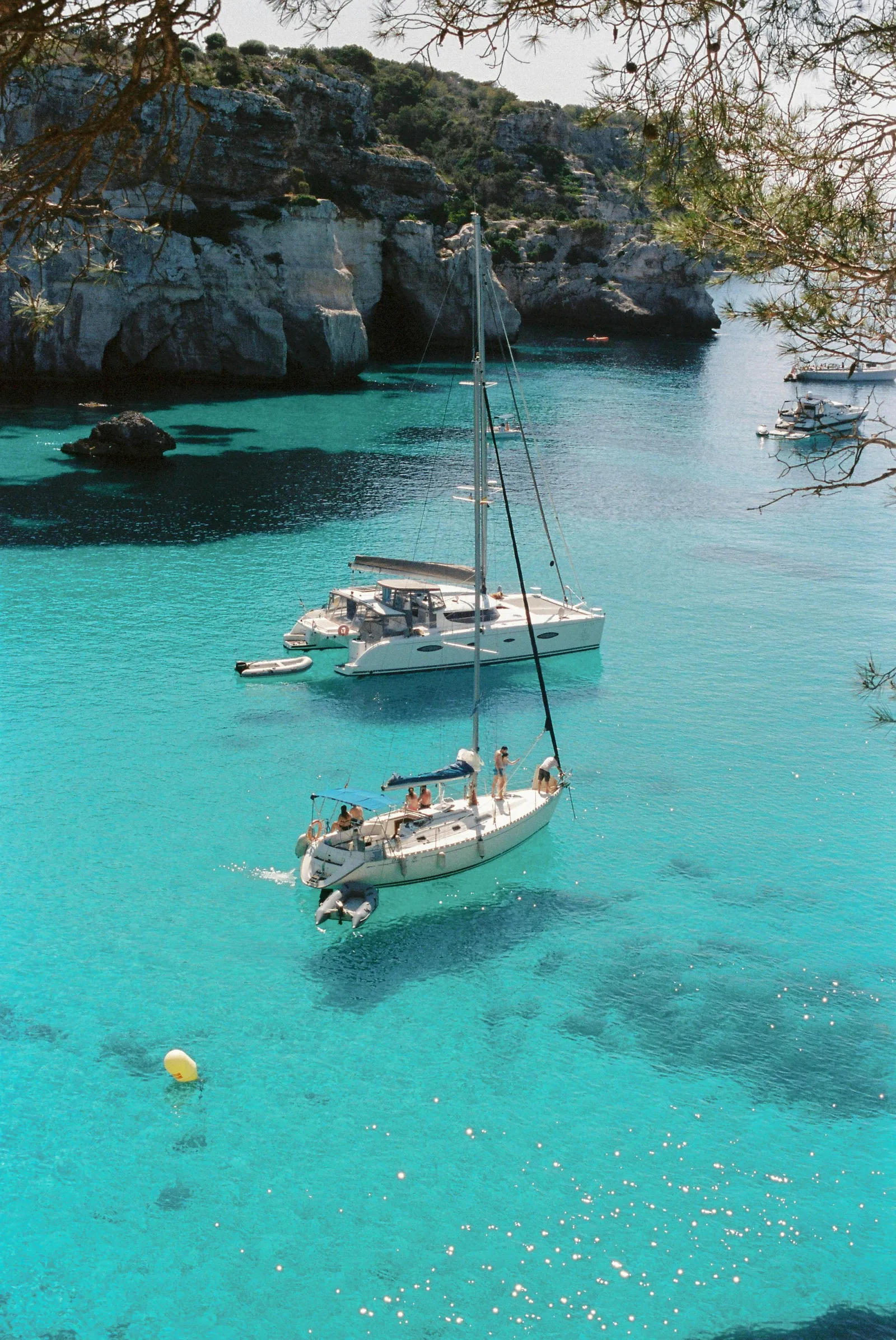
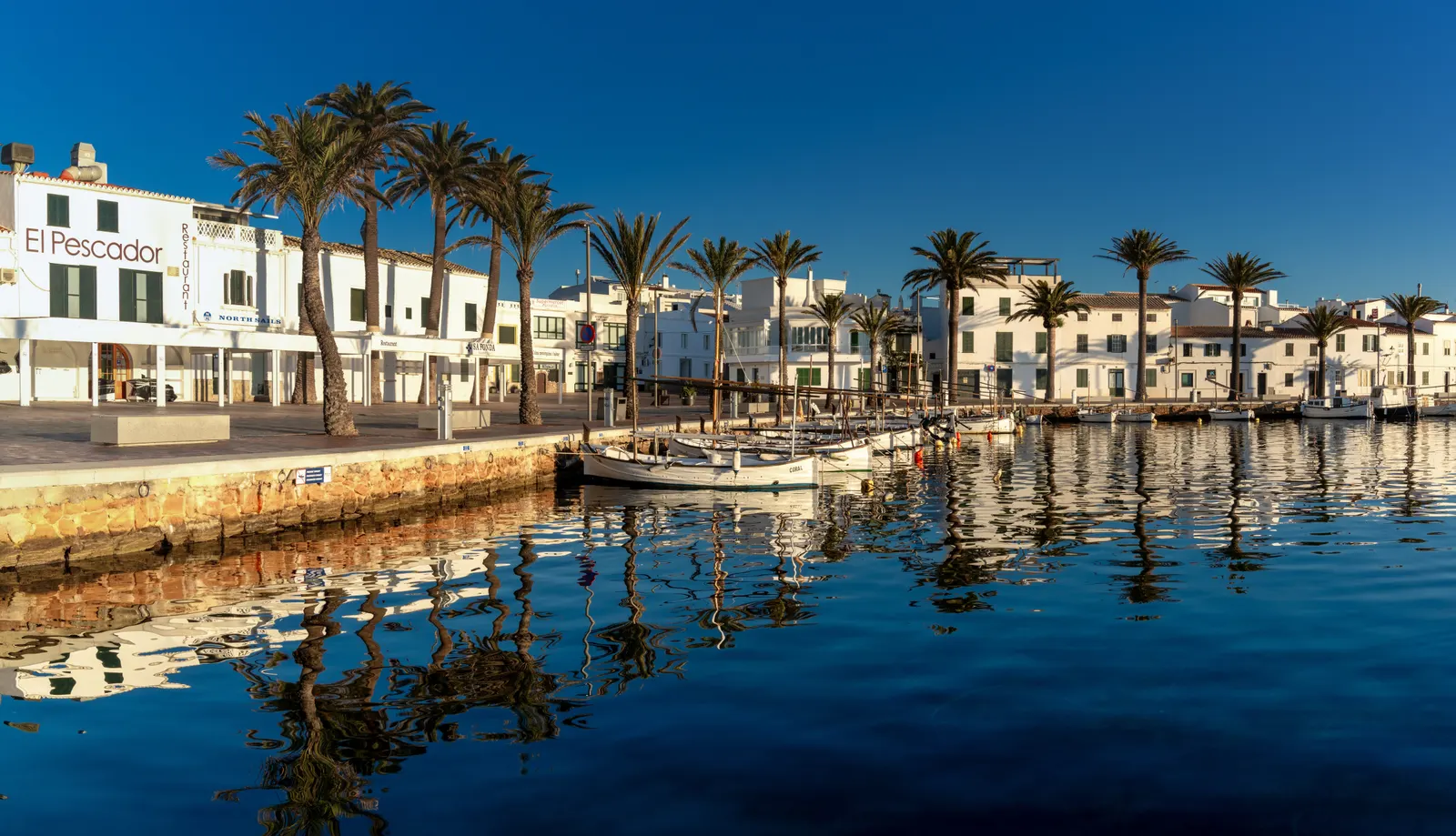
At what cannot be built: scale. Menorca is a genuinely small island — just over 100,000 inhabitants, eight municipalities, two towns that feel like large villages — with no big urban sprawl and no densely built seafronts. Distances are short, the car parks are dirt clearings and the horizon, almost always, is empty. That smallness is not a shortcoming: it is the product.
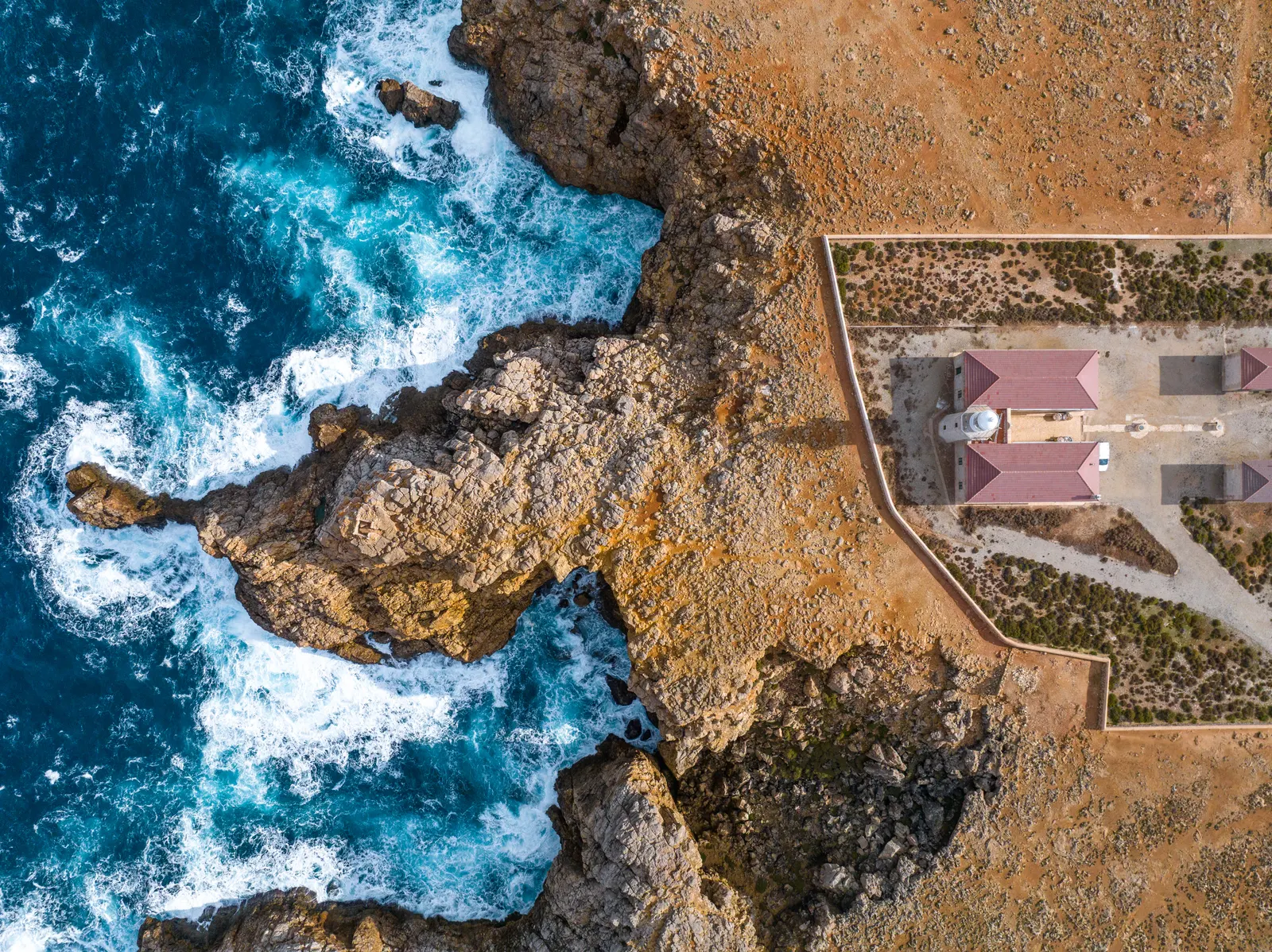
At a decision taken decades ago. The whole island has been a UNESCO Biosphere Reserve since 1993, and that declaration was never an ornament but a course: less volume, more care. The result is visible from the air and felt at the water’s edge — a coastline that keeps entire kilometres without a single building.
At its walkable shoreline. Menorca’s coast is stitched together by the Camí de Cavalls (GR-223), the historic path of some 185 kilometres that rings the whole island, along which many of the best calas are earned on foot, through pinewood and rock. Reaching a cove on foot, in the first light, is the experience that defines this island — and it is nothing like arriving at a built-up beach along an avenue.
And at the 365 days. Menorca does not shut down in winter: it changes register. It is the season of the Mahón-Menorca DOP cheese, of Xoriguer gin and its pomada, of Talayotic Menorca — a World Heritage site since 2023 — visited without the punishing sun, and of festivals, with Sant Joan in Ciutadella at their head, that have been celebrated for centuries for the islanders themselves, not for the photograph.
So, which is quieter?
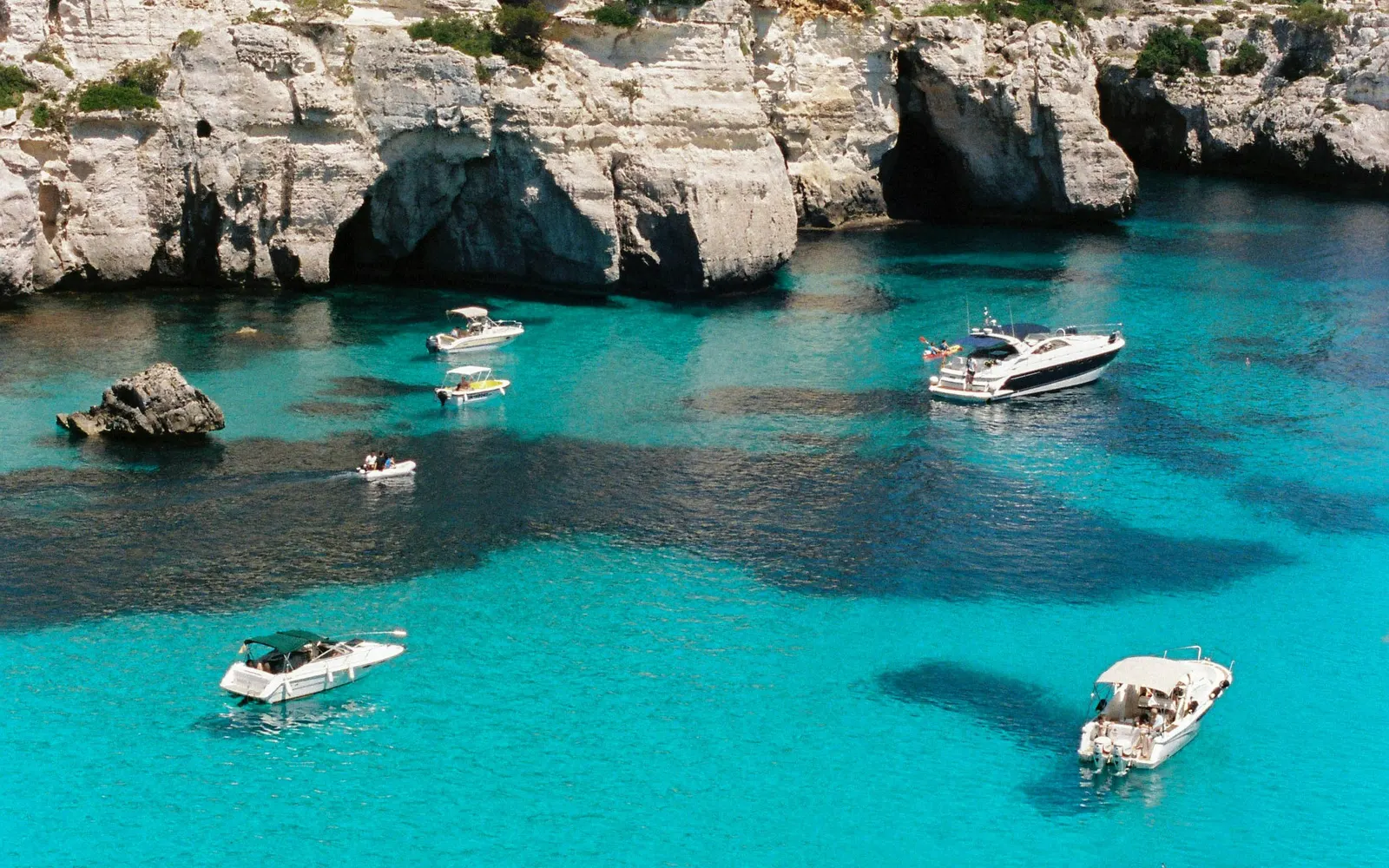
Menorca, and not by a little. It is not a matter of luck or timing but of structure: fewer people, fewer tourist beds, no major nightlife hub and an environmental protection that has been holding back development for three decades. Calm exists in Mallorca — in the Tramuntana out of season, in the farming interior, in hidden coves — but you have to know where to look for it, and shield it from the island itself. In Menorca the opposite is true: calm is the starting point, and it is the bustle that is the exception.
With one qualification that matters to us: in August, Menorca fills up too. The famous southern coves run out of parking by mid-morning and the island quickens. The difference lies in the scale of the crowds and how easy they are to escape: rising early or walking twenty minutes is usually enough. If calm is your absolute priority, the month matters as much as the island; our guide on when to visit Menorca takes it month by month.
Which should you choose for your trip?
- A short break with easy flights, winter included: Mallorca. Its connections make it possible from almost any European city.
- Beach, mountains and city in the same week: Mallorca. No other Balearic island offers that range.
- Genuine disconnection: coves, silence and walking: Menorca. This is precisely its ground, and here it has no rival in the archipelago.
- A gastronomic trip in pursuit of stars: Mallorca. One of produce, markets and unhurried tables: Menorca.
- Nightlife and buzz: Mallorca, by a distance. Menorca offers something else: long sunsets and lingering dinners.
- Travelling slowly, the quiet-luxury way: Menorca. It is this house’s thesis, and we set it out in the art of calm.
And if you refuse to choose? Both in one trip
You are not obliged to decide. Regular ferries run between Palma de Mallorca and Menorca, so combining the two islands over one or two weeks is perfectly feasible: the urban, mountain and grand-table chapters in Mallorca; the coves, footpaths and silence in Menorca. In summer, book the crossings in advance. Getting here and getting around once you arrive is covered in our practical guide to Menorca.
Our verdict
We chose Menorca as this magazine’s first edition precisely because of what this comparison lays bare: it is the island where calm is not a corner to be defended but the entire character of the place. Mallorca is a great island — more complete, better connected, with an urban and mountain depth Menorca cannot offer — and anyone who chooses it on those terms will choose well.
But if what you are after is space, time and a sea you reach on foot, the short answer is the small island. And if this way of looking at the Mediterranean is yours, we will be glad to see you in the Society: our newsletter gathers the best of the island with a quiet-luxury eye — no noise, no hurry.