There is a serene Menorca, of coves and silences, and there is one day a year when the island erupts. The Sant Joan festival in Ciutadella, held around 23 and 24 June, is the oldest, most intense and most emblematic celebration on Menorca: hundreds of horses, riders in full dress, a crowd swept up in it all, and a ritual repeated, almost unchanged, for centuries. This is not a spectacle staged for tourists; it is the very identity of a town, open to anyone willing to live it with respect.
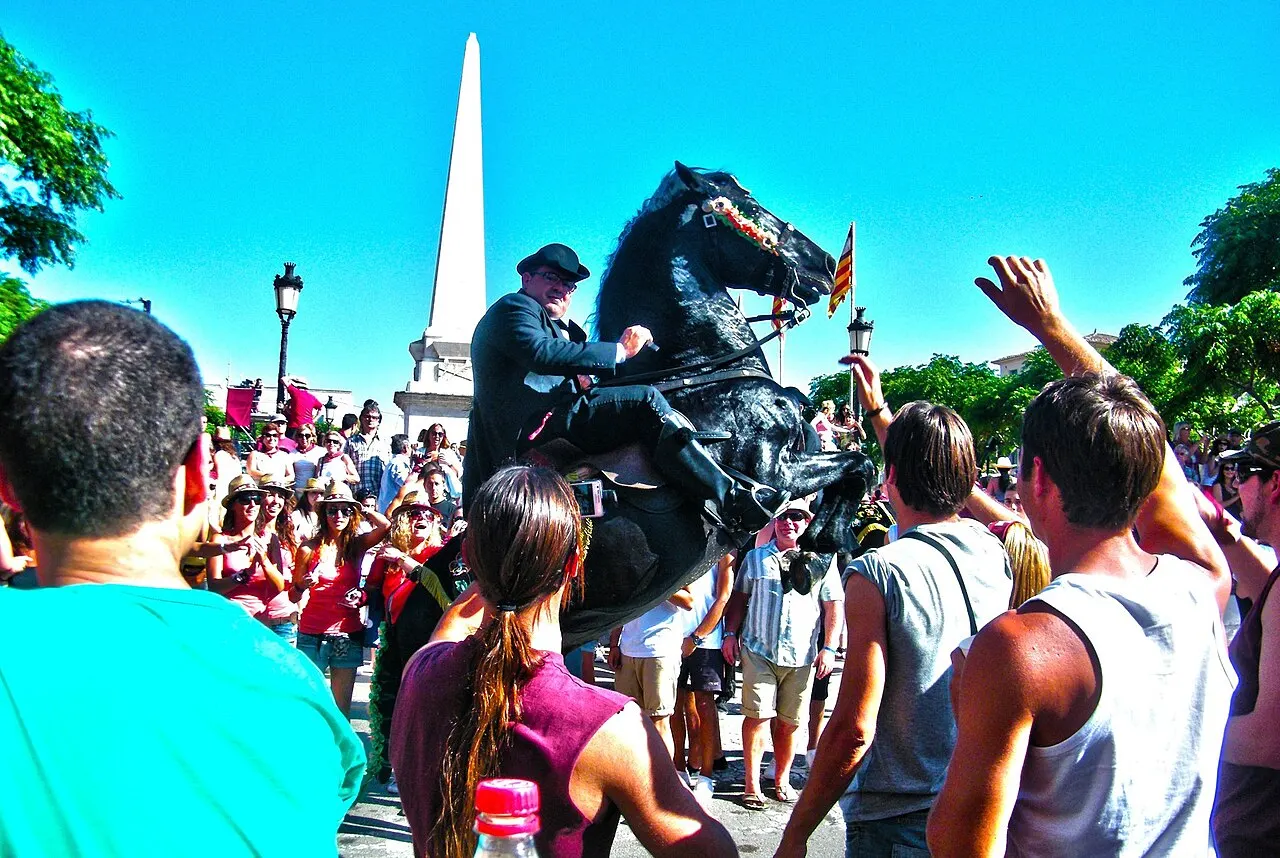
No one who sees it for the first time forgets it. The jaleo —the black horses rearing up on their hind legs among the people— is one of the most powerful images in the Mediterranean. This guide explains what is being celebrated, who is who, and how to enjoy it without striking the wrong note.
The essentials
- When: the main days are 23 (the eve) and 24 June (Sant Joan). In 2026, the Dia des Be opens the festival on Sunday 21 June.
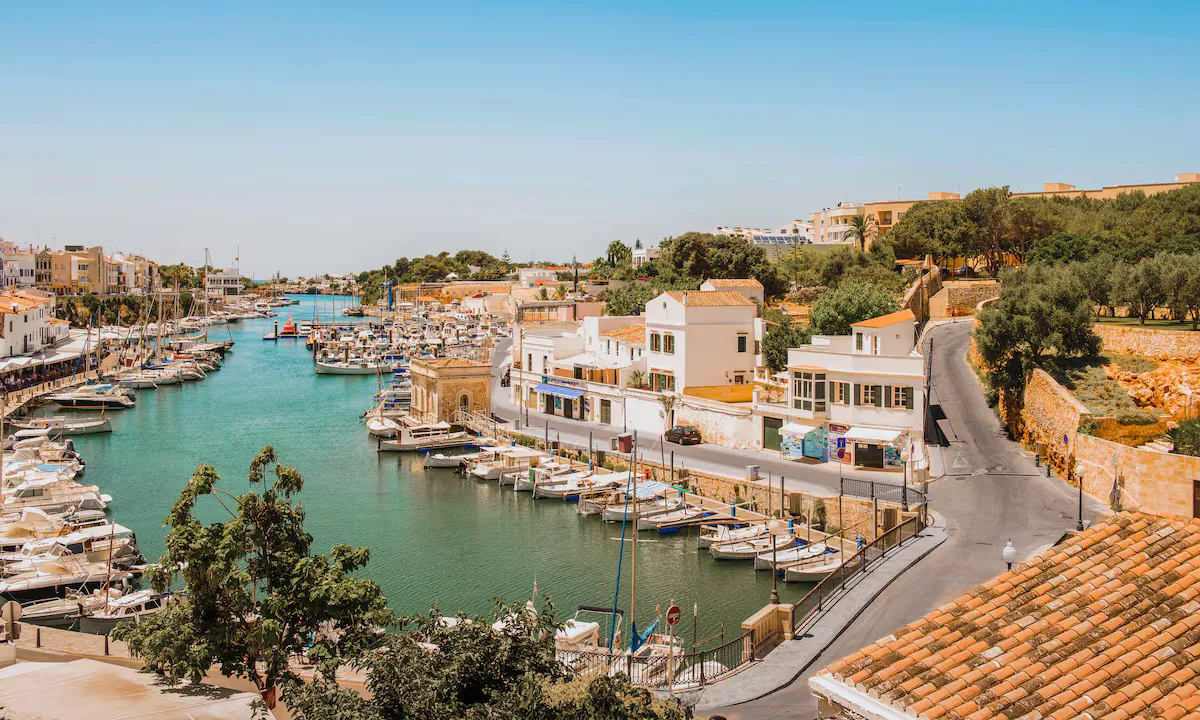
- Where: Ciutadella, in the west of the island. The streets of the old centre are the stage.
- The protagonist: the caball menorquí (the Menorcan horse), black and high-strung, and its riders.
- The high point: the jaleo, when the horses rise up on two legs surrounded by the crowd.
- The drink: the pomada (the island’s gin with lemonade), well chilled.
- A word of warning: it is huge and intense; check the year’s official programme and experience the jaleo with care.
A festival with centuries of history
Sant Joan is no ordinary festival: it is a ritual with medieval roots that re-enacts, on horseback, the society of old Ciutadella. Everything revolves around the qualcada, the mounted procession that winds through the city led by the traditional estates. Each rider —the caixers— represents a social group:
- The caixer capellà (the Church), who presides on horseback.
- The caixer senyor (the nobility).
- The caixers pagesos (the farmers, the land), chosen each year.
- The caixer casat and the caixer fadrí (artisans and craftsmen).
- The caixer batle, representing the townspeople.
It is, at heart, a living portrait of old Menorca, kept up with astonishing fidelity. That is why it is worth watching with the eyes of someone attending something serious, not a mere show.
The jaleo: the heart of the festival
If one moment sums up Sant Joan, it is the jaleo. To the beat of the traditional music, the horses —more than a hundred over the course of the festival— make their way through a crowd that presses in around them and, at the peak, rear up on their hind legs. Tradition holds that touching the heart of the horse while it is raised brings good luck, and people stretch out their hands to reach it.
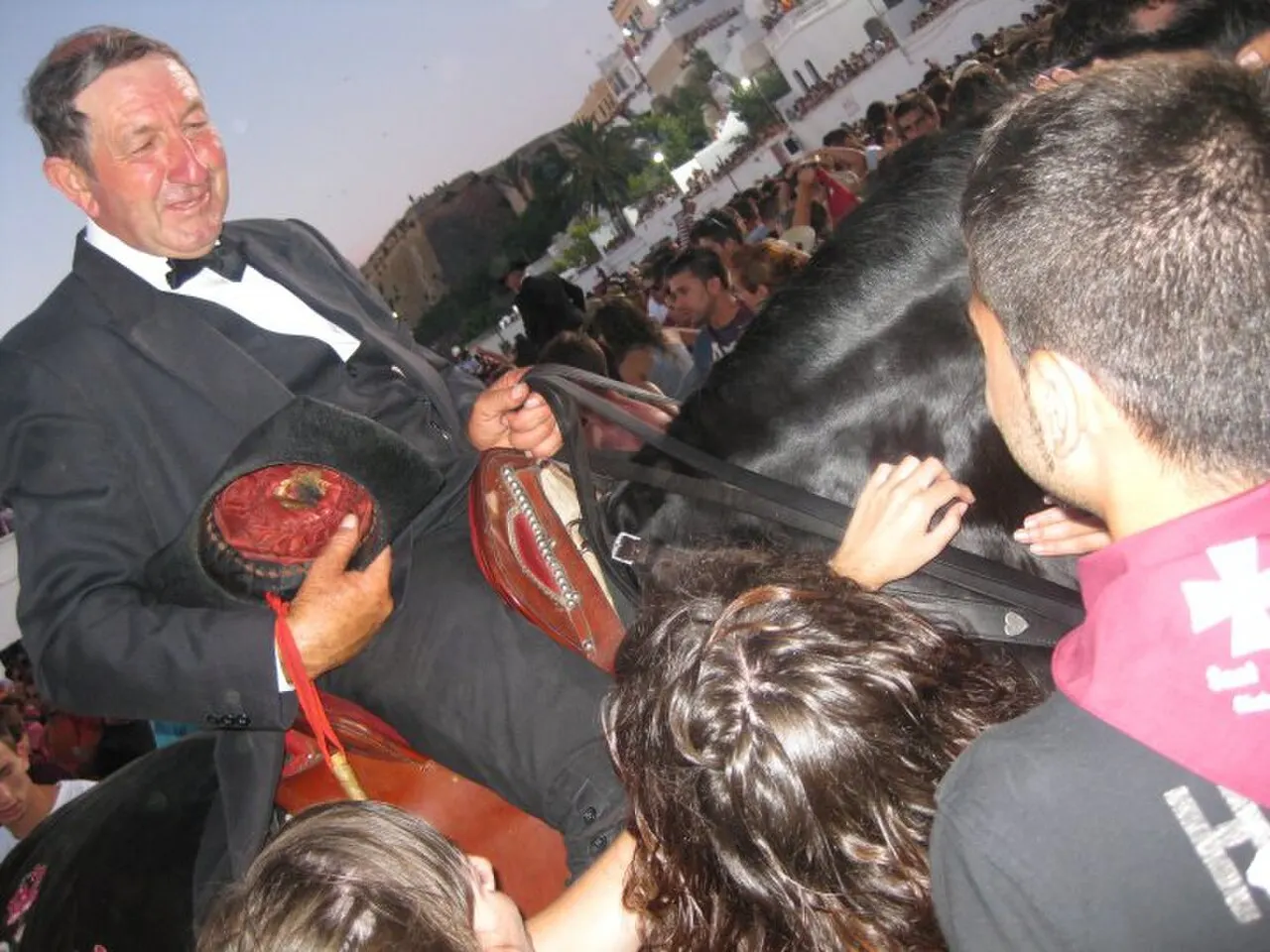
It is breathtaking and also intense and risky: there is jostling, heat and a great deal of emotion. Take it in with your wits about you —watching the horse, never cornering it, respecting both the animal and the riders. Here, elegance means enjoying yourself without getting in the way.
The other rites you can’t miss
Sant Joan is far more than the jaleo:
- Dia des Be: on the Sunday before (in 2026, 21 June), a man dressed in lambskins —the homo des be— walks through the city announcing the festival. It is the starting gun.
- Caragol des Born: the horses turn and wheel in the great plaça des Born, one of the most photographed moments.
- Jocs des Pla: traditional equestrian games with lances and shields.
- The final powder: the fireworks that bring the celebration to a close.
The pomada, the taste of the festival
There is no Sant Joan without pomada: the island’s gin —traditionally the historic Gin Xoriguer, inherited from the British era— mixed with lemonade and served very cold. It is refreshing and deceptively easy to drink, so moderation is the rule: the festival is long and the June sun is fierce. Sip it slowly, like all the good things on the island.
How to live it (practical tips)
- Arrive early and on foot. The centre is closed off and packed; the car is a hindrance. Park far away or take a transfer.
- Closed shoes and comfortable clothes. You’ll be on your feet for hours, among the crowd.
- Respect the horses. Don’t touch them carelessly or hem them in; these are animals at full tension.
- Go easy on the pomada and stay hydrated: it’s hot and the day is a marathon.
- Check the official programme from Ciutadella’s town hall for the year’s exact dates and times, published each season.
Our take
Sant Joan is proof that calm Menorca also knows how to burn. If your visit coincides with the festival, don’t watch it from afar as a tourist turn: come close with respect, understand what the caixers represent, let the jaleo raise the hairs on your arms, and raise a pomada to a tradition the island has managed to keep intact.
And one underlying piece of advice: go unhurried and without a car, let yourself be carried along by the crowd with your head on straight, and save your strength for the night. It is the most vibrant face of an island that almost always speaks softly —and that is why, when it shouts, it moves you so deeply.