Some dishes tell the story of a place better than any book. Lobster stew is Menorca’s: a steaming earthenware pot in which the island’s sea is concentrated until it becomes broth. Today it appears on menus as an expensive delicacy reserved for special occasions, but its origin is precisely the opposite. It was born poor, aboard the fishing boats, from the hands of fishermen who cooked with whatever they had to hand.
Because lobster, which we now pay for as if it were a jewel, was for a long time little prized. The sailors stewed it with a few vegetables and seawater while they worked, with no greater ambition than to eat something hot. Out of that necessity came a dish of extraordinary depth, and out of that shipboard stew came, over the years, the island’s gastronomic emblem. That something so humble should have ended up a luxury says a great deal about how the value of things changes.
In this guide we tell you where the stew comes from, how it is made, why Fornells is its cradle, in which season it makes sense to order it and how to enjoy it without getting it wrong. Without rushing, as a dish that simmers slowly demands.
The essentials
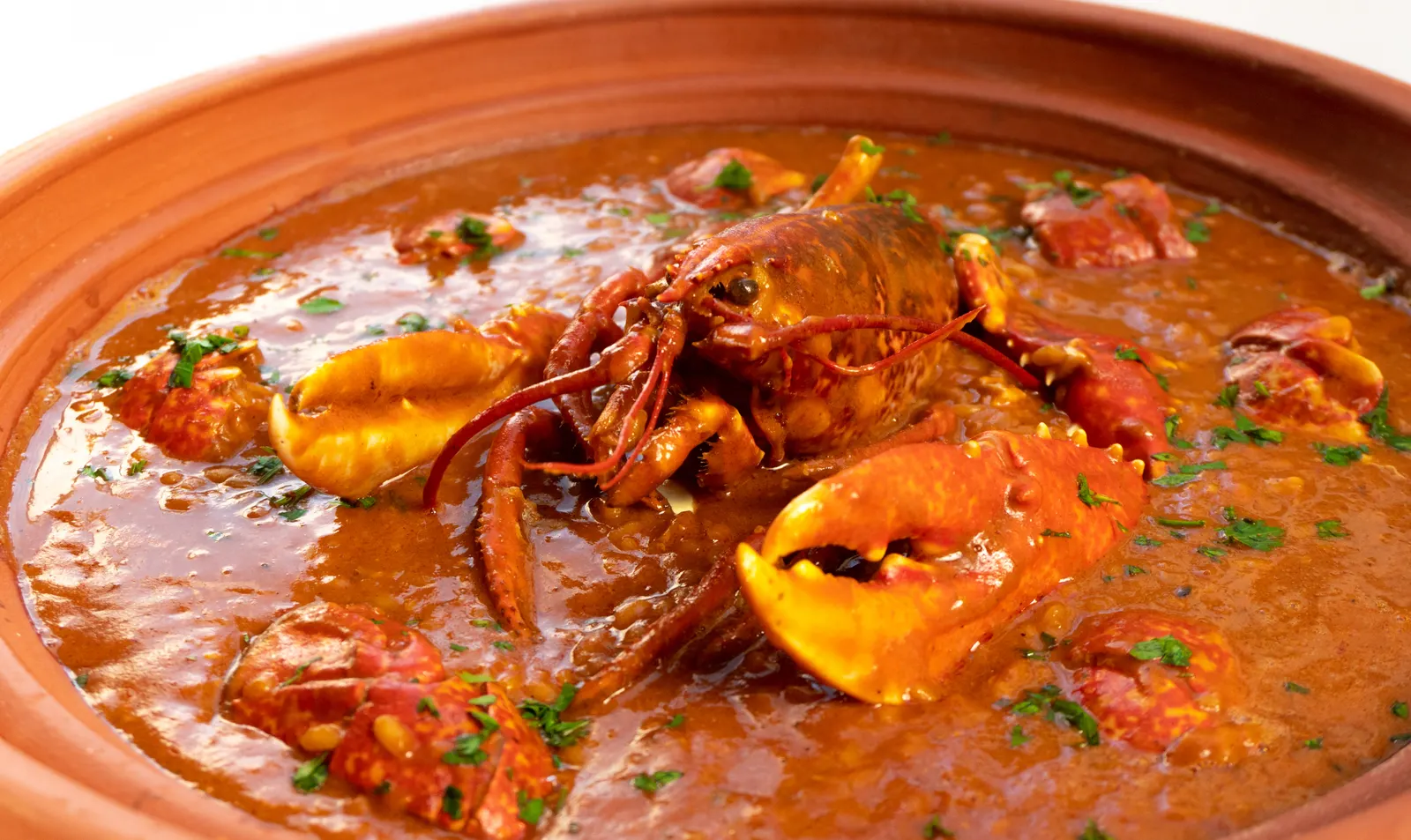
- What it is: a seafood stew of red lobster in an earthenware pot, over a base of slow-cooked vegetables. Menorca’s emblematic dish.
- Humble origin: the fishermen cooked it aboard, making use of lobster (then little valued) and a few vegetables. It is expensive today because of the price of lobster, not because it began life as a luxury dish.
- Its cradle: Fornells, the fishing village on the bay of the north coast, where the seafood restaurants made it famous.
- Season: lobster fishing is open approximately from 1 April to 31 August; for the rest of the year there is a closed season. It is worth confirming the dates each season with the Govern Balear.
- The base: a slow-cooked sofrito of tomato, pepper, onion, garlic and parsley; water and salt; sometimes a pounded almond paste to thicken the broth.
- Not to be confused: nothing to do with the mainland lamb caldereta. Here it is made with lobster, and it is a seafood dish.
A dish born poor
It is worth dismantling the most widespread misunderstanding: lobster stew is not an old luxury dish. It is exactly the opposite. For generations, lobster was not a coveted product, and the fishermen stewed it aboard their boats with a few vegetables and water, as the day’s sustenance. It was working food, not food for celebration.
What has changed is not the recipe, but the price of the main ingredient. Red lobster has become a scarce and expensive product, and with it the whole dish has risen in standing. Today a lobster stew is one of the island’s high-end gastronomic experiences, but its soul is still that of that simple stew: few ingredients, good raw material and time.
That history is part of its charm. Eating a lobster stew in Menorca is not just eating expensive seafood: it is tasting a dish that has travelled from the deck of a fishing boat to the tablecloth, without losing its seafaring character along the way.
How the stew is made
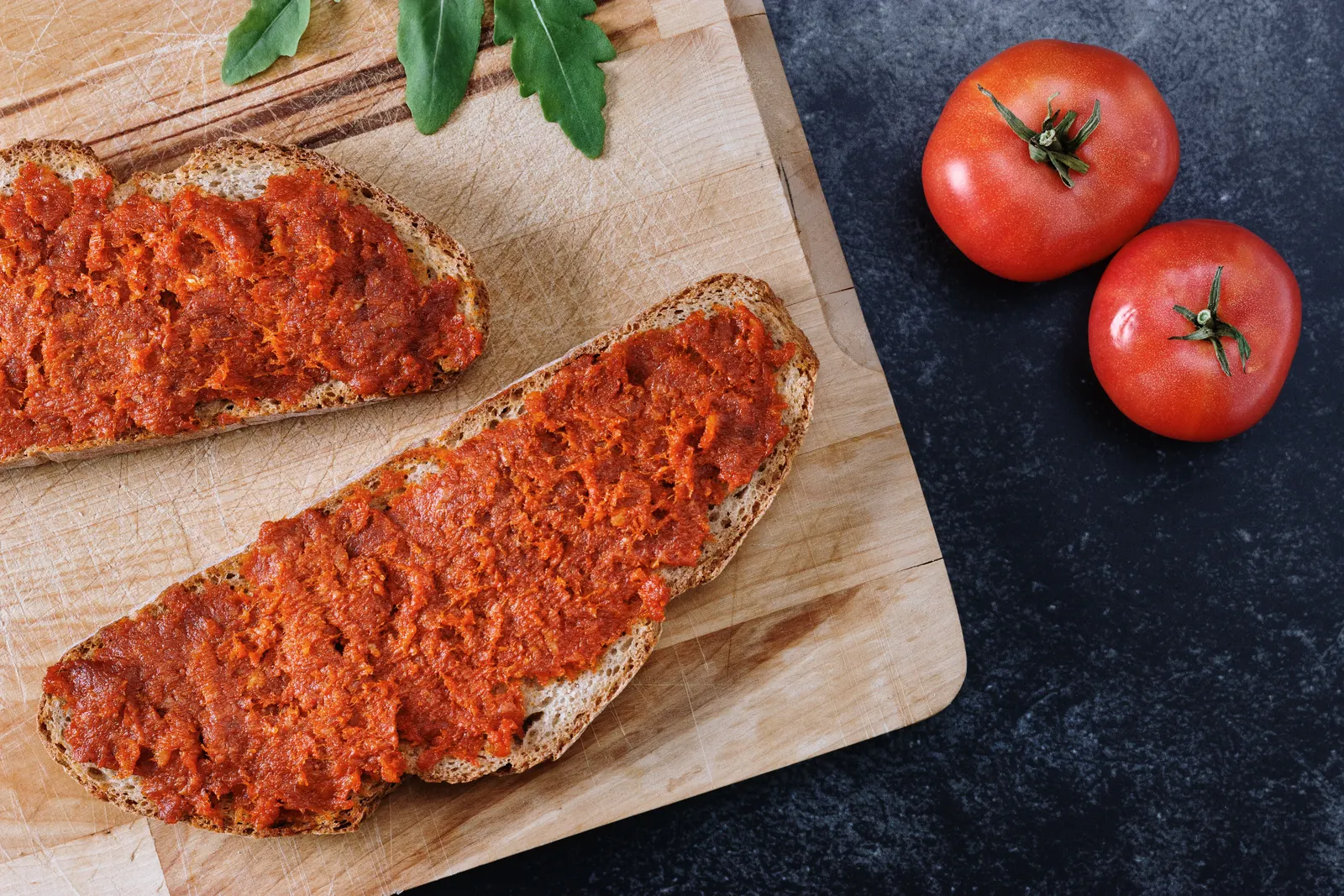
The stew is a dish of apparent simplicity and delicate execution. It all begins with an unhurried sofrito of tomato, pepper, onion, garlic and parsley, cooked slowly in an earthenware pot until its flavour is concentrated. The earthenware is no whim: it distributes the heat gently and keeps the stew at just the right temperature.
Onto that base goes the lobster, cut into pieces, and it is covered with water and salt to form the broth, which is the dish’s true protagonist. Some cooks add a pounded almond paste —ground in a mortar— to thicken and give body to the broth, a gesture that lends a denser texture and a slightly toasted background. The cooking, without haste, finishes uniting sea and garden in a single spoonful.
The result is often served in two stages: first the broth, thick and reddish, with bread; then the lobster. Some dip their bread without pause and others save the best slices for the end. There is no wrong way to do it, except being in a hurry.
Why Fornells is its cradle
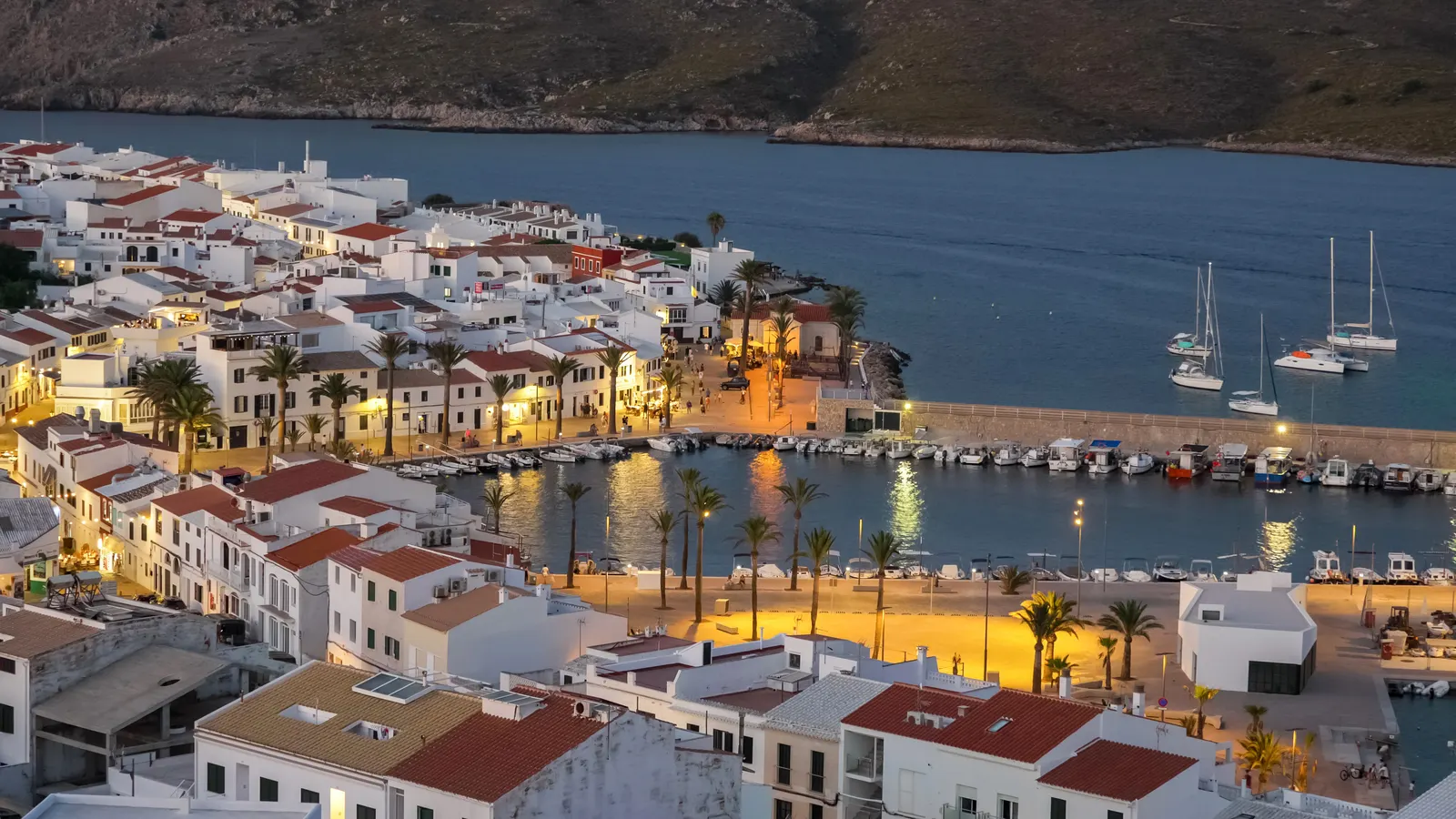
If the stew has a capital, it is Fornells. This fishing village, looking out over a long sheltered bay on the island’s north coast, always lived from the sea, and it was its seafood restaurants that turned the shipboard stew into a menu dish. One of them is among the oldest on the island —its founding is cited as the late nineteenth century—, though it is wise to take that date with the caution due to anything passed on by word of mouth.
What is certain is that Fornells and the stew grew up together. The village preserves its air of a serene port, of white houses and moored boats, and sitting there to eat a lobster stew facing the water is, probably, the most faithful way to understand the dish. If you want to get to know the place beyond the table, we tell you about it in our portrait of Fornells, the fishing village.
The stew has also been a gateway to a more ambitious Menorcan cuisine, one that reinterprets local produce with judgement without betraying it. If you are interested in that contemporary reading, we explore it in our look at Menorca’s fine dining.
When to order it: the season rules
Here is a fact worth being clear about before sitting down at the table: the stew is a seasonal dish, because lobster is. Red lobster fishing is open approximately from 1 April to 31 August, and for the rest of the year a closed season applies that protects the species and allows it to reproduce.
This means that the best lobster stew —the one made with fresh, live lobster caught in the island’s waters— is eaten in spring and summer. Outside that period it is possible to find it with frozen produce or lobster from elsewhere, but it is not the same. As the exact dates can vary from one year to another, the most prudent thing is to confirm the season’s calendar with the Govern Balear before organising the gastronomic outing.
A note of honesty: the authentic stew is made with live red lobster (Palinurus elephas), Menorcan if possible. It is an expensive and seasonal dish, and that is part of its value. Be wary of a cheap stew out of season.
How to enjoy it with judgement
The stew is not a dish to rush or to share half-distracted. It calls for time, a generous napkin and relaxed company. These are our recommendations for getting the most out of it:
- Book in advance, especially in summer and at the Fornells restaurants. Many prepare the lobster to order and appreciate the notice.
- Ask about the origin. That it is live lobster and, if possible, from the island. A good restaurant will say so with pride.
- Don’t order it out of season if you are after the faithful version. During the closed season, better to opt for another seafood dish on the menu.
- Enjoy the broth first. It is the heart of the dish; the bread for dipping is not optional.
- Pair it with a fresh local white that cleanses the palate between spoonfuls.
Our take
Lobster stew is, for us, the dish that best sums up Menorca’s character: humble in origin, generous in flavour and deeply tied to its sea. We don’t recommend it as a luxury whim, but as a seasonal experience to be lived in its moment and in its place. If you come in spring or summer, book a table in Fornells, facing the water, and devote the whole afternoon to it.
And remember where it comes from. Every time you dip bread into that red broth you will be repeating a gesture that began on the deck of a fishing boat, when lobster was worth nothing and the sea gave almost everything. That is the quiet luxury of Menorca: a simple dish, made with time, that tastes exactly of the place where it is cooked.