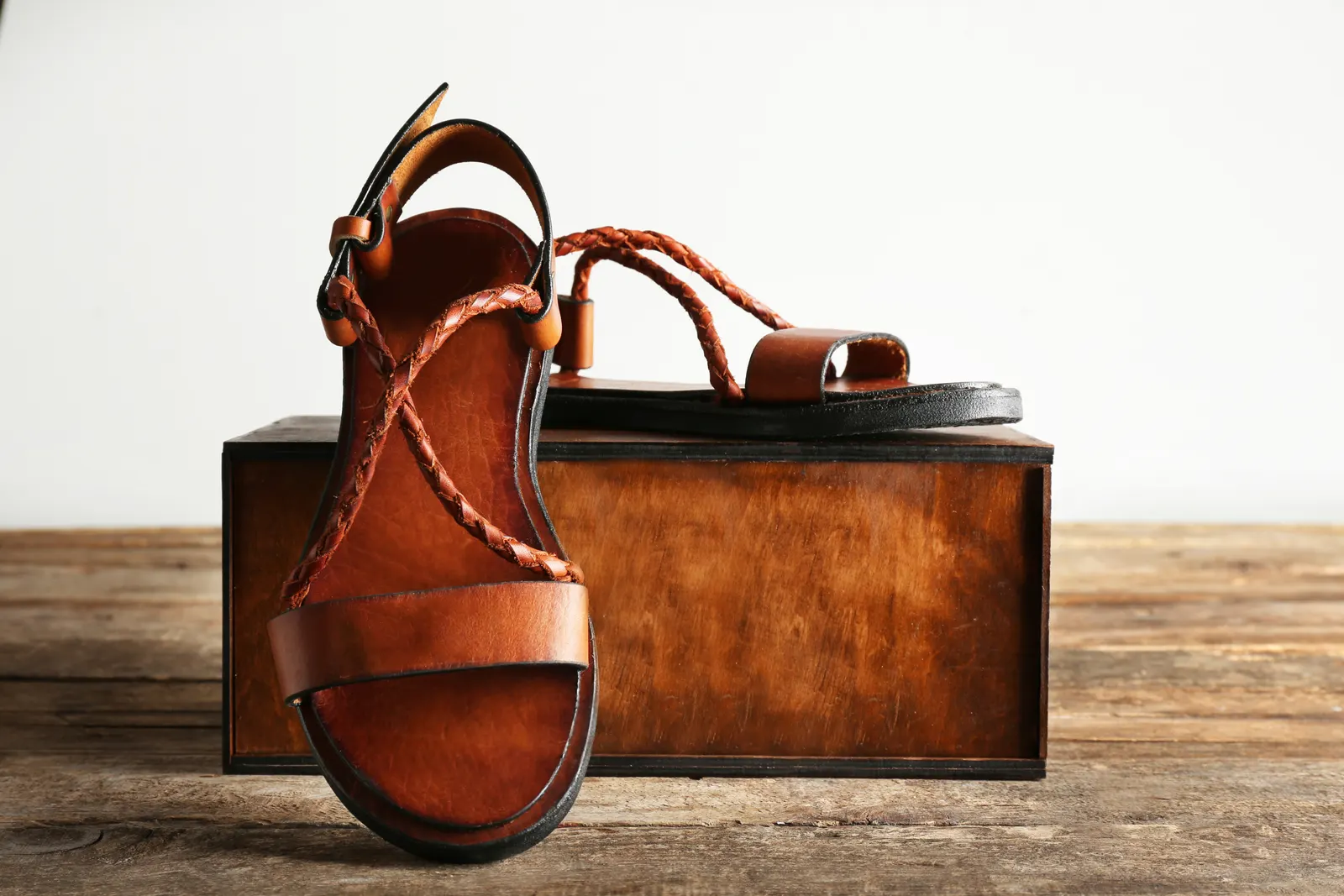
Some objects sum up a place better than any brochure. The avarca —abarca in Spanish, avarca in Menorquín— is one of them: a flat leather sandal, with one strap across the instep and another around the heel. It was born in the countryside, on the feet of farmhands, and today it has become an icon of the Mediterranean summer, seen as readily on a cove as on a street in Milan. But behind the fashion there’s a craft, and it’s worth learning to tell them apart.
This guide explains what a real avarca is, where it comes from, how to recognise the authentic one and where to buy it on the island without ending up with an imitation.
The essentials
- What it is: a flat, light leather sandal with an instep strap and a heel strap. Comfortable, cool and hard-wearing.
- Origin: working footwear from the Menorcan countryside; traditionally, the sole was made from recycled tyre tread.
- Mark to look for: the “Avarca de Menorca” guarantee mark, created in 2010 by the Island Council together with the makers, certifies that they are made in Menorca and meet quality requirements.
- How to choose them: genuine leather (not plastic), good stitching, a well-bonded sole. The comfort is obvious from the first step.
- Rough price: a well-made leather avarca usually starts at around €40-50 a pair; be wary of souvenir-priced ones.
From the farmhand’s feet to the shop window
The avarca is, in essence, working footwear. Simple, cheap to make, cool for summer and tough enough for the hard ground of the fields. For decades it was that and little more: what islanders wore to work. The humblest item in the wardrobe.
Its leap to icon came when that minimalist design —two leather straps and a flat sole— turned out to be timeless. With no bulky buckles or ornament, the avarca is pure function turned into style. Today it’s made in a huge range of colours and finishes, for men, women and children, but the silhouette is the same one the grandparents wore.
How to recognise an authentic one
The market has filled with imitations, many of them plastic and made far from the island. To get it right, look at three things:
- The material. A real avarca is leather, inside and out. Leather feels and smells like leather and, with wear, moulds to the foot. Plastic neither breathes nor lasts.
- The guarantee mark. Look for the “Avarca de Menorca” seal. It’s a guarantee mark backed by the Island Council of Menorca (2010) that certifies manufacture on the island and compliance with certain standards. Not every good avarca carries it, but its presence is a reliable sign.
- The making. Clean stitching, a well-bonded sole, neatly finished edges. In the traditional versions, the sole imitated —or directly used— the tread of a tyre; today lighter rubber is common.
Who makes them
Several workshops and factories with decades of history and direct sales coexist on the island. Among the best known:
- Ria Menorca — in Ferreries, making avarcas since 1947, with a factory shop.
- Avarca Pons — a family firm in Ciutadella, with a shop in the centre and online sales.
- Mibo — in Es Migjorn Gran, with direct factory sales.
There are other respected Menorcan brands; these are a good way in. Buying at the factory or its official shop is the surest way to take home the genuine article.
Where to buy them
You’ll find them in the factories’ own shops (Ferreries, Ciutadella, Es Migjorn Gran), in shoe shops and stores across the island, and at some summer craft markets, such as those at the port of Ciutadella or at Cales Fonts in Es Castell. In high season there are stalls everywhere: there, more than ever, check the material and the mark before you pay.
A tip: try them on without rushing. Leather gives a little with wear, so an avarca that pinches slightly on the first day will settle in perfectly; one that slips will always slip.
Our take
The avarca is the perfect gift from Menorca: light in the suitcase, genuinely useful and full of history. Choose leather over plastic, look for the mark and, if you can, buy it from the workshop that makes it. A restrained colour —natural tan, black— ages better and goes with everything. It isn’t the cheapest souvenir, but it’s one of the few you’ll still be wearing years after you get home.