Menorcan charcuterie can’t be understood without the matança, the pig slaughter — that winter tradition that for centuries filled the larders of the island’s farmhouses. From it come cured meats of strong character and patient making, meant to be spread on bread, fried with eggs or slow-cooked. These aren’t shop-window products: they’re real food, the kind that tells the island’s story in every bite.
This guide explains what each Menorcan cured meat is, how it differs from Mallorca’s —an important nuance— and where to buy it well.
The essentials
- The headliners: sobrassada (spreadable, paprika-rich), carn-i-xulla, cuixot (or camot) and the botifarrons.
- A note on marks: the “Sobrasada de Mallorca” IGP belongs to Mallorca, not Menorca. In Menorca, sobrassada is made artisanally, but it doesn’t carry that mark.
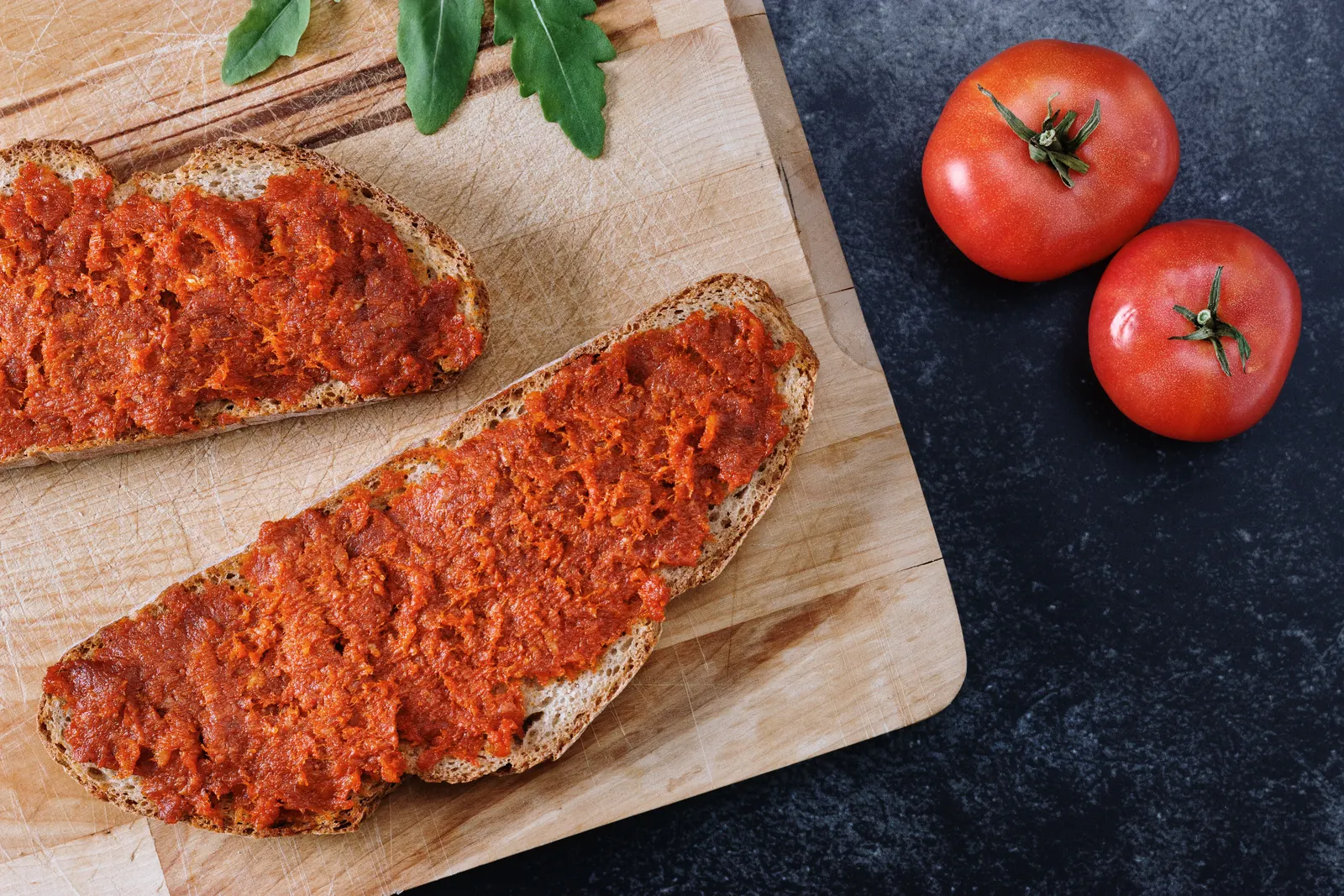
- How they’re eaten: sobrassada spread on bread (with honey it’s wonderful); cuixot, sliced; many of them fried or in stews too.
- Where to buy them: the island’s butchers, local produce markets and farm gourmet shops.
What each one is
- Sobrassada. The most famous cured meat of the Balearics: minced pork and fat, paprika, salt and spices, cured until spreadable. Deep red in colour, deep in flavour. It’s a product shared with Mallorca; in Menorca it’s made artisanally in many homes and butcher’s shops.
- Carn-i-xulla. One of Menorca’s oldest and most characteristic cured meats. Its name —“meat and fat”— says it all: a cured sausage that makes use of both parts of the pig.
- Cuixot (or camot). A cooked cured meat, dark and rich, with minced meat, spices and often blood, traditionally stuffed into a leg of pork. It’s the Menorcan cousin of Mallorca’s camaiot. In Ciutadella it’s called cuixot.
- Botifarrons. Cooked cured meats: the botifarró negre contains blood and spices; the botifarró blanc, finer cuts and a more delicate flavour.
Menorca and Mallorca: the difference worth knowing
It’s easy to confuse the two islands’ charcuterie, because they share roots and the odd product. The key to getting it right is this: the sobrassada with Protected Geographical Indication is “Sobrasada de Mallorca”, whose protected area is the neighbouring island. The sobrassada you buy in Menorca may be excellent and artisanal, but it is not “Sobrasada de Mallorca IGP” — and that’s perfectly fine.
Where Menorca stakes out its own ground is in pieces like the cuixot and the carn-i-xulla, hallmarks of the local charcuterie. If you’re after the most Menorcan thing, ask for those.
How to enjoy them
The most island way is the simplest: bread with sobrassada, sometimes with a thread of island honey on top, which balances the paprika. On toast, with a piece of Mahón-Menorca cheese, it’s one of those bites that sum up a whole culture. Cuixot and botifarrons are served sliced or go into winter stews and rice dishes. And almost everything pairs with a young island red or a cold beer.
Where to buy them
The best bet is the village butcher’s shops, where it’s still made by hand and they’ll advise you on what you’re after. The local produce markets —such as the Mercat des Claustre in Maó— are another good option, and some farm shops (for example, the one at Hort de Sant Patrici, in Ferreries) sell cured meats alongside the cheese and honey. Always ask whether it’s artisanal and locally made.
For the journey, bear in mind that cured sobrassada keeps well, but cooked products like cuixot are more perishable: buy them last and eat them soon.
Our take
Menorcan cured meats are home food, not souvenir food, and that’s what makes them moving. Take home an artisan sobrassada and, if you want to go further, a piece of cuixot: few products tell the island’s winter —the one the August visitor rarely sees— better. One last tip: buy less but better, ask who made it, and save a good loaf for the first bite. The paprika will do the rest.