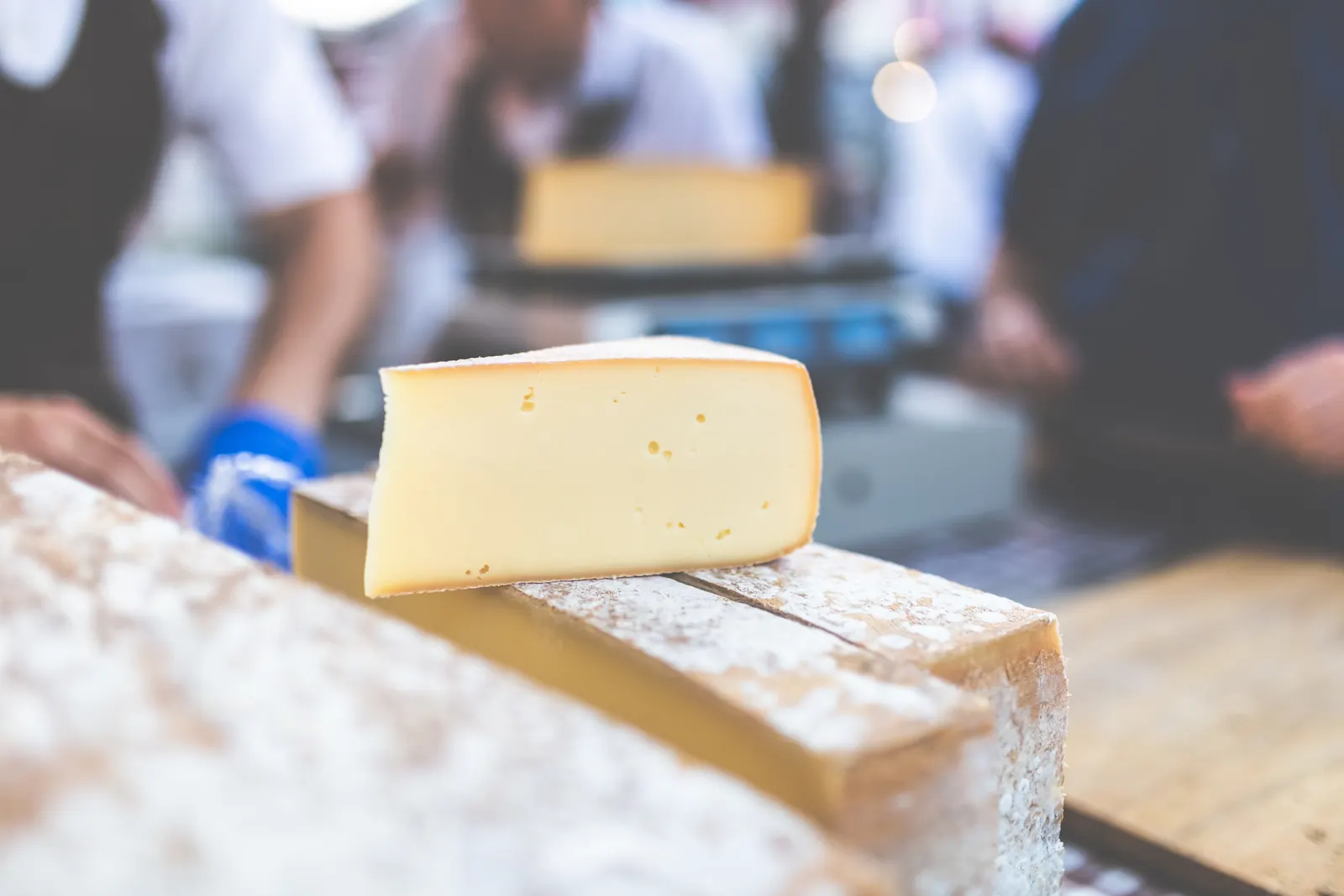
If Menorca had a taste, it would be its Mahón-Menorca cheese, protected by a Protected Designation of Origin. Pressed and made from cow’s milk, it is recognisable at a glance by its square shape with rounded edges and by its orange rind, traditionally rubbed with oil and paprika. It is one of the oldest PDO cheeses in Spain and, very probably, the island’s most faithful ambassador: it fits in a suitcase, travels well and tells, in every bite, the story of a landscape.
Because this cheese cannot be understood without its fields. The dry-stone walls that draw the island, the green meadows that stay green even at the height of summer thanks to the Atlantic humidity that softens the Mediterranean climate, and the cows grazing by the sea are the invisible raw material of every wheel. To speak of Mahón-Menorca is to speak of a whole territory condensed into a piece of yellow paste.
In this guide we explain what makes it different, how it is still made by hand on many farms, how soft, semi-cured and cured cheeses differ, how to pair it without fuss and where to buy and taste it on the island with a discerning eye. Slowly, as the produce itself demands.
The essentials
- What it is: a cow’s-milk cheese, pressed paste, with a Protected Designation of Origin (one of the first in Spain).
- Shape: square with rounded corners, the result of pressing it inside a cloth (the fogasser) knotted at its four points.
- Rind: orange in the cured versions, from the traditional rubbing with oil and paprika.
- Varieties by ageing: soft, semi-cured and cured or aged.
- Key mark: look for “Mahón-Menorca” and, if it is raw-milk and traditionally made, the “Artesano” (artisan) seal.
- How to enjoy it: on its own, with bread and a good local wine or gin; the cured cheese, slowly.
Why this cheese tastes different
The difference begins in the land. Menorca has been a Biosphere Reserve since 1993, and that status is not just a label: it reflects a real balance between farming and a landscape cared for over centuries. The cows graze on green pastures for much of the year, and that grass —brushed by the sea breeze— leaves an unmistakable trace in the milk.
The other factor is the saline touch. The closeness of the sea, present almost everywhere on the island, soaks into the pastures and the air, and is perceptible in the cheese, above all as it matures. That precise note of salt, neither aggressive nor flat, is one of the signatures of Mahón-Menorca and what sets it apart from other mainland cow’s-milk cheeses.
To all this is added the breed and the way the cattle are kept. The herd combines breeds adapted to the island with dairy cattle, and many farms are still family-run, of a human scale, where each animal is known by name. That close care, hard to industrialise, is part of the flavour.
How it is made (and why the shape is square)
The process preserves age-old gestures. The milk is curdled, cut, and the resulting curd is gathered into a cotton cloth —the fogasser— knotted at its four corners. As the knot is tightened and the wheel pressed, the corners of the cloth leave that characteristic fold in the rind and the square, blunt-edged shape that gives away a Mahón-Menorca from metres away.
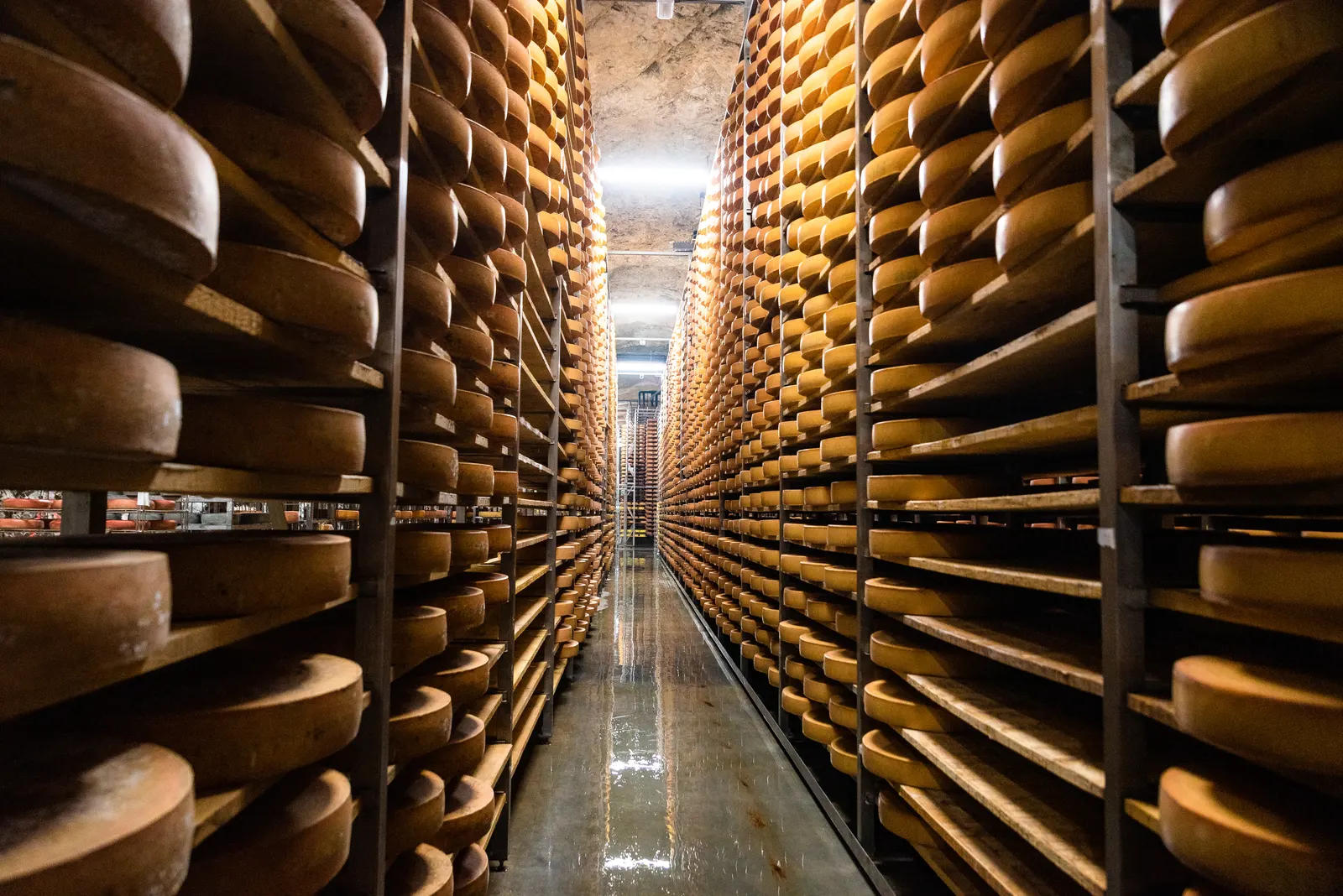
Then comes the salting, traditionally by immersion in brine, and the drying, before the wheels move into the maturing cellars. It is then that the most artisanal part begins: the ageing. The pieces rest on wooden shelves and are turned and rubbed periodically. That rubbing, done with a mixture of oil (sometimes olive oil, sometimes butter) and paprika, is what gradually tints the rind its orange shade and protects it during maturing.
It is worth distinguishing two broad families within the PDO. Plain Mahón-Menorca may be made with pasteurised milk in industrial dairies. Mahón-Menorca Artesano is made with raw milk and following the traditional method on the farm itself, often in small batches. Both are protected, but if you are after the most authentic expression of the territory, the Artesano seal is the clue.
Soft, semi-cured, cured: the ages of the cheese
Ageing changes everything: the texture, the colour, the intensity and even the way you eat it. These are its three great ages.
- Soft: little ageing (around three weeks or a little more). White, elastic paste, buttery texture and a mild, milky flavour with a fresh hint of acidity. The rind is barely marked. It is the gentlest, perfect for beginners, for children and for melting.
- Semi-cured: medium ageing (several months). Here appears the balance that has made the cheese famous: the paste turns firmer and more yellow, the flavour gains body without losing creaminess, and that saline, slightly fruity background emerges. It is the most versatile and the one most eaten on the island.
- Cured and aged: long ageing. The paste concentrates, turning brittle and hard, a deep yellow, and small crunchy crystals appear —a sign of good maturing. The flavour is powerful, salty, with hints of nuts and a noble sharpness that fills the mouth. To be enjoyed in small bites, slowly.
A tasting tip: try the same brand at its three ages, side by side. It is the best way to understand, in a single plate, how time transforms one and the same origin.
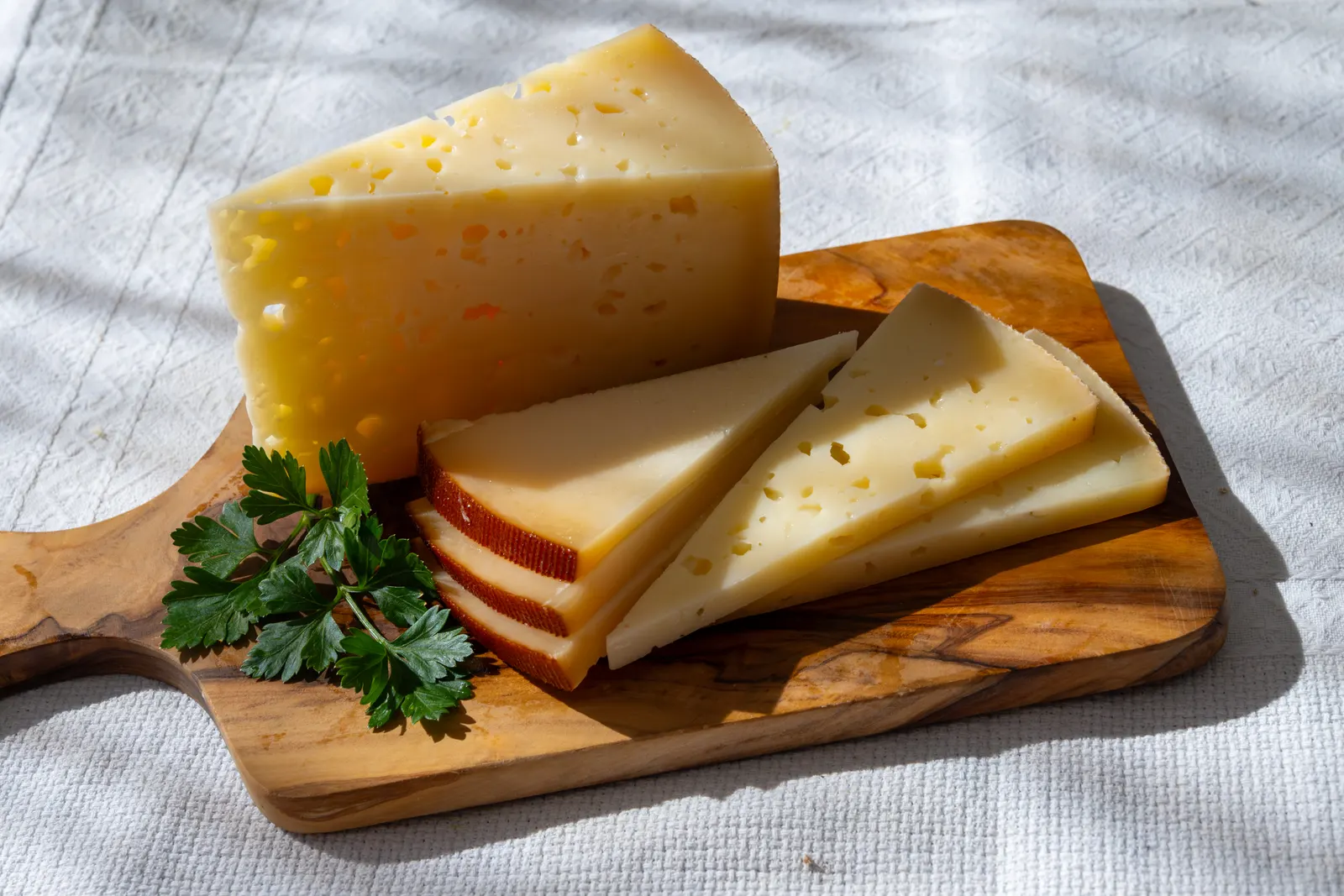
What to pair it with
Mahón-Menorca is generous at the table and welcomes very different company depending on its age.
- The soft cheese calls for fresh things: a salad, fruit, country bread, a young white or even a vermouth.
- The semi-cured shines with cured meats such as Menorcan sobrassada, with quince paste, with island honey and with light local reds. Sobrassada and cheese on toasted bread is an island classic that is hard to better.
- The cured cheese rises to the occasion with full-bodied wines, with nuts and, very much in keeping, with a measure of Gin Xoriguer, Menorca’s gin born of a British gin-making tradition. Some accompany it with a well-chilled pomada (gin with lemonade) on a summer afternoon; the contrast of the citrus with the salt of the cheese works surprisingly well.
A simple rule: the more cured the cheese, the more structure the drink alongside it should have. And always at room temperature: taking it out of the fridge a while beforehand multiplies its aromas.
When and where to buy it on the island
The cheese is available all year round, but the experience is richer at the village markets and in the specialist cheese shops, where they let you taste before you choose. Mercadal, in the centre of the island, has historically been a reference point for cheese, and both Maó and Ciutadella have good shops selling local produce.
If you want to go to the source, several farms and dairies on the island offer visits with tastings, a wonderful way to see the ageing first-hand and to understand why each piece is different. Conditions change according to the season and the farm, so it is wise to check current opening times and book ahead, especially outside the summer.
A practical note for taking it home: cured wheels travel very well and keep for days without trouble; soft cheeses are more delicate and best eaten soon. If you buy it cut to order, ask for it to be vacuum-packed for the journey.
How to store and serve it
At home, keep the cheese in the least cold part of the fridge, wrapped in waxed or baking paper rather than airtight plastic, so it can breathe without drying out. If a little surface mould forms on a cured piece, simply scrape that area away; the paste inside stays perfect.
To serve it, take it out of the fridge between thirty minutes and an hour beforehand. Cold hides the aromas, and this cheese gives its best at room temperature. Cut it into thin slices or small wedges and, if it is very cured, into irregular shards that show off its crystals.
Our verdict
If you are only going to take one cheese home from Menorca, make it a semi-cured Artesano: it sums up the island’s character without asking any effort of the palate. If you are after a thrill, reach for a cured one and set aside time for it, because it is a cheese that tells its story slowly. And if you can, do not just take the produce: take with you the memory of having seen the wheels resting on the shelves, smelling of a clean dairy and of the sea. That is Menorca’s quiet luxury in its most edible form —a piece of aged cheese, bread and a sea view—: few pleasures are this simple and this local.