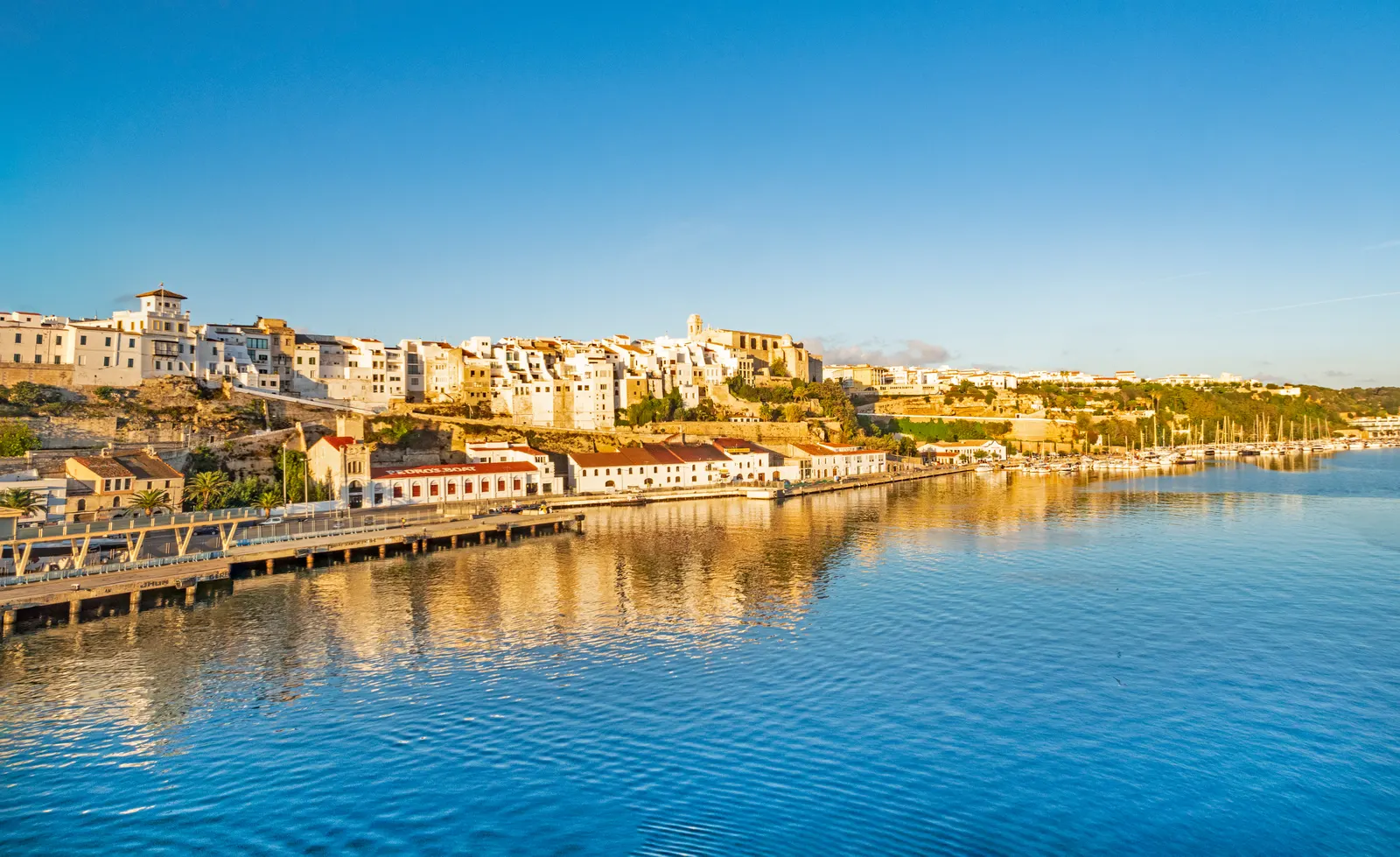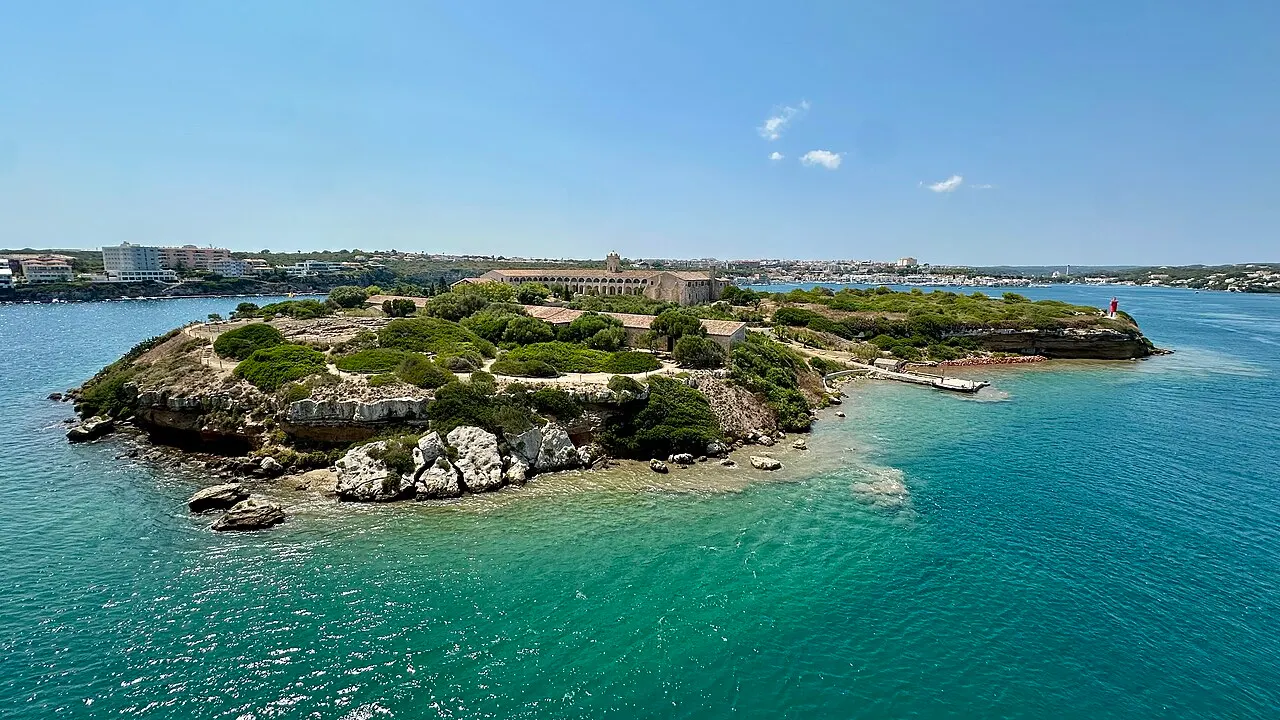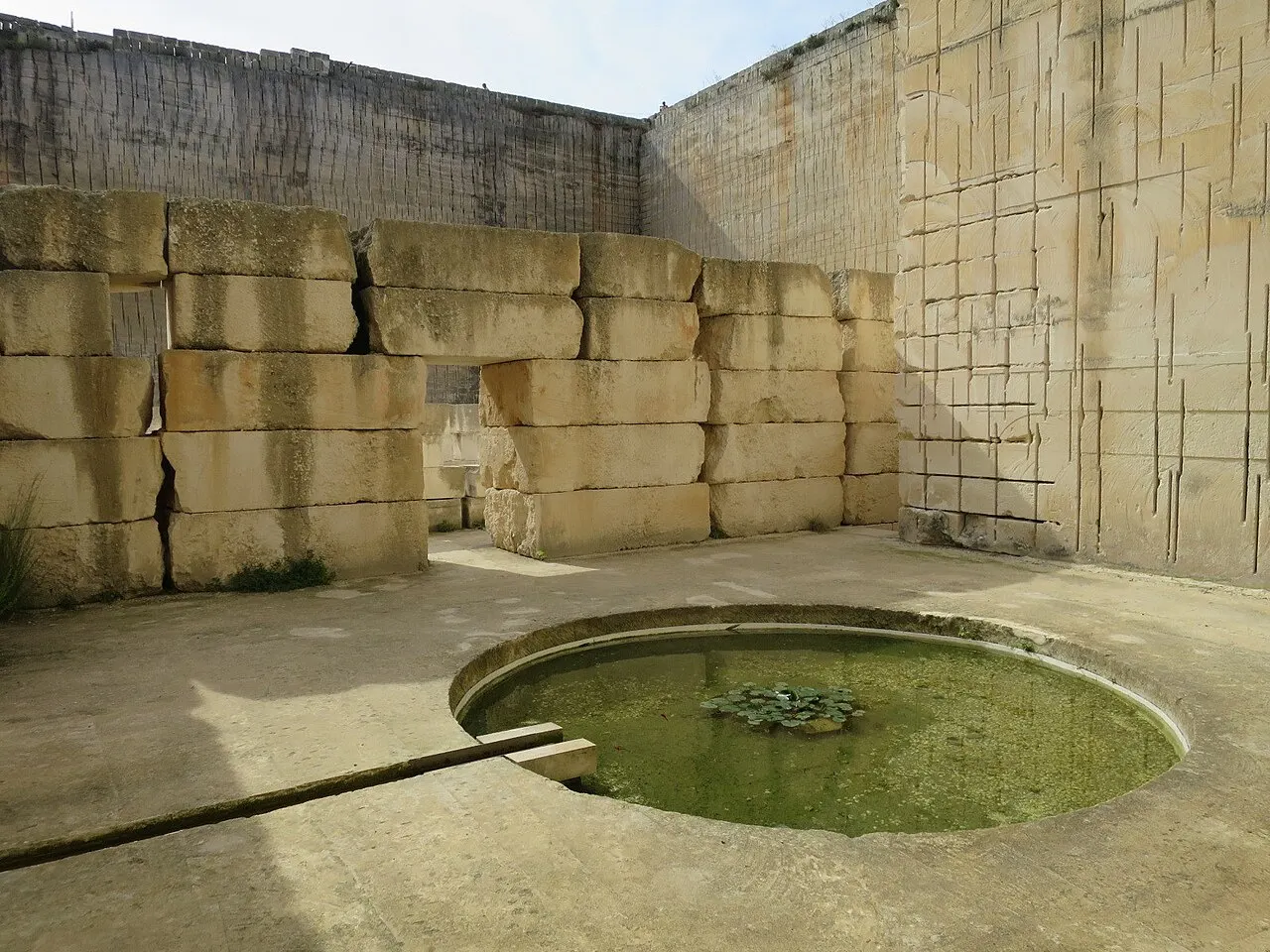
If Maó is the harbour and commerce, Ciutadella is history and elegance. It was Menorca’s capital until the 18th century and keeps one of the prettiest old towns in the Mediterranean: golden stone, streets that narrow until they turn to shade, arcades that invite you to walk slowly, and a light that, by mid-afternoon, turns everything the colour of honey.
This is not a town of isolated monuments, but a whole that reads like a book. The Menorcan aristocracy raised its palaces here, the Church its cathedral, and the guilds their churches and squares, all stitched together within just a few blocks. That is why Ciutadella is best explored unhurried and without a rigid map: the charm lies in getting lost, peering into a half-open courtyard and letting one street lead you to the next.
This is our guide to understanding and enjoying it with judgement: what to see, when to go, how to get around and where to find those moments of calm that make it the island’s most elegant face.
Key facts
- What it is: Menorca’s former capital and its most monumental town, at the island’s far west.
- Who it’s for: anyone after history, architecture, strolling and sunsets, rather than a town beach.
- Time needed: half a day for the essentials; a full day to savour it.
- Must-sees: the old town, the Cathedral, Plaça des Born, the noble palaces and the harbour.
- Don’t miss: the Festes de Sant Joan (June), one of the most singular events in the Mediterranean.
- Best time of day: early morning and sunset at the harbour.
Why it’s called “the city of palaces”
The Menorcan nobility concentrated its residences in Ciutadella, and many families kept their ancestral home here for centuries. The result is a historic centre dotted with noble palaces, with sober façades, great rounded gateways, heraldic coats of arms and inner courtyards where the bustle of the street vanishes all at once.
Some of these palaces remain privately owned and can only be glimpsed from outside; others open their doors for guided visits or at certain times of year. The steady exception is the Palau Salort, on the Born itself: the house, dating from 1813, opens in summer Monday to Saturday mornings (10:00–14:00, €6 entry). And the Museu de Ciutadella, in the palace of Can Saura, has displayed the town’s archaeology across fifteen rooms since 2022. For the rest it is worth checking current opening hours before you go, as access depends on each house. Even if you enter none of them, walking with an eye for the details — wrought-iron grilles, balconies, dim entrance halls — already tells half the city’s story.
What to see in the historic centre
The heart of Ciutadella is pedestrian and a pleasure to walk. These are the stops that give the whole its meaning:
- Menorca’s Cathedral. Gothic, raised by order of Alfons III after the conquest of 1287 on the site of the former main mosque. Its austere form and intimate interior make it the spiritual and historical anchor of the town. In season (May–October) it can be visited 10:00–16:00; the single €6 ticket includes its museum and the Convent de Sant Agustí.
- Plaça des Born. The grand monumental stage, a former seat of power, presided over by a 22-metre obelisk raised in 1857 in memory of the town’s defence against the assault of a great Ottoman fleet in 1558 — the «Any de sa Desgràcia» Ciutadella still remembers. It’s the spot from which the whole town makes sense.
- Ses Voltes. The arcaded street par excellence, with whitewashed colonnades, shops and cafés. Its shade is a perfect refuge in the heat of the day.
- The market and the fishermen’s quarter. Ciutadella’s everyday pulse on the Plaça de la Llibertat: a central fish market under 19th-century ironwork, tapas counters in the morning, and the farmers’ market on Wednesdays and Saturdays (confirm hours locally; they are seasonal).
- The palaces and noble houses. Scattered through lanes such as those around the Born; just look up to find coats of arms and iron balconies.
What the harbour is like, and why go at sunset
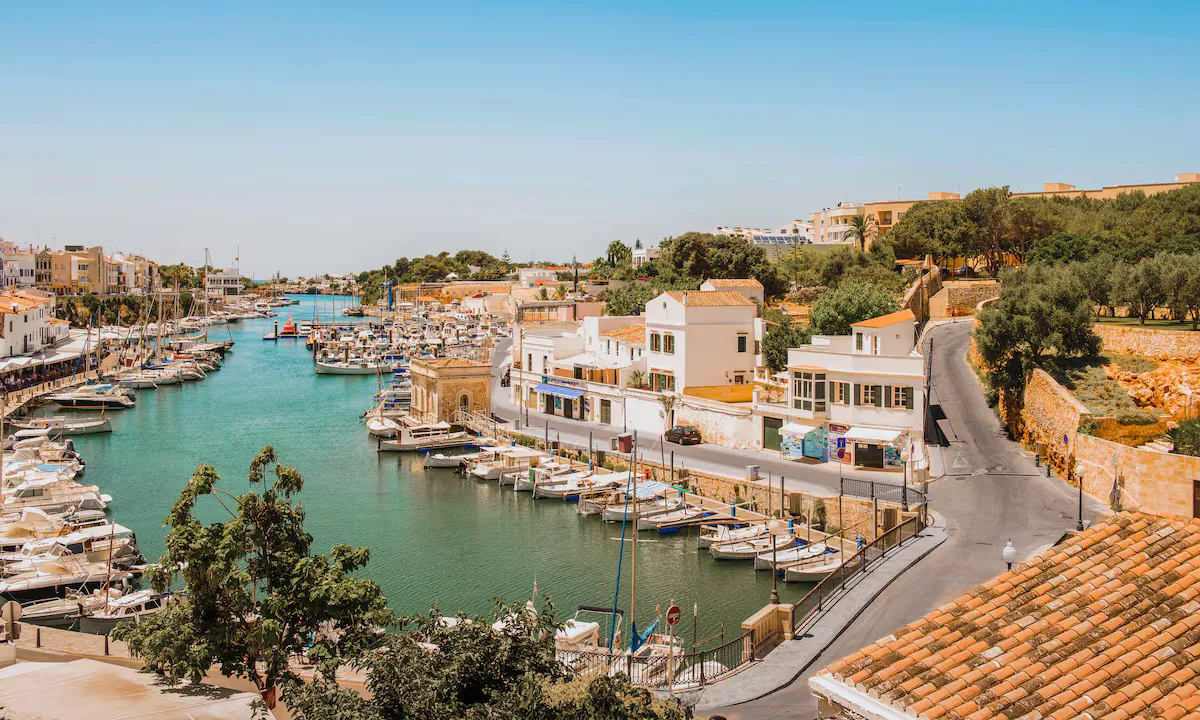
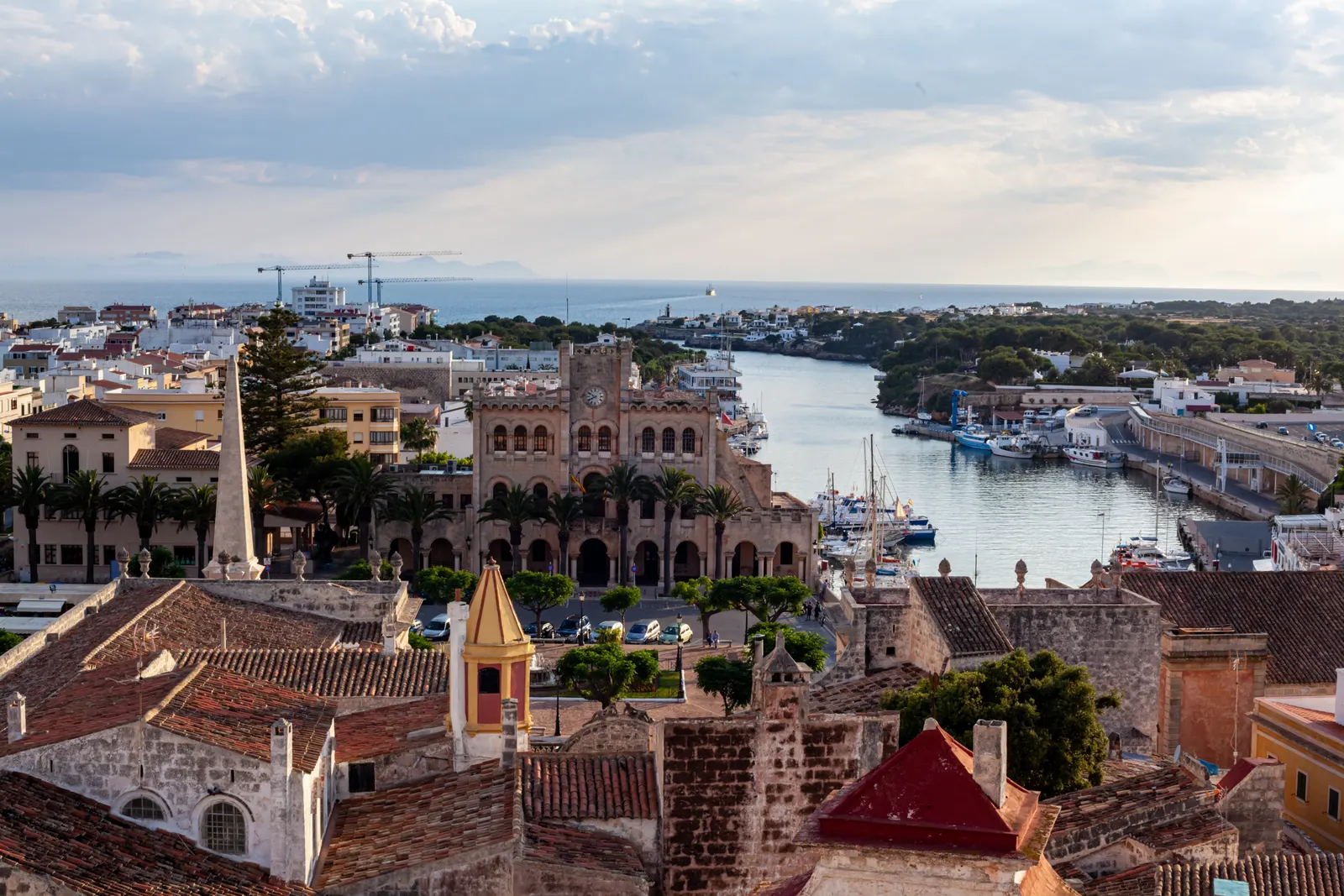
Ciutadella’s harbour is one of the prettiest in Menorca: a long, narrow cove that reaches into the town, flanked by walls, low houses and a row of restaurants and boats. From the historic centre you descend to it by the Baixada Capllonc, and the change of scale — from the noble stone above to the water and jetties below — is part of the charm. At the harbour mouth waits the Castell de Sant Nicolau, the defence tower of 1680–82 that once guarded the entrance: today entry is free, with free guided visits under the town programme (booking required).
The best moment is sunset, when the light turns warm and the water reflects the façades. It’s the ideal way to end the day in calm: a walk along the quay, a table by the water and the slow rhythm that defines this town. Bear in mind that in high season the harbour fills up; arriving a little before dusk helps you enjoy it with more space. And if you want more sunsets chosen with judgement on this side of the island, we’ve gathered them in sunsets and drinks.
When to go
Ciutadella is a delight all year round. Spring and autumn bring mild temperatures, quiet streets and beautiful light; summer fills it with atmosphere, but also with heat and crowds.
The most singular moment is the Festes de Sant Joan, on 23–24 June (fixed dates, with the Diumenge des Be on the Sunday before), one of the oldest and most stirring festivals in the Mediterranean, with origins in the early 14th century. Over several days, horses and their riders — the caixers — take over the streets of the old town in a ritual of medieval origin, amid music, crowds and an intensity that’s hard to forget. Its dates, and the rest of the summer festivals, are in what’s on. If you travel during those dates, book accommodation well in advance and be ready for a town wholly given over to the celebration; if you’re after calm, you may prefer to visit outside those days.
Getting there and getting around
Ciutadella sits at the far west of Menorca, 45 kilometres from Maó along the Me-1, the main road that crosses the island. Without a car, the direct line 01 bus makes the trip in an hour for €5.75 (full fare, summer 2026 season), ending at the Plaça de la Pau station a few minutes’ walk from the old town; departures run frequently through the day — check the current timetable on the official mobility portal. It’s the natural gateway to the western and southern beaches, so many visitors use it as a base.
To visit, leave the car outside the centre: the historic core is pedestrian or has very restricted traffic, and the centre is a regulated zone capped at two hours (the signage rules). The serene move is to park on the perimeter — such as the Canal Salat area by the hospital — and walk in within a few minutes. Once inside, everything is done on foot and without effort: the old town is flat, distances are short, and the pleasure lies precisely in walking them.
What to eat and where to stop
Ciutadella has a good food scene, split between the old town and the harbour. Without pointing you to a particular spot — tastes and menus change — it’s worth seeking out:
- Local market produce: vegetables, fresh fish, the Ciutadella red prawn — landed in this very harbour — and the unmistakable Mahón-Menorca DOP cheese.
- Traditional pastries, the real thing: ovens over a century old are still lit in Ciutadella, such as Forn Curniola (since 1900, five generations) or Pastisseria Xoko (since 1937, with a shop on the Born itself). An ensaimada mid-morning is part of the visit.
- A glass of Xoriguer gin with lemonade, the classic Menorcan pomada, best taken slowly.
- A pair of artisan avarcas: the family shoemaker Ca sa Pollaca has traded under Ses Voltes since 1897. Better tried on slowly than bought in a hurry.
- A table by the harbour at sunset, chosen for atmosphere and calm rather than for the shopfront.
In high season it’s wise to book, especially for dinner by the water.
Our recommendation
Ciutadella isn’t something you “see” — you inhabit it for a few hours. Our advice is to split the visit in two: an early morning for the historic centre, when the streets are cool and almost empty, and a return to the harbour at sunset to close the circle. In between, sit in a square, step into the Cathedral, peer into a courtyard.
If you can choose your dates, spring or autumn offer the town at its best: gentle climate, golden light and the calm that defines Menorca’s quiet luxury. And if your trip coincides with Sant Joan, live it with respect and patience: it’s a privilege to witness, but it calls for planning. In any season, Ciutadella rewards the traveller who takes it slowly.
Seasonal details (opening hours, fares, bus and markets) verified in July 2026 against official sources. Everything seasonal changes: confirm before your visit.