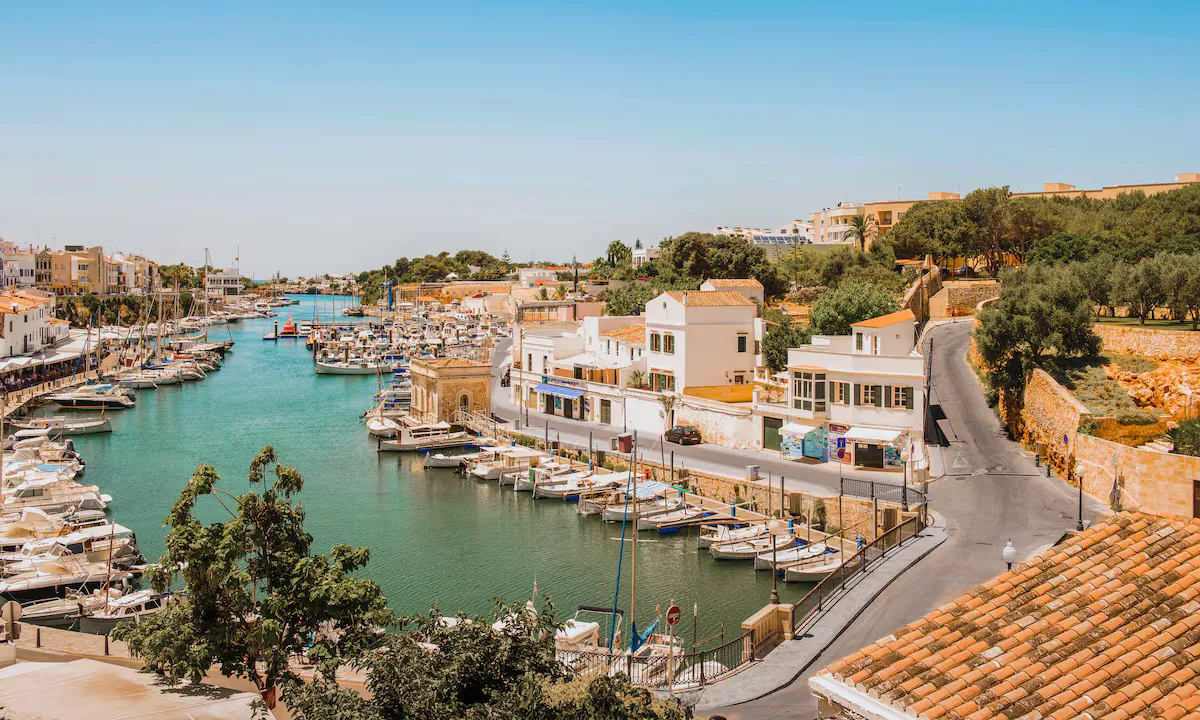
Inland, away from the coast, Menorca’s stone houses tell another story of the island: one of farmland, marès sandstone and the dry-stone walls that have drawn the landscape for centuries. While the shoreline fills up in August, the interior keeps Menorca’s other rhythm, the one of slow seasons, thick walls and cool shade at midday.
Restoring one of these houses well isn’t dressing it up for a magazine; it’s giving back what it already had: walls that breathe, an orientation devised for the tramuntana wind, and an honest relationship with light. It is a job of listening before building, of understanding why the old amos (farm owners) built this way.
This is a considered guide for anyone who dreams of living in the island’s interior all year round: what marès is, how to approach a restoration without betraying the house, what it really costs, and why this is, to us, the most serene luxury Menorca has to offer.
The essentials
- The material is marès: a local sandstone, golden and porous, easy to work and recognisable in walls, lintels and the old ovens.
- The landscape is defined by dry-stone walls (paret seca), built without mortar, a traditional Menorcan craft.
- The classic farmhouse is the lloc: the home of the amos, with a rainwater cistern, a threshing floor and farm buildings around it.
- Restoring with judgement means lime before cement, shade before air conditioning, and local materials before catalogue products.
- All year round: the interior is lived in during winter, not only in summer. Thinking about the cold matters as much as thinking about the heat.
What marès is and why it matters
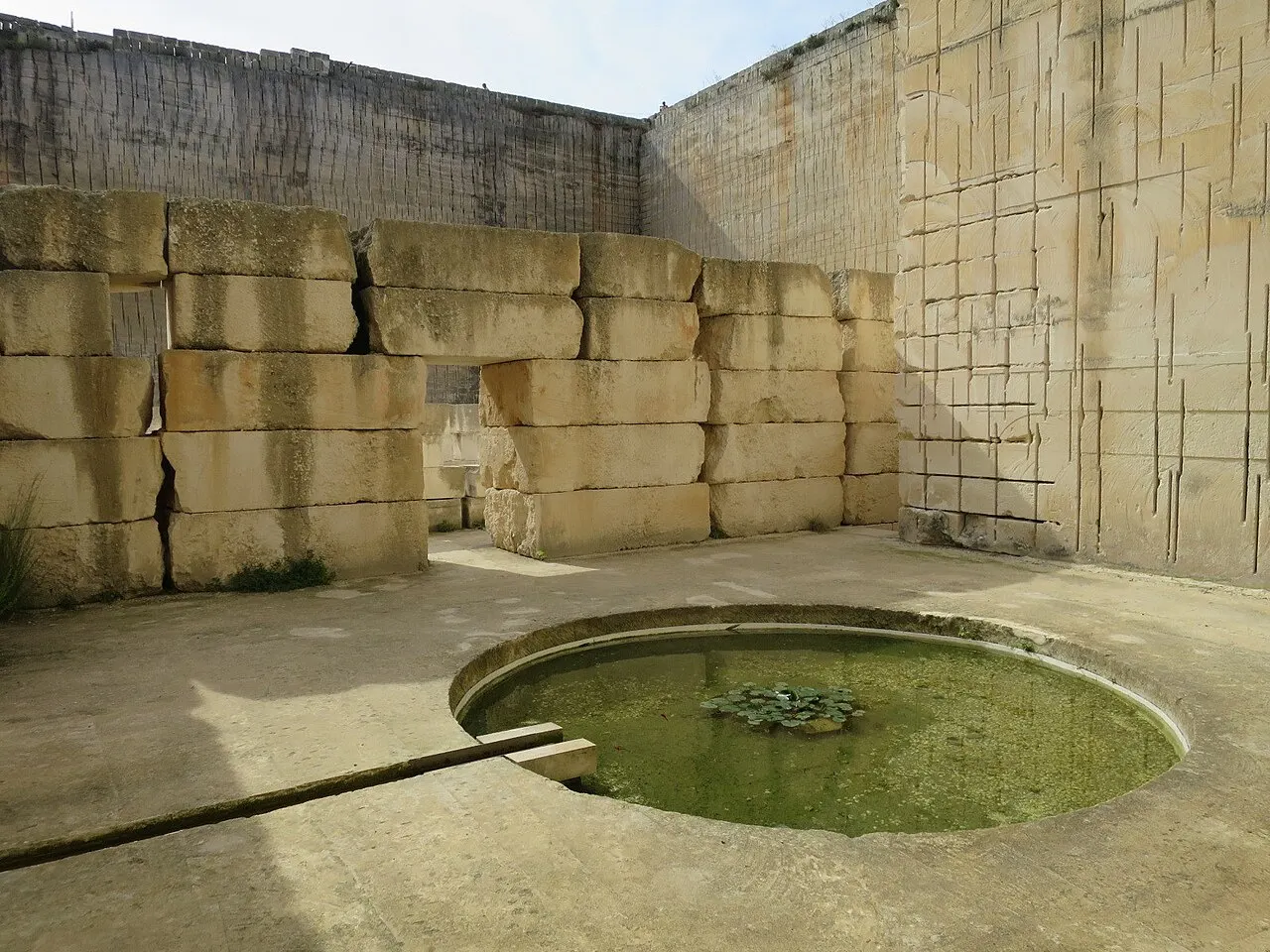
Marès is the stone that built Menorca. It is a warm-toned sandstone, traditionally quarried in open-air pits whose vertical walls can still be seen in some parts of the island. Its great virtue is that it cuts relatively easily when freshly extracted and hardens over time with exposure to the air, which made it possible to raise houses, churches and walls from a material that is from here, not imported.
For a house, marès has a quality no modern material imitates: it regulates humidity and temperature. The thick walls store the cool of the night and release it slowly through the day, so that in August the interior stays temperate without machines. In winter, that same mass holds the warmth of the hearth. Understanding this is the difference between a restoration that works and one that fights the house.
How to approach a restoration with judgement
The temptation, in an old house, is to modernise it thoroughly: seal everything, level the walls, fill it with technology. It is the most expensive mistake. A marès house needs to breathe, and the materials that seal it end up trapping moisture inside the wall.
The principles we stand by:
- Lime before cement. Lime mortars and renders are vapour-permeable: they let the wall breathe and age with dignity. Cement, by contrast, seals, cracks and stains the stone.
- Repair before replace. A sound beam is treated, not discarded. An old hydraulic-tile or marès floor can be recovered; it rarely needs to be copied in porcelain stoneware.
- Respect the proportions. Small windows and thick walls are not a flaw: they are the answer to a climate. Opening large gaps to the south-west is an invitation to heat.
- Few materials, well used. Stone, lime, timber, iron and fired clay are enough for a whole house. Coherence is more elegant than variety.
When to do the work
In Menorca, summer is for living in the house, not for restoring it: the heat, the crowds and the pressure on local trades all complicate matters. Autumn and winter tend to be the best season for substantial work, with a gentler climate for lime mortars, which need to dry slowly and without temperature extremes.
It is also worth working with the island’s rhythms: good stonemasons, margers (dry-stone masters) and carpenters have full diaries, and noble materials aren’t always to hand. Planning months ahead isn’t bureaucracy; it is what separates a serene restoration from a race against the calendar.
What quiet-luxury interiors look like
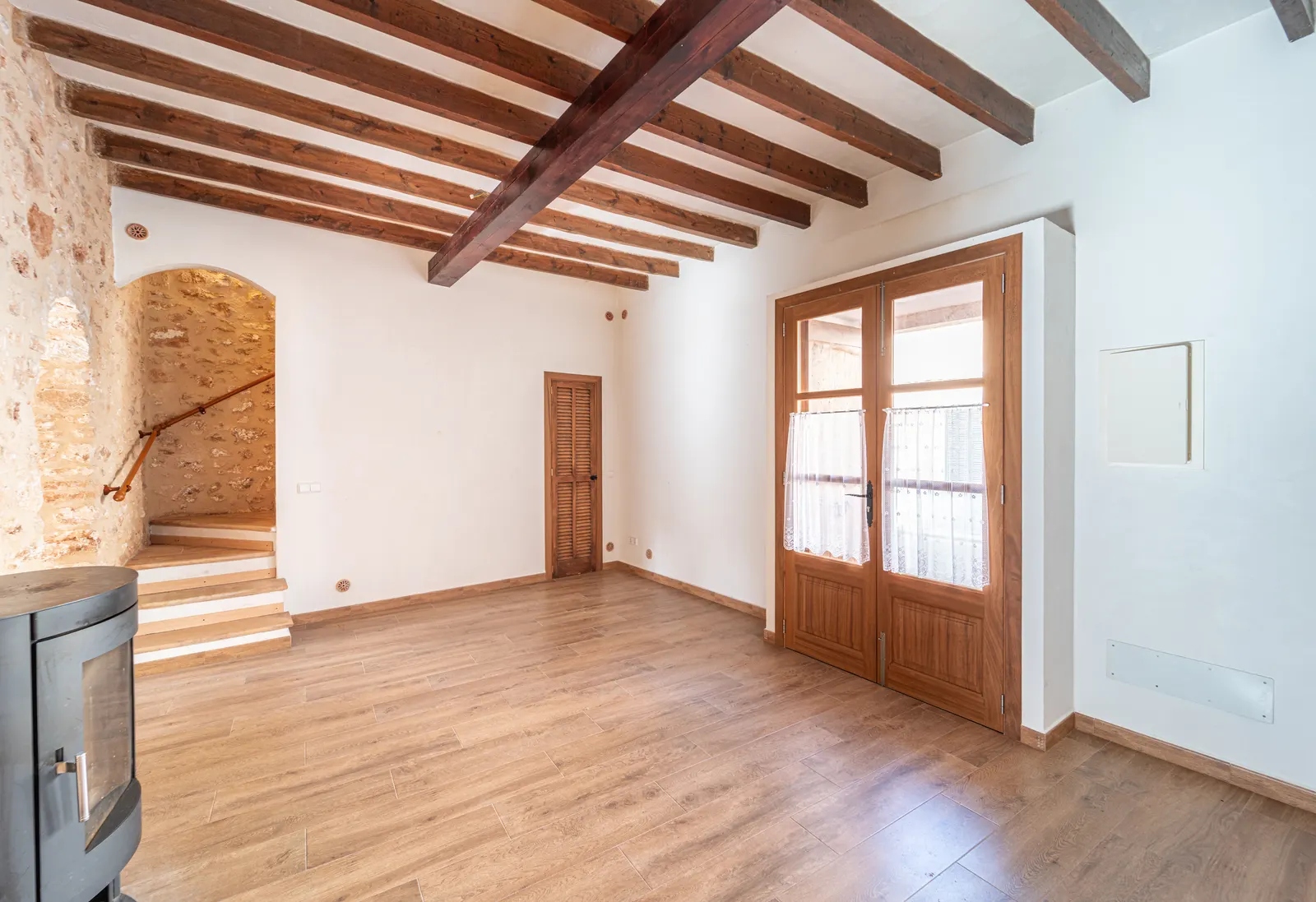
The interior of a well-resolved stone house doesn’t shout. It leans on the architecture itself —the vault, the beam, the marès arch— and lets space and light do the work. The rule is fewer pieces of furniture, better ones, and plenty of air around them.
Some decisions that age well:
- An earth palette. Lime whites, sandy tones, the gold of the marès, timber in its own colour, and the odd sea blue to breathe. Nothing strident.
- Honest fabrics. Linen, cotton, raw wool. Materials that crease, wear and improve with use.
- Local craft. Just as avarques sandals have their place on the island, so do its ceramics, wrought iron and basketry inside the house. Buying close by is coherence, not folklore.
- Warm, low light. Indirect, pointed lighting that accompanies the night rather than flooding it. The Menorcan countryside offers dark skies: there’s no need to compete with them.
Why thinking about winter changes everything
Most houses are imagined for August, and that is their great flaw. Menorca’s interior in January is damp, windy and, at times, surprisingly cold. A house designed only for summer becomes uncomfortable for half the year.
Thinking about winter means insulating sensibly (without sealing the wall), planning a good fireplace or wood stove, orienting the day rooms towards the southern sun, and protecting the north-facing façades. It also means floors that don’t chill your feet and a porch or gallery that acts as a filter between the cold outside and the warmth within. A house lived in all twelve months is, moreover, a house that is cared for: property shut up for eleven months deteriorates far faster.
What it costs, without illusions
To give a fixed figure would be to mislead: it depends on the starting condition, the floor area, how much survives and the quality of the trades. There are, with caution, three things worth knowing.
First, restoring well is rarely cheap: lime, solid timber and craft labour cost more than the catalogue, though they last far longer. Second, there are hidden costs —rebuilding a roof, treating damp, bringing services out to the countryside— and it is wise to keep a generous margin for surprises. Third, houses on rural land carry legal limits on what can be extended or built: before buying or designing, consult the current planning regulations and a local architect. For concrete figures on any given case, the prudent course is to ask island professionals for quotes rather than trust generic numbers.
Living the interior, beyond the house
Anyone who restores inland discovers the Menorca that coastal tourism never sees. The interior is the agricultural island: Mahón-Menorca PDO cheese, cured in the llocs themselves; the village markets; the stretches of the Camí de Cavalls (GR-223), the historic path of some 185 km that rings the island and lets you walk from field to sea. It is also Talayotic Menorca, declared a UNESCO World Heritage Site in 2023, with its talaiots, taules and navetes scattered across the countryside.
And it is the island of small gestures: Xoriguer gin with lemonade —the pomada— as the afternoon fades, the long table after lunch, the real silence of a night without traffic. To live the interior is to choose that rhythm. The stone house is only the frame; what is restored, in truth, is a way of being.
Our take
If we were asked for a single piece of advice, it would be this: don’t rush. The best restoration is not the fastest or the showiest, but the one that respects what the house already knew how to do. Buy less and better, work with local trades, let the stone breathe, and live in the house through a winter before deciding anything for good.
The luxury we stand for is not in imported marble or an infinity pool, but in a house that ages well, that gets on with its climate and that is still of Menorca when the work is done. Discreet, lasting and deeply local. That, to us, is the true quiet luxury of the island’s interior.