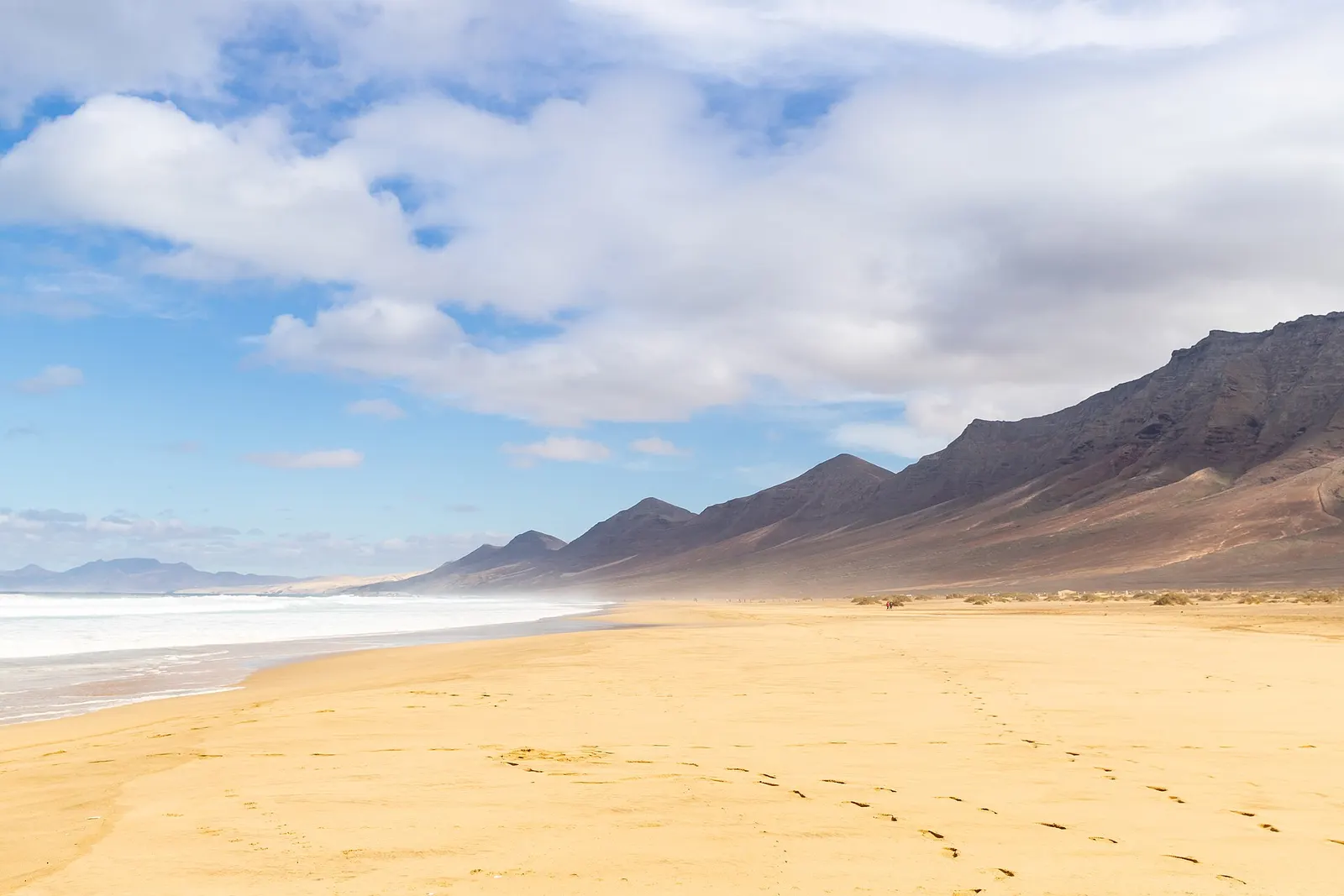
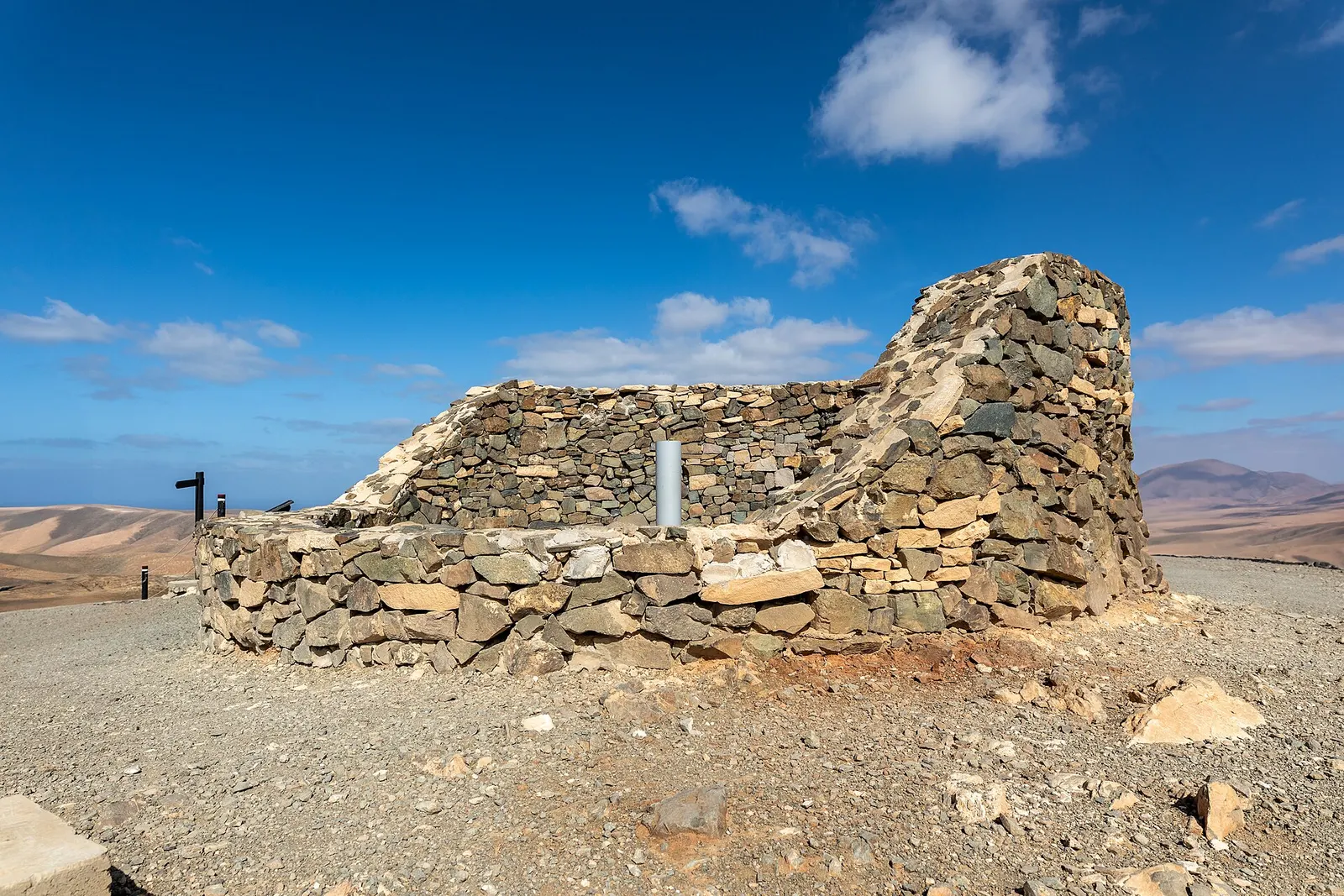
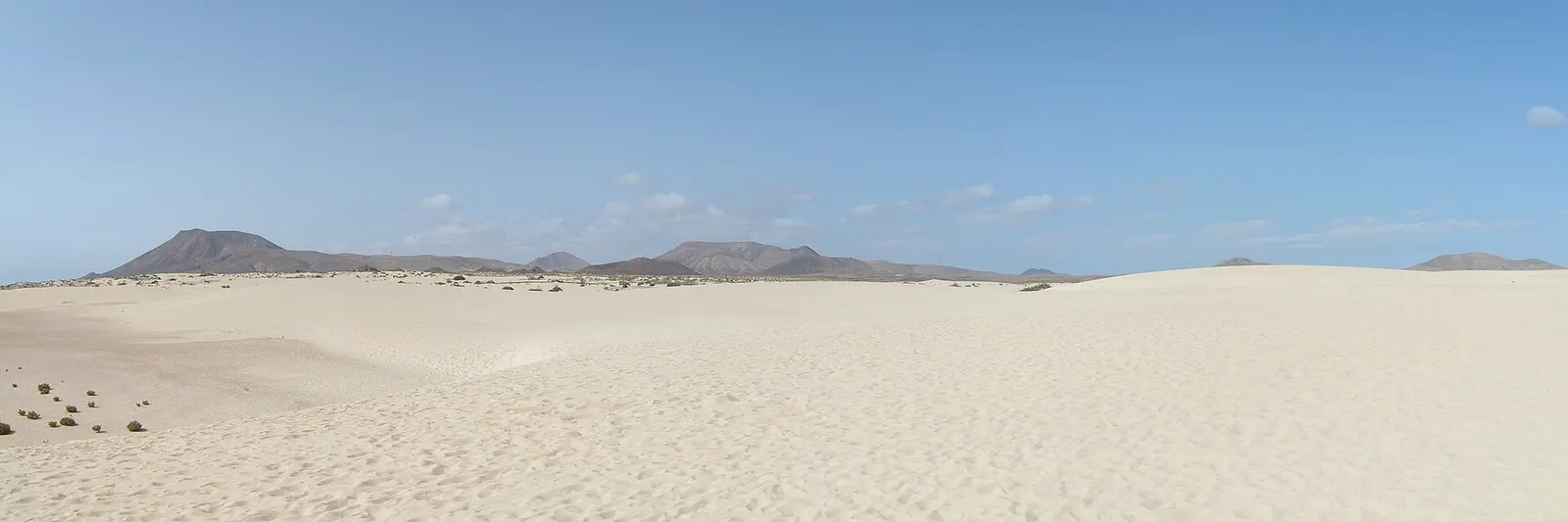
From the shore, Fuerteventura looks like an island of land: ochre plains, worn-down volcanoes, dunes. The official map says otherwise. When UNESCO declared the Fuerteventura Biosphere Reserve in May 2009, it included the whole island and a broad band of ocean: of some 353,500 hectares, 187,836 are marine — 53 per cent. Half of what is protected here is water.
That changes how you look at the island. This guide explains how to head out to sea with good judgement: what you might see, what nobody can promise and which rules separate a good trip from a bad one.
The essentials
- Biosphere Reserve since May 2009, managed by the Cabildo de Fuerteventura: more than half its area is sea.
- Wildlife: dolphins, sperm whales and sea turtles, among other species. No sighting is guaranteed.
- Sailing trips from Morro Jable, in the south, lasting between four and a half and five and a half hours.
- The rule: Royal Decree 1727/2007 protects cetaceans. An exclusion zone of at least 60 metres, no chasing, no touching.
- Choose operators who follow the rules and ask about their authorisation before booking.
A reserve that is sea
The Biosphere Reserve declaration, later published in Spain’s Official State Gazette, defines a marine zone around the island that is larger than the land area. It is not a closed park or a place where you cannot sail: it is a territory where the Cabildo coordinates conservation with island life, fishing and tourism. For the traveller, the upshot is simple: here the sea is not a backdrop to the beach but half of the protected landscape.
Setting sail from Morro Jable
The port of Morro Jable, at the southern tip, is the usual starting point for sailing trips along the Jandía peninsula. They typically last four and a half to five and a half hours: time to sail, stop and, with luck, cross paths with dolphins. The companies that run them say it plainly: sightings are not guaranteed. That is the sentence worth hearing. Anyone promising certain whales is promising something the sea will not sign.
Take it slowly: mornings tend to bring the calmer sea, afternoons the wind and more movement. Bring a warm layer even on a sunny day, sun protection and something for seasickness if you need it.
The 60-metre rule
In Spain, cetaceans are protected by Royal Decree 1727/2007. The decree itself spells out a practical rule: around a cetacean or a group there is an exclusion zone of at least 60 metres that boats may not enter; if the animals approach you, the engine goes into neutral. Feeding them, touching them, swimming with them, making loud noises or blocking their path are all prohibited, and observation as a recreational activity requires an administrative authorisation.
So when choosing a trip, ask directly: whether they hold the authorisation, how they approach the animals and what they do when they appear. A good answer talks about distance, limited time and the engine at idle. A bad one talks about “guarantees” or “swimming with dolphins”.
Turtles going back to sea
The Cabildo de Fuerteventura runs a recovery programme for loggerhead turtles: injured or entangled animals are treated on land and returned to the ocean in public releases. If you happen upon one, watch from wherever you are asked to stand. And in the water, if you see a turtle, the rule is the same as with cetaceans: keep your distance, do not touch and do not follow.
What not to do
Do not chase animals for a photo, do not fly drones over them and do not fish or gather shellfish where it is prohibited. And if your plans include the islet of Lobos, off Corralejo, remember that it is a natural park and that visiting it requires prior authorisation from the Cabildo de Fuerteventura, with limited places per time slot: we explain how in Lobos, the islet you book ahead.
Which suits you
- You want to see the south from land before or after → Cofete and the Jandía peninsula.
- You want calm water for a swim → the Sotavento lagoon, with the tide checked.
- You want the night to carry on from the day → Fuerteventura’s sky, a Starlight Reserve.
Our view
The luxury of looking at Fuerteventura’s sea lies not in how many animals you see but in how you see them. A morning under sail, engine off most of the time, with the Jandía coast on one side and the possibility — only the possibility — of a group of dolphins at a distance, is worth more than any promise. Choose someone who respects the rules, and let the sea decide the rest.
Information as of October 2026, from Spain’s Official State Gazette (BOE), the Ministry for the Ecological Transition, the Cabildo de Fuerteventura and regional press. This guide does not recommend any particular operator and is not paid for inclusion: confirm authorisations, times and prices when booking.