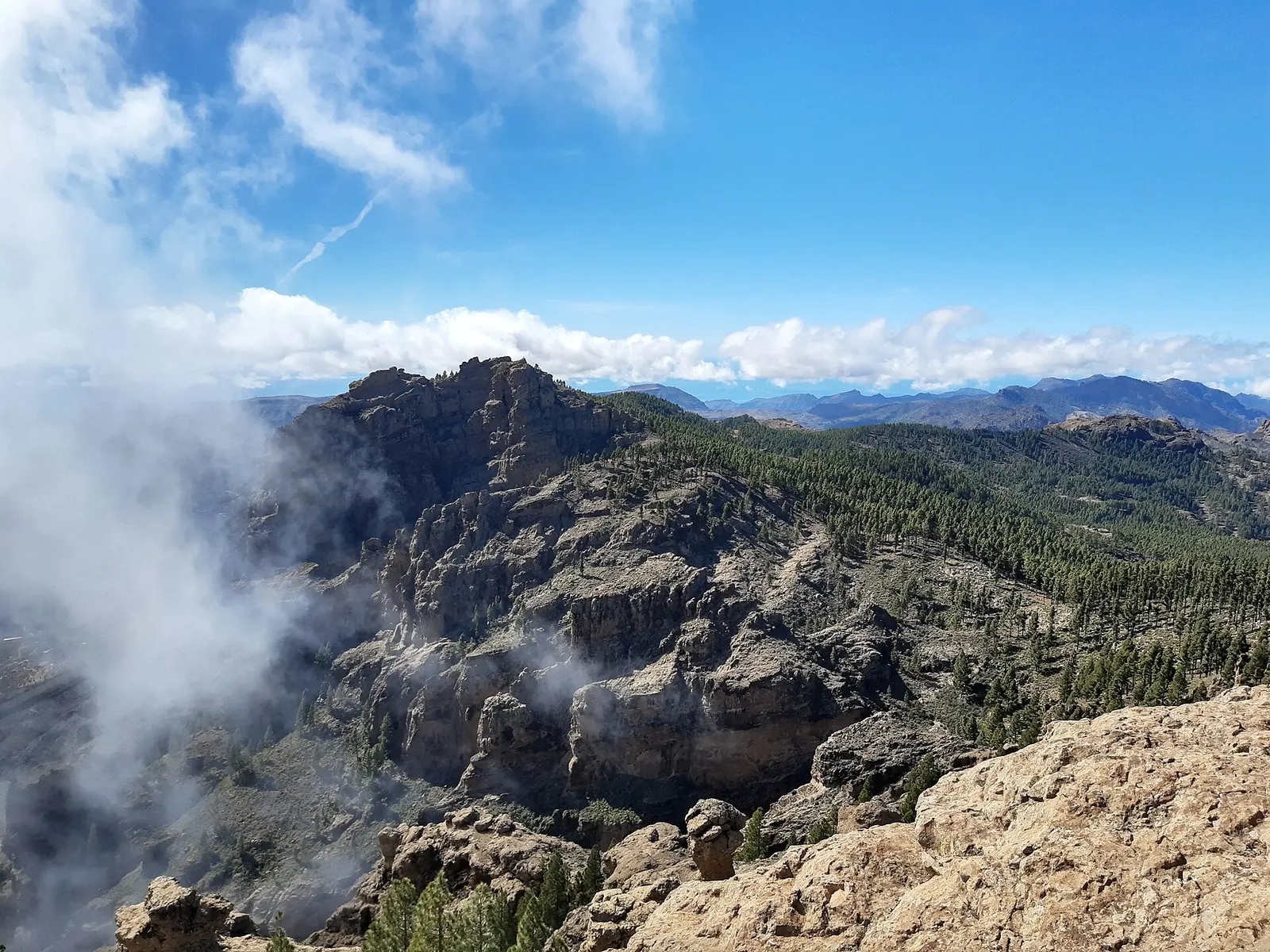
By day, you look down at Gran Canaria: the ravines, the Tejeda caldera, the sea. By night you have to raise your head. The island has a high summit, often above the sea of clouds left by the trade winds, and that makes the centre of Gran Canaria a place where darkness is still dark.
Here, luxury is not something you book from a menu. It is the silence of the mountain at midnight, the clean cold and a Milky Way you can see with the naked eye.
The essentials
- Where: on the summit, away from the lights of the coast. The island’s tourist board places its observation points between 600 and 1,800 metres above sea level.
- When: moonless nights or around the new moon, and when the sea of clouds blankets the glow of the coast.
- What to bring: properly warm clothes, a red-light torch and patience: your eyes need about twenty minutes to adjust to the dark.
- How: on your own at the viewpoints, or on a guided session with a telescope. Camp only in designated areas and with authorisation from the Cabildo, the island government.
Why this sky is different
The answer lies in the wind. The trade winds push a layer of cloud that often settles halfway up the slopes. Above it the summit stays clear and dry, and the cloud works like a lid that dims the glow of the coastal towns. When that happens, from the top you see a white sea at your feet and a black sky overhead.
You do not need to be an astronomer to notice. Simply step out of the car, switch off the lights and wait.
Where to look
Pico de las Nieves, at 1,949 metres, sits at the top of the island and is a classic place to watch the sun set over the clouds, with Mount Teide on the horizon on clear days. Staying on as the first stars appear is the best way to move from day into night.
Llanos de la Pez, up on the summit, is one of the places most often cited for stargazing in Gran Canaria. Among pines and away from the main roads, it is where many telescope sessions are held.
Degollada de las Yeguas, in the south, is a viewpoint over a landscape of ravines that also serves as an astronomical viewpoint.
La Aldea de San Nicolás, in the west, has three astronomical viewpoints renovated by the Cabildo, designed for stargazing and night photography.
Sleeping up high
Spending the night on the summit changes everything: there is no drive back, and the observing can go on. The Parador de Cruz de Tejeda, at the heart of the caldera, was recognised by the Starlight Foundation as a Starlight accommodation; if that is what you are after, ask when booking what it currently offers for stargazing. The other houses we recommend are in sleeping quietly in Gran Canaria.
A sky that was already being read
The ancient Canarians watched this same sky closely. At Risco Caído, in Artenara, a carved cave lets the light of the sun and moon in through an opening, and its path across the wall marks the equinoxes and the seasons. It is regarded as an Aboriginal astronomical observatory, and it belongs to the cultural landscape UNESCO has protected since 2019: we tell the story in what UNESCO protects in the heart of Gran Canaria.
Watching the stars from the summit is, in a way, carrying on that custom.
What not to do
Much of the summit is protected natural area. Do not camp outside designated areas or without the relevant authorisation, do not drive off the tracks, do not light fires and do not fly drones without permission. And out of respect for others: red light, headlights off at the viewpoints and quiet voices.
Our view
Gran Canaria’s sky needs no label to be worth the drive up. It needs a moonless night, a warm coat and time. Go up before sunset, stay until the Milky Way is high, and come down slowly: the summit road at night calls for calm.
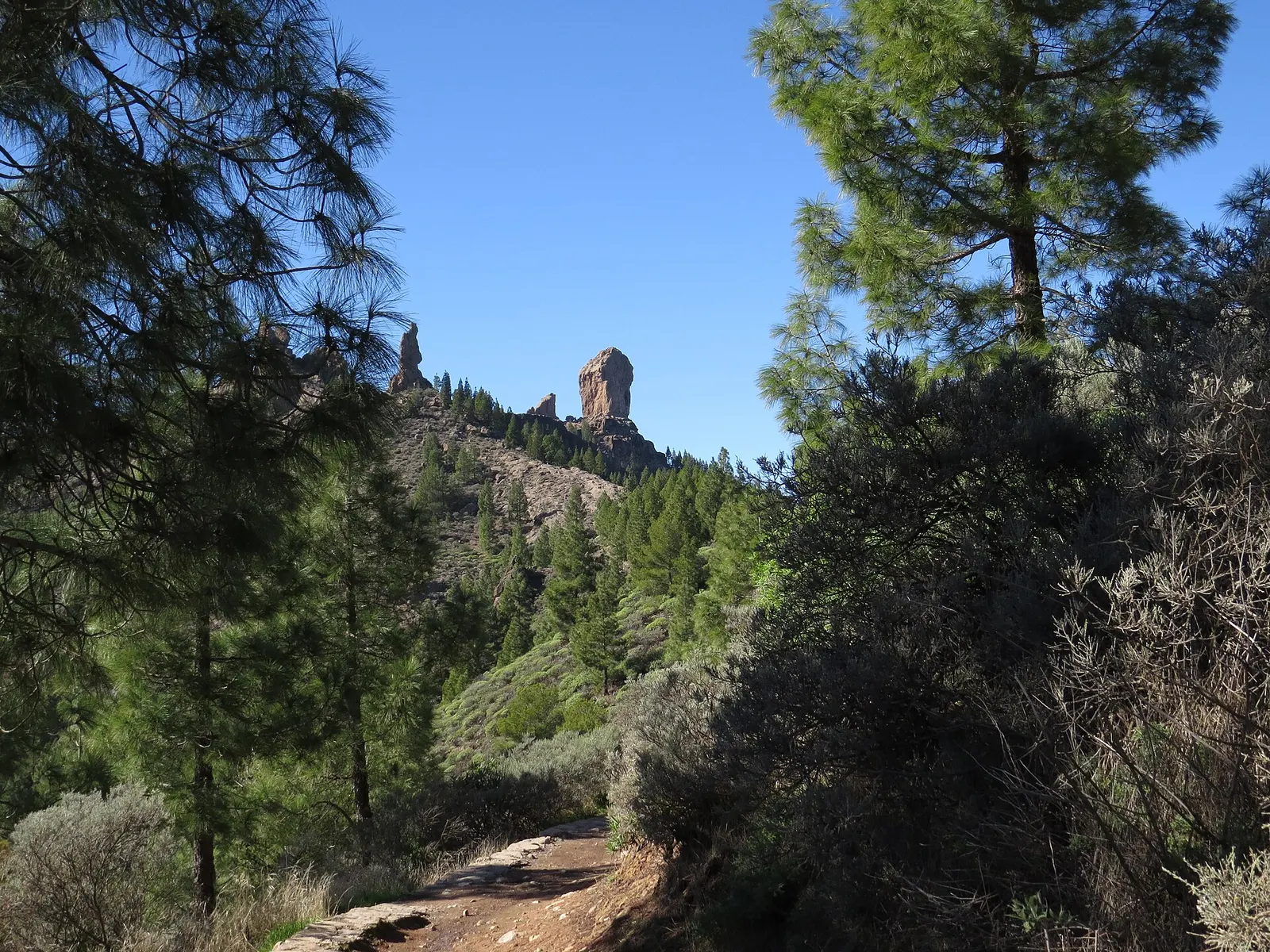
If you want to climb Roque Nublo by day, remember that it requires advance booking: we explain how in Roque Nublo now needs booking.
Information as of October 2026, checked with the Gran Canaria tourist board, the Starlight Foundation and the Canarian press. Access to natural areas and camping permits are a matter for the Cabildo: check before you go.