Some islands are best seen from a viewpoint. Gran Canaria, along its south-west coast, is best seen from the water. Between Puerto Rico and Puerto de Mogán the land drops into the sea in cliffs and ravines that only open up to those arriving by boat. And off that coastline, all year round, live animals that elsewhere are only seen passing through.
The essentials
- Where: the south-west coast, with trips leaving mainly from Puerto Rico and Puerto de Mogán.
- What you may see: resident pilot whales and bottlenose dolphins; sperm whales, seasonally.
- No guarantees: no serious operator promises a sighting.
- Golden rule: only boats authorised for cetacean watching, and no chasing.
- Protection: the Gran Canaria Biosphere Reserve includes a wide marine strip off this south-west coast.
A coast that makes sense from a boat
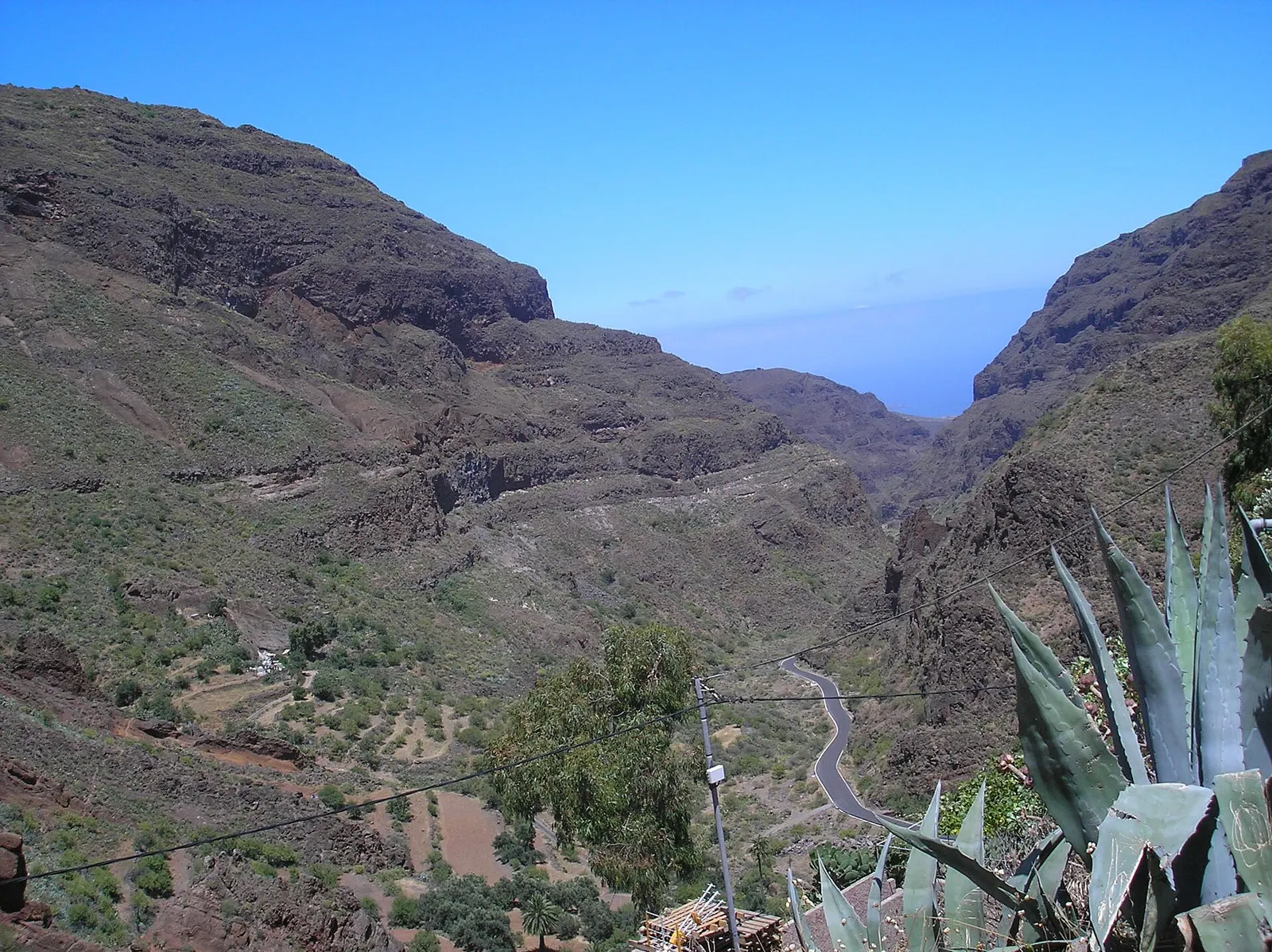
From the road, the south-west is a run of ravines and resorts. From the water it changes: you see the scale of the cliffs, the coves no path reaches and the colour of the sea over the seabed. A few hours out on a small boat are enough to understand why this part of the island lies within the Biosphere Reserve, which here extends out to sea.
The residents
The protagonists are the pilot whales — dark, round-headed, travelling in family groups — and the bottlenose dolphins, which in these waters are neighbours rather than visitors. At certain times of year sperm whales appear too. Whether you see them depends on the sea and on them: which is why an operator who guarantees a sighting is already telling you something about how they work.
How to do it well
Cetacean watching in Spain is regulated by Royal Decree 1727/2007 on the protection of cetaceans, which sets rules of conduct for any boat that approaches them; companies running whale-watching trips also need official authorisation, and in the Canaries operators working without it are inspected and penalised. For the visitor, that comes down to three simple criteria:
- Ask about the authorisation before booking. An operator in good standing will show it without fuss.
- Prefer a private boat or a small group. Less noise on board, less engine in the water and a trip at your own pace.
- Accept the rules of the encounter: the boat approaches slowly, does not cut across the animals’ path, does not surround them and moves off when they leave. If the skipper gives chase, it is the animals who have the bad day.
If you go out in your own boat, the same applies — and check the current regulations beforehand.
Where to set out from
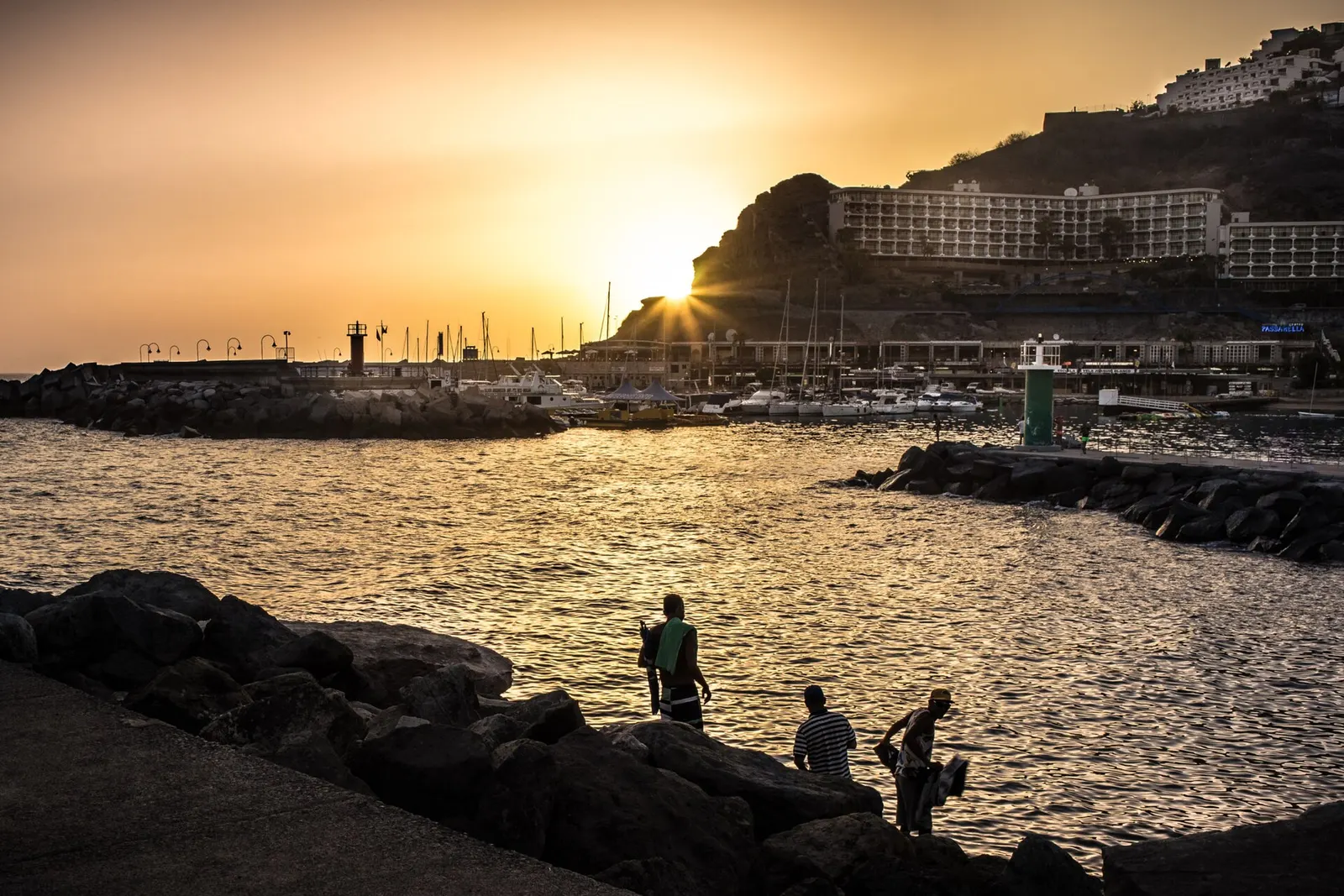
Puerto de Mogán is the departure point with the most character, and if you are arriving with your own or a chartered boat, our guide to getting to your boat in Gran Canaria covers its marinas. To sleep close to the sea and head out early, see our houses of quiet luxury.
Our view
The luxury of this trip is not the boat but the silence when the engine stops and a group of pilot whales surfaces, breathing, a few metres away. For that to go on happening, visitors have to choose well: authorised operators, small groups and no hurry. If one day they do not show, the coast is still worth the morning.
Information as of October 2026. Species and departure points according to local operators; cetacean-watching regulations may change. Confirm the operator’s authorisation before booking.