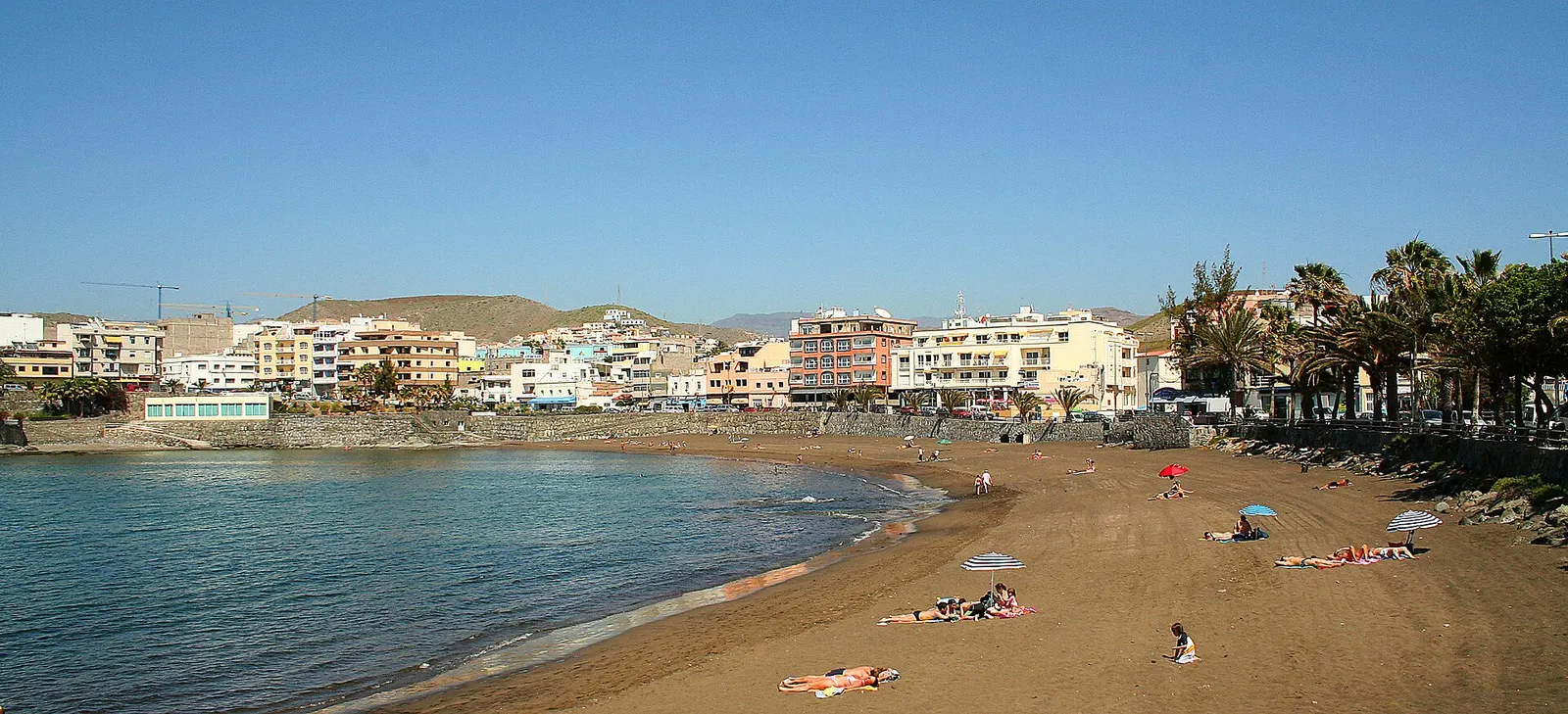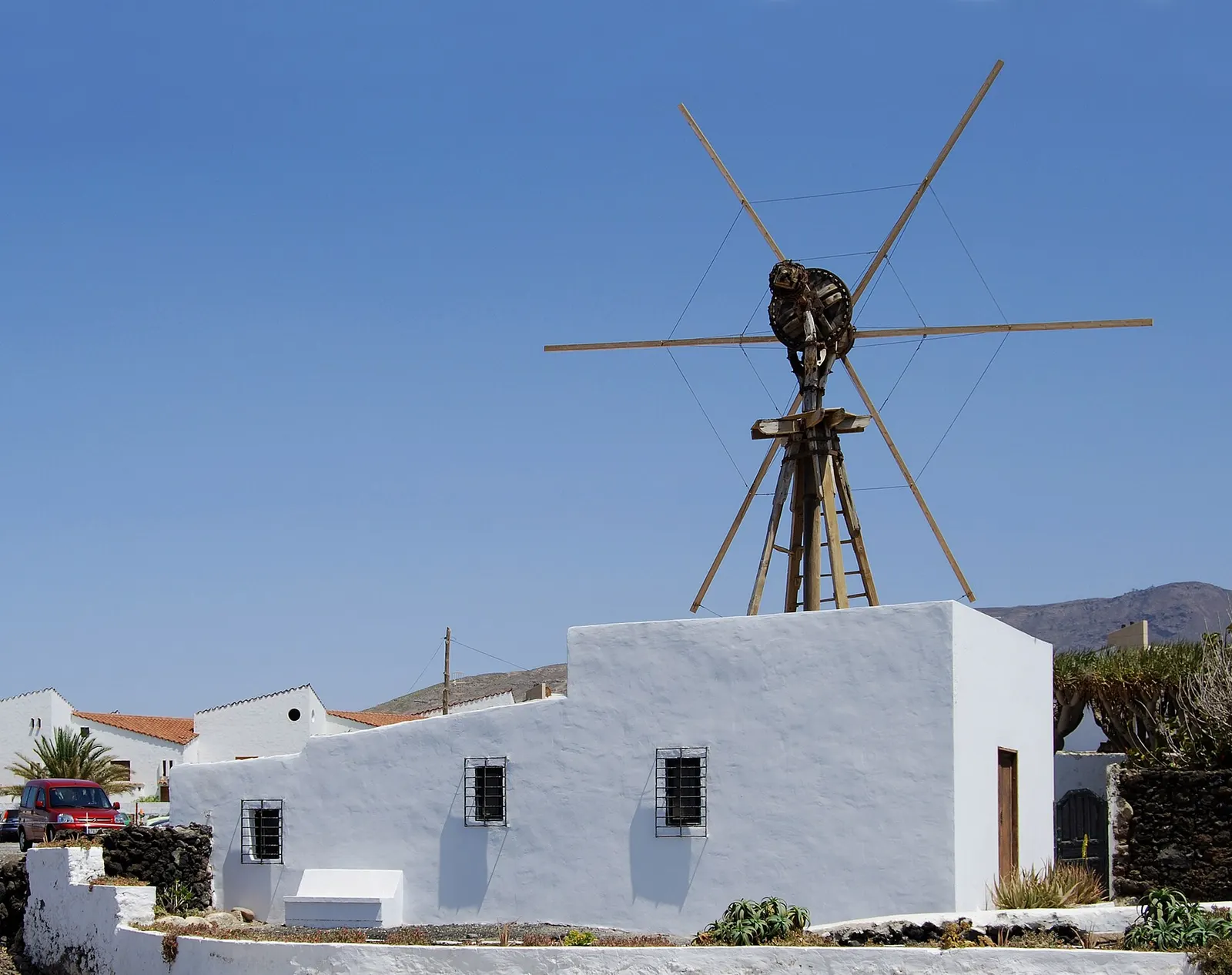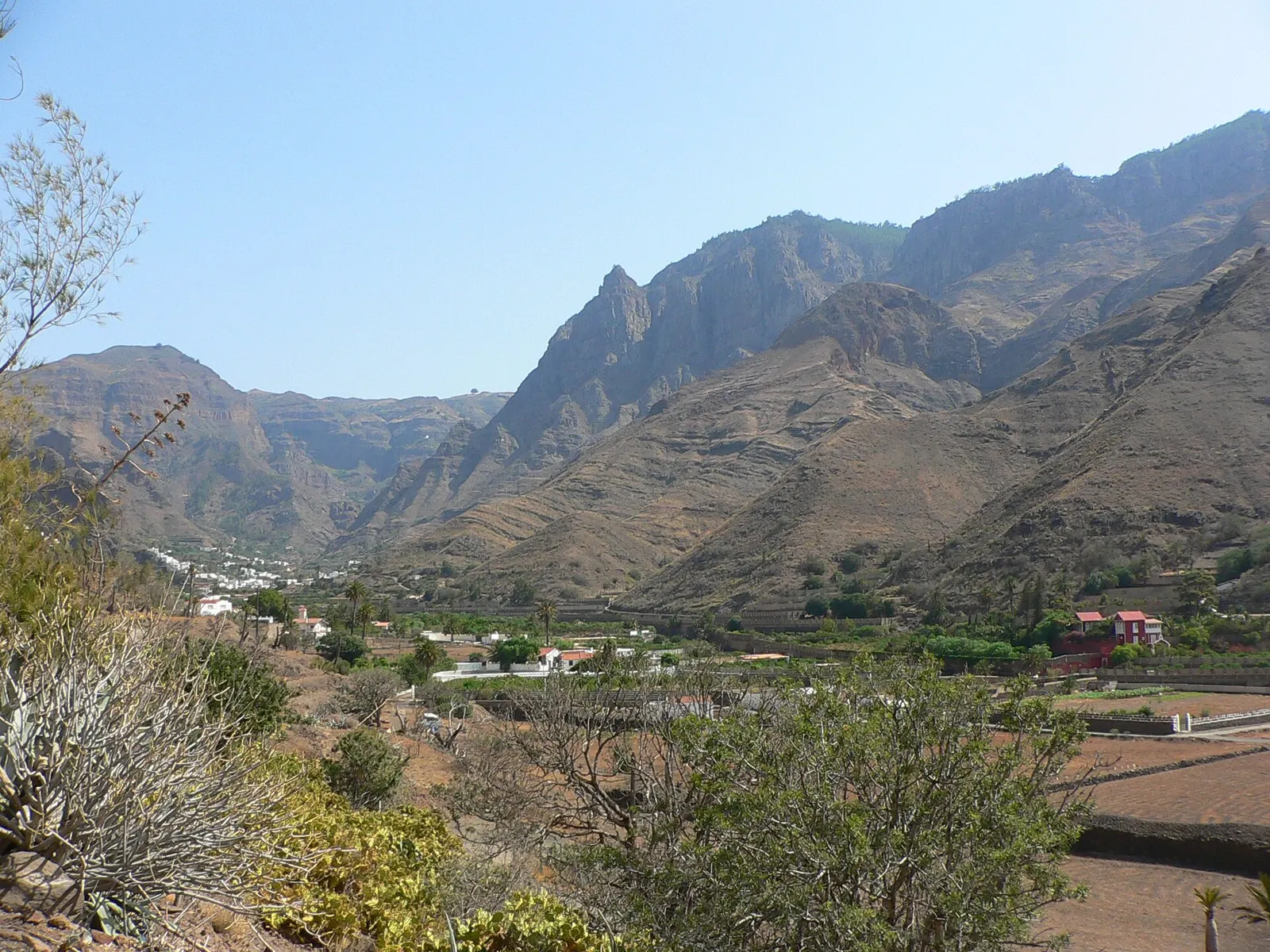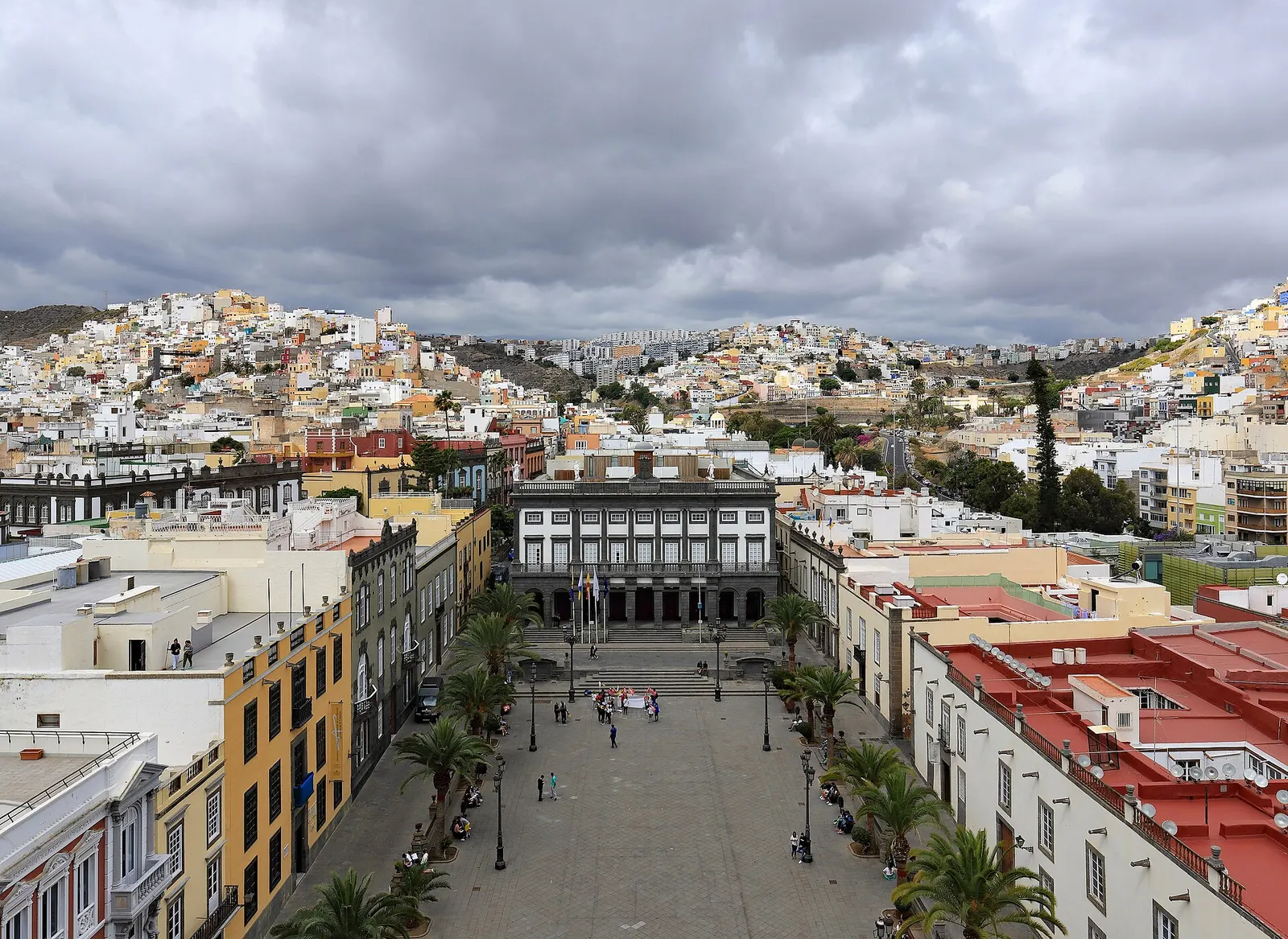
There are two ways to be on Gran Canaria. One is the south: hotels, resorts and guaranteed sunshine. The other is Las Palmas de Gran Canaria, a real city, with morning traffic, markets, a university, a port and an urban beach people go down to before work. For a week, the south does the job. For staying — a whole winter, a long season, a second life — Las Palmas has something a resort cannot give: a life of its own, twelve months a year.
The essentials
- What it is: the capital of Gran Canaria, an Atlantic city that does not live off tourism alone, even if it welcomes it.
- Neighbourhoods to consider: Vegueta and Triana, the historic and shopping centre; and the area around Las Canteras, life by the sea.
- Winter: mild; in January, average highs of around 20-21 °C and lows of about 14-16 °C (indicative figures; check AEMET for exact data).
- Time zone: the Canaries run one hour behind mainland Spain, all year round.
- For whom: those looking for a city, not a stage set.
A city with two centres
Las Palmas stretches along the east coast and, in practice, has two hearts.
Vegueta and Triana are where it began. Vegueta is the founding quarter, with cobbled streets, courtyard houses and Santa Ana Cathedral; Triana, across the ravine, is the city’s long-standing shopping district. Living here means living in the old city: quieter nights, more stone, more history on every corner.
Las Canteras is the other life. Las Canteras beach, just over three kilometres of sand sheltered by the La Barra reef, shapes the days of those who live nearby: a swim first thing, a walk at sunset, a terrace at any hour. It is the liveliest part of the city.
Between the two, the city is covered by guagua: that is what buses are called in the Canaries, and in Las Palmas the urban network is run by Guaguas Municipales.
A winter that doesn’t feel like winter
The reason many people come is the winter climate. In January, according to the UK Met Office averages, highs are around 20-21 °C and lows stay at about 14-16 °C. It is not summer heat: it is a steady mildness that lets you swim at Las Canteras in December and eat outdoors almost all year. There are grey, windy days, as on any Atlantic coast; what there isn’t is real cold.
A British tradition
The city’s relationship with foreign residents goes back a long way. One example: in 1891, British residents founded the first golf club in Spain here, today’s Real Club de Golf de Las Palmas. We tell the story in our piece on golf in Gran Canaria.
What to know before you stay
- It is not a resort. There is noise, traffic and roadworks, as in any city of its size. That is part of the appeal.
- The neighbourhood decides everything. Vegueta-Triana and Las Canteras offer different lives; spend a few days in each before choosing.
- The time difference. One hour behind mainland Spain: useful if you work with teams in Madrid or elsewhere in continental Europe.
- Accommodation. If you rent, use channels that offer proper guarantees and, for holiday lets, check that the property has its tourist registration number. Longer seasonal rentals fall under a different legal regime: find out before you sign.
Our view
Las Palmas is not chosen for what it promises but for what it is: an Atlantic city that works without the tourist, with a beach, an old town and a life of its own, and a winter light and mildness that are hard to find elsewhere in Europe. Those looking for a stage set will go south. Those looking for somewhere to stay tend to end up here.
Information as of October 2026. Climate figures are indicative: check AEMET for official data.