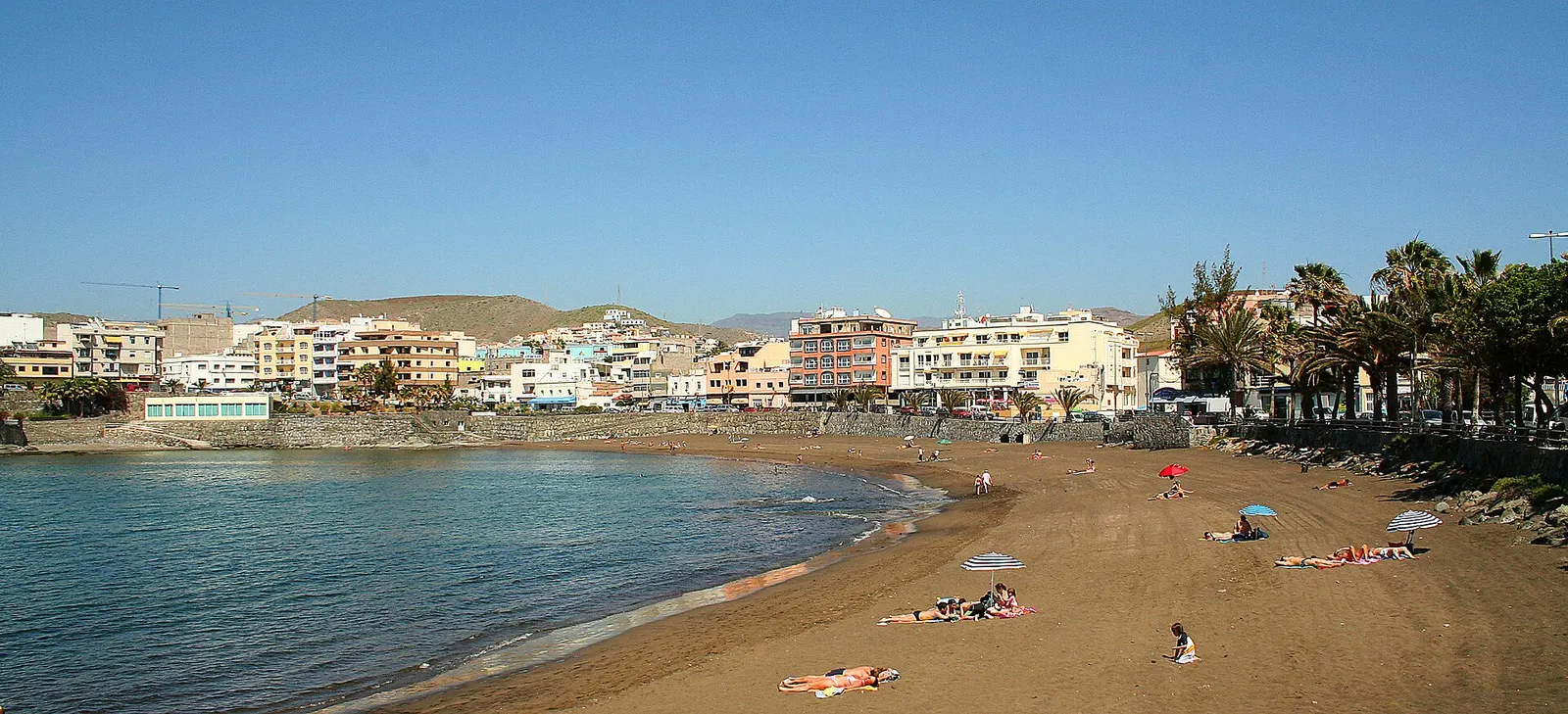
In January in Oslo, the sun rises mid-morning and sets mid-afternoon. In Arguineguín, in the south of Gran Canaria, at that same hour there are people walking the promenade in short sleeves with a book under their arm. It is not a one-off scene: it has repeated itself every winter for decades.
The essentials
- Arguineguín is a fishing village in the municipality of Mogán, on the south coast of Gran Canaria.
- For decades it has welcomed a large seasonal Norwegian community every winter.
- The Norwegian Seamen’s Church (Sjømannskirken) has been on the island for more than thirty years; its high season runs from October to Easter.
- Information as of October 2026.
A village that stayed a village
Arguineguín has kept what many resorts in the south lost: a quay where fishing boats tie up, streets with everyday shops and residents who live here all year round. Tourism arrived, but it did not erase the village. That mix — local life, and foreigners who stay rather than pass through — is exactly what those who come to winter here are looking for.
Norwegians were not the only ones to discover the south of Gran Canaria, but they have been among the most loyal. For many of them, Gran Canaria has long been the winter island; a Tuesday stroll through Arguineguín is enough to sense it.
The seamen’s church
The Sjømannskirken, the Norwegian Seamen’s Church, was founded to look after Norwegian sailors in ports around the world. It has been on Gran Canaria for more than thirty years and since 2008 has occupied its current premises in Arguineguín, close to the seafront promenade and the village beach. It works as a church and, above all, as a shared home: a meeting place where the community recognises itself and speaks its own language. Its high season runs from October to Easter, and in practice its calendar sets the community’s.
The rhythm of the long season
Whoever spends two months here is not travelling: they are living. The routines look like those at home, only with light. An early walk along the coast, shopping in the village, the Tuesday market — souvenir stalls, clothes and the odd Canarian product such as mojo; cash is best — an afternoon reading by the sea. No one is in a hurry to see anything, because there is time to see it all.
That is the lesson Arguineguín offers any traveller, Norwegian or not: the island changes when you stop counting it in days. You learn which mornings the sea lies still, when the fish comes in, which corner of the promenade has shade at midday. For those who want to sail the southern coast at the same pace, see Gran Canaria from the water and getting to your boat in Gran Canaria.
Staying for weeks
If the model tempts you, a few things are worth knowing:
- It is high season. From November to March the south is much in demand; long-stay accommodation is booked months ahead.
- Choose properly licensed accommodation. If you opt for a holiday rental, check that it carries its registration number in the Canary Islands tourism register.
- Look for the counterpoint. The south is sun and sea; the summits and the north offer another winter, cooler and greener. We cover it in Gran Canaria in winter. And if city life appeals, living in Las Palmas is the other way to stay.
Our approach
We describe the Norwegian community from public sources, without clichés or figures we have been unable to verify. Information as of October 2026; the Sjømannskirken’s opening times and activities, always from its official channels.