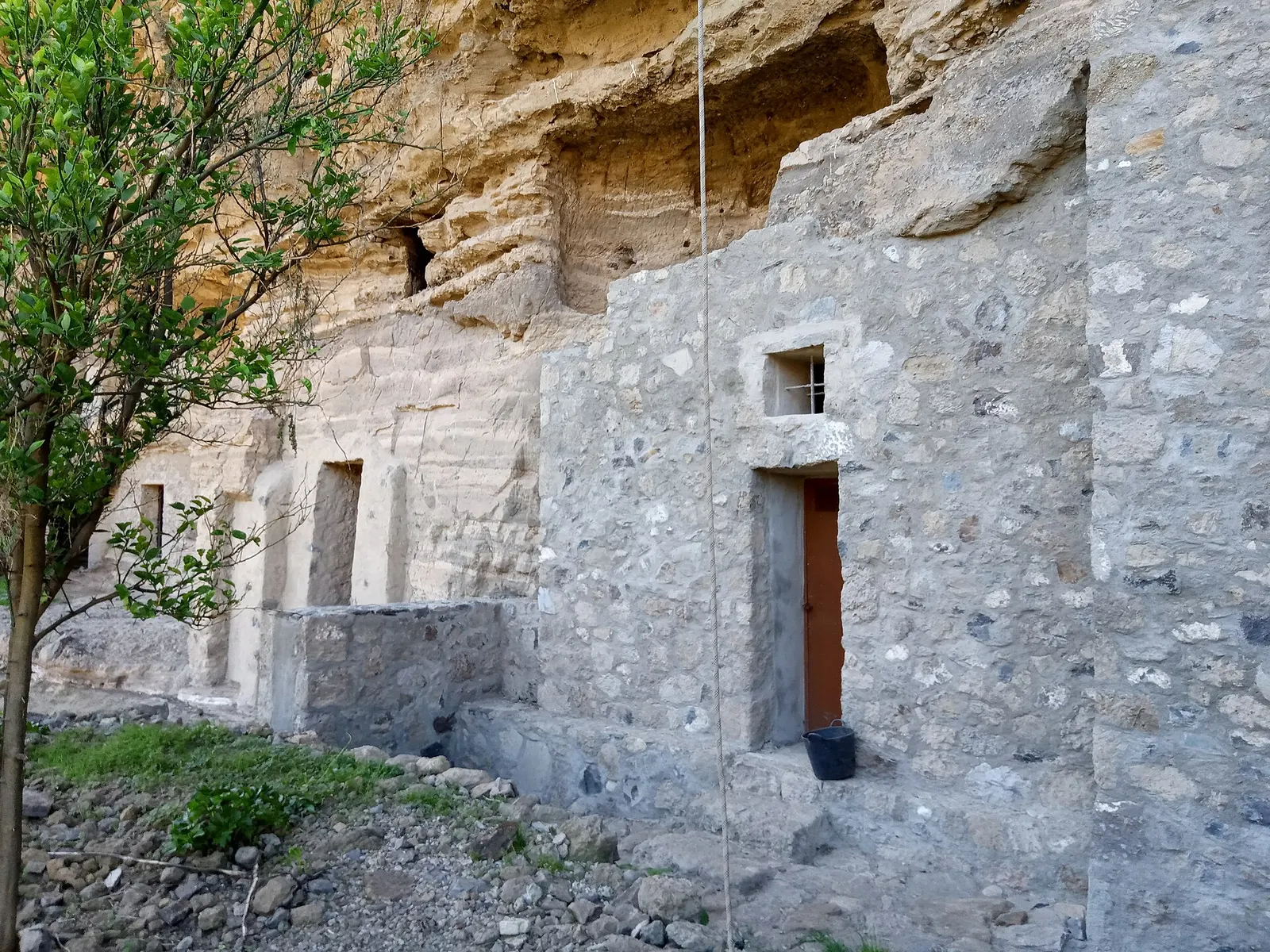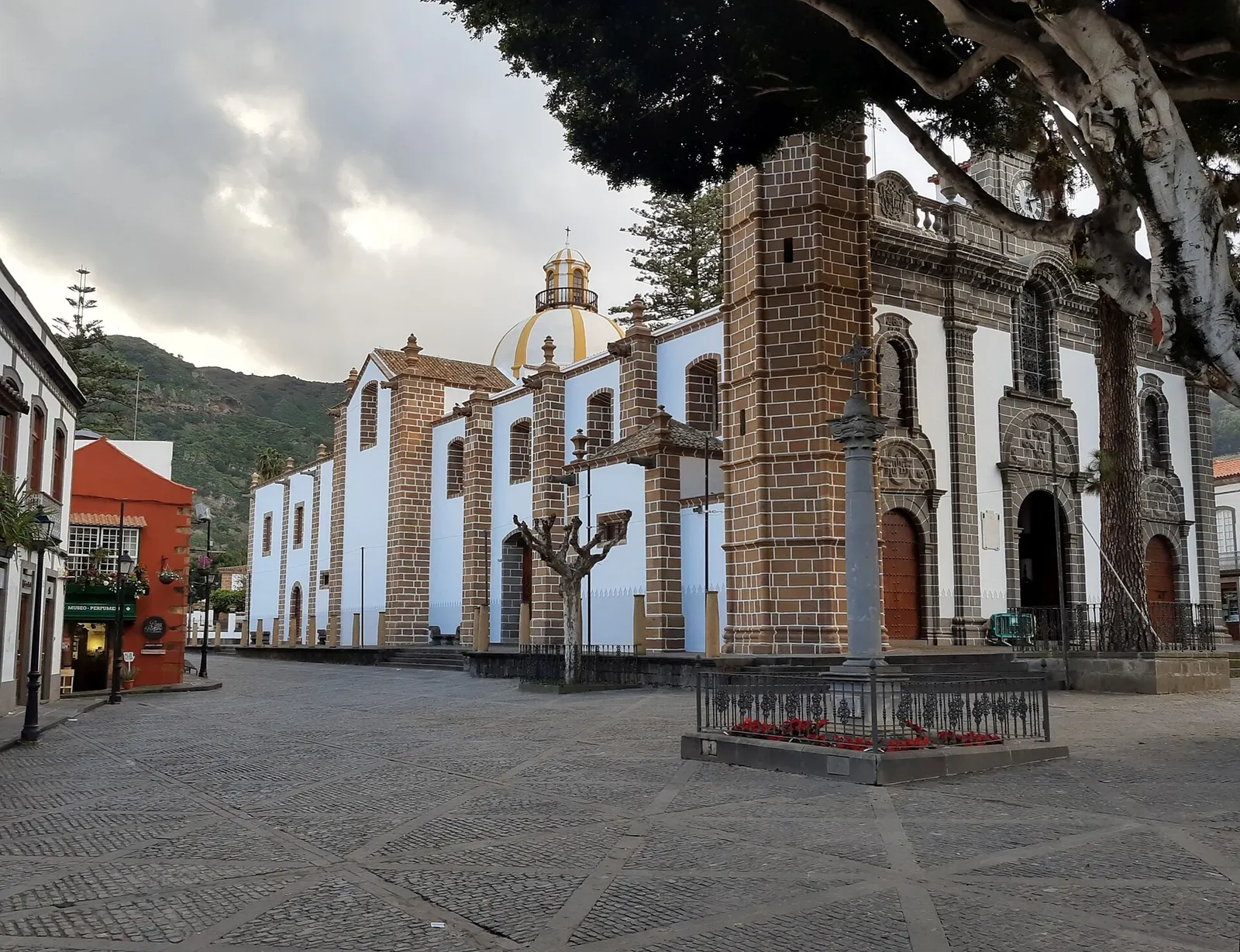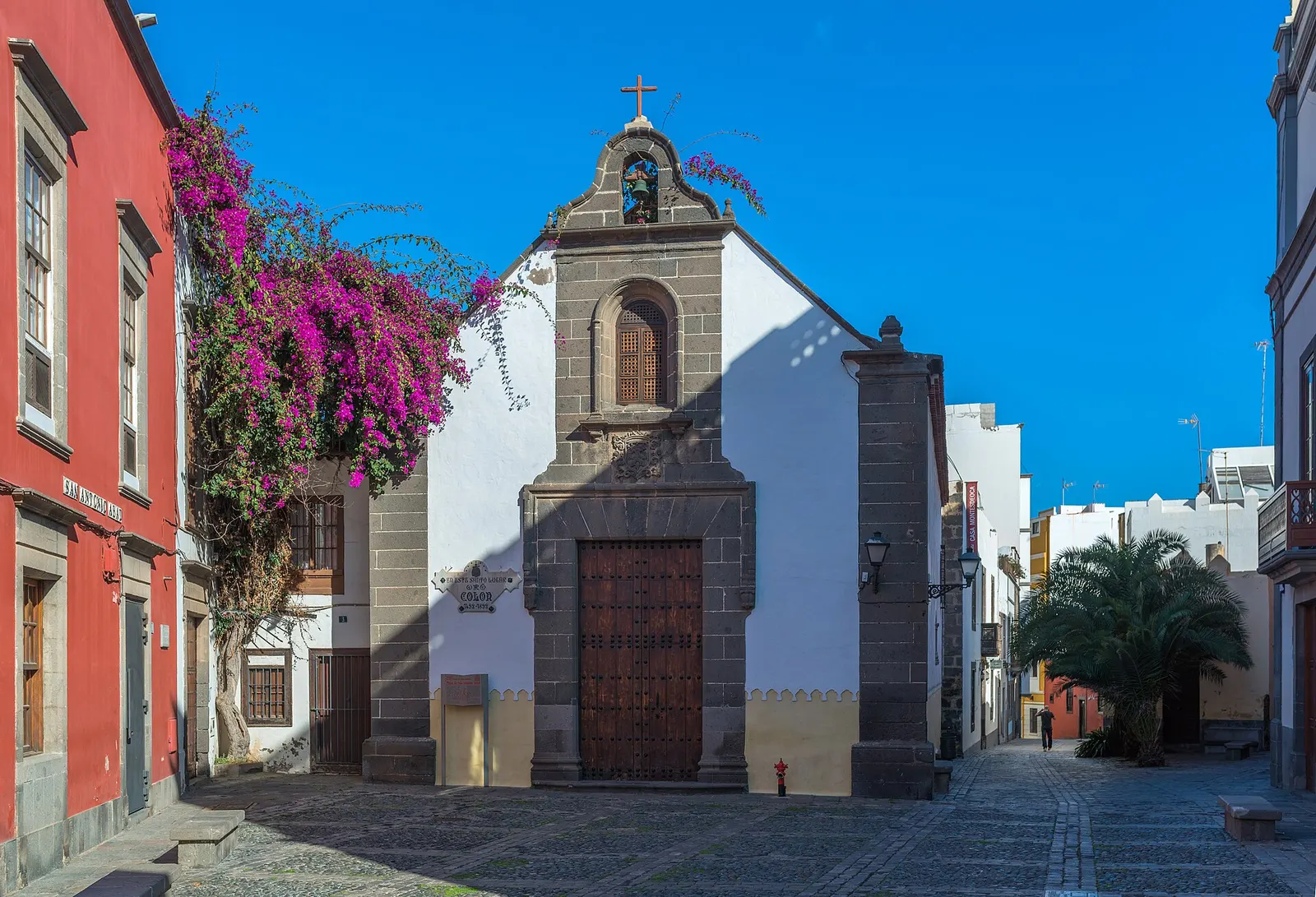
Gáldar is a town in the north of Gran Canaria, with a church, a square and sloping streets. Nothing on a stroll through its centre suggests that beneath a modern building, a few steps away, lies the home of the people who lived here before the conquest. This is the Cueva Pintada — the Painted Cave — one of the most important pre-Hispanic sites on the island open to visitors.
The essentials
- What it is: the Cueva Pintada Museum and Archaeological Park: a cave cut into the rock and decorated with multicoloured geometric paintings, surrounded by the remains of a village of houses built by the ancient Canarians.
- Where: in the old centre of Gáldar, in the north-west of Gran Canaria.
- Recent history: it was closed in 1982 for research and conservation, and reopened in 2006 after more than twenty years of work.
- Visiting: entry to the cave itself is by guided visit only, and brief, to protect the paintings.
- Opening times and prices: check before you go on the official website, cuevapintada.com.
Who the ancient Canarians were
Before the Castilians arrived, Gran Canaria was home to a people of North African origin, known in the literature as the ancient Canarians. (They should not be confused with the Guanches, the name for the indigenous people of Tenerife.) They left no writing we can read with certainty, so almost everything we know about them comes from archaeology: their houses, granaries, everyday objects and places like this one.
That is the honesty the visit calls for. The Cueva Pintada does not solve every mystery of that world, and the museum does not pretend to. What it offers is more valuable: the chance to see, with proper context, what a place where real people lived was like.
The cave
At the heart of the site is a chamber cut into the rock, its walls decorated with multicoloured geometric motifs. They depict no figures or scenes: it is an ordered, geometric decoration whose meaning is still debated.
The visit to the cave is short and always guided, for good reason: the paintings are fragile, and light, humidity and visitors’ breath all affect them. The guide points out the motifs and explains how the pigments were made and why conserving them is so delicate. You leave with the sense of having been somewhere that is protected rather than put on show.
The village
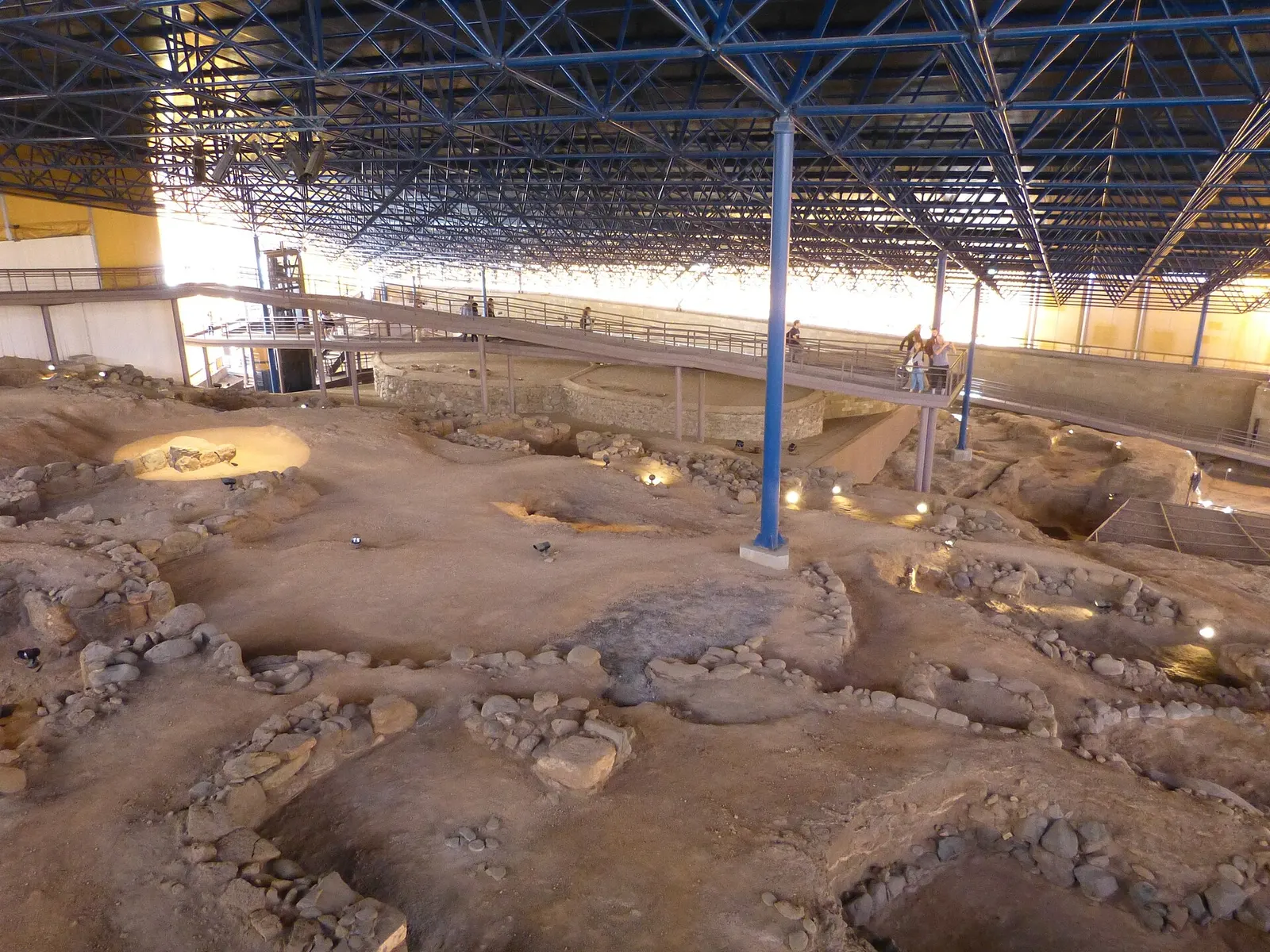
What most people don’t expect is what surrounds the cave: the remains of a village of houses, excavated over many years, now viewed from walkways beneath a large steel canopy. From above, the layout makes sense: stone walls, rooms, shared spaces. The cave stops being an isolated object and becomes part of an inhabited place.
The museum completes the visit with finds from the excavation and material that helps you picture daily life. In recent years it has also occasionally opened its stores to the public, with free visits on prior registration, led by its own technical team. If one falls during your stay, it is worth it: check the programme on the official website.
How to fit it into a day
Gáldar is in the north, a greener and less touristy coast than the south. The Cueva Pintada deserves an unhurried morning: the guided visit, the village, the museum and then a walk around the old centre and the square. For those staying in Las Palmas, there is also a replica of the cave at El Museo Canario, in Vegueta, which works as a prelude or a complement — but it is no substitute for the original.
Our view
The Cueva Pintada is the opposite of quick-snapshot tourism. There is no dramatic viewpoint and no easy postcard: just a small place, cared for with rigour, telling a story the island took a long time to tell itself. Visiting slowly, listening to the guide and not trying to photograph everything is the best way to understand that Gran Canaria had names, homes and lives long before 1478. To follow the thread of that world up into the summits, there is Risco Caído, a World Heritage site.
Information as of October 2026. Check opening times, prices and special visits at cuevapintada.com before you go.