Las Palmas de Gran Canaria is a port city of traffic and an urban beach. But it began in a small quarter of cobbled streets and wooden balconies beside the Guiniguada ravine. That quarter is Vegueta, and the best time to see it is first thing in the morning or on a Sunday, when the city has gone elsewhere and the façades get their silence back.
The essentials
- Founded: in 1478, when the troops of Juan Rejón set up camp here, the Real de Las Palmas.
- Protected: a listed historic-artistic quarter since 1973.
- Not to miss: Santa Ana Cathedral, the hermitage of San Antonio Abad, the three palms of Calle Montesdeoca and the Casa de Colón.
- When: early on a weekday, or on Sunday morning.
- Opening times and tickets: these change; check each monument’s official website before you go.
A camp named after a tree
In June 1478, Captain Juan Rejón landed on the island’s east coast and fortified a camp beside the ravine. It was called the Real de Las Palmas, and tradition has it that, when the ground was cleared, three very tall palms were left standing. Today, on Calle Montesdeoca, three palms recall that origin. They are not the same trees, of course; they are a way of remembering where the city’s name comes from.
The city grew out of that camp. Vegueta keeps its layout: narrow streets, low houses of stone and lime, inner courtyards with wooden galleries you glimpse from the entrance hall when a door is left open.
Santa Ana Cathedral and its square
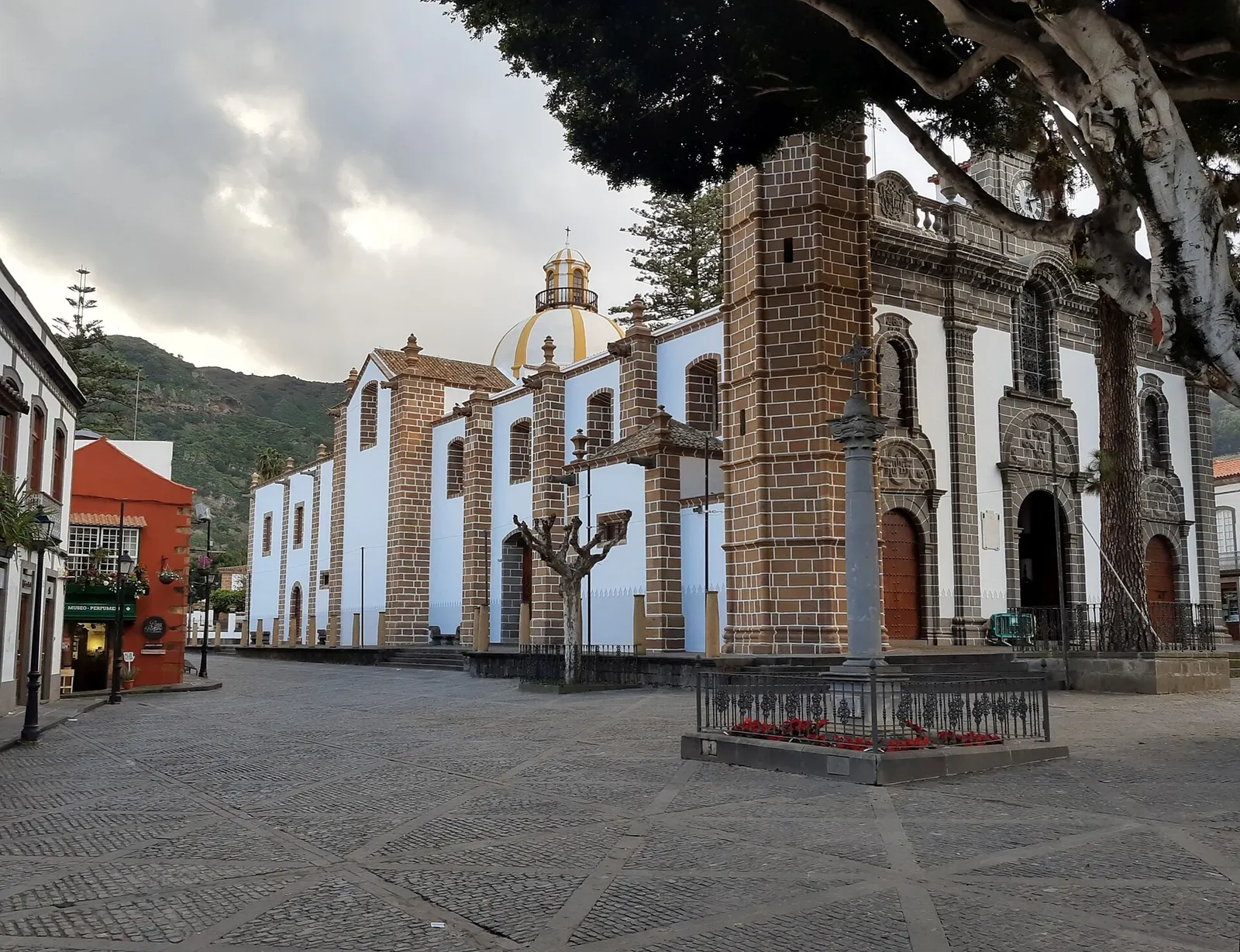
Work on Santa Ana Cathedral began at the end of the 15th century, a few years after the city was founded, and it was not considered finished until the 20th. Those four centuries show in the stone: Gothic, Renaissance and a Neoclassical façade.
In front lies the Plaza de Santa Ana, broad and almost always quiet, with the bronze dogs that keep watch over the space before the cathedral. It was the centre of the original city, and a good place to sit for a while before moving on.
The hermitage of San Antonio Abad
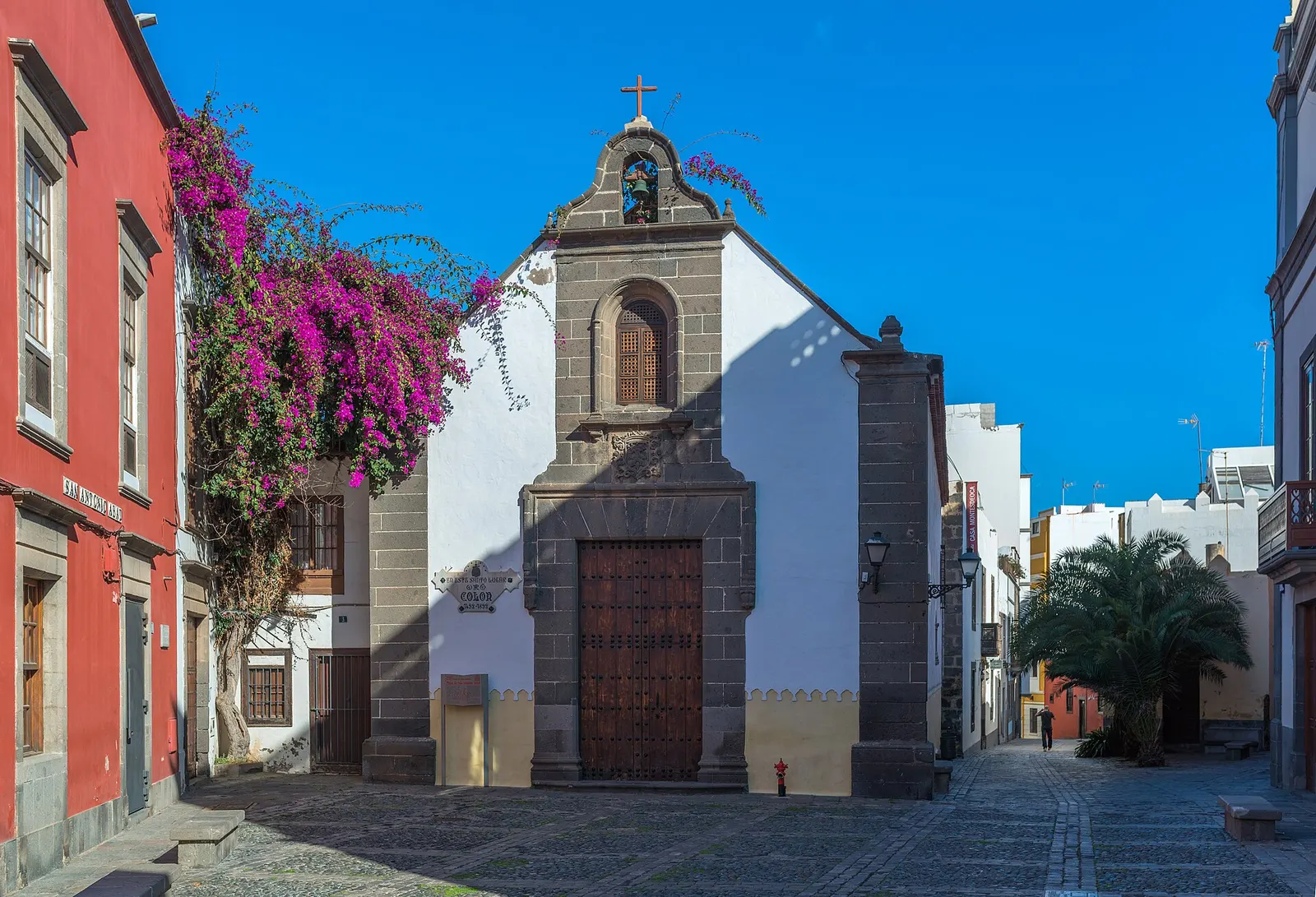
Small, whitewashed and easy to miss, the hermitage of San Antonio Abad stands at the founding core of the quarter. Tradition holds that Christopher Columbus prayed here before sailing on to America. It is best read for what it is: a local tradition, not a precisely documented fact.
The Casa de Colón
What is documented is the stopover. On his first voyage, in 1492, Columbus’s fleet called at Gran Canaria to repair the Pinta’s rudder, and stayed on the island for several weeks before sailing on.
The Casa de Colón, on Calle Colón, occupies the building that tradition identifies with the old residence of the island’s governors, where the admiral is said to have asked for help with his ship. Today it is a museum run by the Cabildo de Gran Canaria, devoted to Columbus and to the ties between the Canaries and the Americas: models of 15th-century ships, a recreation of Columbus’s cabin on the Niña and rooms that explain the islands’ role as the last port of call before the ocean. Give it a long, unhurried hour.
How to walk Vegueta
Vegueta can be covered on foot in a morning. One possible order: start in the Plaza de Santa Ana, step into the cathedral, follow Calle Colón to the Casa de Colón, go down to the hermitage of San Antonio Abad and finish on Calle Montesdeoca, beneath the three palms. On the other side of the ravine lies Triana, the city’s shopping quarter, for anyone who wants to stretch the walk into a coffee.
Comfortable shoes: the cobbles are uneven. And on a Sunday the city moves more slowly, which is exactly the point.
Our view
Vegueta is not a stage set for visitors: people still live here, hang washing in the courtyards and go to Mass in the cathedral. That is why it is best enjoyed early, looking more than photographing. If you have a single morning in Las Palmas, this is the one to give it. And if you want the city’s other face, the sea, it is a few kilometres away: Las Canteras. For those thinking of staying longer, we describe what it is like to live in Las Palmas.
Information as of October 2026. Check opening times and tickets for the cathedral and the Casa de Colón before you go.