People often say UNESCO protected “Roque Nublo”, or “the summits”, and that falls short. What the World Heritage Committee inscribed in July 2019, at its session in Baku, is called the Risco Caído and the Sacred Mountains of Gran Canaria Cultural Landscape, and it is not a postcard: it is a whole territory, lived in, carved out and sacred.
The essentials
- What it is: a cultural landscape, inscribed under UNESCO criteria (iii) and (v).
- How large: 9,425 hectares in the centre of the island, with a further 8,557 hectares of buffer zone.
- What it holds: cave settlements, granaries, cisterns, cult caves and two temples, Risco Caído and Roque Bentayga.
- How to visit: the original Risco Caído cave cannot be visited, for conservation reasons. Its replica is at the Risco Caído Interpretation Centre in Artenara.
A landscape, not a monument
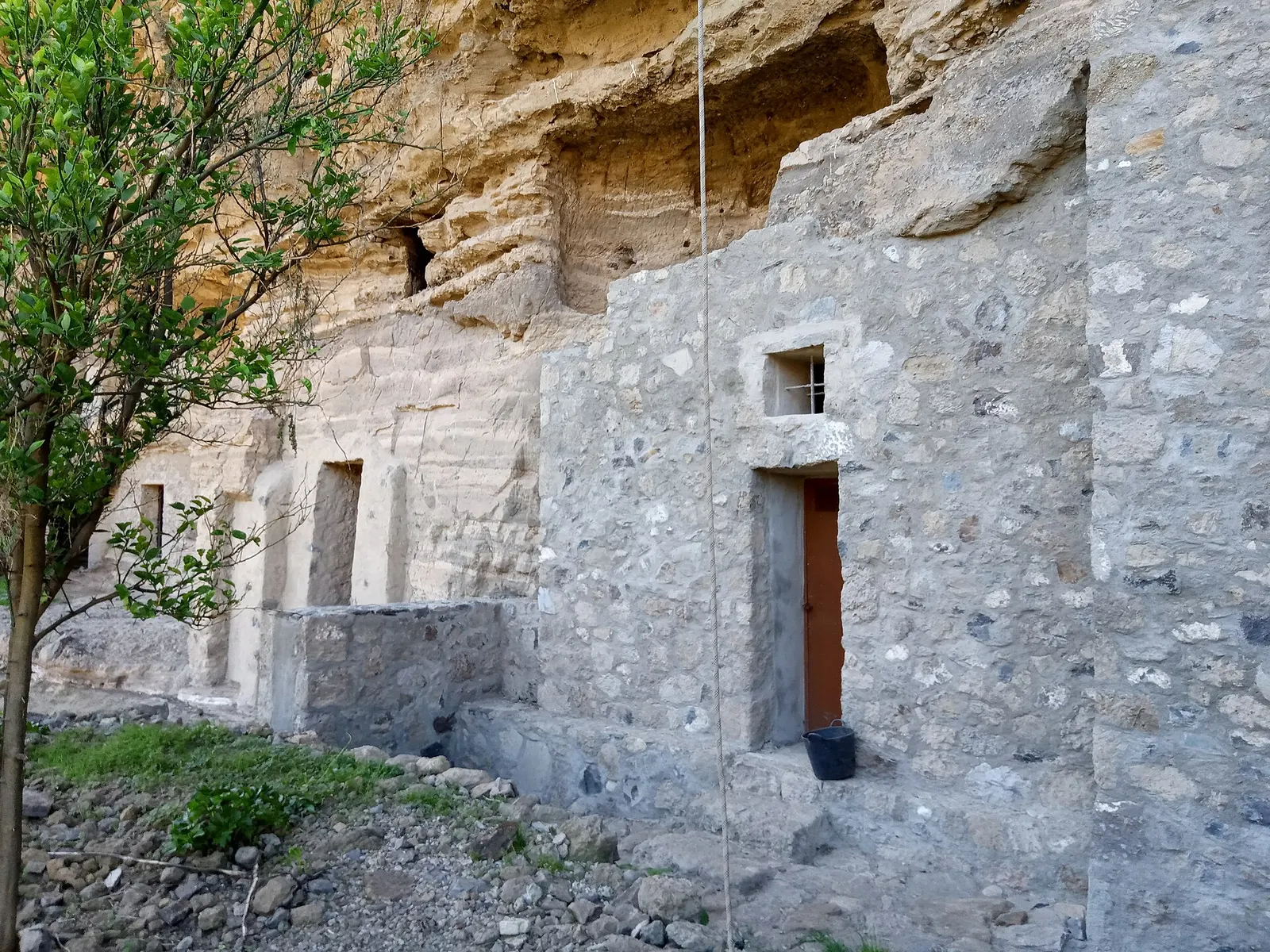
What UNESCO recognised is a way of life. The ancient Canarians, a people of North African origin who lived isolated on the island for centuries until the Castilian conquest of the fifteenth century, dug into the volcanic tuff of the central ravines to make homes, communal granaries and places of worship. Many of those caves remained inhabited long afterwards, and in the summit villages — Artenara is the clearest example — there are cave houses that are still lived in.
That is why the site is a “cultural landscape”: what is protected is the relationship between people and the mountain, not a building.
The two temples
Risco Caído is a group of caves carved into a cliff in Artenara. One of them, cave 6, has a carved dome with an opening through which the light of the sun and moon enters. Through the year the beam moves across the wall, which bears engravings, marking the equinoxes and the turn of the seasons. Hence its description as an Aboriginal astronomical observatory: a calendar made of light, inside the rock.
Roque Bentayga, facing Roque Nublo, is the other great sacred site: a natural rock fortress with caves and ceremonial spaces around it, looking out over the Tejeda caldera.
How to visit
Respectfully, and without hurry. The original Risco Caído cave is closed to the public to protect it. Since 2020 an exact replica has been on display at the Risco Caído Interpretation Centre in Artenara, where the play of light that gives the place its meaning is recreated. Opening times and visiting arrangements change: check before you go.
The rest of the landscape is best understood on foot. The summit roads and waymarked trails cross the protected area. If you climb to Roque Nublo, which is part of the Sacred Mountains, remember that advance booking is required: we explain how in Roque Nublo now needs booking.
At an archaeological site you do not enter closed caves, you do not touch the engravings and you take nothing away. It sounds obvious, but it is the only thing a visitor can do for this place.
What is still to be done
In fairness, it has to be said: the listing has not solved everything. The Canarian press has reported the neglect of parts of the site and a lack of protection and management plans equal to the title. UNESCO recognition is a commitment, not a trophy, and honouring it is up to the public authorities.
For the traveller, the practical consequence is simple: the landscape is not “set up” like a theme park, and for anyone seeking authenticity that has its good side. But it asks for more care from those who visit.
Our view
Risco Caído is not somewhere to tick off a list. It is a place to understand how a culture isolated in the middle of the Atlantic looked at the sky and the mountain, and left its calendar written in stone.
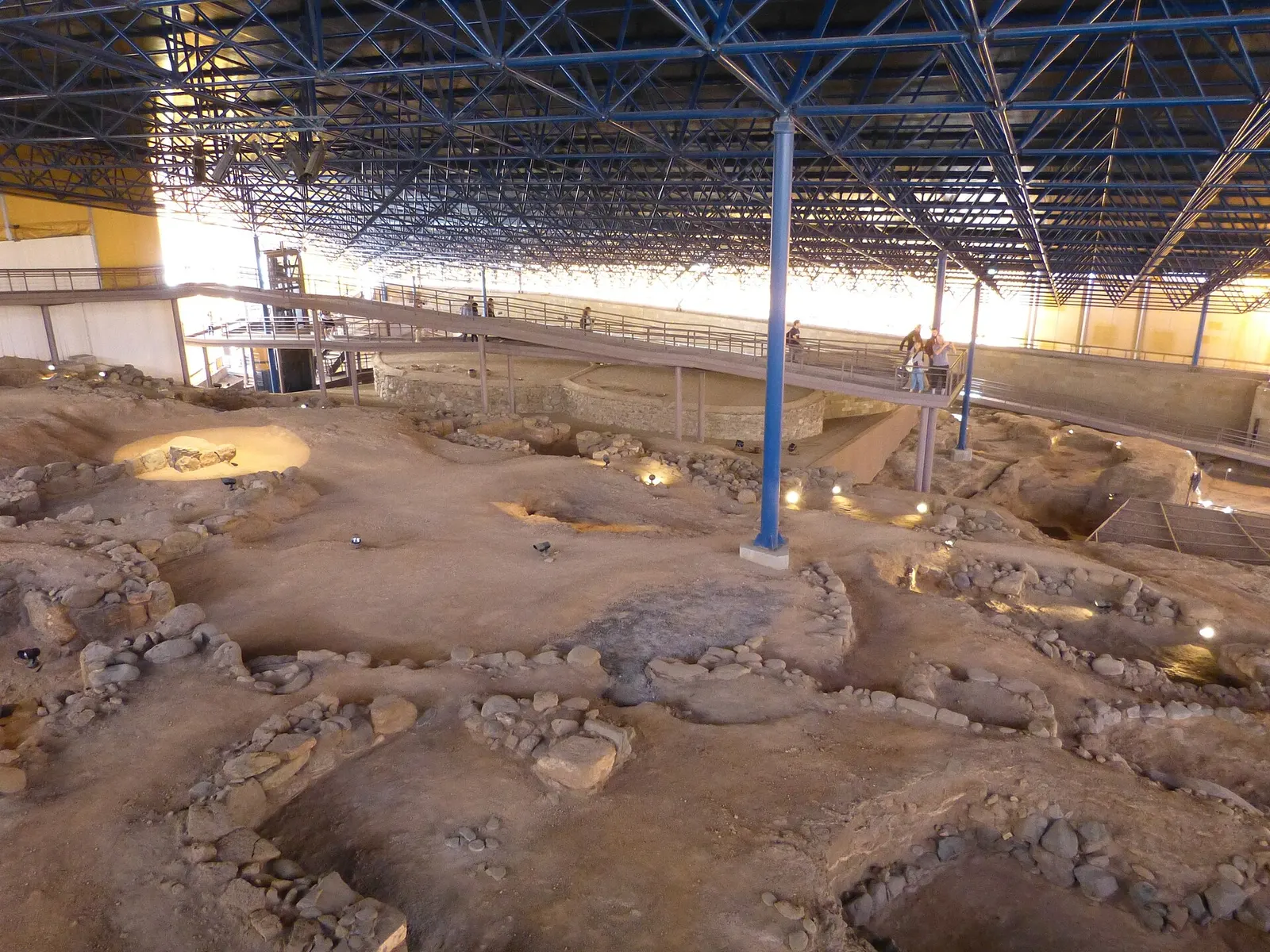
And since that gaze at the sky is still possible, the summit sky is the natural continuation of this visit. In the north-west, in Gáldar, the Cueva Pintada shows what an ancient Canarian home was like. In the south-east of the island, another ravine keeps the memory of the ancient Canarians: Guayadeque, where people still live in caves.
Information as of October 2026, checked against the UNESCO World Heritage listing (ref. 1578), the Canarian press and documentation on the Risco Caído replica. Interpretation centre opening times may change: check before you go.