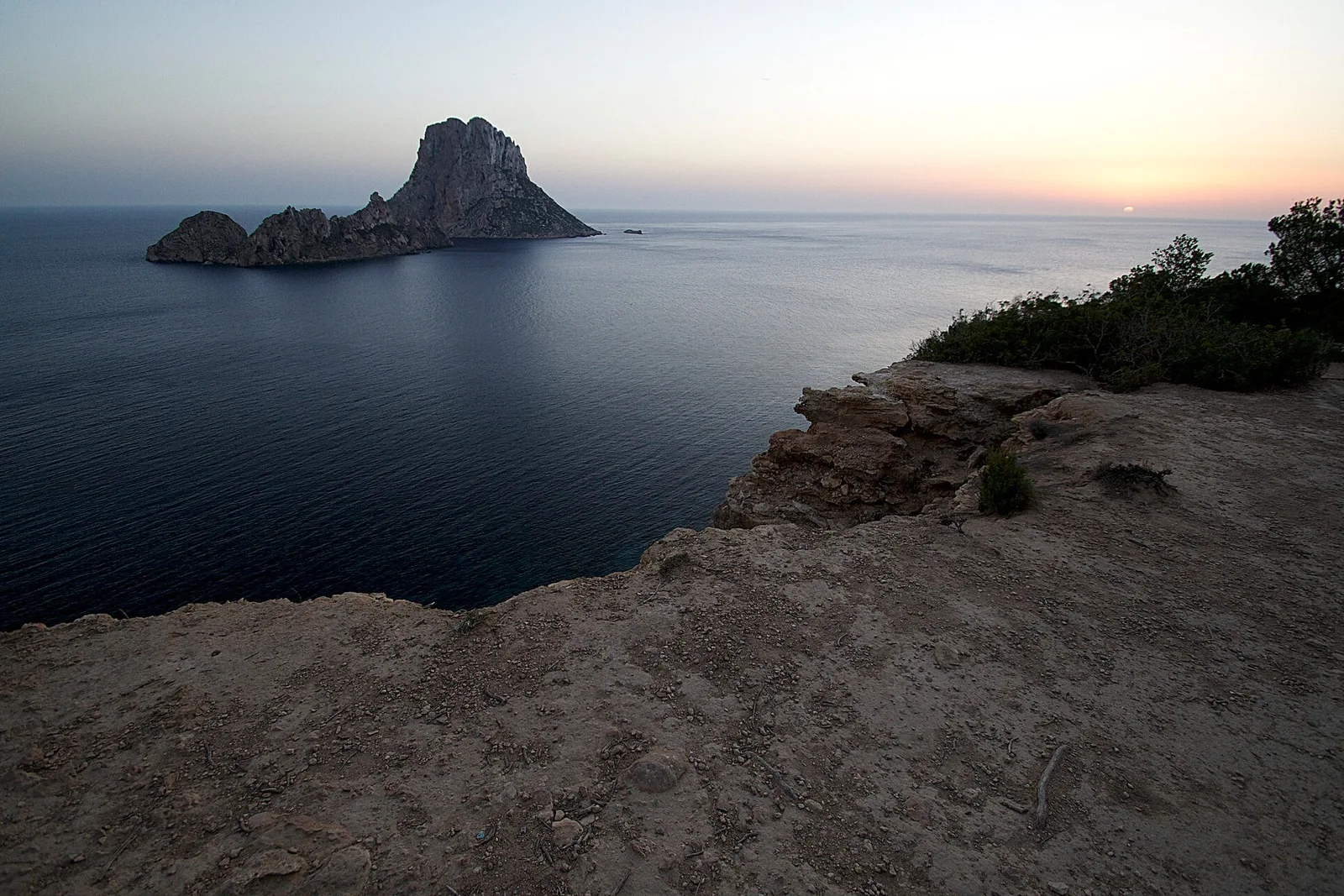
The western coast is the one that faces the sunset, and that explains almost everything: it is the part of the island where people gather at the end of the day and where, in exchange, mid-morning is better than anywhere else.
What is there, from south to north
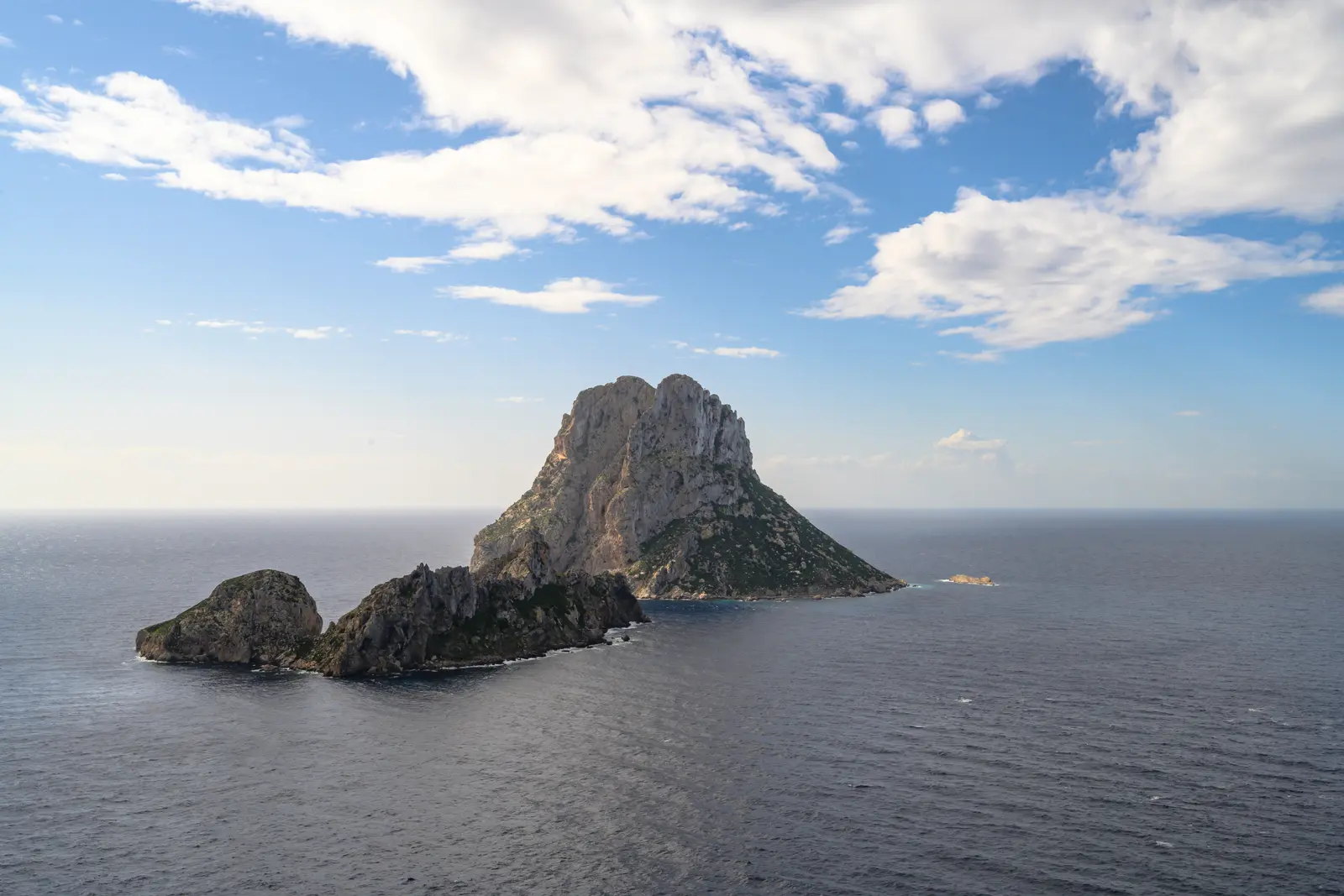
Cala d’Hort is the viewpoint for es Vedrà, the 380-metre islet rising opposite. It is the postcard of Ibiza and the one that fills the car parks in summer: if you are going for the photograph, go early or go in October.
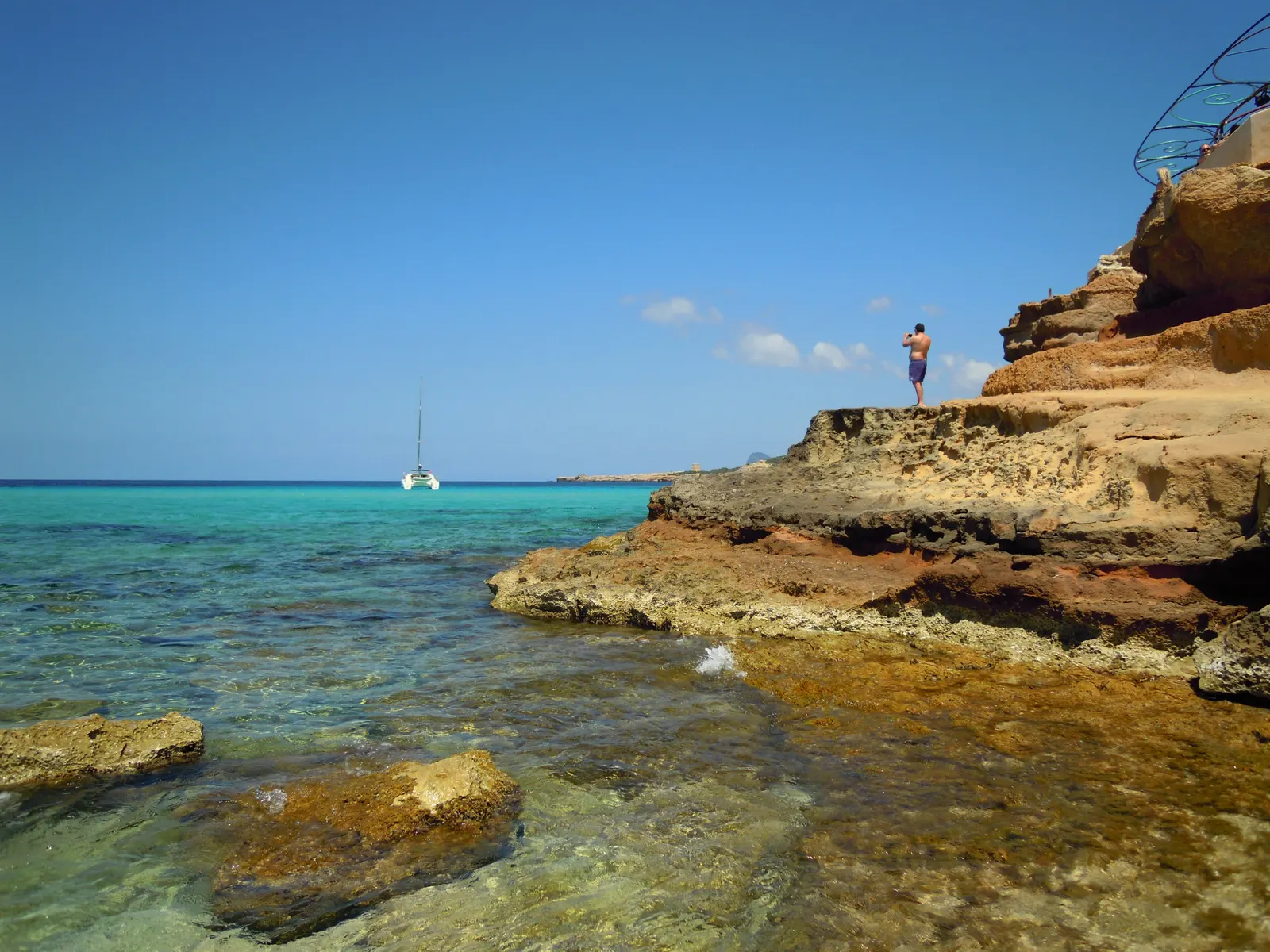
Cala Comte (Cala Conta on many maps) is a run of small coves facing the islets of s’Espartar and sa Conillera. The water stays clear a long way out because the bottom is sand and pale rock.
Cala Salada, already in Sant Antoni, is more sheltered and has pine woods down to the shore. Access is regulated in high season.
The hour, which is what really changes
These coves have two lives a day. Before eleven in the morning they belong to whoever gets up early. From six in the evening they fill with people coming for the sunset, and in August the car park becomes the main problem.
In between, if you have to go at midday, be realistic: in July and August the west coast at two in the afternoon is not a quiet place. It is in May, in early June, and from September onwards.
When to go
From May to mid-June and from mid-September into October the water is still good and the island fits inside itself again. In winter these coves are not for swimming, but Cala d’Hort beach with es Vedrà facing it repays the journey. The clifftop viewpoint, by the Torre des Savinar, has been closed on foot since 2025: we cover it in Es Vedrà is no longer viewed from the cliff.
Bear in mind that Ibiza limits the entry and circulation of vehicles between 1 June and 30 September: if you come with a car in those months, you have to book beforehand. We explain it in the getting-around section.