Some Menorcan towns face the sea and others face the land. Alaior belongs to the latter. Set inland in the east of the island, on a low hill of white houses that can be seen from far away, it is the third-largest town in Menorca and one of those places where the island keeps working all twelve months of the year, far from the noise of the coast. You don’t grasp it by looking at the horizon, but by walking into its cobbled streets and, above all, by tasting what is made here.
Because Alaior has two trades that define it and that have travelled beyond the island to make a name elsewhere: cheese and footwear. It is the commercial cradle of Mahón-Menorca cheese —the historic producers were born here and are still going— and, at the same time, a town of shoe factories where leather is stitched with the eye of an author. Two traditions of patient hands, of good, unhurried produce, that fit exactly with the idea of quiet luxury we stand for.
This is a calm guide to Alaior: why it is worth the stop, what to taste, what to take home and what to see in its surroundings, which hide some of Menorca’s least touristy treasures.
The essentials
- Where: inland-east of Menorca, on a hill; the island’s third-largest town.
- Its fame: the commercial cradle of Mahón-Menorca cheese, with its historic dairies.
- Designation: PDO Mahón-Menorca Cheese, protected since 1985 (the protected area is the whole island; Alaior concentrates the historic producers).
- Another trade: artisan footwear —with export houses such as Pons Quintana— and costume jewellery/jewellery.
- What to see: the old town of cobbled streets and white houses, the church of Santa Eulàlia and that of Sant Diego with its cloister, the Pati de Sa Lluna.
- Nearby: the Torre d’en Galmés (the island’s largest Talayotic settlement), Cales Coves and the Cala’n Porter area, all within its municipality.
Why stop in Alaior?
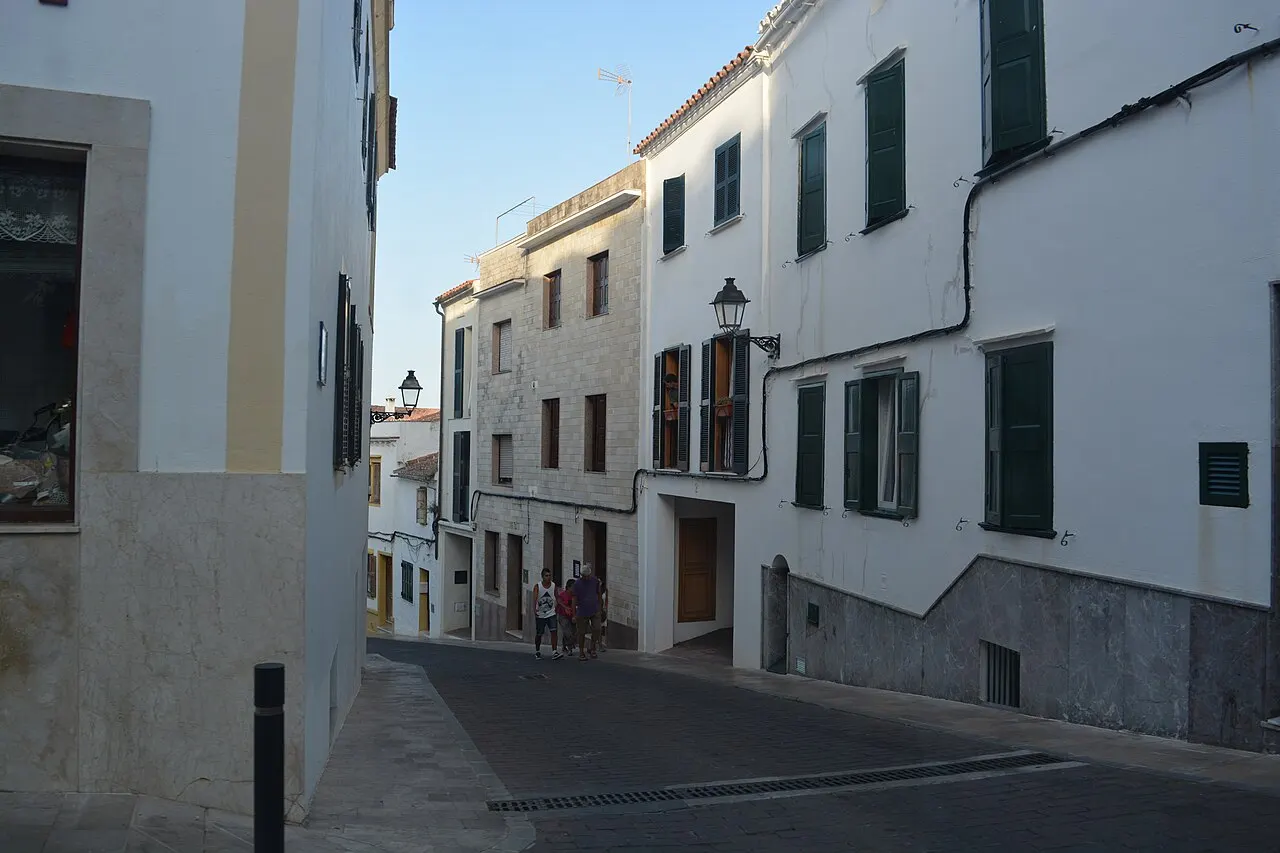
Because it is the Menorca that doesn’t appear on postcards and yet sustains much of what the island eats and wears on its feet. Alaior isn’t chasing the tourist: it welcomes you without making a fuss. You can walk it in a quiet stroll, among whitewashed houses, painted shutters and an old street plan that rises and falls along the hill without hurry.
The plan here isn’t to tick off monuments, but to understand a craft. To stop at a dairy, look at a window of hand-stitched shoes, buy real produce and head back to the coast with something genuinely worthwhile. It’s a town for those who travel with judgement, not with a checklist.
Mahón-Menorca cheese: why Alaior is its capital
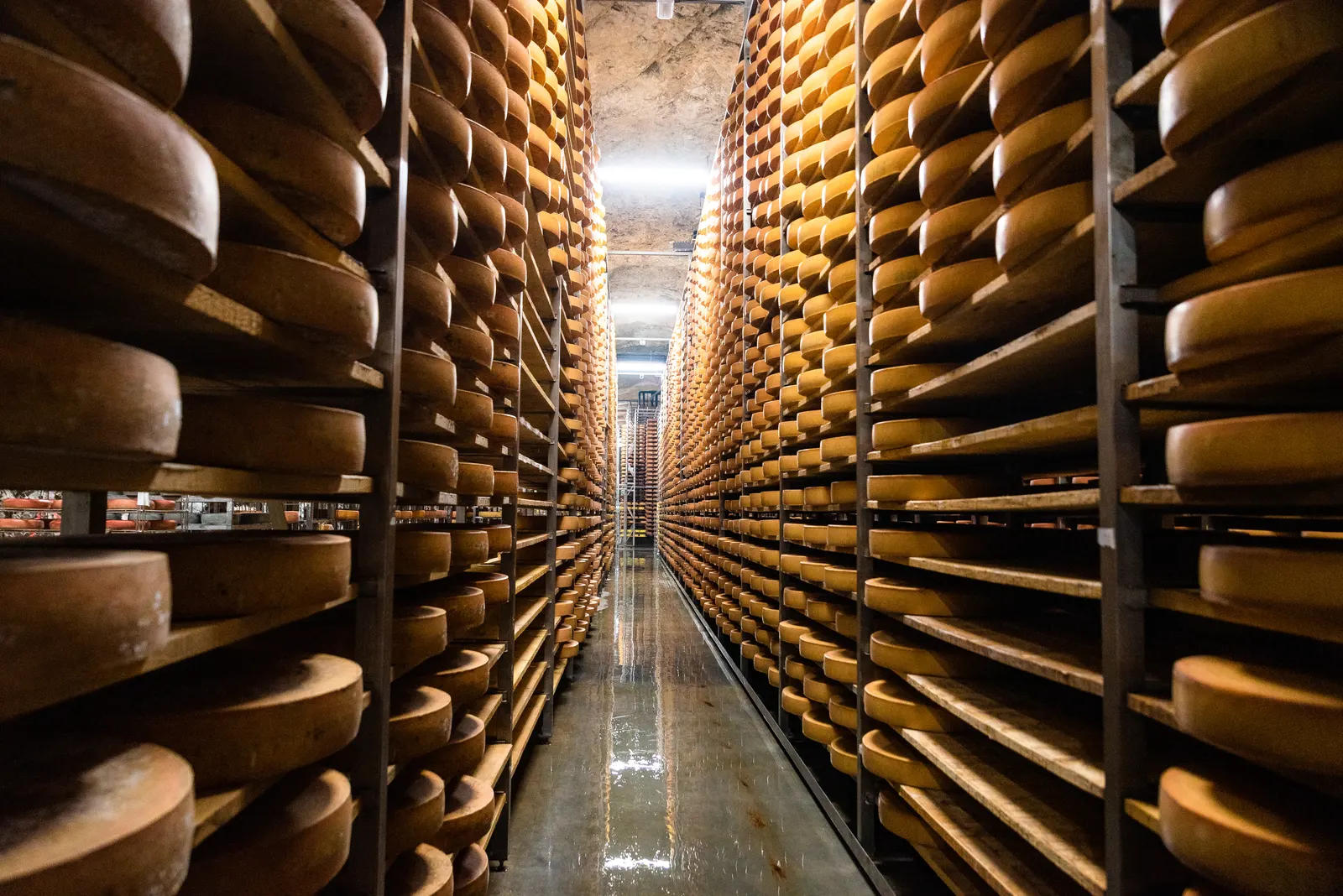
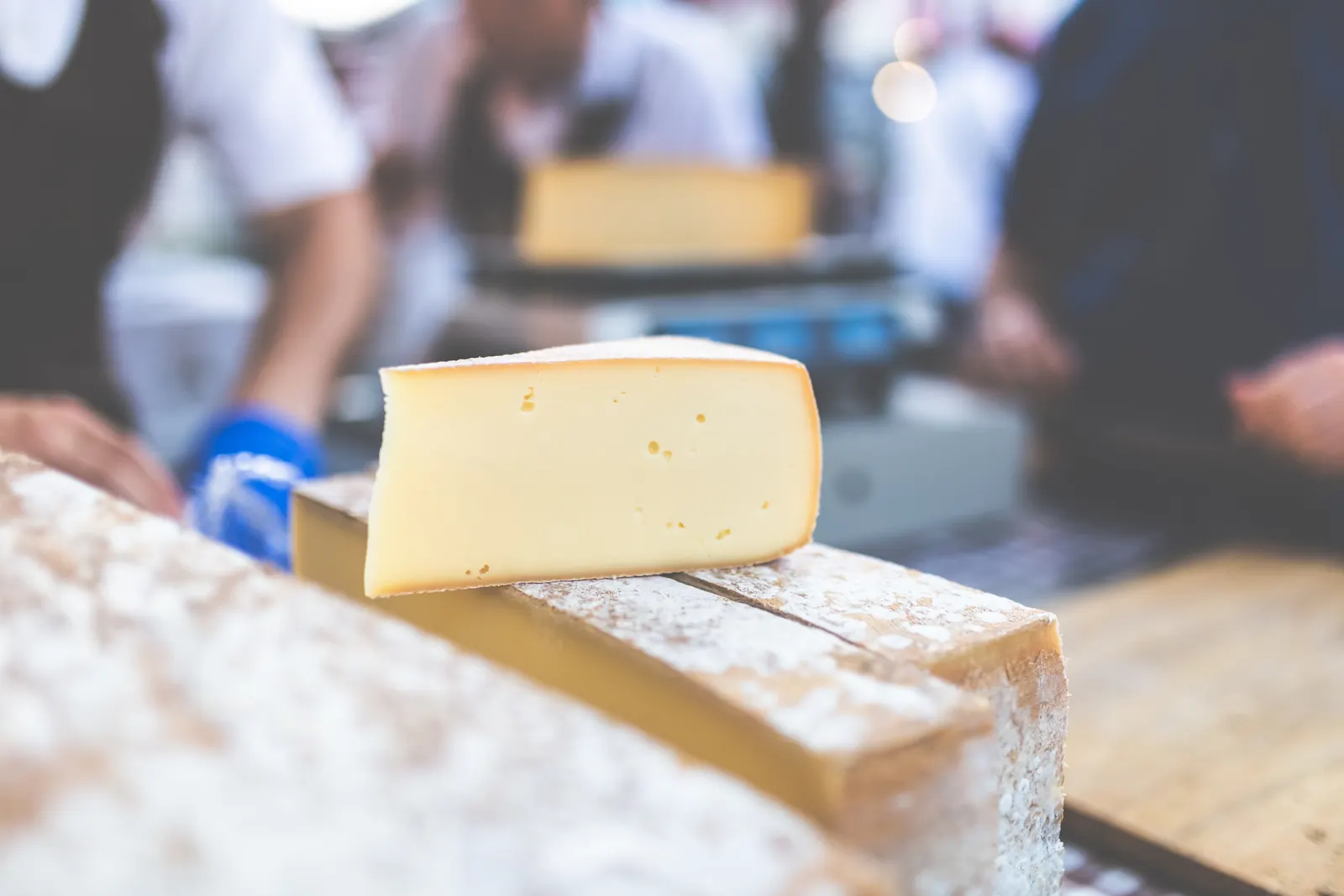
It’s worth being clear from the start: the cheese is called Mahón-Menorca, never “Alaior cheese”. The protected designation of origin covers the whole island and has existed officially since 1985. What happens is that Alaior has historically been the commercial centre of this cheese: the producers that took it beyond Menorca were born here and are still running.
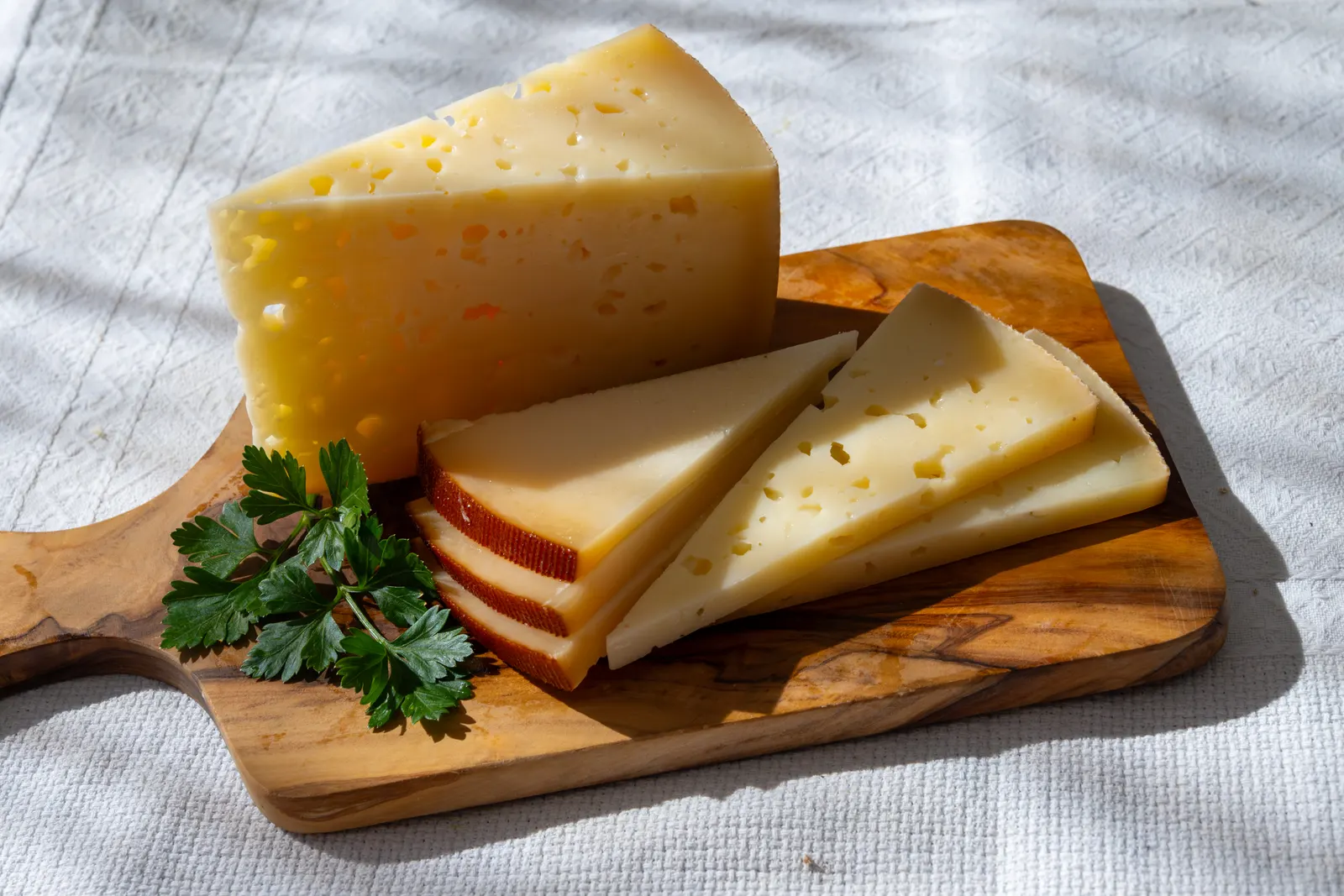
Two names tell the story. Coinga, the cooperative that brings together a large share of the island’s farmers, and La Payesa, a family dairy founded in Alaior in the late 1940s. Between them they sum up how a farmhouse cheese, made on each estate, became a product with a seal and recognition. Mahón-Menorca is a pressed-curd cheese, made from cow’s milk, and is found at different stages of ageing: from the young (tender), mild and buttery, to the cured, intense and with its characteristic orange rind rubbed with oil and paprika.
If you want to take something home from Alaior, make it cheese. Many dairies have a shop and, in some cases, visits; it’s worth confirming opening hours before going, as they vary with the season. To really understand what we’re talking about —its origins and how to choose it— we’ve devoted a guide of its own to Mahón-Menorca cheese.
Artisan footwear, the other trade of the hands
Alaior’s second soul is stitched in leather. The town has a long footwear tradition, and from here have come houses that export to half the world while keeping family-run production. The best known is Pons Quintana (PQ), a Menorcan factory recognised for its distinctive braided leather and for a comfortable, elegant shoe, made with the patience of a craft. Alongside footwear, workshops of costume jewellery and jewellery thrive, another of the town’s artisan legacies.
It’s a different purchase from the coastal souvenir: a lasting, well-made product with a story behind it. The same judgement that calls for a cured cheese calls for a hand-stitched shoe. As ever, check the hours of factories and shops, which don’t always coincide with those of the tourist areas.
What to see in Alaior’s old town
The centre of Alaior is best enjoyed without hurry. Its cobbled streets and white houses climb the hill to the very top, where the church of Santa Eulàlia, dedicated to the town’s patron saint, stands over everything: a sturdy temple, almost fortress-like, visible from the road long before you arrive.
A few steps away is the church of Sant Diego, home to one of the town’s loveliest and most photographed corners: the Pati de Sa Lluna, a former cloister now turned into a serene courtyard of arches and whitewash, where time seems to stand still. It’s exactly the kind of place Alaior is perfect for: no queues, no tickets, just an attentive stroll.
What to see nearby: talayots, caves and a cove with history
The municipality of Alaior holds some of the island’s least crowded treasures. Just a short distance away waits the Torre d’en Galmés, the most extensive Talayotic settlement in Menorca: a vast site, with talayots, a taula and the remains of dwellings, that lets you imagine how people lived here thousands of years ago. If this prehistoric past interests you, we tell it calmly in our guide to Talayotic Menorca.
Nearby too are the Cales Coves, a necropolis carved into the rock with more than a hundred caves looking out over the sea, and the Cala’n Porter area, on the municipality’s southern coast. All of it belongs to Alaior, even if it lies far from its town centre. The island, as so often, is smaller than it looks.
When to go and how to get there
Alaior can be enjoyed all year round, and that is precisely what makes it interesting: it’s a town that doesn’t depend on the season. Spring and autumn offer gentle light and quiet streets; in summer, the early hours of the morning are the most serene for walking the old town before the heat. It’s easy to reach by car from Maó, as it sits right on the main road that crosses the island, though the streets in the centre are narrow and steep for parking.
Our take
Alaior isn’t something you “see”, it’s something you understand. Our recommendation: start at a dairy to take home a good Mahón-Menorca, then climb up to the old town as far as Santa Eulàlia and look in on the cloister of Sant Diego, and leave a while for a window of artisan footwear. If you have the morning, add the Torre d’en Galmés, which calls for time and low light.
It’s quiet luxury away from the sea: real produce, patient hands and a white town that keeps working as it always has. Nothing to photograph in a rush; plenty to take home.