Some products explain an island better than any monument. In Menorca, one of them is a deep, intense red, lives hundreds of metres down and is landed every afternoon in the port that lends it its name: the Ciutadella red prawn. It is not merely a delicacy; it is a lesson in how luxury works when it is real: scarce, regulated, seasonal, and traceable in a town where everyone knows which boat each crate came off.
This article tells its story with facts —the species, the fishery, the quotas published in Spain’s official gazette (BOE), the voice of the fishing sector— and with one honest warning: you will not find a price per kilo here, because it changes daily at auction, and any figure written today would be a lie by tomorrow.
The essentials
- The species is Aristeus antennatus, the Mediterranean red prawn, caught by Menorca’s trawling fleet in the deep waters of the island’s slope — at roughly 300 to 800 metres, as described by fisheries scientist Pere Oliver.
- It carries the city’s name: it is known as the red prawn of Ciutadella, and it is compared with the Sóller prawn among the most prized in the Spanish Mediterranean.
- It is a quota fishery. In December 2024 the European Union agreed to reduce catch quotas for red prawn within the multiannual plan for the Mediterranean; since then, the limits are measured in kilos and in fishing days.
- In August 2025, the BOE raised the Menorcan boats’ ceiling by 2,000 kilos —around 1,100 kilos for Ciutadella and 700 for Maó— within an allocation of an extra 45.9 tonnes for 286 trawlers across the Spanish Mediterranean.
- Where to eat it: at the seafaring houses of the Ciutadella and Maó harbours that cook from the local fish market —grilled, raw or in rice; and to take it home, at Sa Llotja or off the boat in summer.
What makes the Ciutadella red prawn different?
Start with the animal. The Mediterranean red prawn —Aristeus antennatus— is not the pale prawn of set-menu lunches: it is a deep-water crustacean, blazing red, with a head that concentrates all the flavour of the dark sea it inhabits. Around Menorca it is caught on the slope —the step where the island’s shelf drops towards the Mediterranean floor— at depths that fisheries scientist Pere Oliver places between 300 and 800 metres.
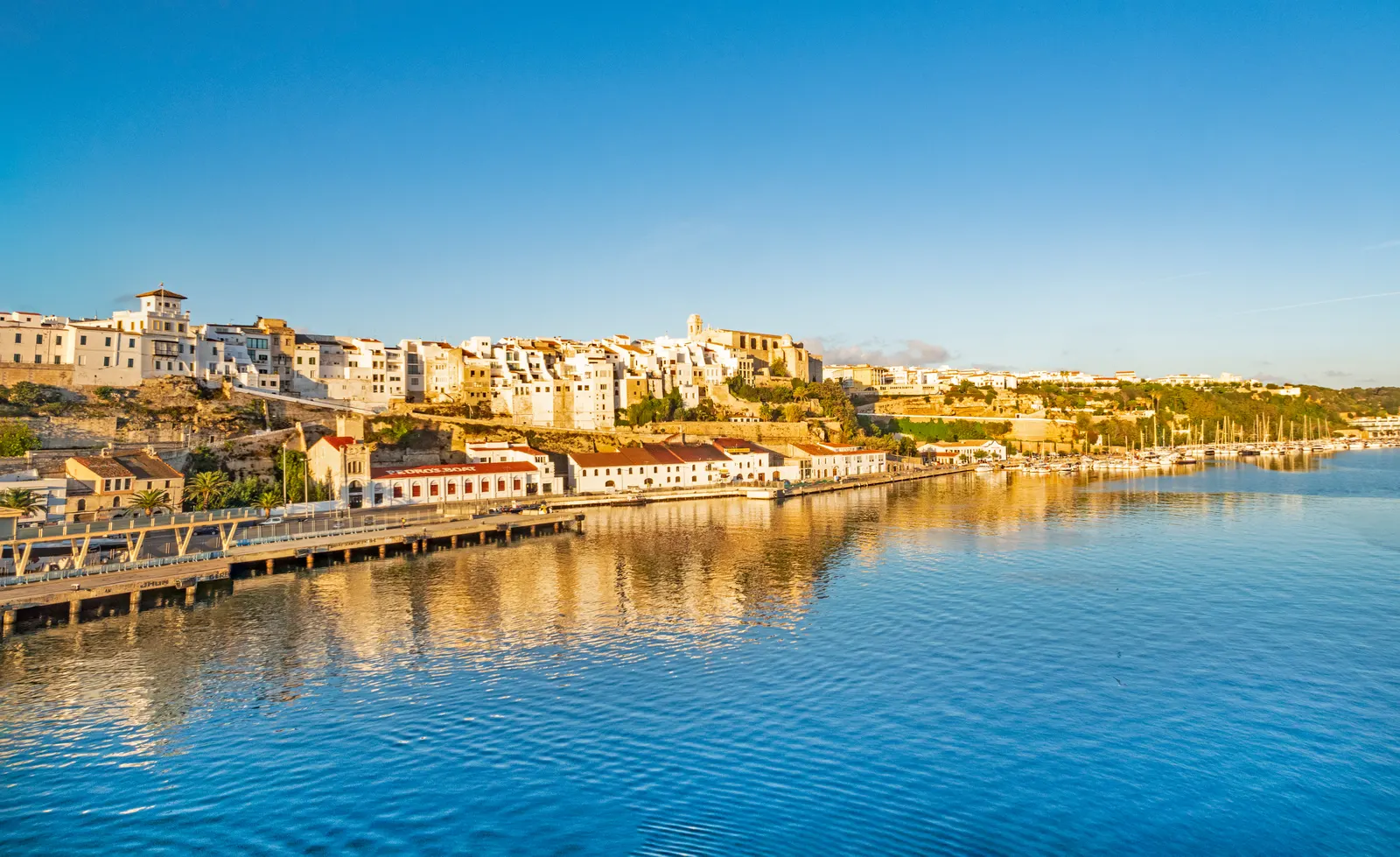
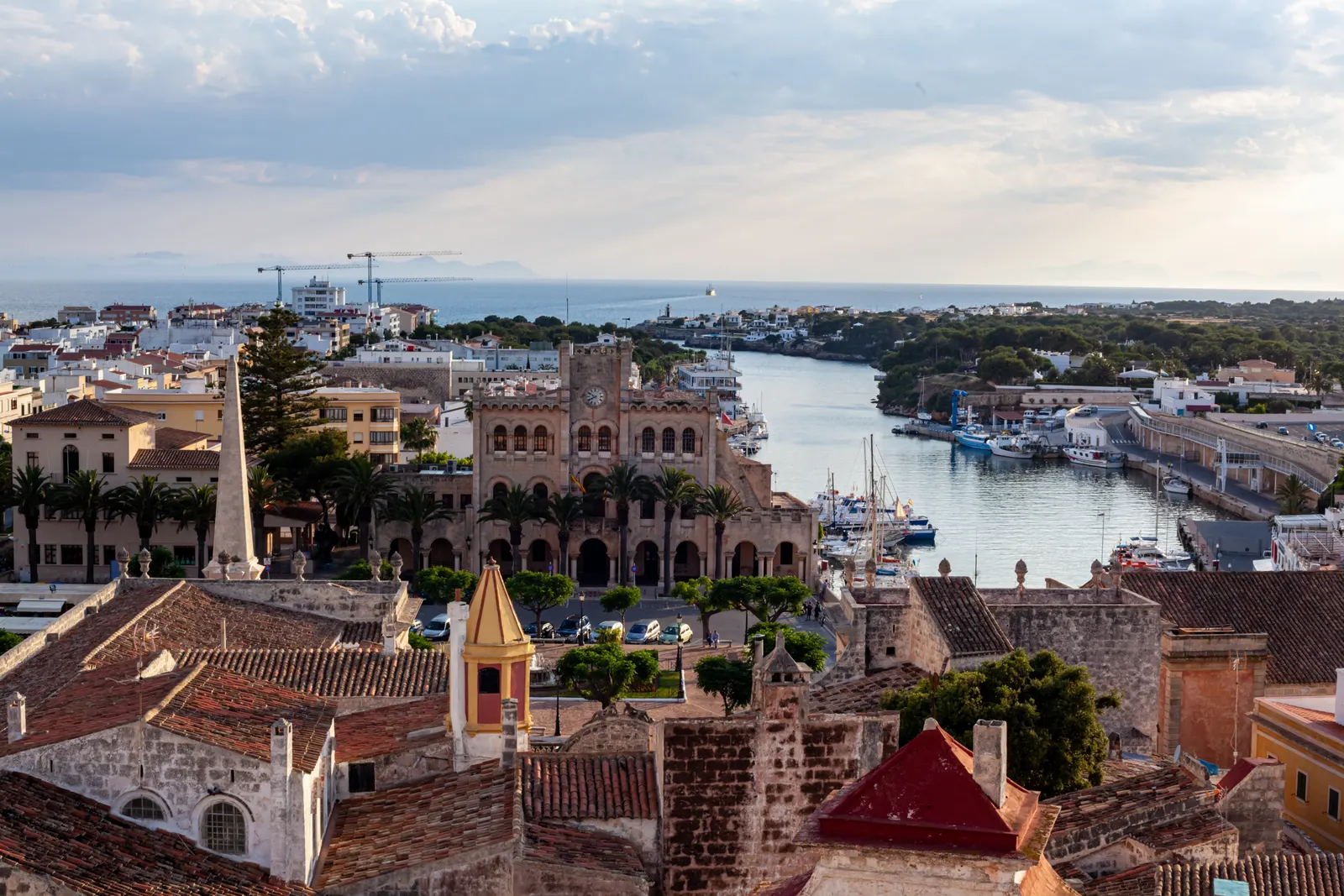
The fleet that brings it in is deliberately small: a handful of trawlers based in the ports of Ciutadella and Maó. That domestic scale is why the prawn bears the name of the western city —where most of it is landed— and why its reputation is built by comparison with the Balearics’ other mythical prawn, that of Sóller. What separates this from other gastronomic luxuries is that it cannot be scaled: there are no more boats, no more days, no more kilos.
Why is it measured in kilos and days?
Because Europe decided so. In December 2024, the European Union agreed to cut red prawn catch quotas within the multiannual plan for the western Mediterranean — the framework meant to ensure deep-water fisheries still exist twenty years from now. That same December produced a telling episode: the Spanish ministry went as far as banning prawn fishing over the Christmas period —the year’s peak of demand— and reversed itself within days in the face of the sector’s criticism.
The latest chapter arrived in summer: on 2 August 2025, the BOE published an increase of 2,000 kilos in the catch ceiling for Menorca’s boats —around 1,100 kilos for Ciutadella and 700 for Maó— within an allocation of an extra 45.9 tonnes for 286 trawlers in the Spanish Mediterranean: 35.9 tonnes obtained by exchanging fishing opportunities with France, and 10 from a reserve.
The sector, even so, did not celebrate. The head of Ciutadella’s fishermen’s guild, Xavier Marquès, summed up the unease in the local press: the new limits arrive “in kilos and in days” at once — a double accounting the fishermen consider hard to square — and he questioned whether the criteria are truly “biological and scientific” when tonnes can be traded between countries. That is the underlying tension of this product: between the science that counsels caution and a trade that lives by going out to fish.
And the price? The honest answer
It is the inevitable question, and the serious answer is that there is no publishable figure: the price is set daily at auction and swings with size, season and demand. Any printed number ages within a week.
What is quotable is the trade’s own perspective. When talk of sky-high prices circulated in 2024, Menorca’s fishermen put the rise in perspective with long memories: “I remember them at 10,000 pesetas a kilo,” one of them told the local press. Translated: the red prawn was always expensive, because it was always scarce and hard-won. Historically it was a dish “for guests”, saved for the great occasions. That has not changed; only the currency has.
Where to buy it and where to eat it
To take it home, the short route is Sa Llotja, which sells the fish and shellfish landed by the island’s boats; in summer there are also quayside sales straight off the boat, queues at dusk included, as a small local ritual.
To eat it cooked, look for the seafaring and market houses of the two ports that land it —Ciutadella and Maó—, the ones that work directly with the local fish market. It is at those tables, a few metres from the water, that the red prawn makes the most sense: order it and ask, without embarrassment, which boat it came in on.
In traditional Menorcan cooking, the red prawn has been eaten four ways: in a caldera stew (a close relative of the Fornells lobster stew), in rice, grilled and fried with garlic. All four share one rule: the less you do to it, the more it gives back.
Our view
The Ciutadella red prawn is the perfect argument against volume luxury. There is no way to produce more of it: there is a slope, a few boats, a quota in kilos and days, and a fish market you can walk to. Anyone who tastes it in the harbour, a few metres from where it was landed, understands that exclusivity needs no stage set.
Our suggestion: save it for an occasion, order it where they cook from the local market, and ask without embarrassment which boat it came in on — in Menorca, that question has an answer. And if the day’s price seems high, remember what the fishermen say: it was never cheap. That is precisely the point.
A luxury measured in kilos and days cannot be manufactured or scaled: it can only be respected. The Ciutadella red prawn is exactly that.