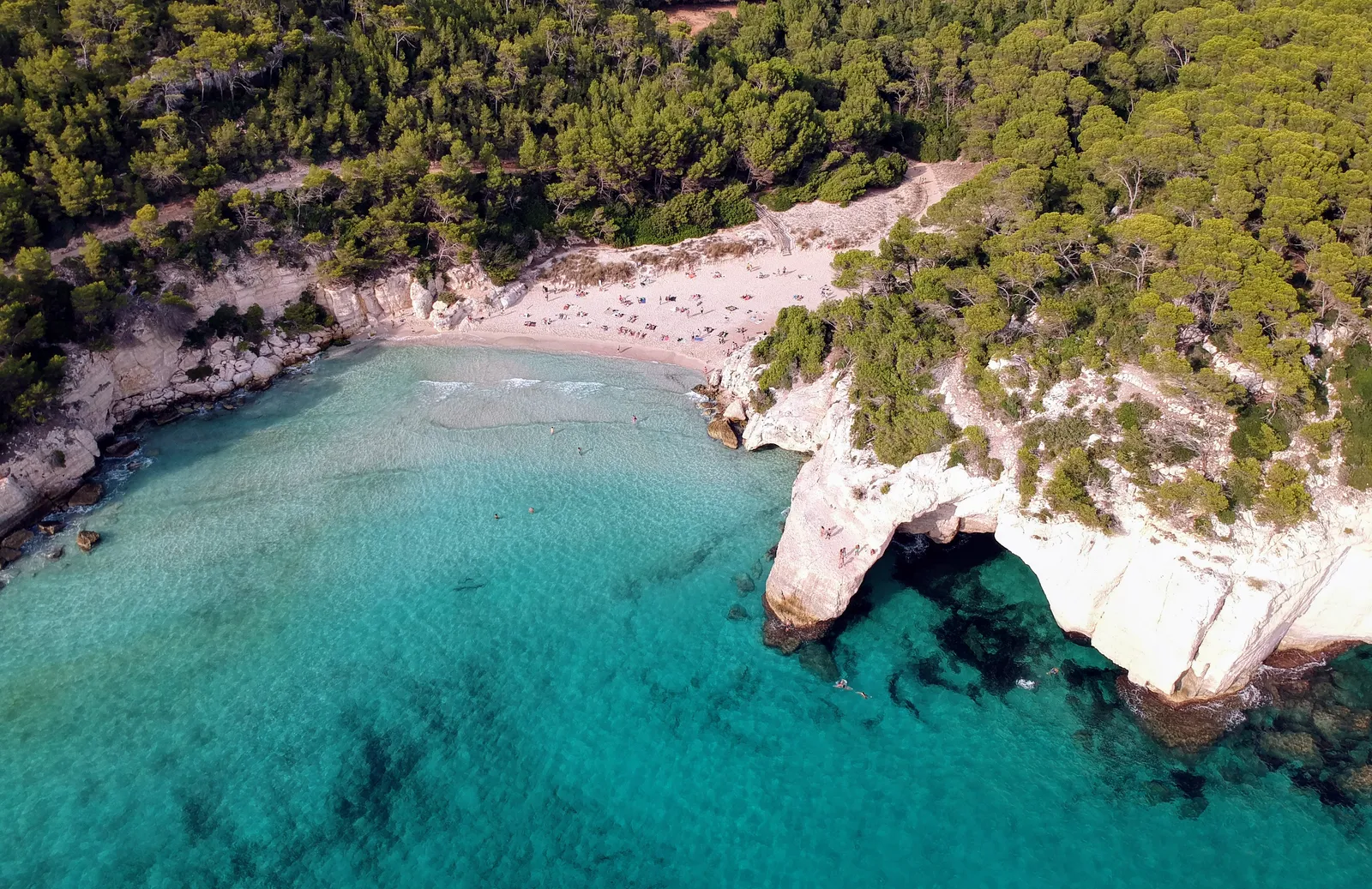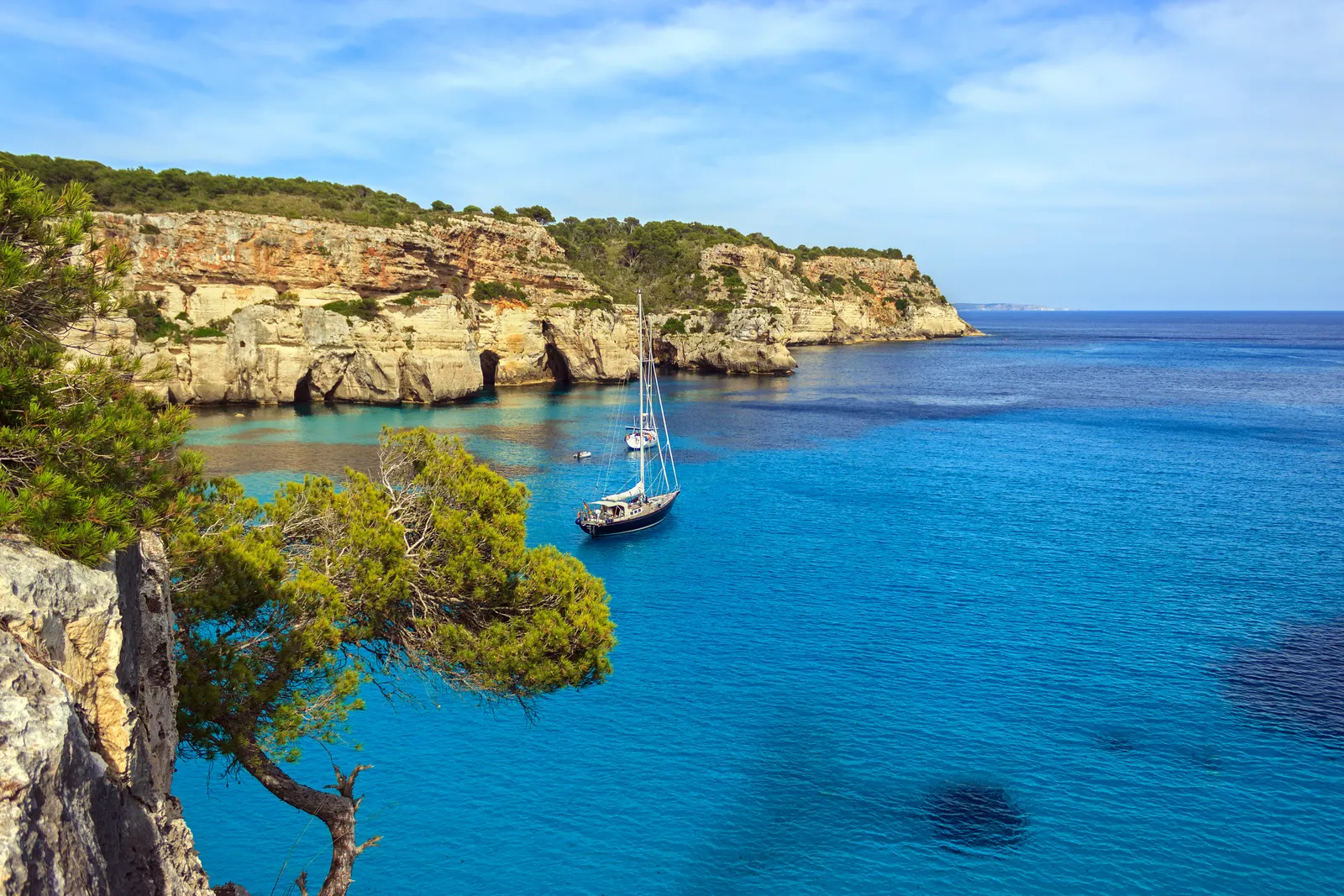
There is a Menorca you cannot see from the road. It isn’t in the dirt car parks or at the end of the footpaths: it lies on the far side of the coastline, where the cliff opens into caves, where the water shifts from turquoise to ink-blue in a matter of metres, and where entire coves exist only for those who arrive afloat. That is the island you discover from the sea, and it is, without question, the most intimate version of Menorca.
Sailing here is neither a sport nor a pose. It is a way of looking. From a boat, the coast stops being a destination to reach and becomes a landscape that glides past: the lighthouse in the distance, the pine grove bent by the tramuntana, the cleft in the rock that hides an impossible pool. No crowd filters the experience, no schedule pushes you along. Just the hull on the water, the engine off the moment you can manage it, and the silence the sea gives back when you leave it in peace.
This is a considered guide to experiencing Menorca from the water with the calm it deserves: how to choose your boat, when to set out, where to anchor without harming anything and, above all, how to turn a day’s sailing into something slow, sensory and memorable rather than a race between coves with your phone in hand.
The essentials
- How: boat hire with a skipper (no licence needed, someone else takes the helm) or bareboat (a nautical qualification is required), or organised excursions that depart from Ciutadella, Fornells and Maó.
- Where to set off: the three main ports —Ciutadella (west), Maó (east) and Fornells (north)— open onto very different coastlines; choose according to the day’s wind.
- When: May to October for warm water; first thing in the morning or at sunset for the best light and the fewest people.
- The detail that matters: anchor only on sand or on eco-friendly buoys. Never on posidonia (the protected seagrass meadow that keeps the water crystal clear).
- Philosophy: silence, no trace, no rush. The luxury here is space and time, not speed.
Why see Menorca from the sea?
Because many of the island’s loveliest spots simply have no other way in. Coves with no path, caves only a small boat can peer into, stretches of untouched coast where there isn’t room for a parasol: the sea is the only key. And where there is access by land, the water offers the version without queues, without a hike under the sun and without the feeling of sharing paradise with two hundred other people.
But there is something deeper. From the sea, Menorca makes sense. You see how the pale, Caribbean-like south gives way to the dark, dramatic north; how the white cliffs of the south coast hide pine-filled gorges; how each cove has its own character depending on where the wind is blowing from. It is a lesson in geography and in calm at once. The island stops being a list of places and becomes one continuous landscape.
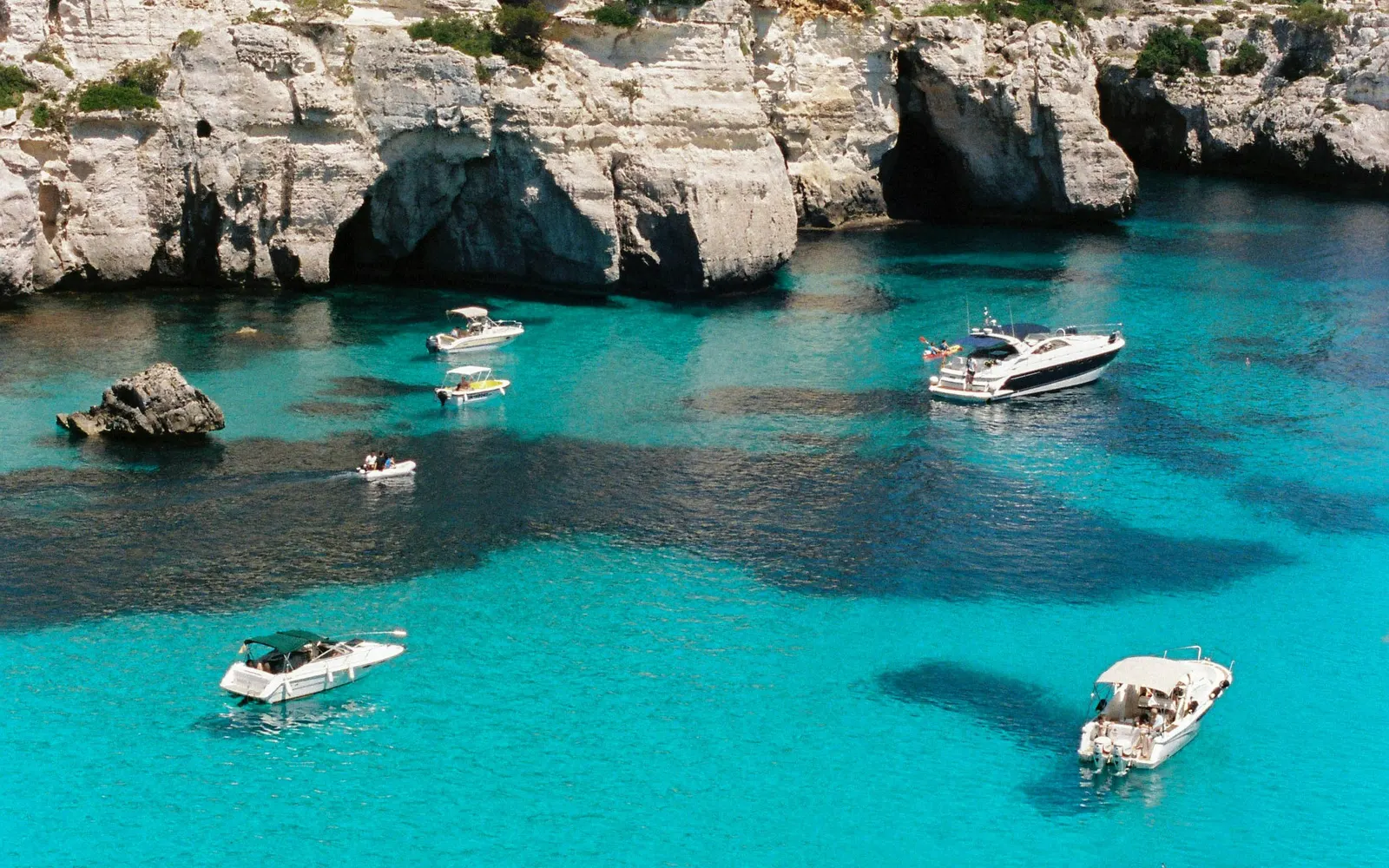
With a skipper, bareboat or on an excursion: which to choose?
The decision depends on your qualifications, your budget and, above all, the kind of day you’re after.
- With a skipper. The most comfortable option and, in the spirit of quiet luxury, the most recommendable for anyone who wants to switch off completely. No licence required: someone who knows the coast takes the helm, knows where to anchor without harming anything, and brings you to spots that don’t appear on any map. You just look. Ideal for a day with no responsibilities.
- Bareboat. For those with a nautical qualification who enjoy being in command. Total freedom of route and pace, but also all the responsibility: reading the wind, anchoring correctly, safety. It demands real experience, not improvisation.
- Organised excursion. Group departures from Ciutadella, Fornells or Maó, often aboard traditional boats or catamarans. The most affordable and sociable formula; less intimate, but a good first taste if you’ve never sailed these waters.
Whichever route you take, check current prices and conditions and book ahead in high season. Always ask whether the operator respects the anchoring zones and the posidonia: it’s the sign that you’ll be doing things properly.
Which port to set off from?
Each port opens onto a different Menorca, and the day’s choice should depend on the wind more than on convenience.
- Ciutadella (west). The gateway to the western south coast: coves of white sand and water of an almost unreal turquoise, such as Macarella, Macarelleta or Es Talaier. The classic choice for the turquoise postcard.
- Maó (east). One of the largest natural harbours in the Mediterranean, an experience in itself. From here you reach the coves of the southeast and a coast of great historical character.
- Fornells (north). The base for exploring the tramuntana: the wild coast of reddish sand, dark cliffs and a sea with real character. More demanding, more solitary, more spectacular when the wind eases.
The local rule is simple: in a strong tramuntana, avoid the north —the sea turns rough— and take shelter in the more protected coves of the south. In calm weather, the north is a gift few people claim. To choose your anchorage each morning, our where the sea is calm tool shows which coast lies sheltered from the wind.
One logistical note: if your day begins at the airport with your kit bags, we have a dedicated guide on getting to your boat in Menorca, port by port and marina by marina.
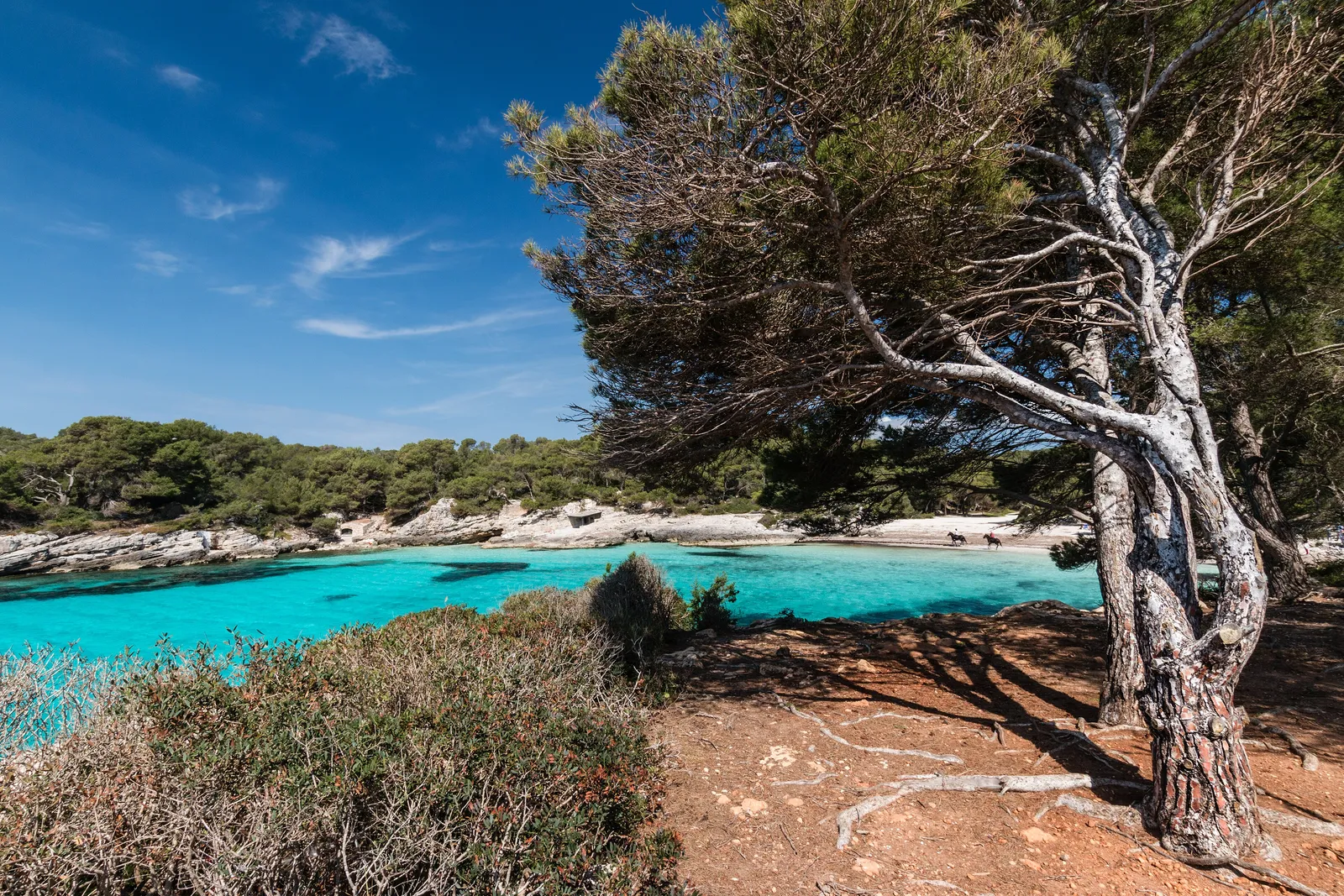
The gesture that defines a good sailor: respecting the posidonia
Here lies the difference between enjoying Menorca and damaging it. Posidonia is a marine plant —not a seaweed— that forms protected underwater meadows all around the island. It is the ultimate reason the water is so transparent: it oxygenates the sea, anchors the seabed and supports an extraordinarily rich marine life. It is, quite literally, responsible for the colour you came to see.
The anchor is its greatest enemy. When it bites into a meadow and drags, it rips out plants that take centuries to regrow. That is why the rule is clear and non-negotiable:
- Anchor only on sand —the pale seabed, free of dark patches— or on eco-friendly buoys installed for mooring without harming the bottom.
- Never drop anchor over the dark patches: that shadow beneath the water is living posidonia.
- If in doubt, approach slowly and look: Menorca’s water is so clear that you can see the bottom. That transparency is at once your guide and the very thing you are protecting.
Anchoring properly isn’t a nuisance: it’s the gesture that separates the traveller who respects the island from the one who merely consumes it. And it is, moreover, part of the luxury. A cared-for sea is a beautiful sea.
How to live the day calmly (and not as a race)
The most common mistake is treating sailing as a checklist of coves to tick off. Five anchorages, five photos, back to port exhausted. That is the opposite of what the sea offers. The Calma Society approach is precisely the reverse: fewer places, more time in each one.
Choose two or three coves, not ten. Anchor, switch off the engine and stay. Let the boat swing slowly on its mooring. Swim without hurrying, float looking up at the sky, eat on board with no eye on the clock. The silence a cove gives back when the engine falls quiet is one of the great luxuries of the Mediterranean, and it only appears if you stay long enough to hear it.
Set off early: the dawn water lies still as a mirror, the light is golden and the coves are still asleep. Or save the sunset, when the excursions return to port and the coast empties out for you. The middle hours, with the sun high and more boat traffic, are the least rewarding. Calm has its hours, and they are almost never midday.
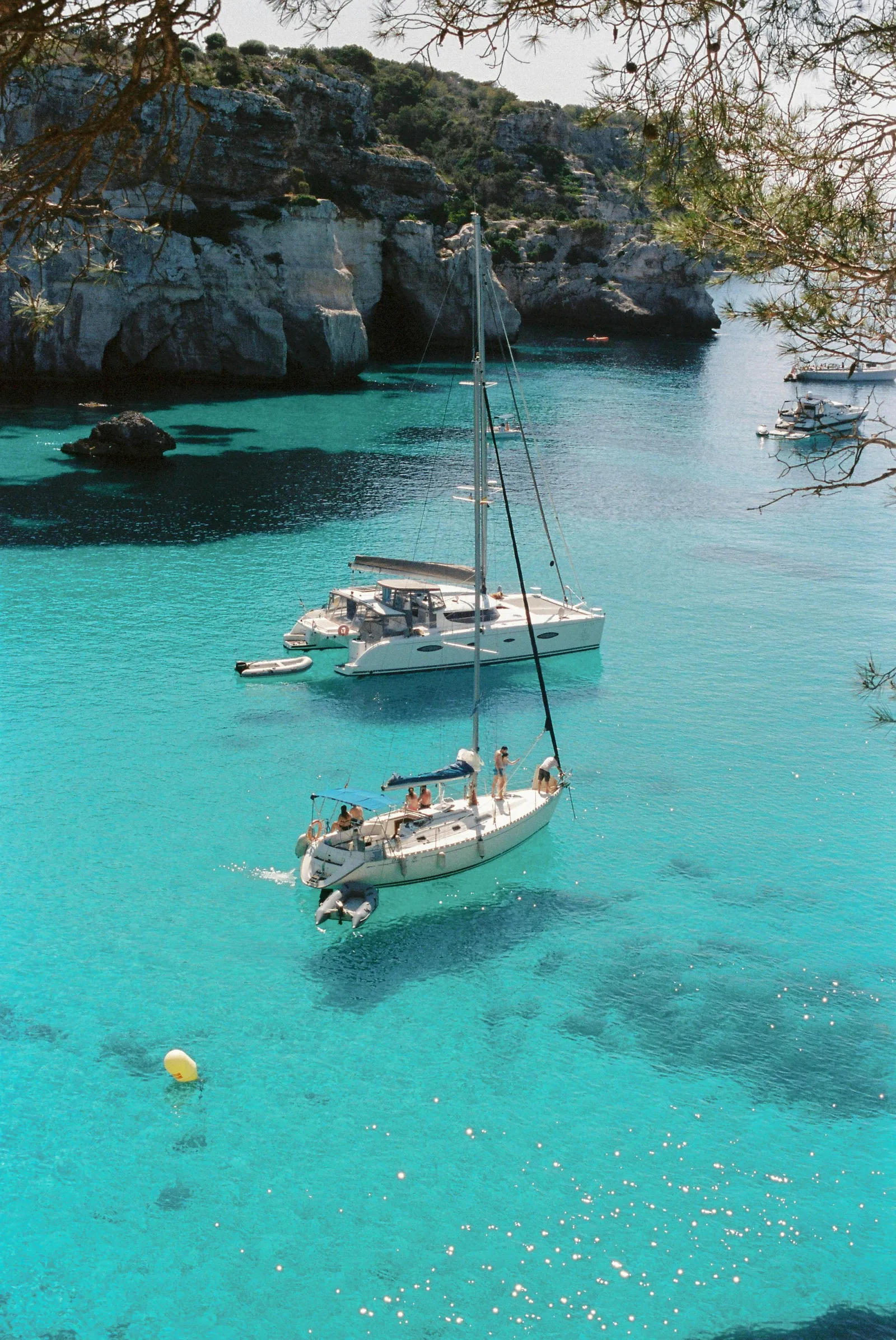
Details that turn a swim into a memory
The sea is experienced through all five senses, and good sailors know it. Take less than you think you need: a towel, plenty of water, fruit, some Mahón-Menorca DOP cheese and bread for a picnic on board. Simplicity, here, is elegance.
Snorkelling is all but compulsory: at the rocky ends of each cove, where the posidonia and the rock meet, marine life is abundant and the water of a clarity that looks retouched. Dive in from the bow when the sun is high and you’ll see the bottom several metres down. Afterwards, stretch out on deck to dry in the sun with no sound but the water against the hull. You need nothing more.
And a mark of respect that is also a matter of style: silence. Nothing ruins an unspoilt cove faster than the blaring music of a neighbouring boat. Sailing calmly means letting the place sound like what it is —water, wind, gulls— and not imposing your own soundtrack on it.
Leaving no trace: the golden rule
What comes onto the boat leaves with you. No exceptions. No plastics in the water, no cigarette ends, no food scraps. Many coves don’t even have a bin because they don’t even have a path: they are fragile precisely because they are intact. Bring a bag for your rubbish and leave the place as you found it, or better.
Respect, too, the protected zones and natural areas: part of the coast falls within areas of special protection, and some coves have anchoring or access restrictions in season. Check the current regulations before setting out, especially if you’re sailing bareboat. Respecting the rules isn’t bureaucracy: it’s what guarantees the next generation will find the same sea.
Our take
If you could do only one thing in Menorca, consider doing it from the water. A day on a boat —done well, slowly, with respect— is probably the most complete experience the island offers: it brings together landscape, swimming, simple food, silence and that rare sense of reaching places almost no one sets foot on.
Our recommendation is clear: if you can, go with a skipper and let yourself be carried; set off first thing; choose few coves and truly stay in each one; and always anchor on sand or an eco-friendly buoy, never on posidonia. Take little, do less, look more. The sea of Menorca rewards not the one who hurries, but the one who knows how to stay still. Cut the engine, stop making plans, and let the island, from the water, show you what the road never will.