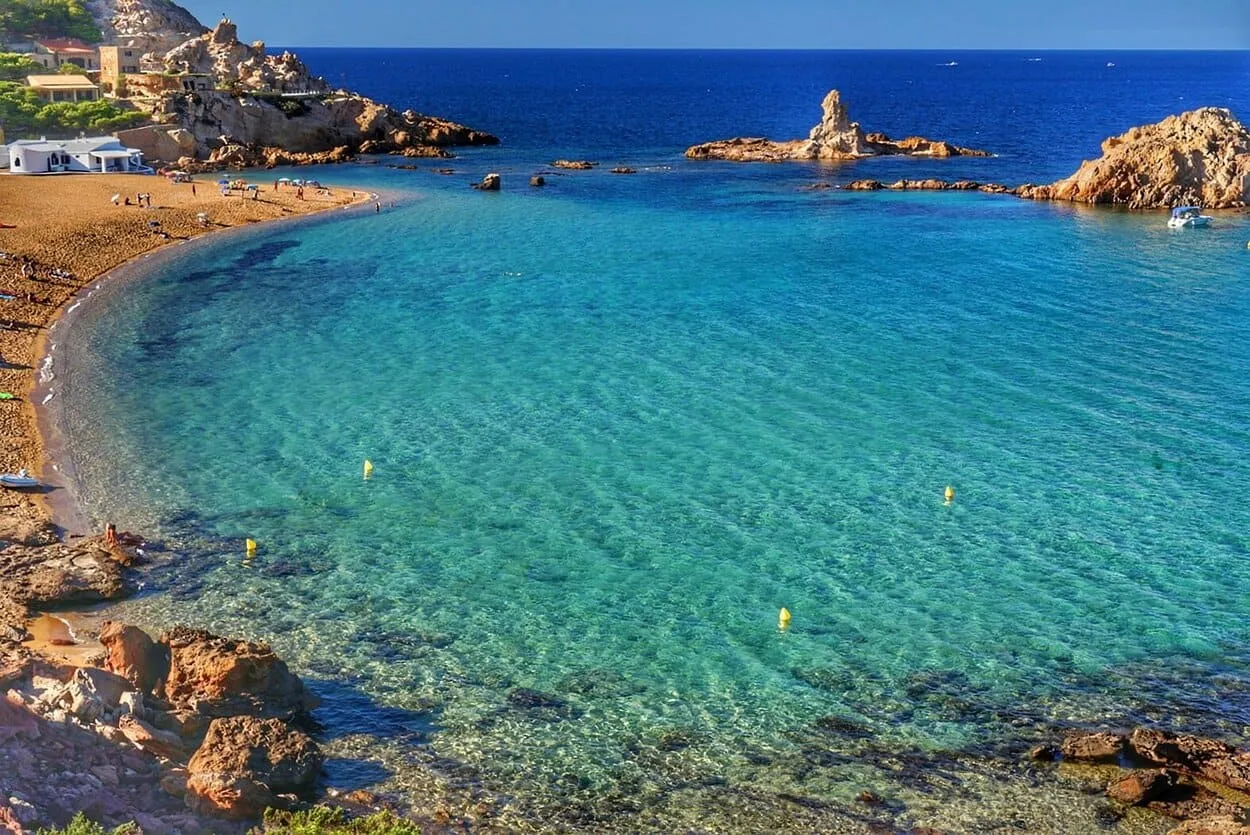
There is a Menorca that remains as it was a century ago: coves where there is nothing to rent, nothing to order at a bar and not a single roof on the shoreline. Just sand, rock, pine or scrub, and a sea that changes mood with the wind. Getting there means walking, and that is exactly why they have stayed this way.
Before the list, an honest warning almost nobody gives: virgin does not mean empty. Some of these coves fill up in high August just like the famous ones; others barely see a soul even in peak season. We say which is which, cove by cove, because promising solitude where there is none is the fastest way to lose your trust.
This guide crosses the whole island —south and north, from the south-west of Ciutadella to the natural park near Maó— with a single filter, applied against our own records for each cove. Twelve pass it. Not one more, not one less.
The essentials
- The criterion: virgin cove = no beach bar or facilities of any kind, no lifeguard, no buildings on the shoreline and access on foot only.
- How many qualify: 12, according to our records. Celebrated names like Pregonda and Cavalleria stop at the door (we explain why).
- Where they are: 2 in the south-west, 5 in the south-centre, 2 in the north and 3 in the natural park of the north-east.
- When to go: May, June and September; in August, only first thing in the morning.
- What to bring: plenty of water, your own shade, walking shoes, food and a bag for your litter. There is nothing waiting for you: that’s the deal.
- Safety: with no lifeguard there are no flags to check; be cautious with the sea and never swim alone.
The criterion, with no small print
“Virgin cove” is one of those labels that has been used so much it no longer means anything. Here we put it back in its place with four conditions, all checked against our place records:
- No beach bar, sun loungers, showers or bins: no facilities at all.
- No lifeguard: nobody watches the water (which also asks something of you).
- No buildings on the shoreline: no hotels, no development, no promenade.
- Access on foot only: the car stays behind; the walk is part of the price.
It is a stricter filter than usual, which is why this list doesn’t match our guide to the best calas in Menorca —a general ranking where virgin and developed coves live side by side— nor the northern coves, which covers a single coast. Here the four conditions rule, whoever falls: even Pregonda stays out.
In the south-west: the quiet neighbours of the famous ones
1. Cala des Talaier (Ciutadella)
Small, tucked-away and sheltered: pale sand, calm water and an islet just off the shore. It sits beside the Son Saura beaches, but it demands a walk, and that small toll leaves it noticeably less crowded than its neighbour. Bring a picnic, water and shade, because there is nothing here but the scenery. Cala des Talaier’s page.
2. Cala Macarelleta (Ciutadella)
Macarella’s small, intimate sister, on the far side of a rocky isthmus: intense turquoise, a tucked-away feel —partly naturist— and not a single facility of its own. Honesty required: it is the most famous cove on this list and in high summer it does not escape its fame; you reach it on foot from Macarella, and in August you should arrive first thing. More detail in our guide to Macarella and Macarelleta. Cala Macarelleta’s page.
In the south-centre: ravines, pine woods and white sand
3. Cala Mitjana (Ferreries)
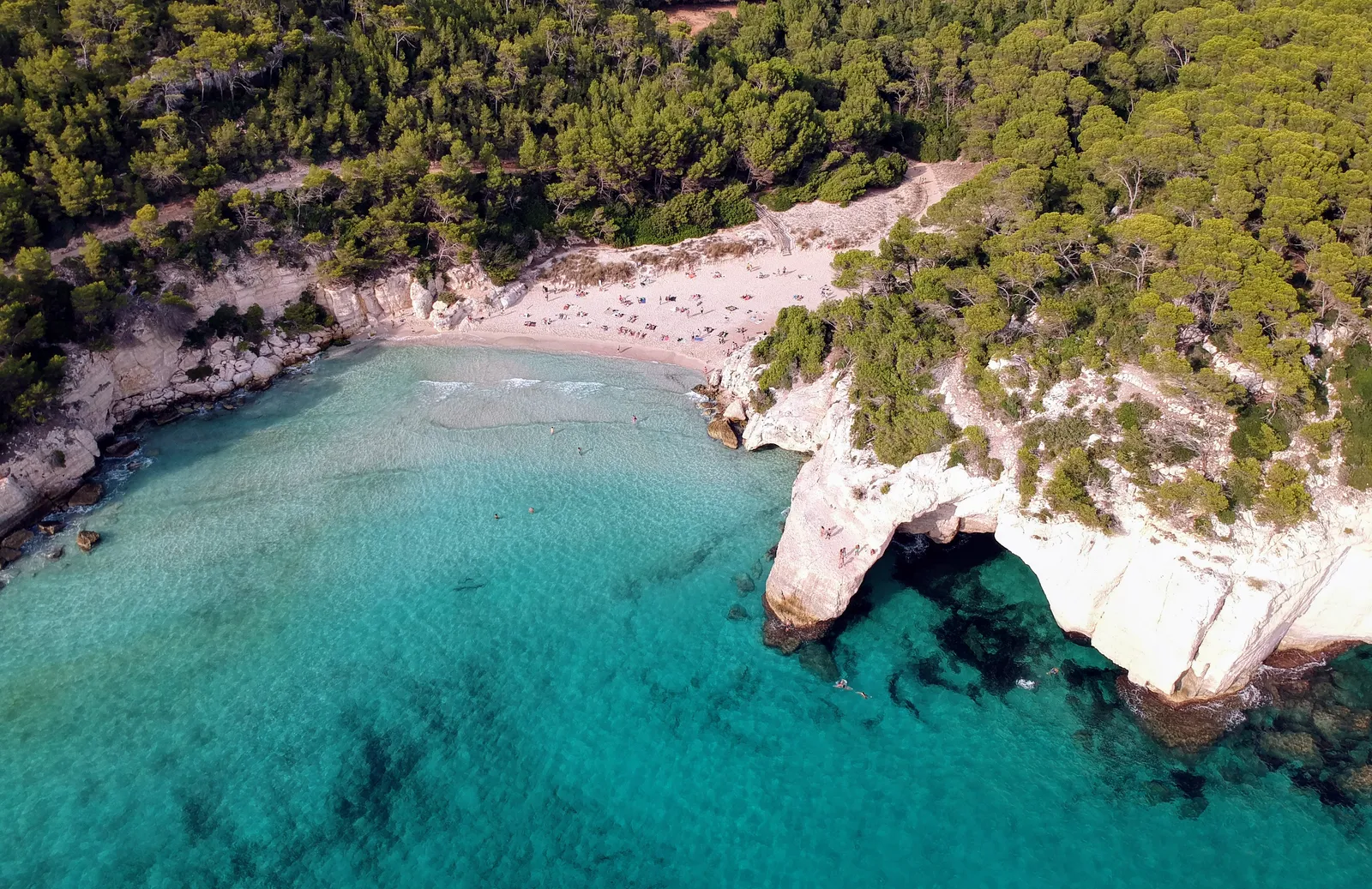
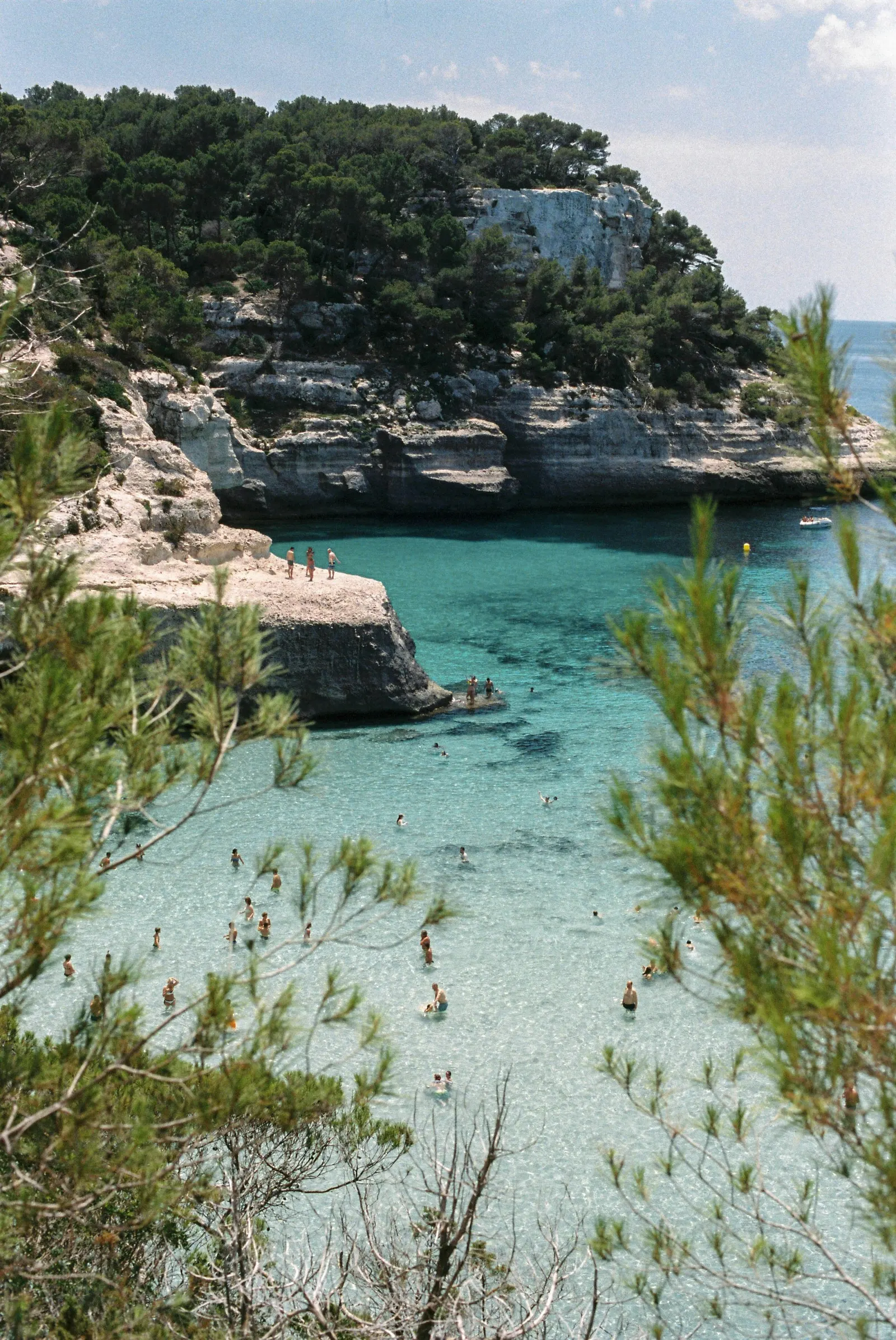
The island’s most approachable virgin cove: an easy walk of around 15 minutes through pine wood from the car park —which fills early in high season— and, at the end, a wide horseshoe of pale sand between cliffs that some dare to jump from. No facilities: bring everything you need. We’ve written an honest guide of its own. Cala Mitjana’s page.
4. Cala Trebaluger (Ferreries)
One of Menorca’s most beautiful virgin coves: white sand, limestone cliffs, pines down to the waterline and a small stream flowing out at one side. It can only be reached on foot —a demanding walk— or by sea, and that demand is what keeps it calm. No facilities of any kind: plan the walk back too. Cala Trebaluger’s page.
5. Cala Escorxada (Es Migjorn Gran)
An end-of-the-world feel: isolated, fine sand and clean water, almost always solitary. It is the reward for a good hike along the Camí de Cavalls and asks you to be entirely self-sufficient: no facilities, no shade, and the long walk home waiting. For those seeking true solitude, few compare. Cala Escorxada’s page.
6. Platja de Binigaus (Es Migjorn Gran)
A long virgin beach of golden sand and shallow, crystal-clear water, the natural continuation of Sant Tomàs: you walk in from there. Its western stretch, more secluded among vegetation and cliffs, is considered one of the island’s best for naturism. From the sand you can explore the Binigaus ravine and the Cova des Coloms. Platja de Binigaus’s page.
7. Cala de Llucalari (Alaior)
Son Bou’s hidden one: a short walk and this small cove appears, tranquil and little visited precisely because it has to be earned on foot. There is no beach bar and nothing else at the cove, so water and shade travel with you. Ideal for escaping the big beach without touching the car. Cala de Llucalari’s page.
In the north: red clay and solitude
8. Cala del Pilar (Ferreries)
One of Menorca’s wildest, most isolated beaches: golden sand beneath red clay cliffs and not a single facility. The long walk through pine wood and scrub filters out almost everyone, and in summer road access is regulated, with a shuttle bus instead. Arrive with nothing, leave with nothing: that is the experience. Cala del Pilar’s page.
9. Cala Mica (Es Mercadal)
The great unknown of the tramuntana coast: a shell-shaped cove of coarse sand and pebbles beside an old country house —the only built trace, and from another era—. It rewards those who extend the Camí de Cavalls beyond Cavalleria or Binimel·là. No facilities: water and shade, always. Cala Mica’s page.
In the north-east: the natural park
The last three share a guardian: the Parc Natural de s’Albufera des Grau, the heart of the Biosphere Reserve.
10. Cala Tortuga (Maó)
Golden sand beneath the lunar landscape of black slate around Favàritx, inside the natural park and without a beach bar in sight. Car access is restricted and in summer you arrive by seasonal bus from Maó, plus the final walk: that double filter guarantees its serenity. Cala Tortuga’s page.
11. Cala Presili (Maó)
Tortuga’s little neighbour, at the foot of the Favàritx lighthouse: a virgin swim in the middle of the natural park that most people pair with Tortuga on the same walk. Its quiet is guaranteed by the same access controls. Few postcards of Menorca are this austere and this emphatic. Cala Presili’s page.
12. Sa Torreta (Maó)
The most remote on the list and almost always deserted: it is earned after a long stage of the Camí de Cavalls from Es Grau, with the British defence tower that names it standing opposite the Illa d’en Colom. For hikers only, with no facilities whatsoever; the walk is the guarantee of solitude. Sa Torreta’s page.
The ones that stop at the door
A strict filter also proves itself by who it leaves out:
- Cala Pregonda: no facilities and half an hour’s walk from Binimel·là, but according to our records it has seasonal lifeguard cover. It misses one point of the criterion; not one ounce of beauty.
- Platja de Cavalleria and Cala en Turqueta: wild scenery or postcard turquoise, but both are recorded with seasonal lifeguard cover.
- Son Saura del Sur: pine wood, open sand and a walk, but with lifeguard cover according to our records.
- Cala Algaiarens and Binimel·là: undeveloped, unspoiled settings, but you can drive almost to the sand: they fail the fourth point.
- Cala Roja and Platja d’en Ferragut: nearly always empty and with nothing in sight, but our records don’t yet confirm every point of the filter, so we name them without promising them.
How to go (and how to leave them as they are)
The same arithmetic rules them all: plenty of water, your own shade, closed walking shoes, food and a bag for your litter. There are no bins and no cleaning service; whatever comes in leaves with you. And since there is no lifeguard, there are no flags either: take extra care, never swim alone and give up on swimming in rough seas.
The wind decides the day. With a strong tramuntana, the coves of the north and north-east turn inhospitable and the south is the answer; in calm weather, they are a gift. Our tool showing where the sea is calm tells you each morning which coast is sheltered. And if you want to link several on foot, the Camí de Cavalls is the thread that stitches them together.
These twelve coves are half the story of the quiet Menorca. The other half is the famous beaches —Macarella, Turqueta, Mitjana included— and the exact hour at which they stop being full: that is precisely what the Society’s free guide covers, Menorca’s famous beaches, and how to see them without the crowd. Ask for it and we’ll send it to your inbox — judgement, not noise.