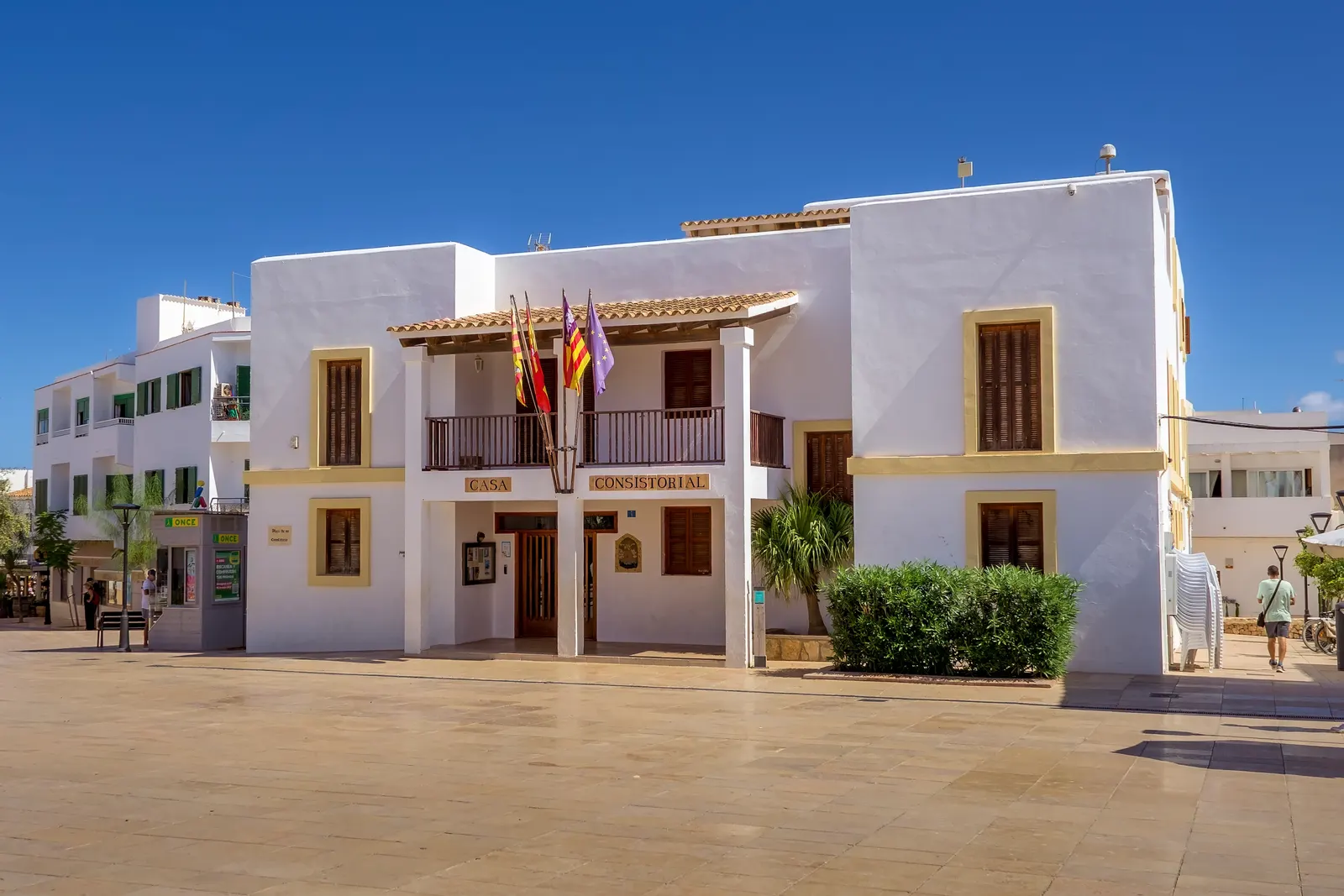
The capital of Formentera is a small village with a square, and that is all the grandeur it has. Most visitors cross it on the way to the beach. It is a cheap mistake to correct.
The church
The first thing you notice is that the church looks like a small fort — because it was one: thick walls, few windows, the air of a refuge rather than a temple. This is not an aesthetic whim. Formentera was left unpopulated for centuries because of pirate raids, and when it was resettled, the buildings were made with that in mind. The church was where you shut yourself in.
Understanding this changes how you see the rest of the island: Formentera’s traditional architecture — the white, massive farmhouse with minimal openings — answers the same logic of shelter, not a decorative style.
The village today
Sant Francesc is where the administration is, the market, the shops that open in winter and a good share of the restaurants that work all year. It is, quite simply, where the island lives out of season.
In summer it also holds the craft market and is the epicentre of the festivals: 25 July, Sant Jaume’s day, is the Diada de Formentera and everything happens here.
What to do, honestly
Not much, and unhurried: the square, the church, a coffee, the market if it is on. Half a morning is enough. What you take away is not a list of monuments but the real measure of the island — which is what is hard to see when you go straight to the beach.
When
Any day of the year. It is one of the few places on Formentera that does not close in winter, and in January, with the square empty, it makes more sense than in August.