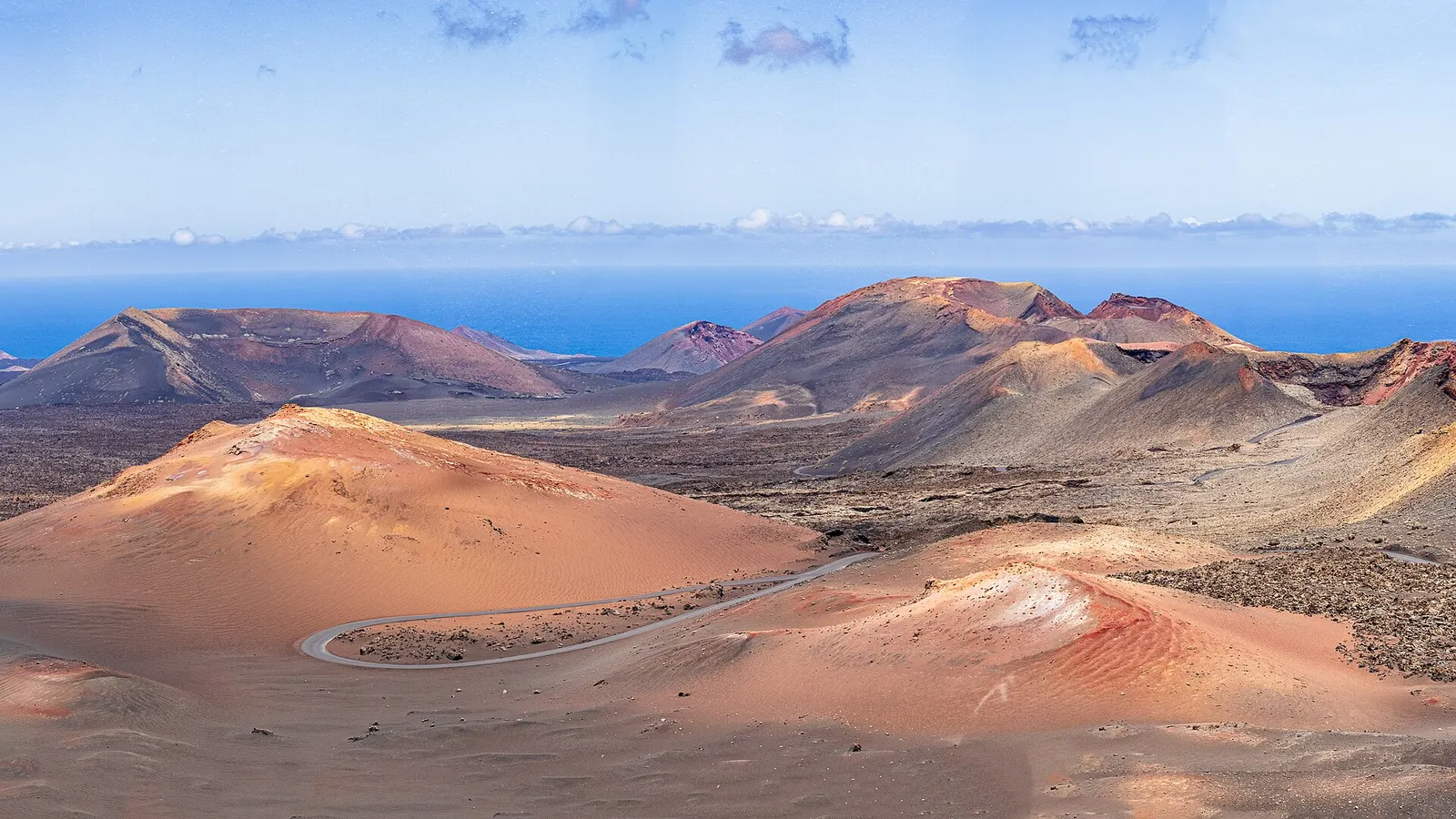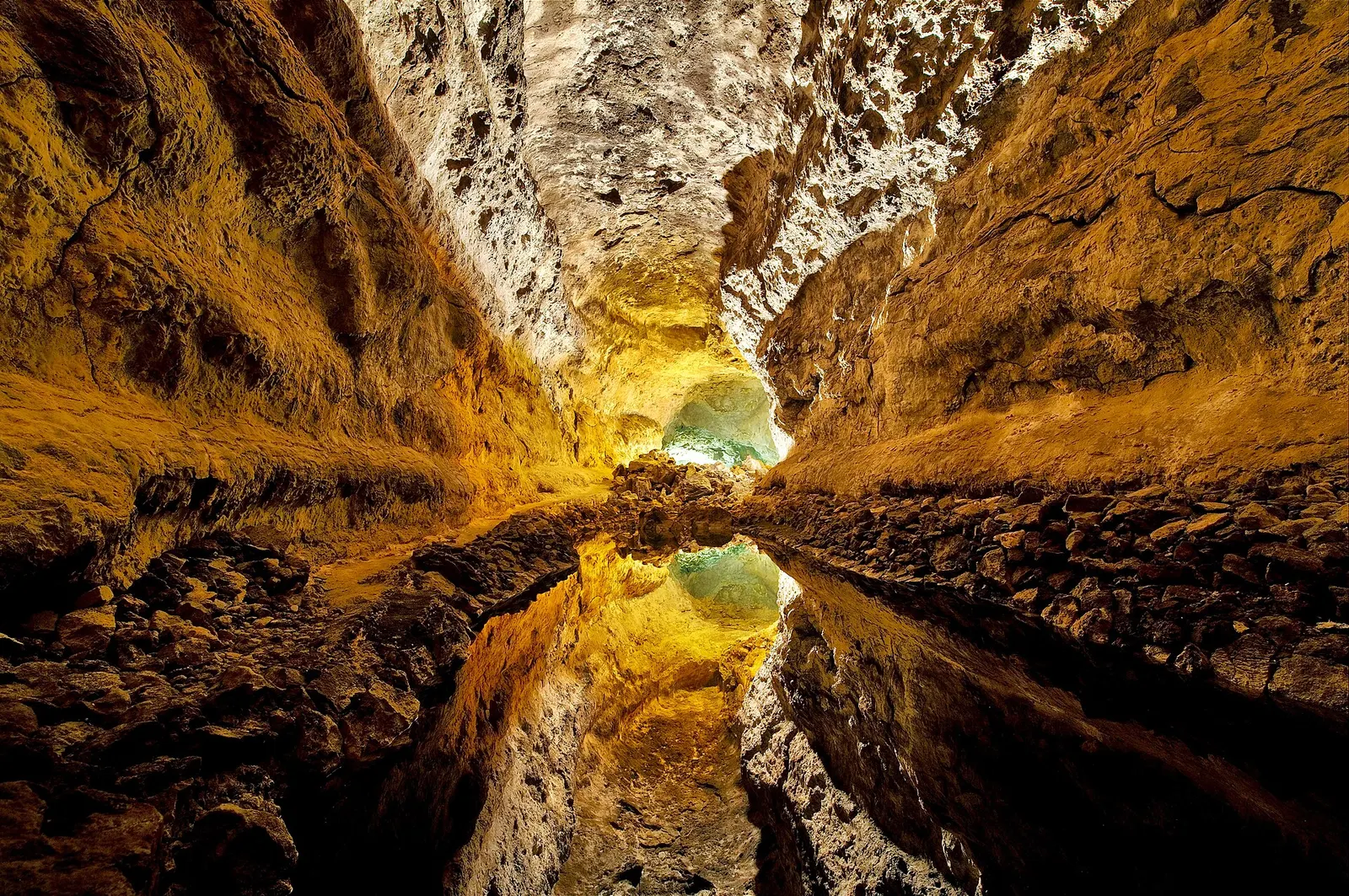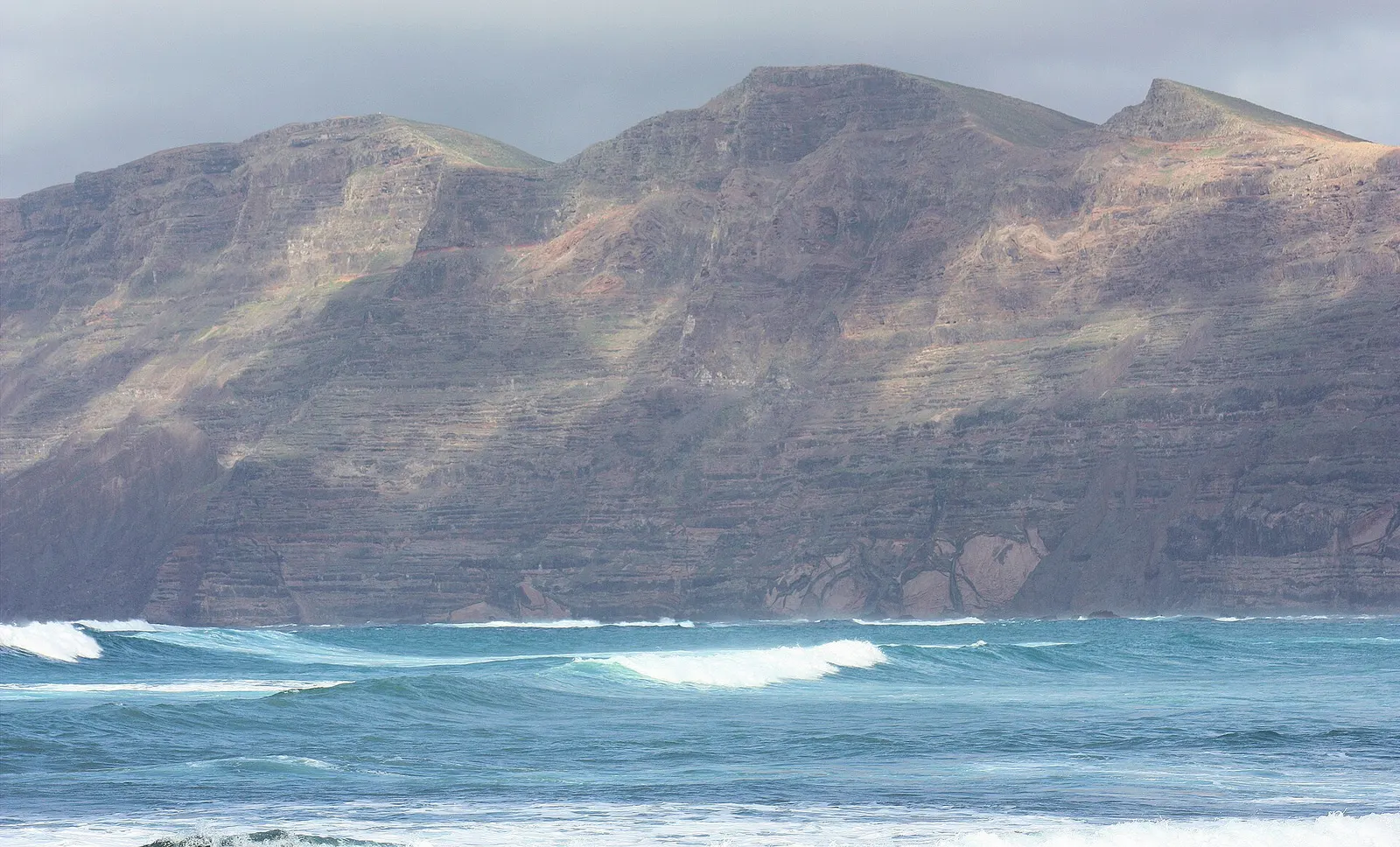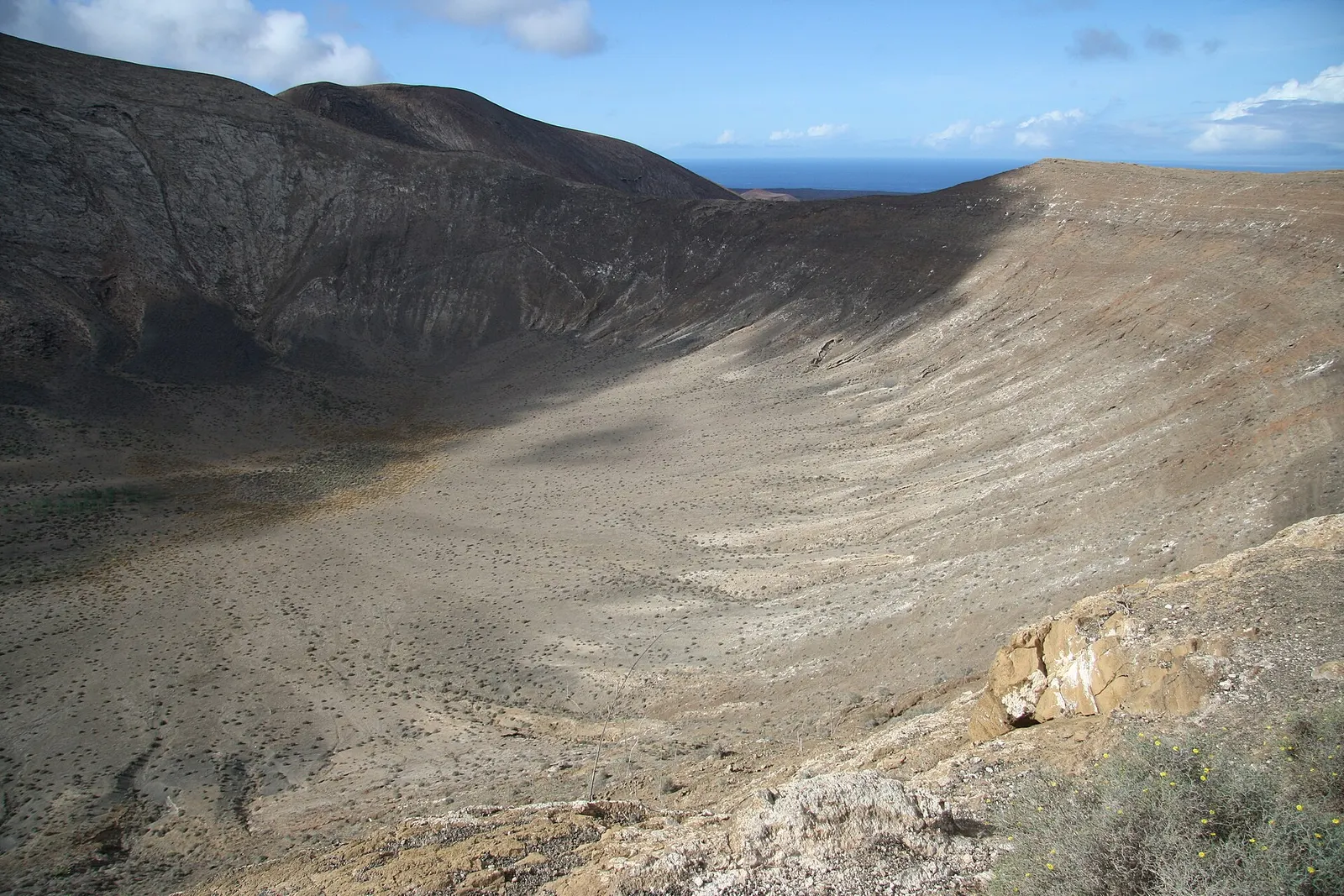
Anyone who arrives in Lanzarote wanting to set foot on a volcano tends to hit the same wall: Timanfaya cannot be walked freely. The answer lies a few kilometres further north, and it is better than it sounds. Caldera Blanca is climbed on foot, with no ticket or booking, along a waymarked trail that crosses a lava field before climbing to the rim of a crater more than a kilometre across.
The essentials
- Where: in the Los Volcanes Natural Park, next to Mancha Blanca (Tinajo), outside Timanfaya National Park.
- Access: free, with no ticket or booking, always on the waymarked trails.
- The route: circular, about 10 kilometres; three to four hours with stops.
- What to bring: plenty of water (no fountains, no shade), hiking boots and a warm layer.
- When: first thing in the morning, for the light and the heat.
Two protected areas, two sets of rules
Worth getting straight before you lace up, because it decides what you may do:
- Timanfaya National Park. No open access on foot. Visited on the Ruta de los Volcanes or on booked guided walks.
- Los Volcanes Natural Park. It borders the National Park, and this is where Caldera Blanca stands. Here you may walk freely, always on the waymarked trails.
From the top you see both at once: the pale cone beneath your feet, older, and beyond it the black lava of the 1730–1736 eruptions, which flowed around it without ever burying it. That contrast — an old, light-coloured volcano in a dark, recent sea — is what gives the walk its name and its meaning.
The route
The trail starts on the edge of Mancha Blanca, in the municipality of Tinajo. Directions to the exact starting point vary from source to source: some walkers park on a patch of open ground by the start of the path, others leave the car in the village streets. The sensible thing is to park where you’re not in the way and follow the trail markers.
It is a circular route of about 10 kilometres, taking three to four hours with stops. The first stretch crosses the malpaís on a marked path between blocks of lava; the second is the climb to the crater rim, steeper and on loose ground. At the top, the walk along the edge of the caldera is what makes the day: the open crater below, the Atlantic to the north and the mountains of Timanfaya to the south.
It isn’t a technical route, but nor is it a stroll: volcanic ground is hard on ankles and on light shoes.
What to bring (and what not to)
- Plenty of water. There are no fountains anywhere on the route and no shade worth the name.
- Walking boots and a warm layer: the wind blows up top, and in Lanzarote it nearly always does.
- An early start. The first hour of the morning brings the loveliest light on the lava and the most bearable heat. By midday the dark rock throws the sun straight back at you.
And what not to: don’t leave the trail for a shortcut or a photograph, because lava keeps footprints for years. Nobody takes volcanic stones home as souvenirs. No drones over the protected area, and no camping. These rules protect exactly what you came to see.
Where it fits in your trip
Caldera Blanca takes a whole morning and leaves you with tired legs and a clear head. In the afternoon, something calm and nearby works best: head south-west to watch the sun go down over Los Hervideros and El Golfo, or save Timanfaya for the next day and compare the two ways of looking at a volcano — from inside a coach, and with your feet on it.
Access information as of October 2026. Before you go, check the trail’s status with the Cabildo de Lanzarote: after rain or storms there may be temporary closures.