In the north of Lanzarote there is a place where the island breaks off. The Famara cliffs drop sheer onto a long beach open to the Atlantic, and at one end of that beach sits a small village, Caleta de Famara, with sand streets and low houses turned towards the sea. It is not a sunlounger kind of place: it is a place of wind, long walks and watching the waves come in.
The essentials
- Famara is in Teguise, on Lanzarote’s north coast, facing La Graciosa.
- The cliff is the same one on whose edge the Mirador del Río stands.
- The beach is dangerous for swimming: Teguise Town Council warns of waves and currents. Always follow the lifeguards.
- It is one of the island’s surf beaches, with schools on the sandy stretch and rocky breaks for experts.
- The landscape lies within the protected area of the Chinijo Archipelago and the Famara cliffs.
The cliff
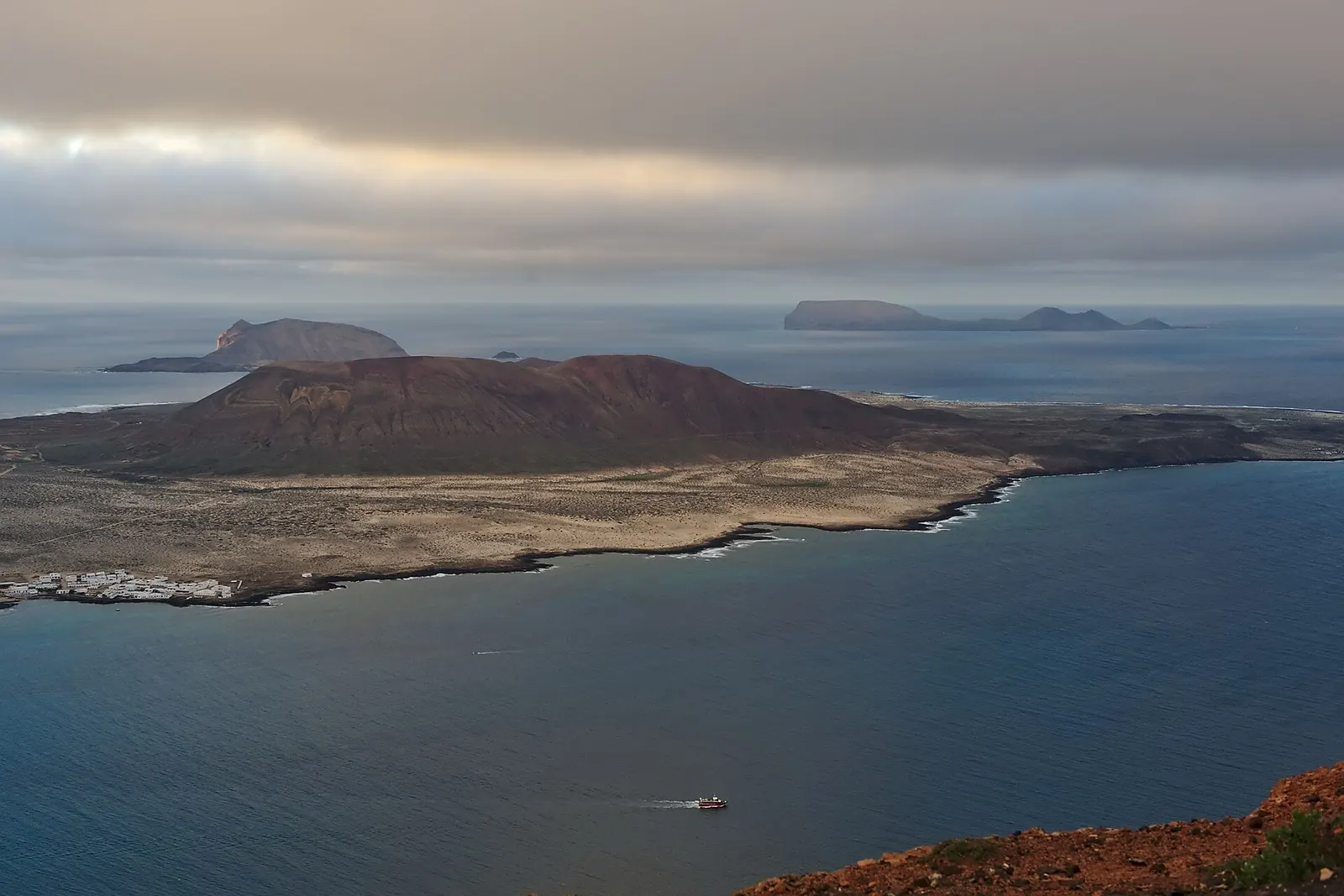
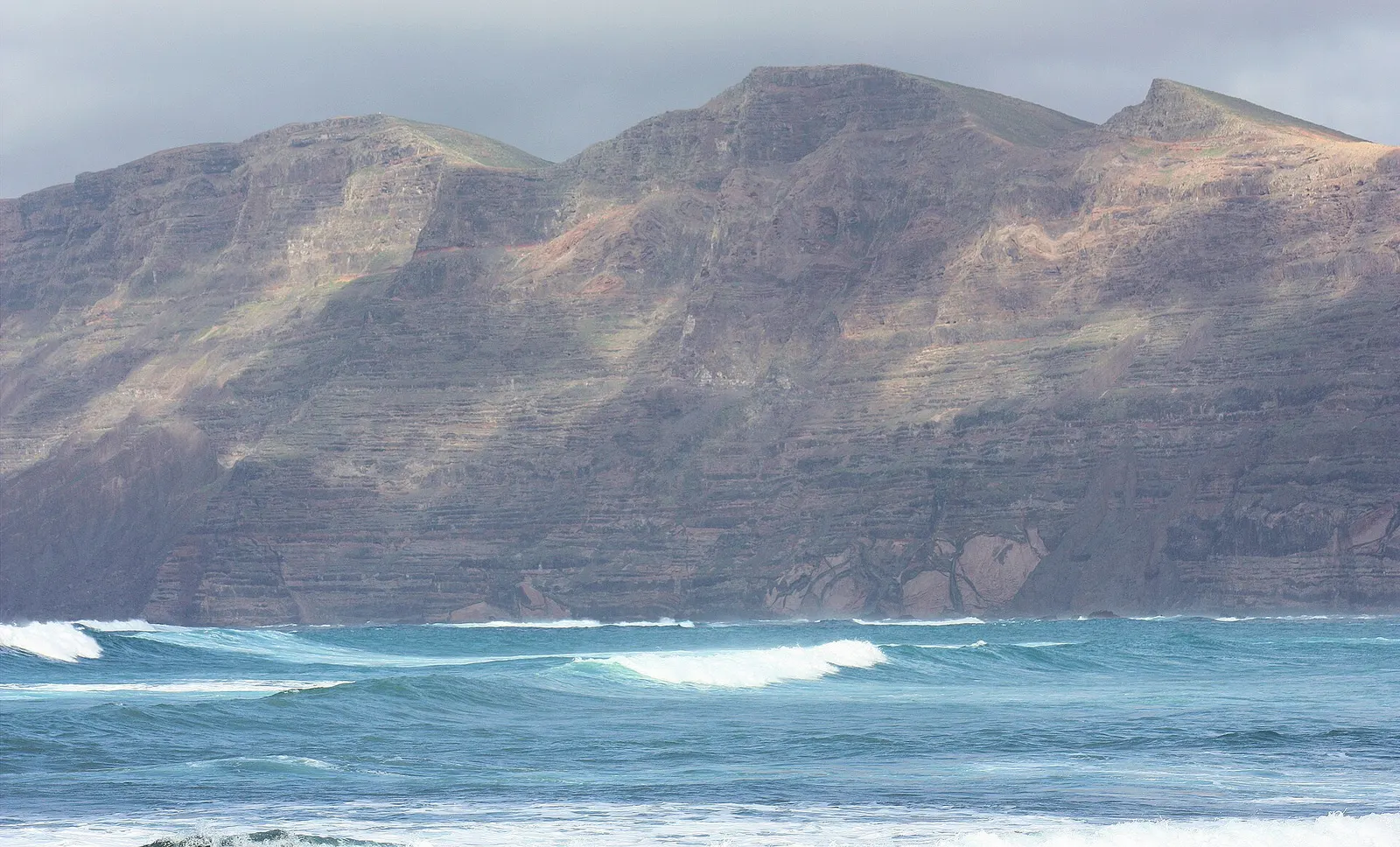
Seen from the sand, the cliff is a wall of volcanic layers, hundreds of metres of rock laid bare by wind and time. Up on the edge is the Mirador del Río, which César Manrique set into the rock to look out over the strait and La Graciosa. Down below, the same landscape reads the other way round: the walker small, what towers above immense. The viewpoint and the rest of the north are in northern Lanzarote: Haría, the valley of palms and the Mirador del Río.
In the late-afternoon light the cliff turns copper and La Graciosa stands out in the distance. That is Famara’s moment.
The beach
Famara beach is long, wide and exposed. When the tide comes in, the sand disappears under water along some stretches and the waves reach the callaos, the rounded volcanic pebbles of the shoreline. Check the tide before setting off, and do not get caught between the water and the rock.
Teguise Town Council classes it as a dangerous beach because of waves and currents and asks bathers to follow the lifeguards’ instructions. This guide is clear: Famara is for walking, looking and surfing with judgement. Swim only in a supervised area, with a flag that allows it and a calm sea. Never alone, never in a heavy swell.
And the usual Canary Islands rule: the callaos, the stones and the sand stay where they are.
Surfing as a way of life
Famara is one of the names in Canary Islands surfing. Schools work mainly in the middle of the beach, where the bottom is sand and there is room. Near the village there are breaks with a rocky bottom and currents that are not for beginners: if it is your first time, go with a school. If you are an experienced surfer, still ask in the village before paddling out; the sea here does not forgive overconfidence.
Caleta de Famara
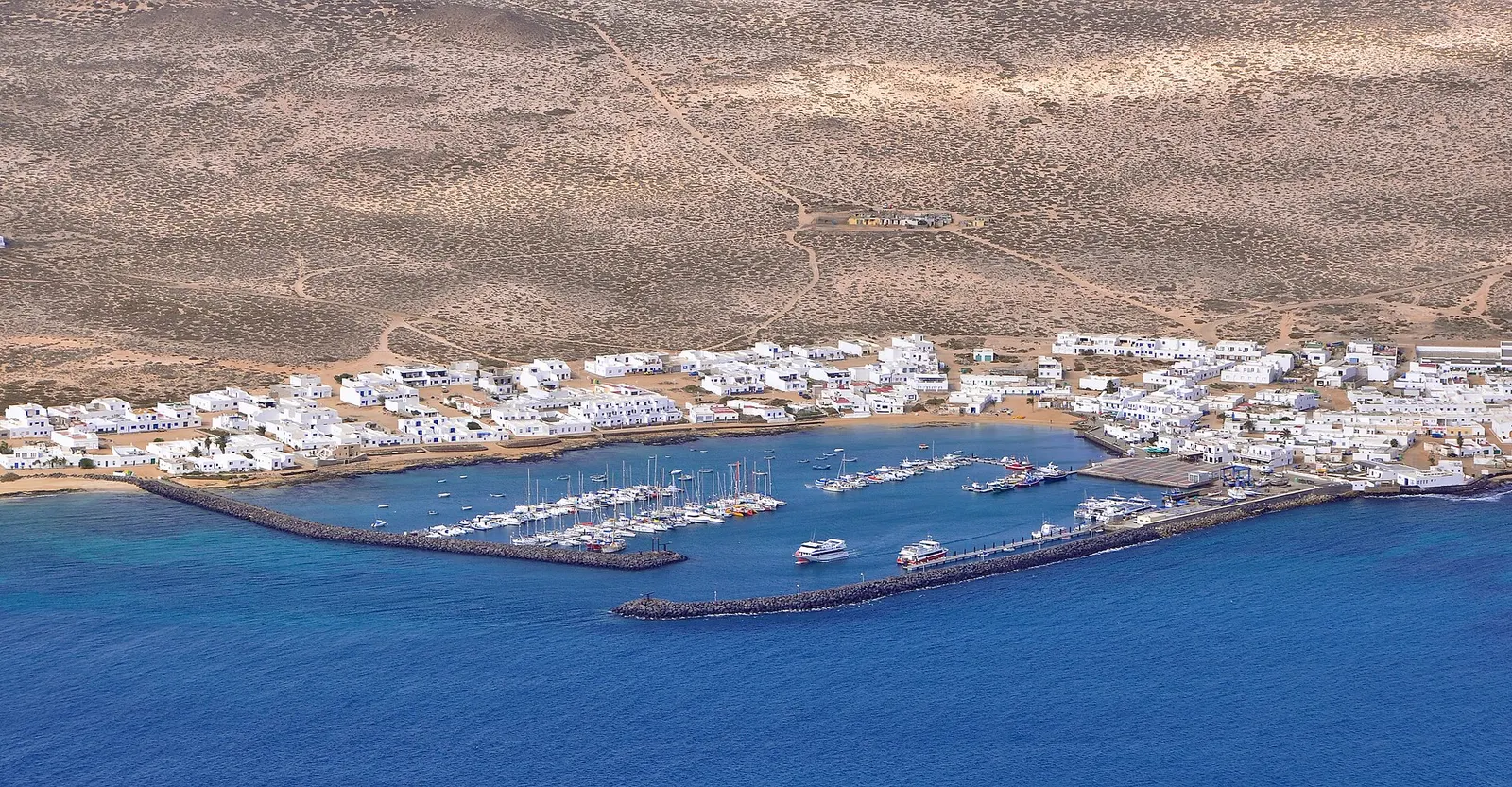
La Caleta began as a fishing village and still keeps the essentials of those days — the sand streets, the small harbour, the white houses — alongside surf shops, terraces and fish restaurants. It takes a short while to walk round and you stay longer than planned. Come unhurried, early or late in the afternoon, and find a table looking at the cliff.
From above and from the water
The same landscape has two other viewpoints. From the water, with the marine reserve ahead: Lanzarote from the water: sailing the Chinijo Archipelago. And across the strait, the island you can see from the Caleta: La Graciosa: the island where the streets are sand.
Our view
Famara is not a beach for sunbathing: it is a beach for understanding Lanzarote. Walk it at low tide, sit in the Caleta when the cliff lights up and leave the swim for another day if the sea says so. Here, respect for the Atlantic is part of the luxury.
Facts checked on 20 October 2026 with Teguise Town Council and the Lanzarote Art, Culture and Tourism Centres. Information as of October 2026: sea conditions change daily, so ask the lifeguards before going in.