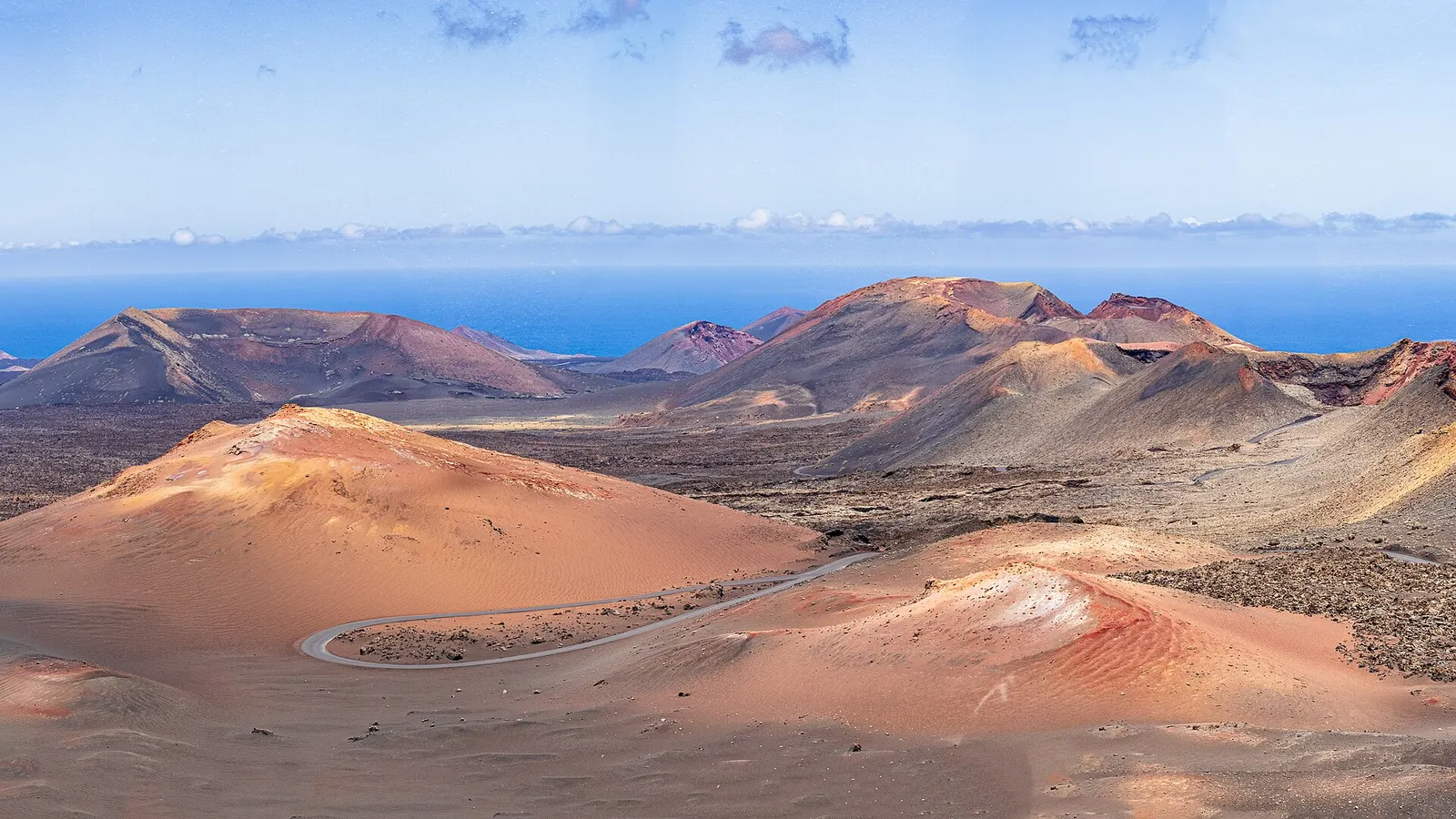
Between 1730 and 1736, Lanzarote erupted for six years. What was left south of Tinajo and north of Yaiza is now Timanfaya National Park: a sea of lava, rust-red cones and black ash where almost nothing has grown back. It is the landscape most people come to see — and the one least understood before they arrive.
The essentials
- The rule: inside the National Park there is no free access on foot, and you may not stop or get out of the car on its roads.
- How to get in: on the Ruta de los Volcanes, from Islote de Hilario (Montañas del Fuego), or on a guided walk run by the National Park.
- Tickets: online, with a date and time slot, on the Cabildo’s CACT website; best booked ahead. Prices on the official channel.
- Guided walks (such as Tremesana): very small groups, booked in advance at the Mancha Blanca Visitor Centre.
- To walk on lava freely: Caldera Blanca, outside the National Park.
The rule comes first
Timanfaya cannot be walked freely. There is no open access on foot inside the National Park, and on the roads that cross it you do not stop or get out of the car. This is not bureaucracy for its own sake: volcanic ground is fragile, the life now colonising it is slow, and a footstep in the wrong place stays visible for decades.
There are two legitimate ways in:
- The Ruta de los Volcanes, from Islote de Hilario in the Montañas del Fuego.
- The park’s own guided walks, booked in advance.
And a third, simpler rule: nobody takes a stone from here — no lava, no ash, not even as a keepsake.
Montañas del Fuego and the Ruta de los Volcanes
Access is through Islote de Hilario, home to the visitor centre. Tickets are sold online only, for a set date and time slot, on the website of the Cabildo’s Centres of Art, Culture and Tourism (CACT Lanzarote). Book ahead rather than turning up on the off chance. We don’t quote prices — they change and sources disagree — so check the official channel before you go (information as of October 2026).
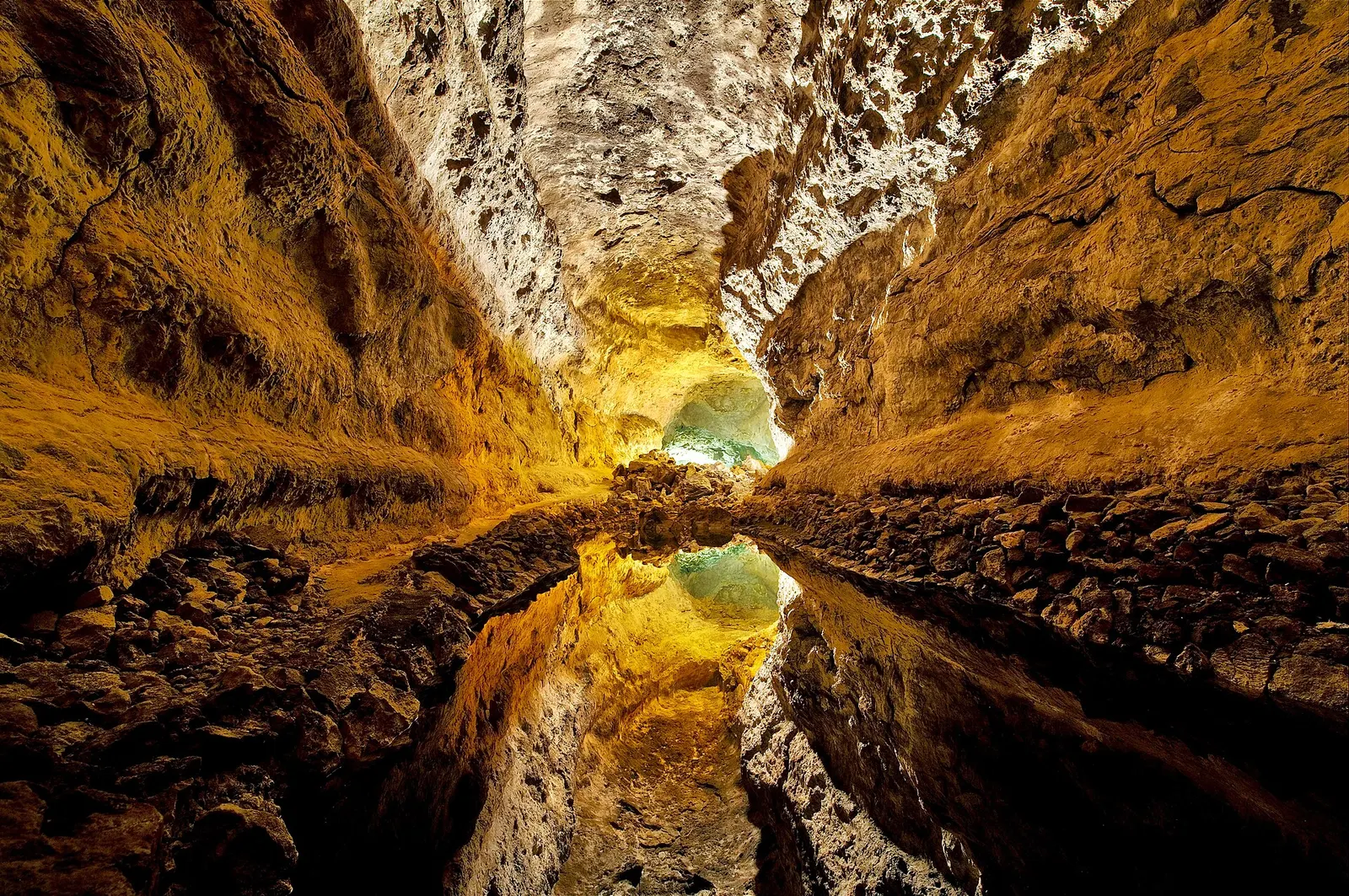
From there the Ruta de los Volcanes sets off: around 14 kilometres through the heart of the park on the official coach, with recorded commentary. You stay on board for the whole route. It may sound restrictive for such a vast landscape, but the logic holds: it is the only way to see the core of the park without leaving a mark on it. Look out of the window rather than at a screen; the road winds between craters, lava flows and lava tubes you won’t see from anywhere else.
The heat below
Beside the visitor centre, park staff run the geothermal demonstrations: water poured into a pipe returns as a burst of steam; dry brushwood bursts into flame when held near the ground. It is repeated many times a day and still works — a reminder that the volcano isn’t dead, only quiet.
On the same islet is El Diablo, the restaurant designed by César Manrique, where food is grilled over heat rising from the ground. It rewards a slow look more than a quick meal: the windows open onto the mountains.
Walking it, with a guide
For those who need to set foot on the volcano, the National Park runs guided walks, such as the Tremesana route, in very small groups and booked through the Mancha Blanca Visitor and Interpretation Centre. Places are few, departure days vary, and it is wise to ask weeks ahead; confirm directly with the centre before you go.
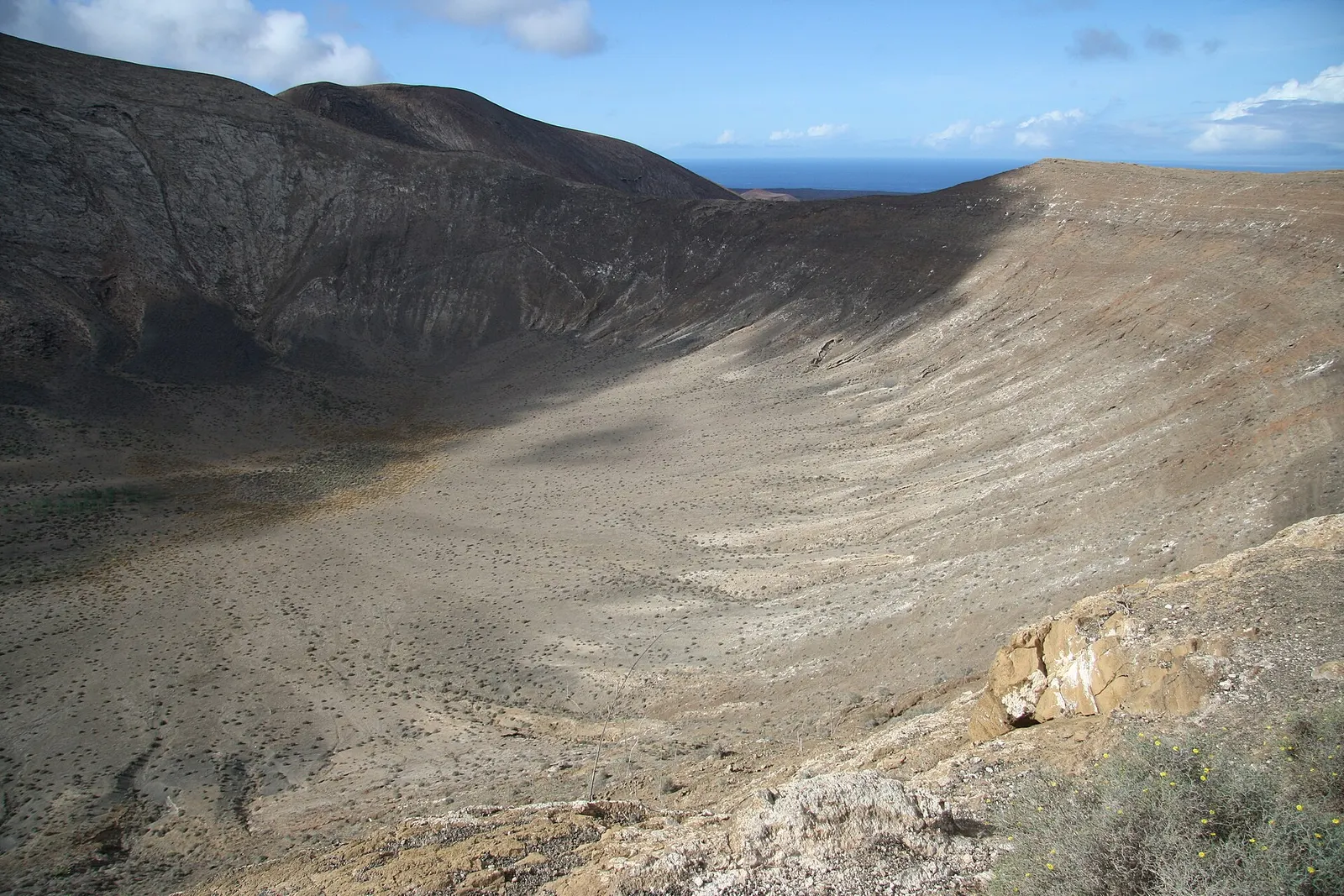
If what you want is an unguided walk over lava, the answer lies outside the National Park: Caldera Blanca, in Los Volcanes Natural Park, can be climbed on foot with no booking.
How to take it calmly
- The first slot of the day. Fewer coaches, cleaner light on the red of the cones.
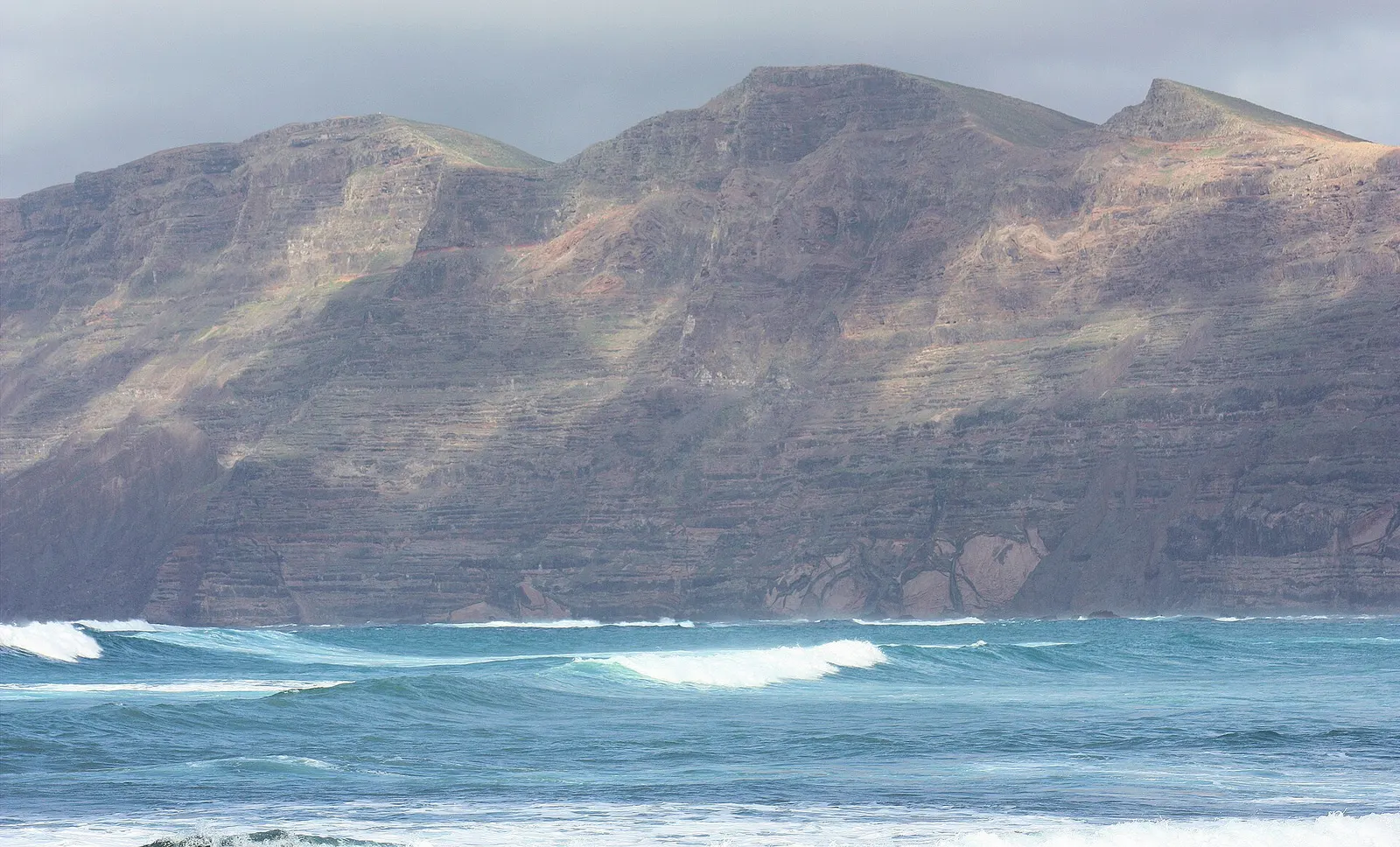
- Don’t stack it with everything else. Timanfaya tires the eye; keep the afternoon for something slow. The coast of Los Hervideros and El Golfo is close by and the natural end to the day.
- Add La Geria. The vineyard dug into the ash of those same eruptions is the volcano’s other face — the face of the people who stayed to farm it. We tell its story in La Geria, the vineyard born from ash.
- Bring water and a layer. The sun beats down on dark rock, but higher up the wind cools you quickly.