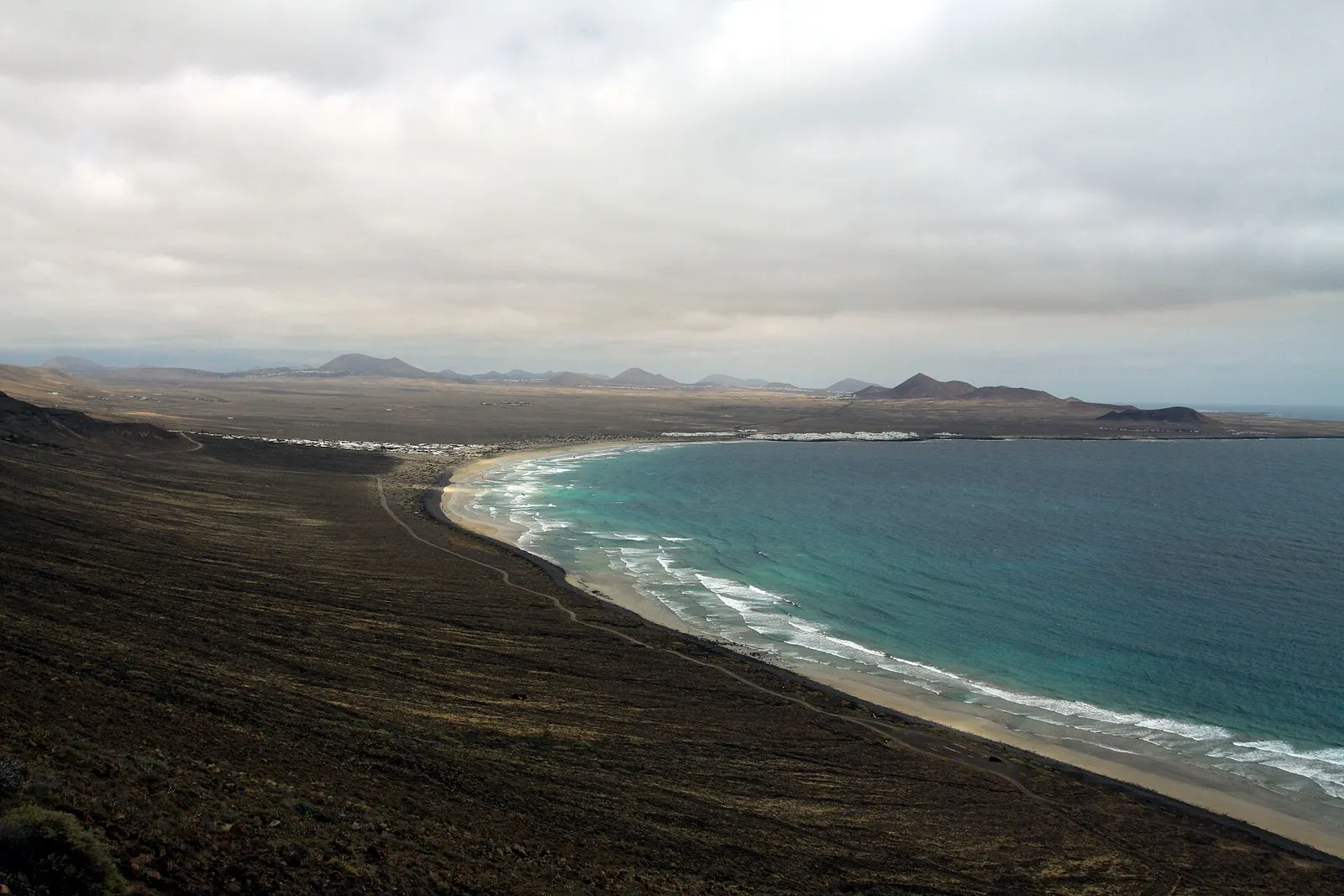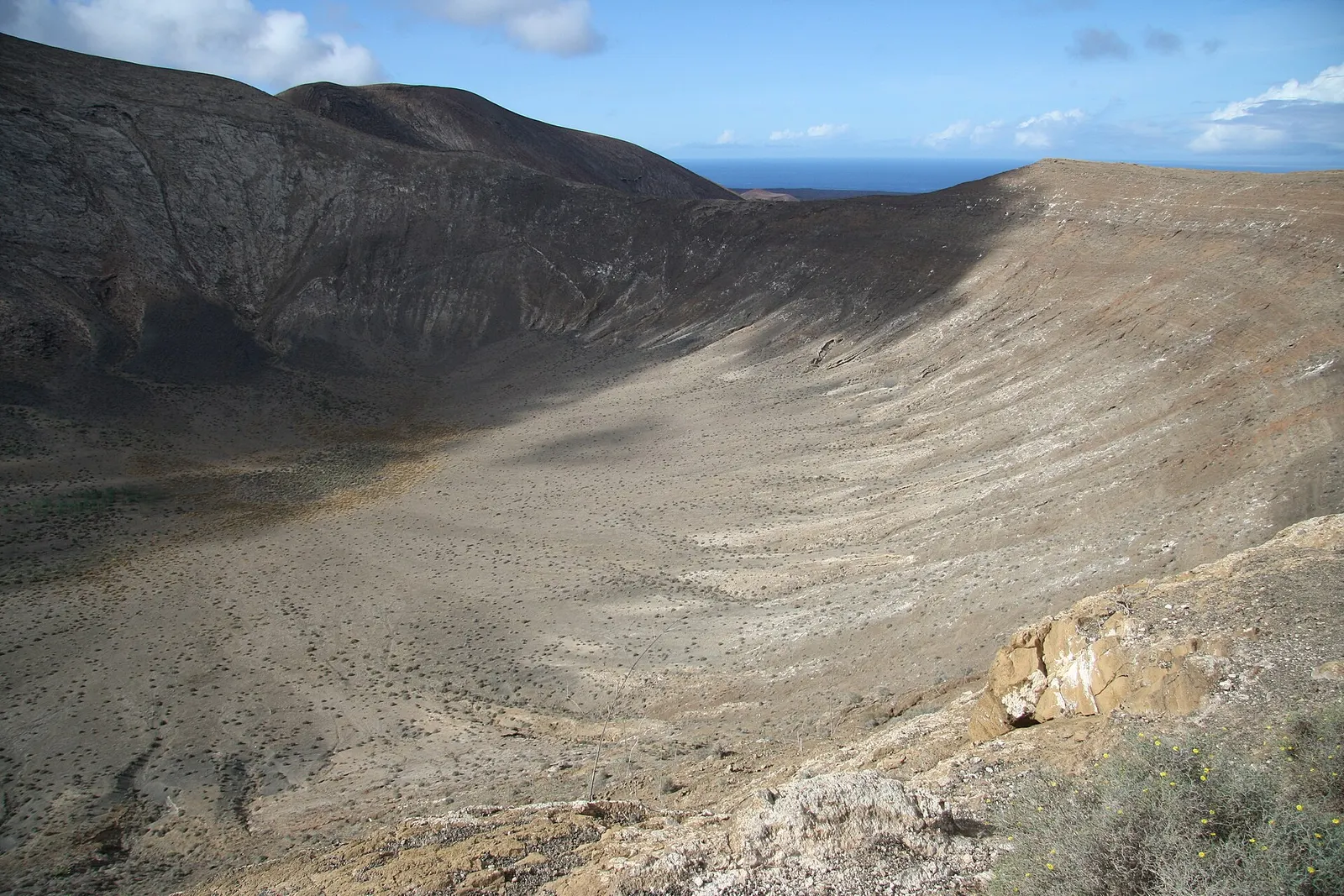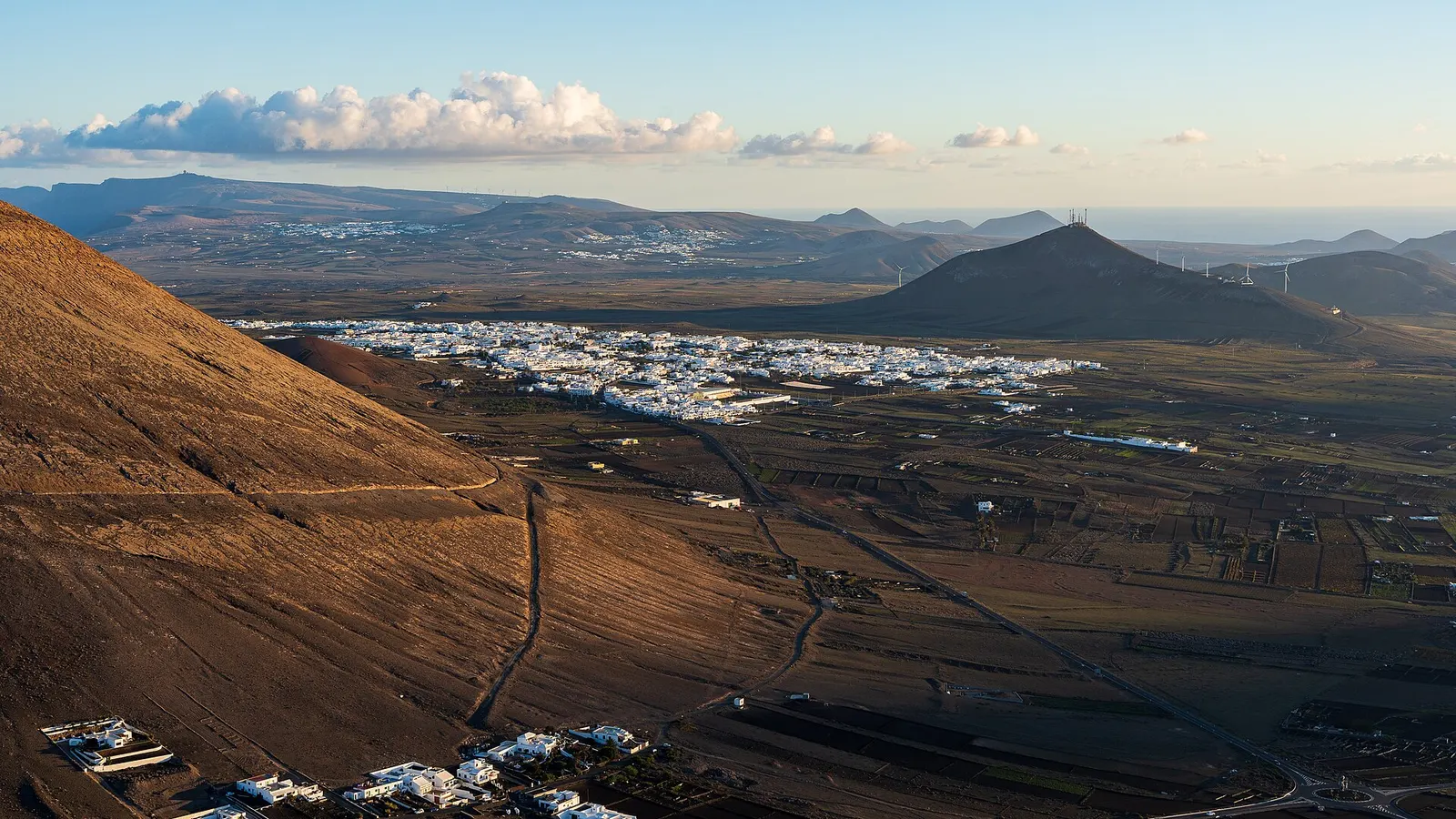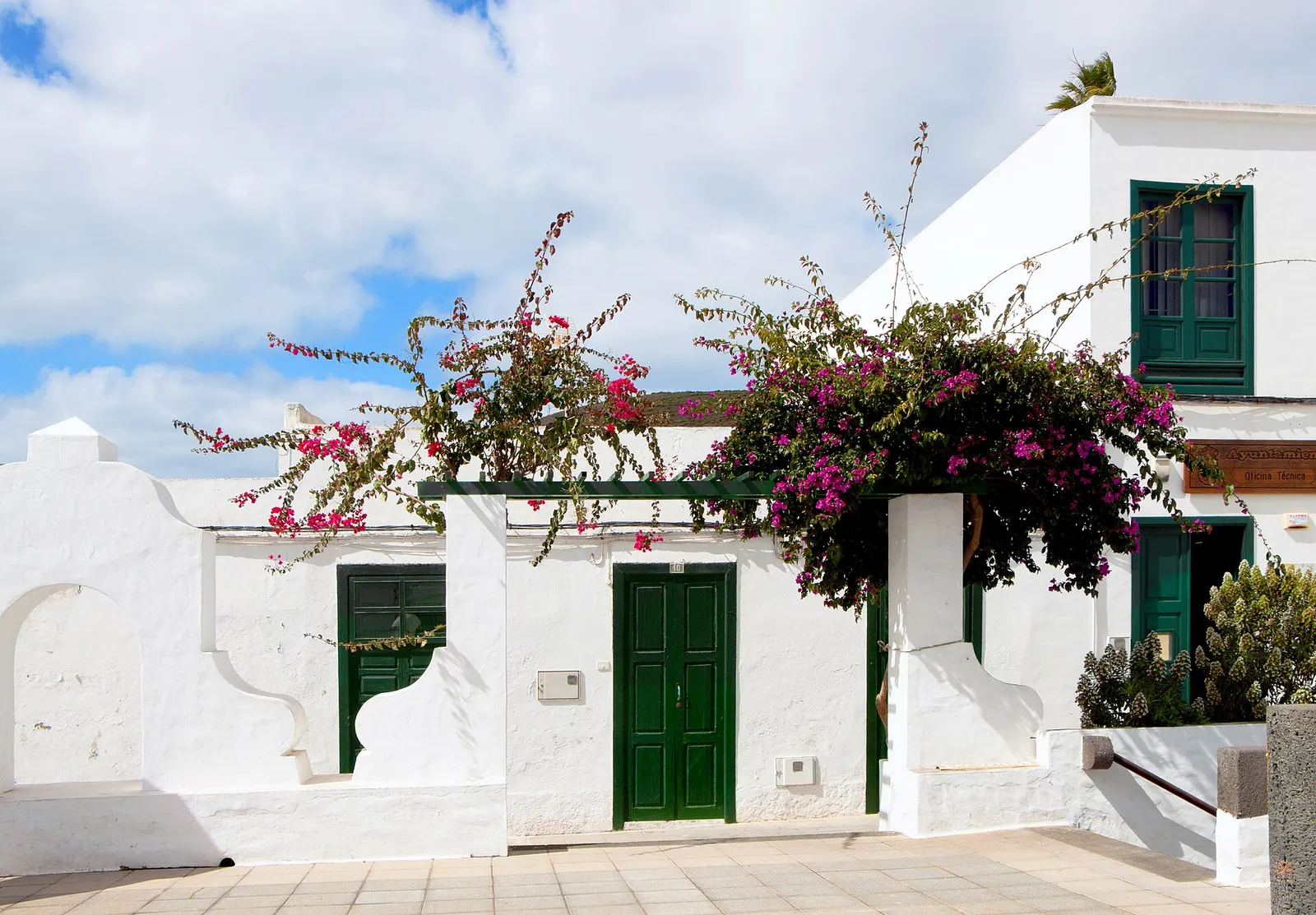
Anyone travelling around Lanzarote for the first time notices something before they can name it: there is no visual noise. No towers on the coast, no hoardings along the roads, no façades competing with each other. The houses are white, low, with painted wooden doors and windows, and they sit on the black earth as if they had always been there. It is no accident: it is a decision the island took decades ago and still upholds.
The traditional house
The Lanzarote house is an answer to climate and scarcity. Thick whitewashed walls that reflect the sun and keep the cool; low, cubic volumes, with nothing to catch the wind; small openings; inner courtyards where life goes on in shelter. On an island where fresh water was always scarce, many old houses collected rainwater in cisterns (aljibes).
Woodwork is painted green, sometimes blue near the sea. Tradition has it that the green came from paint left over from the boats, and spread from house to house. Whether or not the story is exact, the result is a shared grammar: the white of the lime, the green of the wood and the black of the volcano.
Manrique and the island that said no
The artist César Manrique (1919–1992) devoted much of his life to defending that architecture. In the 1970s he documented the island’s vernacular building in a book that became a reference, Lanzarote, arquitectura inédita (1974), and he fought against high-rise hotels and roadside billboards. His idea was simple and radical: the landscape is Lanzarote’s greatest heritage, and every building should ask its permission.
That vision made its way into the island’s planning. In 1991 the Lanzarote Island Spatial Plan (Plan Insular de Ordenación del Territorio) was approved, confining tourist growth to existing resorts and setting criteria for how buildings should look. In 1993, UNESCO declared Lanzarote a Biosphere Reserve.
Why all the houses look alike
Almost everyone who arrives asks the same question: why are there no different houses? The answer is that this uniformity is the value. A house on Lanzarote does not stand out on its own, but in how it fits in: the view over the volcano, the silence of a courtyard, a garden of cactus and stone instead of lawn. Luxury here is not displayed; it shows in space, light and calm.
If you are thinking of a home on the island
A few practical points before buying or renovating:
- Planning rules come first. What can be built, extended or changed on a plot depends on island and municipal planning, and on rural land or in protected areas the restrictions are significant. Before signing anything, check with the town council and a local architect exactly what that plot allows. We give no specific regulatory details here: they change and must be checked case by case.
- Renovating means respecting. The island’s finest houses are those that restore original walls, woodwork and proportions rather than impose another architecture.
- Water and wind still rule. Orientation, shelter from the trade wind and water management are not decorative details: they are the reason the traditional house exists.
- Holiday letting. In the Canary Islands it is regulated and requires registration with the tourism register; if you are buying with that in mind, consult a professional first.
Living at the island’s pace
Owning a house on Lanzarote means accepting a pact: less prominence in exchange for a landscape that is still what it was. It is why the island is so restful to the eye, and why, decades on, Manrique’s pact still holds.
To understand the man behind the idea, read César Manrique and the island he shaped; and to see traditional architecture in the island’s old capital, Teguise.