Know only the south of Lanzarote and you leave with the image of a black and ochre island, young lava and hard light. The north is something else: higher, cooler, with palms on the valley floors and a calm that has nothing to do with the season. It deserves a whole day, and no watch.
Haría, the valley of a thousand palms
Haría is known as the valley of a thousand palms, and the name does not exaggerate. Coming down to the village from the heights, the volcanic landscape opens into a grey-green valley scattered with palms, with white houses here and there and kitchen gardens on the terraces.
This is where César Manrique spent his final years, after leaving his house at Tahíche. The choice was no accident: this is the corner of the island where what he stood for is easiest to read, low white architecture that does not compete with the landscape. If you have not yet read it, our piece on César Manrique gives the background.
Haría is for walking, slowly: the square, the shaded streets, the mid-afternoon quiet. It is a village to sit in rather than to see.
Towards the Risco de Famara
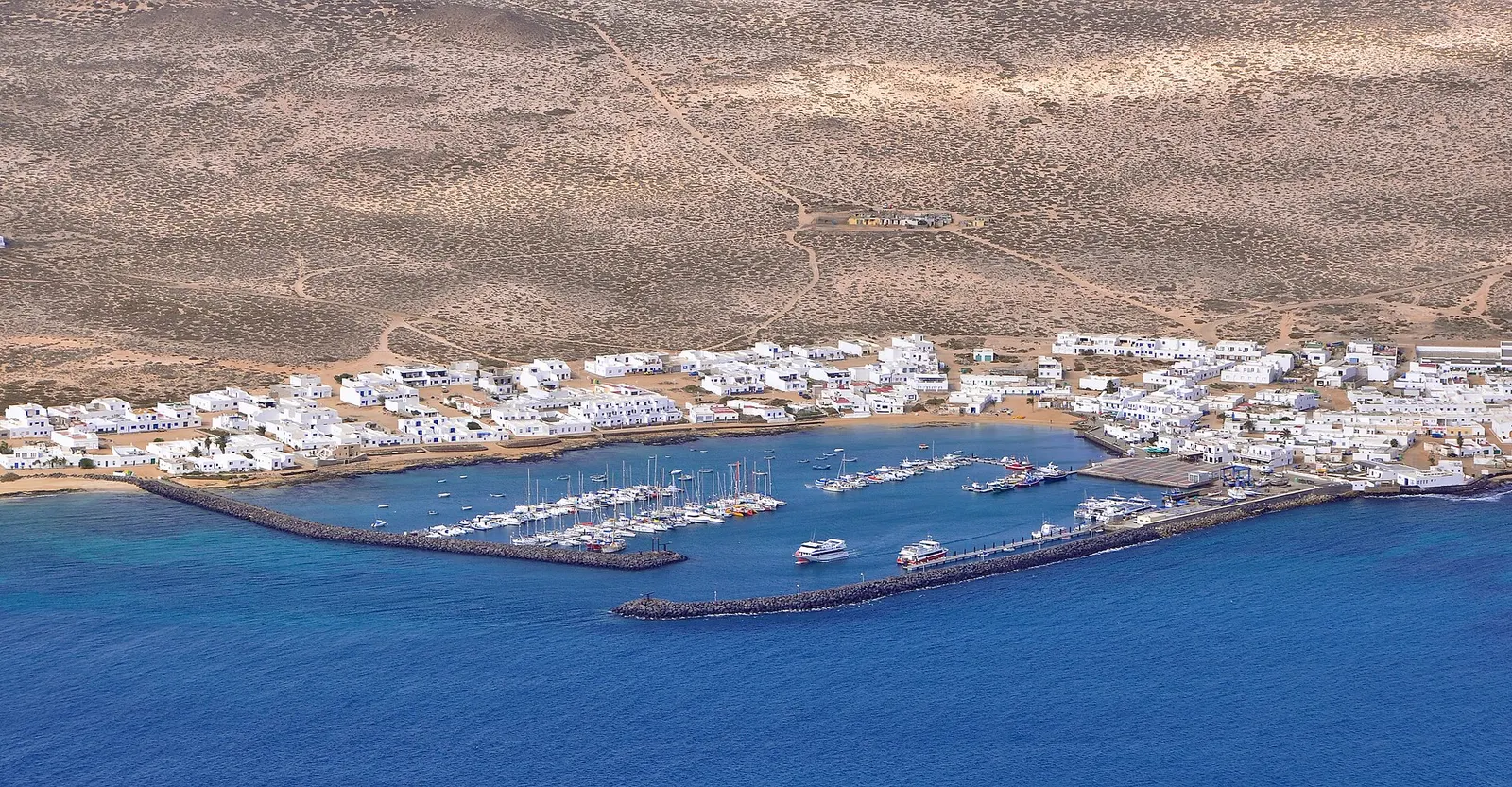
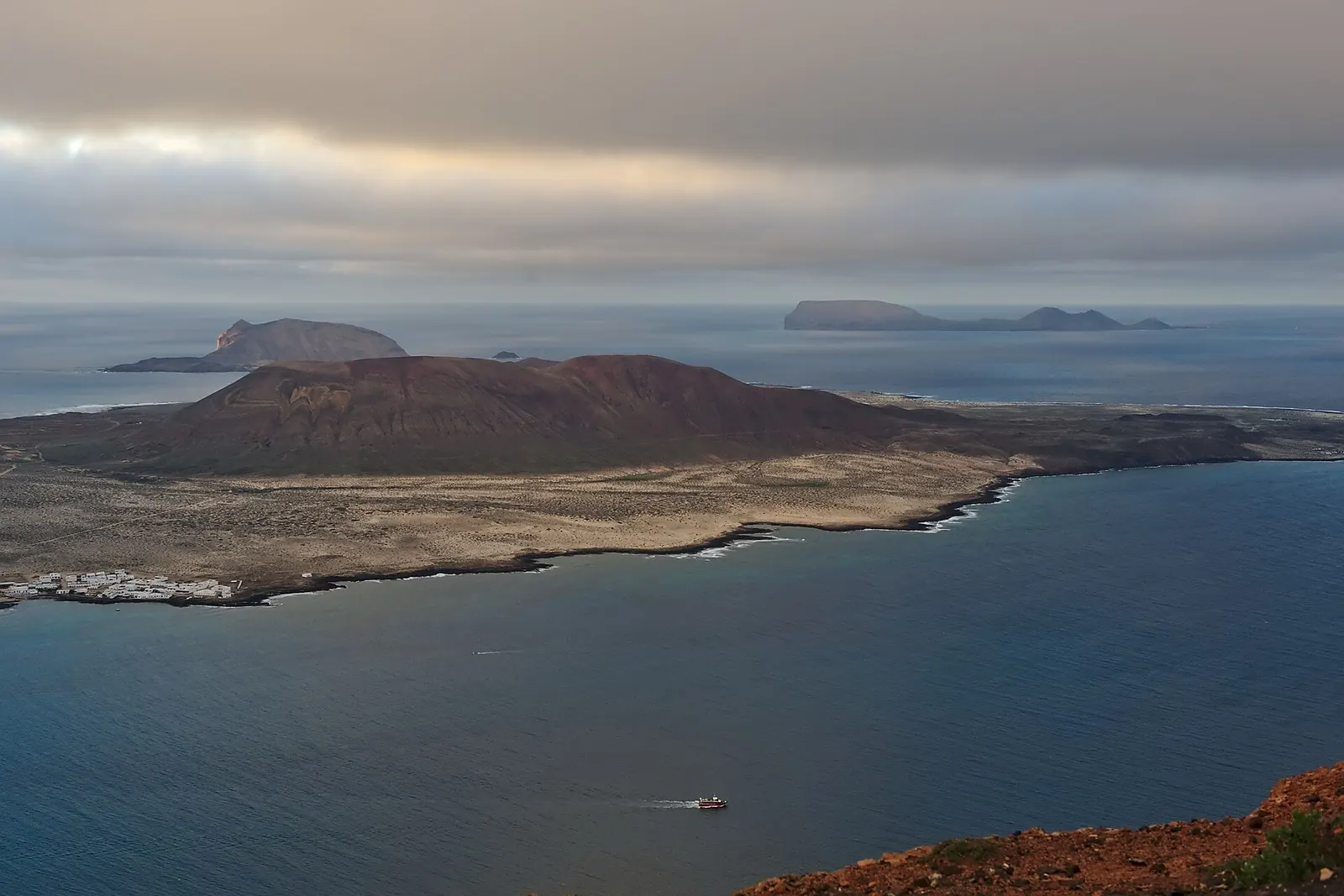
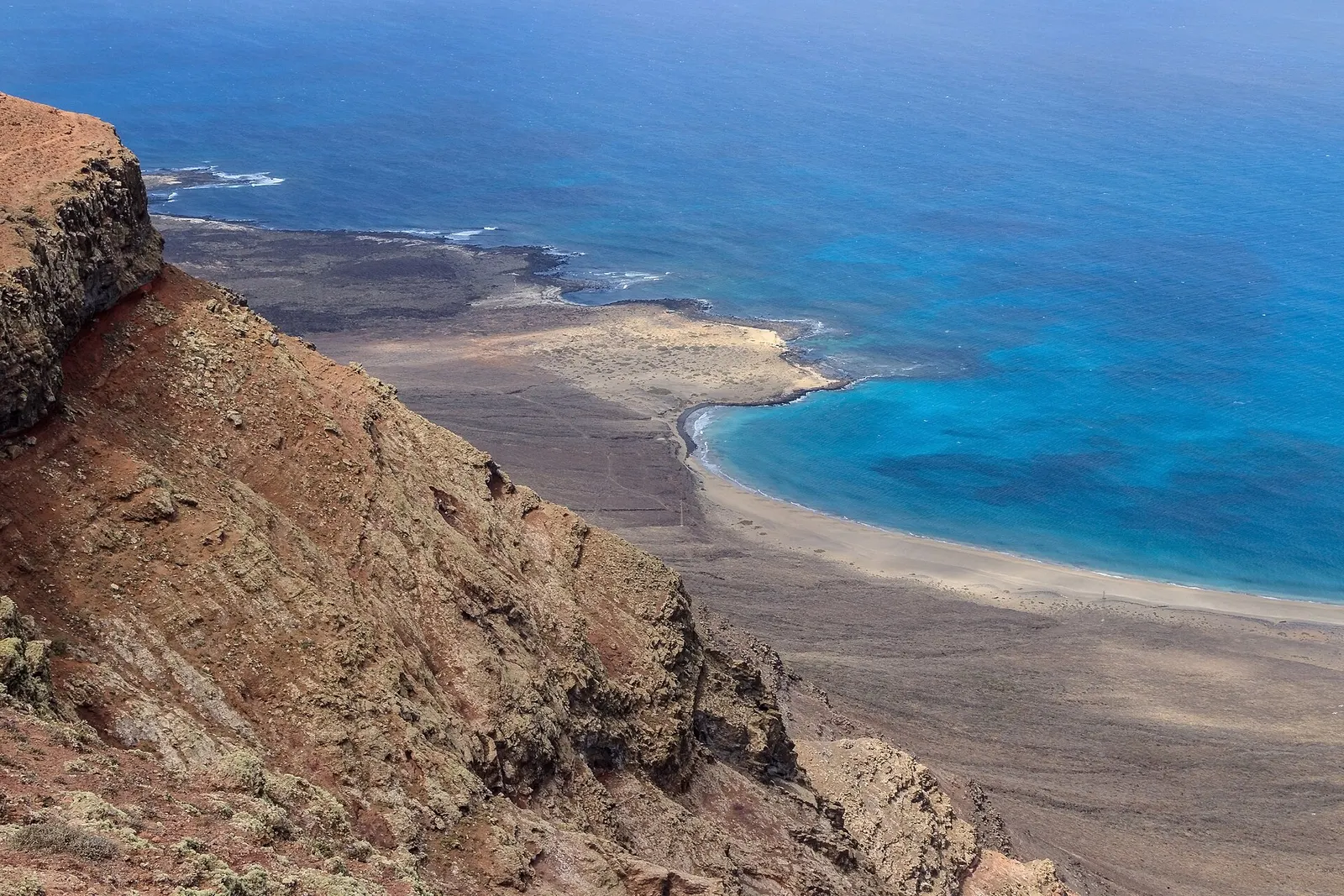
From Haría the road climbs north through ever more open country until it reaches the edge of the Risco de Famara, the great cliff that closes the island to the north-west. Below, the sea; opposite, La Graciosa and the islets of the Chinijo archipelago.
The Mirador del Río
At the top of the cliff, more than four hundred metres above the sea, Manrique built the Mirador del Río in 1973, with Eduardo Cáceres and Jesús Soto, on the site of an old nineteenth-century gun battery. The beauty of the building is that you hardly see it: it is set into the rock and barely shows from the road.
Inside, a curved, dim corridor opens into a room with large windows. And then everything appears at once: the El Río strait, the whole of La Graciosa at your feet, the cliff dropping sheer to the sea. The effect is deliberate, and it works every time.
At the foot of the cliff you can make out the Salinas del Río, cited as the oldest salt pans in the Canary Islands. Seen from above, a coloured grid beside the sea, they are a detail worth recognising.
The best time is mid-afternoon, with the light falling sideways across La Graciosa and fewer visitors than at midday. On hazy days or in a strong north wind the view closes in: look at the sky before you drive up.
How to plan the day
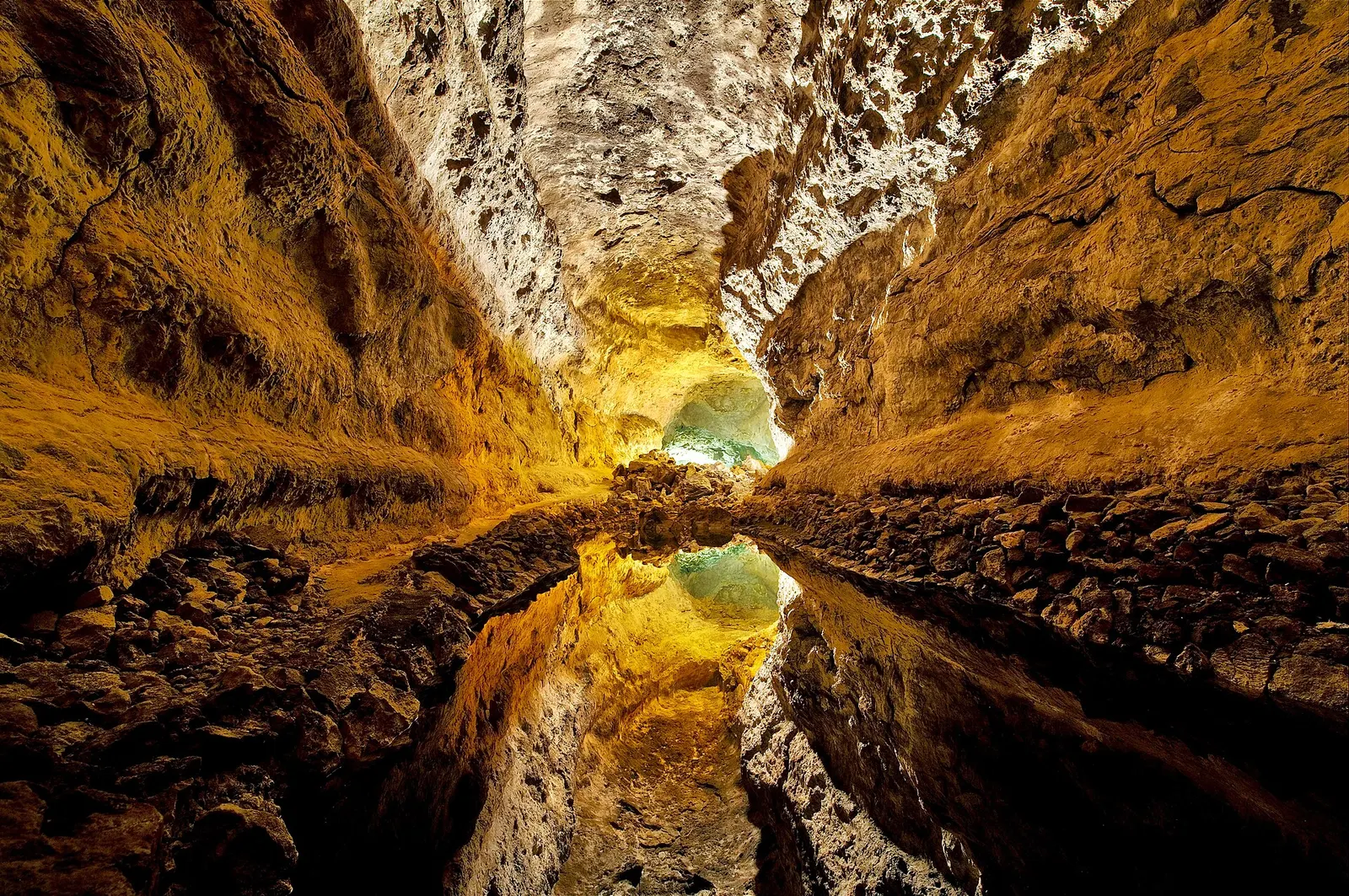
- Morning: Cueva de los Verdes and Jameos del Agua, on the north-east coast.
- Midday: down to Haría for an unhurried lunch and a walk round the village.
- Afternoon: up to the Mirador del Río, staying as long as the light asks.
The roads in the north are narrow and winding: drive calmly and do not string together more stops than you need.
Practical notes
- Mirador del Río: run by the Cabildo de Lanzarote’s Art, Culture and Tourism Centres (CACT). Paid entry; hours and prices on the official CACT website (October 2026 information; check before you go).
- Respect: the cliff is a fragile natural area. No drones, no leaving the paths and no volcanic stones taken home as souvenirs.