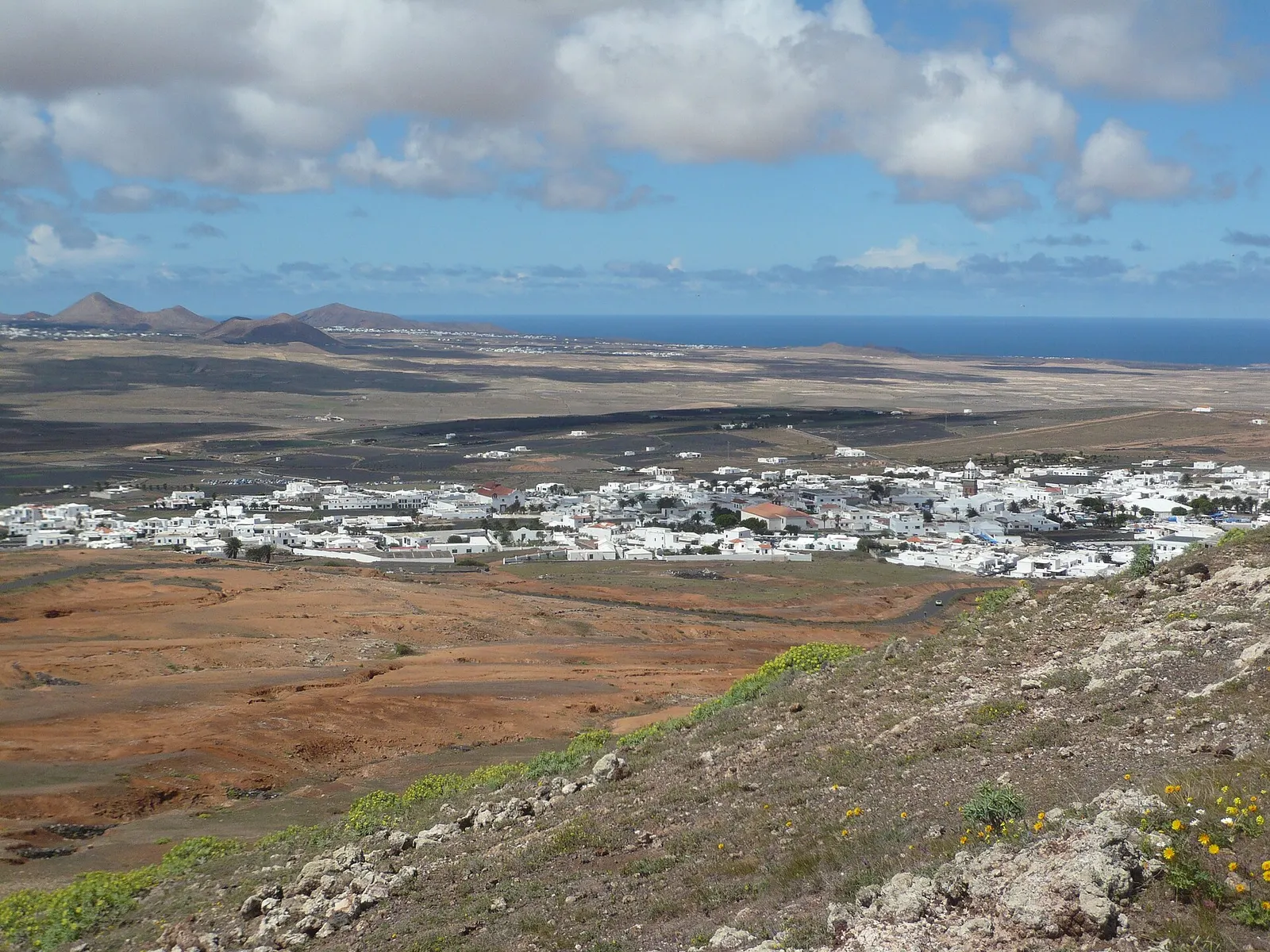
Teguise has two faces, and almost everyone knows only one. Sunday’s: stalls, crowds, music, car parks full by mid-morning. And any Tuesday’s: empty cobbled streets, white mansions with wooden balconies, a silent square. The second is the one that explains why this town was, for centuries, the centre of the island.
The capital it once was
Teguise was the capital of Lanzarote from the fifteenth century until 1852, when the title passed to Arrecife, by the harbour. Building the town inland, away from the coast, was not an aesthetic choice: the sea was the door through which attacks came, and an inland capital was easier to defend.
From those centuries survives a remarkably intact old town. The streets keep their original scale and the houses the traditional architecture that César Manrique championed for the whole island: white walls, wooden joinery, inner courtyards. Tahíche, where his house and foundation stand, is in fact part of the municipality of Teguise.
What to look at
The walk organises itself around the square:
- The church of Nuestra Señora de Guadalupe, the town’s main church, with a long history of rebuilding after several fires.
- The Palacio Spínola, an eighteenth-century mansion facing the square and a fine example of how the old capital’s elite lived.
- The surrounding streets, best walked without a map: great doors, latticed windows, shaded corners.
There is not much more to see, and that is a blessing. Teguise is enjoyed for its pace, not for a list of sights.
The castle on the volcano
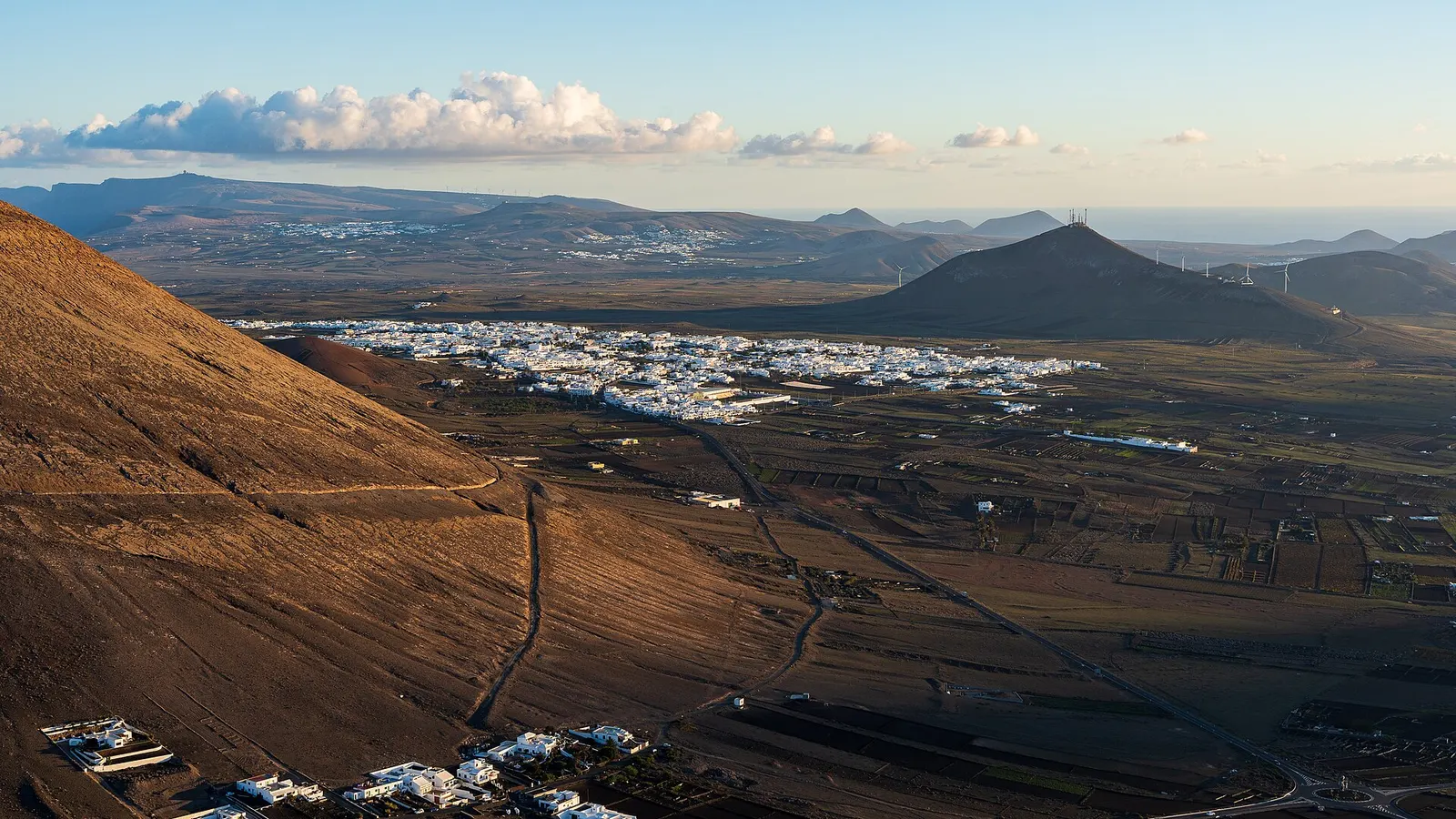
On the outskirts, on top of Guanapay volcano, stands the Castillo de Santa Bárbara, now home to the Piracy Museum. Built on the rim of the crater, it kept watch over the island in the centuries when pirates were a real threat, and the museum tells exactly that story: an island that lived looking at the horizon in fear.
It is worth the climb for the view alone. From up there the geography of Lanzarote makes sense at a glance: the town below, the volcanic interior, the coast in the distance. Best late in the afternoon, when the light turns golden over the lava fields.
The market, if that is what you want
Teguise market is held every Sunday from 9:00 to 14:00 and fills the old town with stalls. It is the best known on the island and has its following. If you go, go early: the outer car parks tend to fill up by mid-morning.
Our advice, though, is different: see Teguise on a weekday. The town without crowds is what justifies the visit, and Sunday is precisely the day it least resembles itself.
Fitting it in
Teguise sits in the centre of the island, a short drive from Arrecife and the airport. It pairs well with Manrique’s house at Tahíche in the morning and the Castillo de Santa Bárbara at the end of the afternoon. If you have time for the north, carry on to Haría and the Mirador del Río.
For the table, our guide to eating in Lanzarote covers where and what.
Museum and church opening hours: check before you go (October 2026 information).